


Assistive-Device Training
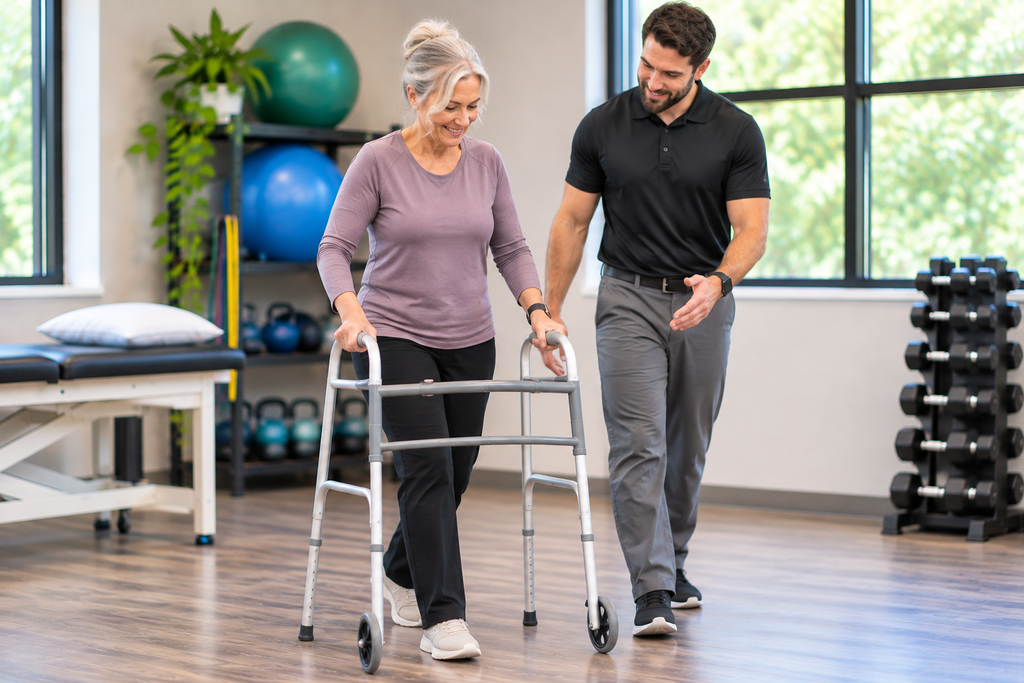
Does walking feel less steady than it used to? Maybe you’re recovering from surgery, experiencing balance difficulties, or finding yourself reaching for furniture to move around your home. When walking becomes uncomfortable or unpredictable, even familiar activities can feel overwhelming. Using a cane, walker, or crutches can provide additional support, but knowing how to use these devices correctly makes an important difference. Assistive-device training helps ensure that you can use your cane, walker, or crutches safely and confidently. An improperly fitted device or unfamiliar walking technique may create new challenges instead of improving your mobility.
At Reform Physical Therapy, assistive-device training helps patients learn how to use mobility aids safely, comfortably, and effectively. Our physical therapists evaluate your walking ability, balance, strength, and individual needs to help determine which devices and techniques may support your rehabilitation goals. Whether you’re recovering from an injury, managing a neurological condition, or adjusting to changes in mobility, our goal is to help you move with greater confidence and independence.
What Is Assistive-Device Training?
Assistive-device training is a specialized physical therapy approach that teaches patients how to use mobility aids to improve stability, walking ability, and functional independence. Common mobility aids include canes, walkers, crutches, and other devices that provide additional support during standing or walking. Although these devices may seem straightforward, proper use requires coordination, balance, strength, and an understanding of safe movement techniques. For example, someone using a cane may need guidance on which hand should hold the device and how to coordinate it with their steps. Another individual recovering from surgery may need instruction on using crutches while following specific weight-bearing restrictions.
Physical therapists use assistive-device training to address these challenges through individualized assessment, equipment adjustments, and supervised movement practice. Your therapist will consider your medical history, physical abilities, home environment, and personal goals when recommending appropriate strategies.
Why Is Proper Assistive-Device Use Important?
Mobility aids can provide valuable support when walking becomes difficult, but the device must match your needs and physical abilities. Using the wrong equipment or an inappropriate technique may interfere with balance, posture, or walking efficiency. Poorly fitted devices can also place unnecessary demands on your wrists, shoulders, or other joints.
Proper assistive-device training may help you:
- Improve stability while standing and walking
- Learn safer walking techniques
- Follow post-surgical weight-bearing restrictions
- Navigate stairs, curbs, and uneven surfaces
- Improve confidence during everyday activities
- Reduce unnecessary strain from improper device use
- Develop more efficient movement strategies
- Maintain greater independence with daily mobility
The goal isn’t simply to help you use a device. It’s to help you understand how that device fits into your overall rehabilitation plan.
Who Can Benefit From Assistive-Device Training?
People may need mobility aids temporarily during recovery or for longer periods when certain conditions affect walking and balance.
Assistive-device training may benefit individuals who experience:
- Balance difficulties or frequent instability
- Walking problems following an injury
- Reduced mobility after orthopedic surgery
- Muscle weakness affecting walking ability
- Neurological conditions
- Peripheral neuropathy or reduced foot sensation
- Difficulty maintaining stability on uneven surfaces
- Increased fall risk
- Pain that limits comfortable walking
- Temporary weight-bearing restrictions
- Reduced confidence during everyday movement
Some patients already use a cane or walker but struggle with proper positioning or movement coordination. Others may need help determining whether a mobility aid would improve their safety. A physical therapy evaluation can help identify which approach best supports your needs.
Types of Assistive Devices Used in Physical Therapy
Different mobility aids provide varying levels of support. Your physical therapist will consider your balance, strength, coordination, and medical needs when discussing appropriate options.
Cane Training
Canes provide additional support for individuals who need assistance with balance or partial unloading during walking. A standard single-point cane may work well for someone who needs a relatively small amount of support. Certain patients may benefit from a quad cane, which has a wider base and multiple contact points.
During cane training, your physical therapist may address:
- Proper cane height and positioning
- Which hand should hold the cane
- Coordinating cane movement with walking
- Maintaining appropriate posture
- Turning and changing directions
- Navigating stairs and uneven surfaces
The correct technique depends on your condition, strength, and walking pattern. Your therapist will help you practice movements that reflect your everyday activities.
Walker Training
Walkers provide a larger base of support and may help individuals who experience significant balance difficulties, weakness, or reduced walking confidence. Several walker designs are available, including standard walkers, two-wheeled walkers, and four-wheeled rollators. Each option has different features and requires specific techniques. For example, a standard walker may provide substantial support but requires the user to lift or advance the frame. A rollator moves more easily across certain surfaces but requires appropriate balance, brake management, and control.
Walker training may focus on:
- Selecting an appropriate walker style
- Adjusting equipment height
- Coordinating steps with walker movement
- Maintaining a safe distance from the device
- Turning and navigating narrow spaces
- Using brakes and seats when applicable
- Managing thresholds and uneven surfaces
Your therapist will determine whether a particular walker is appropriate for your strength, coordination, and mobility needs.
Crutch Training
Crutches commonly support individuals recovering from injuries or surgeries that temporarily limit how much weight they can place on one leg. Proper crutch use requires coordination, upper-body strength, and an understanding of weight-bearing precautions.
Your physical therapist may teach you how to:
- Adjust crutches to the correct height
- Position your hands and arms appropriately
- Follow prescribed weight-bearing restrictions
- Coordinate crutch movement with stepping
- Safely transition between sitting and standing
- Navigate stairs when appropriate
- Avoid unnecessary pressure through the underarms
Crutch training helps patients develop techniques that support mobility while respecting their medical restrictions.
Other Mobility Aids
Some individuals use forearm crutches, specialized walkers, or other mobility equipment based on their physical needs. Your physical therapist may also assess how braces or orthotic devices affect walking mechanics when these devices form part of your rehabilitation plan. Equipment recommendations depend on the patient’s condition, functional abilities, and available resources.
How Do Physical Therapists Determine Which Device Is Right for You?
Choosing a mobility aid involves more than selecting the device that feels easiest to use. Your physical therapist evaluates several factors to understand which equipment may provide appropriate support.
Balance and Stability
Your ability to maintain balance influences the level of support you may need. Someone with mild instability may benefit from a cane, while another individual with more significant balance difficulties may require a walker. Your therapist will assess your stability during standing, walking, and changes in direction.
Muscle Strength
Upper-body and lower-body strength can affect your ability to use certain mobility aids. For example, crutches require sufficient arm and shoulder strength to support the prescribed walking technique. Your therapist will consider whether you can safely control and advance the device.
Walking Mechanics
Your walking pattern provides important information about how you distribute weight, coordinate steps, and maintain stability. An evaluation may identify uneven steps, difficulty lifting your feet, reduced walking speed, or other movement challenges. These findings help guide device selection and training.
Medical Precautions
Certain injuries and surgeries require temporary restrictions on how much weight you can place through a leg. Your physical therapist will follow your healthcare provider’s instructions when recommending walking techniques or equipment.
Daily Activities and Environment
The layout of your home and the activities you perform can influence device selection. Narrow hallways, stairs, outdoor surfaces, and transportation needs may create different mobility challenges. Your therapist can discuss practical strategies that reflect your daily routine.
How Does Assistive-Device Training Work?
Assistive-device training combines equipment assessment, walking instruction, balance exercises, and functional movement practice. Your physical therapist develops a plan based on your current abilities and the activities you want to perform more comfortably.
Proper Device Fitting
An appropriately fitted mobility aid can improve comfort and support more effective movement. Your therapist will assess equipment height, hand positioning, and other relevant adjustments. Correct fitting also helps reduce unnecessary strain that may result from awkward posture or positioning.
Walking Pattern Training
Learning to coordinate your steps with a cane, walker, or crutches takes practice. Your therapist may begin with simple walking activities before introducing more challenging movements. Treatment focuses on developing a walking pattern that supports stability and respects any medical restrictions.
Balance and Weight-Shifting Exercises
Walking requires continuous adjustments as your body transfers weight between your legs. When balance difficulties contribute to mobility limitations, your therapist may incorporate supported standing, weight shifting, and controlled stepping exercises. These activities can complement assistive-device training and improve movement confidence.
Turning and Changing Directions
Turning can become challenging when you use a mobility aid, particularly in smaller spaces. Your therapist may help you practice controlled turns, changes in direction, and navigating around obstacles. Treatment emphasizes maintaining stability while coordinating the device with your movements.
Sit-to-Stand Transfers
Getting into and out of a chair requires coordination, strength, and appropriate device positioning. Your physical therapist can teach strategies for transitioning between sitting and standing without relying on unsafe equipment placement. For example, some walkers should not serve as the primary support when pulling yourself up from a chair. Your therapist will explain the correct technique for your specific device and physical abilities.
Stair and Curb Training
Stairs and curbs present additional challenges because they require changes in elevation and weight distribution. Your therapist may teach techniques for navigating these surfaces when appropriate for your device, medical restrictions, and balance abilities. Some mobility aids are not suitable for certain stair situations. Your therapist will help identify safer alternatives when needed.
Assistive-Device Training After Surgery
Orthopedic surgery can temporarily affect your strength, balance, walking mechanics, and ability to bear weight comfortably. During recovery, some patients require a mobility aid to help them move while following surgical precautions.
After Knee Replacement
Following knee replacement surgery, individuals may initially use a walker or cane while rebuilding strength and walking confidence. Physical therapy may focus on improving knee mobility, lower-body strength, and walking mechanics. As recovery progresses, your therapist can reassess whether you still need the same level of support.
After Hip Replacement
Hip replacement recovery may involve temporary changes in balance, muscle strength, and weight distribution. Assistive-device training helps patients practice walking and everyday movements while following their surgeon’s recommendations. Your therapist will consider applicable precautions and functional progress before changing equipment or walking techniques.
After Foot or Ankle Surgery
Certain foot and ankle procedures require temporary weight-bearing restrictions. Crutches, walkers, or other mobility aids may help patients follow these restrictions while moving through daily activities. Your physical therapist will use your surgeon’s instructions to guide device selection and progression.
After Other Orthopedic Procedures
Some patients need mobility assistance following spine surgery, fracture treatment, or other orthopedic procedures. Your therapist will consider healing timelines, medical precautions, and individual abilities when developing a mobility plan.
Assistive-Device Training for Balance Disorders
Balance disorders can make walking feel unpredictable, particularly when turning, navigating uneven surfaces, or moving through crowded environments. Some individuals experience dizziness or instability related to vestibular dysfunction. When appropriate, a mobility aid may provide additional support while the patient participates in rehabilitation. Assistive-device training can help individuals learn walking strategies that improve stability and confidence during daily activities. Your therapist may combine device instruction with balance training, gait training, and other vestibular rehabilitation techniques. The goal is to identify an appropriate level of support while addressing the factors contributing to instability.
Assistive-Device Training for Neurological Conditions
Neurological conditions can affect walking ability, coordination, strength, sensation, and balance. Some individuals benefit from mobility aids that help them navigate everyday environments more safely.
Stroke Rehabilitation
A stroke may affect strength, movement control, sensation, or balance on one side of the body. Assistive-device training may help patients learn walking strategies that account for these changes. Your therapist may also incorporate gait training, balance exercises, and functional movement practice.
Parkinson’s Disease
Parkinson’s disease can affect walking speed, posture, step length, and movement initiation. Some individuals experience freezing episodes or difficulty changing directions. A physical therapist can assess whether a mobility aid may help and provide instruction tailored to the person’s movement challenges. Certain devices may be more appropriate than others depending on freezing, coordination, and balance.
Multiple Sclerosis
Multiple sclerosis can contribute to muscle weakness, fatigue, coordination changes, and walking difficulties. Some individuals use mobility aids during periods of increased symptoms or as part of longer-term mobility management. Your therapist can help identify strategies that support stability while considering fatigue and changing physical abilities.
Peripheral Neuropathy
Peripheral neuropathy may reduce sensation in the feet and interfere with awareness of foot placement. These changes can contribute to instability, particularly on uneven surfaces or in low-light environments. Assistive-device training may help address certain walking challenges while complementing balance and strengthening exercises.
Assistive-Device Training for Older Adults
Some older adults begin using mobility aids because of balance difficulties, muscle weakness, pain, or changes in walking ability. However, using a cane or walker without proper instruction can create avoidable challenges. A physical therapist can assess whether the device provides enough support, fits appropriately, and works well with the patient’s walking pattern. Training may focus on navigating household spaces, turning, transferring between surfaces, and walking outdoors. For individuals concerned about falling, treatment may also include strengthening, balance exercises, and fall prevention strategies. The goal is to support confidence and independence while addressing individual safety needs.
Can Physical Therapy Help You Stop Using a Cane or Walker?
Some patients need mobility aids temporarily while recovering from surgery or an injury. Others benefit from continued use because of ongoing balance, strength, or neurological challenges. Whether you can reduce or discontinue a device depends on your medical condition, physical abilities, and rehabilitation progress.
Your physical therapist may reassess:
- Walking stability and balance
- Lower-body strength
- Movement coordination
- Weight-bearing ability
- Walking endurance
- Fall risk
- Confidence during everyday activities
If your abilities improve sufficiently, your therapist may recommend gradually changing your level of support. However, discontinuing a mobility aid isn’t always the best goal. For some individuals, continued device use supports safer movement and greater independence.
Never stop using a prescribed mobility aid or disregard weight-bearing restrictions without appropriate guidance from your healthcare team.
Assistive-Device Training vs. Gait Training
Assistive-device training and gait training often work together, but each approach emphasizes different aspects of mobility. Assistive-device training focuses on selecting, fitting, and safely using equipment such as canes, walkers, and crutches. Gait training focuses on improving walking mechanics, stepping patterns, balance, and functional mobility. For example, someone recovering from knee surgery may need instruction on using a walker while also working to improve knee movement and walking mechanics. Your physical therapist may combine both approaches to address your rehabilitation goals.
What to Expect During Your First Assistive-Device Training Appointment
Your first visit begins with a conversation about your medical history, mobility challenges, and daily activities. Your physical therapist may ask whether you’ve experienced falls, which movements feel difficult, and whether you currently use a cane, walker, crutches, or another mobility aid.
The evaluation may include assessments of:
- Walking mechanics and stability
- Standing balance
- Lower-body and upper-body strength
- Joint mobility
- Movement coordination
- Weight-bearing precautions
- Functional transfers
- Walking endurance
- Current equipment fit and use
- Home and community mobility needs
If you already own a mobility aid, bringing it to your appointment can help your therapist assess its fit and how you use it. Following the evaluation, your therapist will discuss appropriate equipment and walking strategies. Treatment may begin with supported walking practice, device adjustments, or instruction on specific movements. As your confidence and abilities improve, your therapist can introduce more challenging activities that reflect your everyday environment.
Is Assistive-Device Training Safe?
Physical therapists design assistive-device training to improve mobility while accounting for your individual safety needs. Your therapist will consider your strength, balance, medical history, and risk of falling before recommending specific activities. Training may begin in a controlled environment with direct assistance before progressing to more challenging walking situations. Proper equipment maintenance also matters. Worn cane tips, damaged walker components, or malfunctioning brakes can affect safety. Your therapist can help you recognize equipment concerns and determine when a device needs repair, replacement, or further assessment.
How Long Does Assistive-Device Training Take?
The amount of training needed varies depending on your condition, experience with mobility aids, and rehabilitation goals. Some individuals learn basic device techniques during a small number of appointments. Others benefit from continued practice as their strength, balance, or walking ability changes. Patients recovering from surgery may need periodic adjustments to their walking strategies throughout rehabilitation. Individuals managing chronic neurological conditions may require ongoing reassessment as their mobility needs evolve. Your physical therapist will monitor your progress and adjust recommendations accordingly.
Why Choose Reform Physical Therapy for Assistive-Device Training?
At Reform Physical Therapy, we understand that needing a cane, walker, or crutches can feel like a significant adjustment. Mobility challenges may affect your confidence, independence, and ability to participate in activities you enjoy. Our team focuses on helping you develop practical skills that support safer, more comfortable movement.
Personalized, One-on-One Physical Therapy
Our independent, woman-owned practice prioritizes individualized care and one-on-one appointments. Your physical therapist will take the time to understand your mobility challenges, evaluate your walking ability, and develop a treatment plan that reflects your goals.
Consistency Throughout Your Rehabilitation
At Reform Physical Therapy, you’ll work with the same physical therapist throughout your treatment. This continuity allows your provider to monitor changes in your walking ability and adjust your equipment recommendations as needed.
Treatment That Supports Everyday Independence
Our goal extends beyond helping you walk through the clinic. We want to help you build confidence during meaningful activities, whether that means navigating your home, walking outdoors, attending appointments, or returning to community activities. With seven locations throughout Southern and Midcoast Maine, our team can help you identify the clinic and rehabilitation services that best fit your needs.
Move More Confidently With the Right Support
Using a mobility aid doesn’t have to mean giving up your independence. With appropriate equipment, individualized instruction, and targeted rehabilitation, many patients can improve their confidence and ability to navigate everyday activities. Through assistive-device training, physical therapy may help you develop safer walking strategies, improve movement control, and make better use of the support available to you. Whether you’re recovering from surgery, managing balance difficulties, or adjusting to changes in mobility, Reform Physical Therapy is here to support your goals.
Sudden difficulty walking, new weakness, facial drooping, difficulty speaking, or severe loss of balance may indicate a medical emergency. Call 911 if these symptoms occur.