


Plantar Fasciitis Treatment
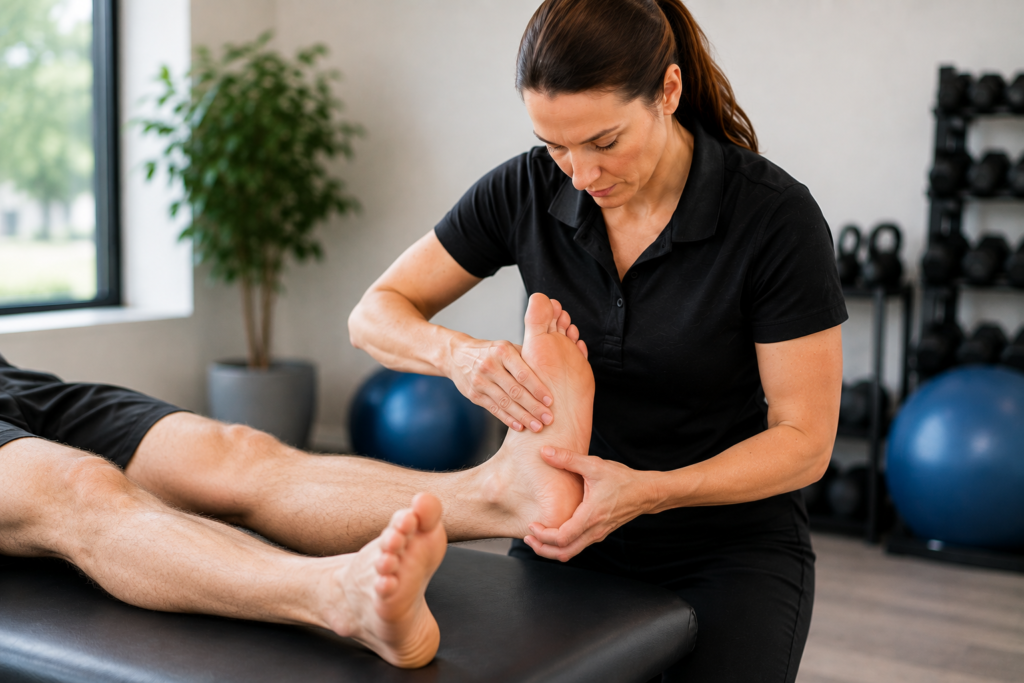
Plantar fasciitis treatment can help reduce heel pain, morning stiffness, foot weakness, and discomfort during walking, standing, running, or exercise. The plantar fascia is a strong band of tissue along the bottom of the foot. It connects the heel bone to the front of the foot and helps support the arch. When this tissue becomes irritated or overloaded, pain often develops near the bottom or inner portion of the heel.
Symptoms commonly feel worse during the first few steps after getting out of bed or standing after a long period of rest. The foot may loosen after several minutes of movement, but pain can return after prolonged walking, standing, running, or exercise. At Reform Physical Therapy, we provide one-on-one care based on your symptoms, foot movement, strength, activity level, footwear, and goals. Your therapist will assess the painful area while also examining the ankle, calf, knee, hip, balance, walking pattern, and activities that increase your symptoms.
Understanding Plantar Fasciitis
Plantar fasciitis is one of the most common causes of pain on the bottom of the heel. It develops when repeated stress places more demand on the plantar fascia than the tissue can comfortably manage. The plantar fascia helps support the arch and manage force as the foot contacts the ground. It also tightens as the toes bend during the push-off stage of walking and running.
Problems can begin when walking, running, standing, or jumping increases too quickly. Limited ankle movement, reduced calf strength, changes in footwear, and long periods on hard surfaces may also contribute. Effective plantar fasciitis treatment focuses on reducing irritation while gradually rebuilding foot strength, mobility, and tolerance for daily activity.
Plantar Fascia Location and Function
The plantar fascia runs from the heel bone toward the toes along the bottom of the foot. It forms a strong connection beneath the arch and helps the foot remain stable during standing and movement. During walking, the plantar fascia helps absorb force when the foot lands. As the body moves forward and the toes bend, the tissue tightens and supports the foot during push-off.
This process happens thousands of times during a normal day. Running, jumping, sports, and jobs that require prolonged standing place even greater demands on the tissue. When the plantar fascia is not prepared for these demands, irritation can develop near the heel or along the bottom of the foot.
Common Plantar Fasciitis Symptoms
Pain usually develops near the bottom of the heel. Some people feel discomfort closer to the inner side of the heel or along the arch. The first steps in the morning are often the most painful. Discomfort may also return after sitting, driving, or resting for a long period. Once the foot begins moving, symptoms may temporarily ease. Pain may become worse after a long day of standing or walking. Running, jumping, climbing stairs, and walking barefoot on hard floors can also increase irritation.
The heel may feel tender when pressed. Some people describe the pain as sharp, stabbing, aching, or bruised. Symptoms can affect one foot or both feet. However, the amount of pain may be different on each side.
Morning Heel Pain
Morning pain is one of the most recognized symptoms of plantar fasciitis. While sleeping, the ankle and toes often remain in a relaxed position. The plantar fascia may become temporarily stiff during this period. When the person takes the first few steps, the tissue is suddenly placed under tension. This can cause a sharp or pulling feeling near the heel.
Morning stiffness may improve after walking for several minutes. However, symptoms often return after another period of rest or after spending a long time on the feet. Your therapist may recommend gentle movement before standing, changes to morning routines, or a night splint in certain cases.
Pain After Standing or Walking
Plantar fasciitis may cause discomfort after spending a long time standing at work, shopping, completing household tasks, or attending an event. The pain may not always feel severe during the activity. Instead, it may increase after the person sits down or at the end of the day. Walking on concrete, tile, hardwood, or other firm surfaces can be especially uncomfortable when the foot is already irritated. Some people begin shifting their weight away from the painful heel. This may change their walking pattern and create discomfort elsewhere in the foot, ankle, knee, hip, or lower back.
Pain During Running and Exercise
Runners may notice heel pain at the beginning of a run, after several miles, or later that day. A sudden increase in mileage, speed, hills, or weekly running days may overload the plantar fascia. Returning to running after an injury or long break can also lead to symptoms. Jumping, court sports, and fitness classes may create similar problems. These activities place repeated force through the heel and arch. Continuing to train through worsening pain may make the condition harder to settle. A temporary adjustment to distance, speed, surfaces, or workout frequency may be needed.
Common Causes of Plantar Fasciitis
Plantar fasciitis often develops after a change in activity. A person may begin walking for exercise, start a new job, increase running mileage, or return to sports after time away. The condition can also appear when several smaller factors occur together. Limited ankle mobility, calf weakness, foot fatigue, worn shoes, and long periods on hard floors may combine to increase stress on the plantar fascia.
Foot shape can play a role, but having flat feet or high arches does not automatically cause heel pain. The way the foot manages force during movement is often more important than its appearance while standing. Body weight, age, health conditions, and recovery time between activities may also influence how much stress the tissue can tolerate. MedlinePlus lists sudden weight gain, running, arch differences, and a tight Achilles tendon among factors associated with plantar fasciitis.
Sudden Activity Changes
The body needs time to adapt when activity increases. A person who normally walks for 20 minutes may develop heel pain after suddenly beginning hour-long walks. A runner may experience symptoms after increasing mileage and adding hills during the same week. Changes in work can also matter. Starting a job that requires prolonged standing or walking may place new stress on the feet. Physical therapy can help identify which part of the activity routine may be contributing. Temporary changes can then reduce irritation without requiring complete inactivity.
Calf Tightness and Ankle Mobility
The calf muscles connect to the heel through the Achilles tendon. Tightness or limited ankle movement can affect how the foot and lower leg move during walking. When the ankle does not bend forward comfortably, the body may compensate through the foot, knee, hip, or opposite leg. Calf and ankle mobility exercises may help some patients move more comfortably. However, aggressive stretching is not appropriate for every person. Your therapist will determine whether limited mobility is contributing and which movements are safe for your symptoms.
Foot and Calf Weakness
The muscles of the feet and calves help support the arch, absorb force, and push the body forward. When these muscles become tired or weak, the plantar fascia may take on more demand during walking, running, and standing. Treatment may include exercises for the toes, arch, ankles, and calves. Strengthening usually progresses from gentle seated movements to standing and single-leg exercises. The goal is not to force the arch into a certain shape. Instead, the exercises help the foot become stronger and better prepared for daily activity.
Footwear and Hard Surfaces
Shoes can affect how comfortable the heel feels during standing and walking. Thin, worn, or poorly fitted shoes may provide less cushioning or support. Walking barefoot on hard floors can also increase symptoms for some people. A supportive shoe may provide temporary relief while the foot becomes stronger. Heel cups, arch supports, or inserts may also help certain patients. These options should be selected based on comfort and the individual evaluation. Footwear changes alone may not address weakness, reduced mobility, or activity overload.
Plantar Fasciitis and Heel Spurs
Heel spurs are small bony growths that may appear near the bottom of the heel. They are sometimes found on X-rays of people with plantar fasciitis. However, the spur itself is not always the source of pain. Many people have heel spurs without symptoms. Others experience heel pain without having a spur. Treatment usually focuses on the irritated tissue, strength, movement, footwear, and activity demands rather than trying to remove the spur. AAOS notes that most people with plantar fasciitis improve without surgery to remove a heel spur.
Plantar Fasciitis and Achilles Tendon Pain
Plantar fasciitis affects the bottom of the heel, while Achilles tendon problems usually cause pain at the back of the ankle or heel. Both conditions may be influenced by calf strength, ankle mobility, training changes, and repeated loading. Some people experience symptoms in both areas at the same time. This can happen because the Achilles tendon and plantar fascia both connect around the heel and help manage force during walking. The treatment plan should be based on the exact location of the pain and the findings from the physical examination.
Other Conditions That Can Cause Heel Pain
Not all heel pain is caused by plantar fasciitis. A stress fracture may create more focused pain that worsens during walking and remains present at rest. A heel bruise may begin after landing hard or stepping on a firm object. Nerve irritation can cause burning, tingling, numbness, or electric pain. Tarsal tunnel syndrome may create symptoms along the inner ankle and bottom of the foot.
Achilles tendon problems and heel bursitis usually cause pain toward the back of the heel. Fat-pad irritation often feels like a deep bruise directly beneath the center of the heel. Arthritis, infection, gout, and circulation problems may also cause foot or heel pain. An evaluation helps determine whether the symptoms match plantar fasciitis or another condition.
Effects on Daily Life
Plantar fasciitis can make normal daily activities difficult. Getting out of bed may become stressful because the first steps are painful. Some people begin walking on their toes or the outside of the foot to avoid pressure on the heel. Work can become challenging when it requires prolonged standing, walking, climbing stairs, or carrying items.
Exercise may also decrease because running, walking, and fitness classes become uncomfortable. Reduced activity can affect strength, mood, sleep, and general health. Treatment focuses on improving comfort while helping the foot gradually regain the strength needed for daily life.
Physical Therapy Evaluation
Your first appointment begins with a discussion about when the symptoms started, where the pain is located, and how the problem affects your activities. Recent changes in walking, running, sports, work, footwear, and exercise will be reviewed. Your therapist may also ask about previous foot or ankle injuries and health conditions that could affect healing. During the physical examination, the therapist may check the heel, arch, ankle, toes, calf, knee, and hip. Tenderness, ankle movement, calf flexibility, foot strength, balance, and walking may also be assessed. This evaluation helps your therapist create a plantar fasciitis treatment plan based on your symptoms, movement, activity level, and goals.
Medical Imaging
Most cases of plantar fasciitis can be evaluated without an X-ray or MRI. An X-ray may be ordered when a fracture, arthritis, or another bone condition is suspected. It may also show a heel spur, although the presence of a spur does not prove that it is causing the pain. Ultrasound or MRI may be considered when symptoms are severe, the diagnosis remains unclear, or the condition is not improving as expected. Imaging findings should be considered alongside the physical examination and the person’s symptoms.
Plantar Fasciitis Treatment
Plantar fasciitis treatment usually begins by reducing the activities and positions that repeatedly irritate the heel. This does not always mean complete rest. Walking, running, standing, or jumping may need to be temporarily adjusted while the tissue becomes less sensitive.
A rehabilitation program can then address foot strength, calf strength, ankle mobility, balance, walking, footwear, and activity progression. Physical therapy programs may include stretching, strengthening, hands-on care, ice guidance, and recommendations for supportive footwear or inserts.
Activity Changes During Recovery
Plantar fasciitis treatment may begin with temporarily reducing activities that repeatedly irritate the heel. A runner might reduce mileage, avoid hills, or alternate jogging with walking. Someone who stands for work may need brief sitting breaks or more supportive footwear. Lower-impact exercise may help maintain fitness during recovery. Cycling, swimming, or another comfortable activity may be used when appropriate.The goal is to find a level of activity that allows the foot to recover without causing symptoms to steadily worsen.
Pain Management
Ice may provide short-term relief after activity. A frozen water bottle can also be rolled gently beneath the foot when this feels comfortable. ChoosePT includes cold rolling among exercises that may help manage plantar heel pain. Shoes, heel cups, taping, or inserts may reduce pressure on the painful area. Pain-relief methods can make movement more comfortable, but they should usually be combined with exercises that improve the foot’s long-term ability to manage force.
Medication questions should be discussed with a physician or pharmacist, particularly when other health conditions or prescriptions are involved.
Plantar Fascia Mobility
Gentle mobility may be used to reduce stiffness along the bottom of the foot. One approach involves gently pulling the toes back until a stretch is felt through the arch. This may be performed before taking the first steps in the morning. A small ball or frozen water bottle may also be rolled beneath the foot. The pressure should remain comfortable and should not create sharp pain. Stretching alone may not be enough when foot weakness and activity overload are also present.
Calf and Ankle Mobility
Calf stretching may help when limited ankle movement contributes to the problem. Exercises may be performed with the knee straight or slightly bent to address different portions of the calf. The heel should remain supported, and the stretch should feel gentle rather than sharp. Mobility work is usually combined with strengthening because the foot and ankle must manage force during walking, running, and standing.
Foot Strengthening
Strengthening is an important part of plantar fasciitis treatment because the muscles of the foot and calf help support the arch and manage force. Early exercises may include gentle arch activation, toe control, seated heel raises, and light resistance movements. As strength improves, the program may progress to standing heel raises, balance exercises, step training, and single-leg movements. The goal is to help the foot become stronger and better prepared for walking, standing, running, and exercise.
Calf Strengthening
The calf muscles help lift the heel, control the ankle, and move the body forward. Heel raises may begin with both feet on the floor. More weight can gradually shift toward the painful side as strength and comfort improve. Later exercises may include single-leg heel raises, added resistance, or slower lowering. Calf strength is especially important for people returning to running, hiking, sports, or jobs that require prolonged standing.
Hip and Leg Strengthening
The foot works as part of the entire leg. Hip and knee strength can affect balance, walking, squatting, running, and landing. Weakness farther up the leg may change how force reaches the foot. Treatment may include bridges, step-ups, squats, lunges, side-stepping, and single-leg exercises. These movements help prepare the whole body for daily activities instead of treating the heel in isolation.
Balance and Movement Training
Heel pain may cause the person to shift weight away from the affected foot. Over time, this can reduce balance and confidence. Single-leg standing may also become uncomfortable. Balance training often begins with simple supported positions. Reaching, stepping, uneven surfaces, and movement challenges can be added as symptoms improve. Athletes may later progress to hopping, landing, running, and direction changes.
Walking Training
A gradual walking or running progression may be included in plantar fasciitis treatment once normal daily movement becomes more comfortable. Walking distance can increase in small steps as heel pain and foot strength improve. Runners may begin with short jogging intervals mixed with walking. Distance is usually increased before adding speed, hills, or longer continuous runs. Pain that continues to build, changes the way you move, or remains clearly worse the following morning may mean the progression was too fast.
Running Assessments
Runners may benefit from a review of mileage, training frequency, speed, hills, surfaces, and recovery. Your therapist may also observe stride length, step rate, foot contact, and control of the hip and knee. Small changes may improve comfort for some runners. However, running form should not be changed simply to make it look a certain way. Any adjustment should be introduced gradually while foot and calf strength continue to improve.
Gradual Return to Running
Running may begin after normal walking becomes more comfortable and foot strength has improved. The first sessions may alternate short jogging periods with walking. Distance is generally increased before speed, hills, or longer continuous runs. Symptoms should be monitored during the run and the following morning. Pain that continues to increase, causes limping, or remains clearly worse the next day may mean the progression was too fast.
Taping, Inserts, and Night Splints
Taping may temporarily support the arch and reduce tension on the plantar fascia. Shoe inserts or heel cups may improve comfort during walking and standing. Some people benefit from over-the-counter options, while others may need a more personalized recommendation.
Night splints hold the ankle and toes in a gently stretched position while sleeping. They may reduce morning pain for some patients. Supportive footwear, inserts, and night splints are among the conservative options described by ChoosePT and MedlinePlus. These tools may provide support, but exercise is often needed to restore strength and activity tolerance.
Hands-On Treatment
Hands-on care may be used to improve ankle movement or reduce tightness in nearby muscles. Treatment may include gentle joint movement, soft-tissue techniques, or assisted stretching. Direct pressure beneath the heel may be uncomfortable when the area is highly sensitive. Manual treatment may offer short-term relief, but it should support rather than replace strengthening and activity progression.
Home Exercise Program
Your home program may include plantar fascia mobility, calf stretching, foot strengthening, heel raises, balance, and activity guidance. The exercises should match your symptoms and current ability. A short program completed regularly is often more useful than a long plan that is difficult to follow. As the foot becomes stronger, the program should progress toward the activities you want to resume.
Injections and Surgery
Most people with plantar fasciitis improve with nonsurgical care. Injections may be discussed when symptoms continue despite treatment. However, repeated corticosteroid injections can weaken the plantar fascia and increase the risk of tissue damage. Surgery is rarely needed. It is generally considered only when symptoms remain severe after an extended period of conservative treatment. Questions about injections or surgery should be discussed with an orthopedic or foot specialist.
Recovery Time
Plantar fasciitis treatment often takes time because the irritated tissue and surrounding muscles must gradually adapt to activity. Mild symptoms may begin to settle within several weeks. Long-standing cases may require several months of consistent strengthening, mobility work, footwear changes, and activity management. Recovery time depends on how long the symptoms have been present, daily demands, overall health, and consistency with the treatment plan. Progress may include less morning pain, easier walking, reduced tenderness, improved calf strength, and the ability to spend more time on the feet.
Preventing Symptoms From Returning
Activity should increase gradually after symptoms improve. Walking distance, running mileage, speed, hills, and workout frequency should not all increase at the same time. Foot and calf strengthening may need to continue after the pain settles. This helps the plantar fascia remain prepared for daily activity. Supportive shoes may improve comfort, especially during long periods on hard floors. Rest and recovery days are also important. The body needs time to respond to exercise before taking on another demanding session.
Medical Warning Signs
Prompt medical evaluation is important when heel pain begins after a major fall, accident, or hard landing. Severe swelling, bruising, or an inability to place weight on the foot may suggest a fracture or serious tissue injury. Burning, tingling, numbness, or weakness may indicate nerve involvement. A red, hot, swollen foot with fever requires medical attention because it may indicate infection or another urgent condition.
People with diabetes, poor circulation, reduced sensation, or an open wound should seek medical guidance rather than attempting to manage the condition alone. Pain that remains severe during rest, worsens at night, or continues to increase despite reducing activity should also be evaluated.
Plantar Fasciitis Treatment in Maine
Reform Physical Therapy provides one-on-one plantar fasciitis treatment at our 7 Maine clinic locations. We work with runners, athletes, active adults, workers, and people who have developed heel pain after increasing their walking or standing. Your plantar fasciitis treatment plan may include activity guidance, foot and calf strengthening, ankle mobility, balance work, footwear recommendations, walking analysis, and a gradual return-to-activity program. The goal is not only to reduce heel pain. Treatment also helps your foot become stronger and better prepared for the activities you need and enjoy.
Schedule a Plantar Fasciitis Evaluation
Plantar fasciitis can make the first steps of the day, long work shifts, exercise, and everyday walking painful. Continuing to push through worsening heel pain may cause symptoms to last longer. It may also allow another foot condition to go unnoticed. A one-on-one evaluation can help identify the movements, strength problems, and activity demands contributing to your symptoms.