

Hand Injury Treatment
Hand injury treatment can help reduce pain, swelling, stiffness, weakness, and difficulty gripping, lifting, writing, typing, or completing everyday activities. The hand contains many small bones, joints, ligaments, tendons, muscles, nerves, and blood vessels. Because these structures work together during nearly every daily task, even a small injury can make normal hand use difficult. Hand injuries may include fractures, ligament tears, dislocations, tendon injuries, nerve injuries, and injuries involving the fingers or thumb. Some hand injuries happen suddenly after a fall, sports injury, cut, crush injury, or direct impact. Others develop from repeated gripping, lifting, tool use, or overuse.
At Reform Physical Therapy, we provide one-on-one hand injury treatment based on your symptoms, movement, strength, injury history, work demands, daily activities, and goals. Treatment may include mobility exercises, strengthening, swelling management, hands-on care, scar treatment, activity changes, and a personalized home exercise program.
Understanding Hand Injuries
A hand injury can involve one structure or several structures at the same time. For example, a finger fracture may also damage nearby tendons, nerves, or ligaments. A deep cut may injure a tendon or nerve beneath the skin, while a crush injury may affect bone, joints, soft tissue, and sensation. The severity of the injury also varies. A mild sprain may improve with protection and gradual exercise, while a displaced fracture, complete tendon tear, or serious nerve injury may require surgery before rehabilitation begins. Because the hand is so complex, hand injury treatment should be based on the specific tissue involved rather than simply treating all hand pain the same way.
Common Hand Injury Symptoms
Pain is one of the most common symptoms after a hand injury. The discomfort may be sharp, aching, burning, or throbbing depending on the tissue involved. Swelling and bruising may develop around the fingers, palm, knuckles, or back of the hand. Movement may become difficult, especially when bending or straightening the fingers.
Some injuries also cause weakness, numbness, tingling, stiffness, or difficulty gripping. A more serious injury may lead to visible deformity or an inability to move part of the hand normally. Hand fractures, for example, may cause swelling, bruising, tenderness, deformity, and difficulty moving the fingers.
Hand Fractures
The hand contains several small bones that can break during falls, sports, crush injuries, twisting injuries, or direct impact. A fracture may affect one of the metacarpal bones in the hand or one of the smaller bones in the fingers. Symptoms can include pain, swelling, bruising, tenderness, deformity, and difficulty moving the affected finger or hand. Some fractures are treated with a splint or cast. Others require surgery to restore proper alignment or stability. Once the bone is stable enough for movement, hand injury treatment may focus on restoring finger motion, reducing stiffness, rebuilding grip strength, and returning to normal hand use.
Finger Fractures
Finger fractures can happen when a finger is jammed, twisted, crushed, or struck. The finger may become swollen, bruised, painful, or difficult to bend. In some cases, the finger may appear crooked or rotate abnormally when making a fist. Finger fractures can also occur with tendon, ligament, or nerve injuries. Because of this, ongoing weakness, numbness, or loss of movement should not be ignored even after the bone begins healing. Rehabilitation may include gentle finger motion, swelling control, strengthening, and gradual return to gripping activities.
Hand Sprains and Ligament Injuries
Ligaments connect bones and help keep joints stable. A hand or finger sprain happens when a ligament is stretched or torn. These injuries commonly occur after a finger bends too far backward, twists unexpectedly, or becomes caught during sports or everyday activities. Pain and swelling may develop around the injured joint. Gripping or pushing through the finger can become uncomfortable. Mild ligament injuries may improve with protection and gradual movement. More serious tears may require splinting or surgical evaluation, particularly when the joint remains unstable.
Finger Dislocations
A dislocation occurs when the bones forming a joint are forced out of their normal position. Finger dislocations may happen during sports, falls, or accidents. The finger can appear visibly crooked and may become very painful and swollen. A dislocated finger should receive medical evaluation rather than being forced back into position at home. After the joint has been properly treated, physical therapy may help restore movement, reduce swelling, improve strength, and prevent long-term stiffness.
Tendon Injuries
Tendons connect muscles to bones and allow the fingers and thumb to move. A cut, sports injury, forceful pulling motion, or crush injury may damage a tendon. Flexor tendon injuries often occur after cuts to the palm side of the hand, finger, wrist, or forearm. They may also happen when a finger is forcefully pulled while the tendon is contracting. A tendon injury can make it difficult or impossible to bend or straighten part of a finger. Complete tears and deep cuts may require surgery. Rehabilitation afterward must follow the surgeon’s healing restrictions while gradually restoring motion and strength.
Mallet Finger
Mallet finger occurs when the tendon that straightens the end joint of a finger or thumb is injured. The fingertip may droop and become difficult to straighten without using the other hand. This often happens when a ball or other object forcefully strikes the end of the finger. Splinting is commonly used to allow the tendon to heal. Because correct positioning is important, medical evaluation should occur early. Later hand injury treatment may address stiffness, swelling, and weakness once the tendon is ready for more movement.
Nerve Injuries in the Hand
Nerves provide sensation and control muscle movement throughout the hand. A nerve may be damaged by pressure, stretching, cutting, or another traumatic injury. Symptoms can include numbness, tingling, burning, weakness, or loss of movement. A deep cut with new numbness or weakness requires prompt medical evaluation. Nerves generally recover more slowly and less predictably than many muscle or ligament injuries. Rehabilitation may focus on protecting sensation, maintaining movement, strengthening available muscles, and helping the hand adapt as nerve recovery occurs.
Crush Injuries
A crush injury can happen when the hand becomes caught between objects, under equipment, in a door, or beneath a heavy item. These injuries can affect bones, muscles, tendons, nerves, blood vessels, and skin at the same time. Severe swelling, numbness, color changes, open wounds, or major difficulty moving the fingers require immediate medical evaluation. After the injury is medically stable, treatment may address stiffness, weakness, swelling, scar tissue, and loss of normal hand function.
Cuts and Lacerations
A cut may appear minor on the surface while still damaging structures underneath the skin. Deep lacerations can injure tendons, nerves, or blood vessels. Flexor tendons are especially vulnerable to cuts along the palm side of the hand and fingers. Seek medical care when a cut is deep, bleeding heavily, causes numbness, or makes it difficult to move a finger. Rehabilitation may be needed after repair to improve movement while protecting the healing tissue.
Sports-Related Hand Injuries
Sports can place the fingers and hands at risk for fractures, sprains, dislocations, and tendon injuries. Basketball, football, baseball, hockey, volleyball, skiing, gymnastics, and racquet sports can all involve direct impact, falls, or sudden forces through the fingers. An athlete may initially assume an injury is only a jammed finger. However, significant swelling, deformity, or loss of movement may indicate a fracture or tendon injury. Returning to sports should be based on healing, strength, grip, movement, and the demands of the sport rather than only the amount of time that has passed.
Work-Related Hand Injuries
Hand injuries can also happen at work. Construction, manufacturing, healthcare, food service, landscaping, mechanical work, warehouse jobs, and other occupations may involve gripping, lifting, cutting tools, machinery, repetitive hand use, or risk of crush injuries. A complete hand injury treatment plan may include work-specific strengthening and practice with the actual movements needed on the job. The goal is to build enough strength and endurance for an entire workday, not simply to complete a few exercises in the clinic.
Overuse Injuries
Not every hand problem begins with an accident. Repeated gripping, typing, lifting, tool use, or wrist movement may irritate tendons and surrounding tissues over time. Wrist tendinitis, for example, may cause pain and reduced strength or mobility, and physical therapy may help restore flexibility and strength. Overuse problems often improve when the activity is temporarily adjusted while the hand gradually becomes stronger. Complete rest for long periods may lead to more weakness. Instead, treatment usually focuses on finding an amount of activity the tissues can tolerate.
De Quervain’s Tenosynovitis
De Quervain’s tenosynovitis causes pain, tenderness, and swelling along the thumb side of the wrist. Symptoms may increase when gripping, lifting, twisting the wrist, or moving the thumb. This condition is not a traumatic hand injury in every case, but it may be included when evaluating hand and wrist symptoms. Treatment may involve temporary activity changes, thumb and wrist positioning, strengthening, and medical care when symptoms remain severe.
Hand Injuries and Carpal Tunnel Syndrome
Carpal tunnel syndrome is different from a traumatic hand injury, but numbness and weakness can sometimes make the symptoms difficult to tell apart. Carpal tunnel syndrome occurs when the median nerve becomes compressed at the wrist. It commonly causes numbness, pain, or weakness in the wrist and hand. A sudden hand injury that causes new numbness should be evaluated because nerve damage, swelling, fracture, or another problem may be present.
Hand Injuries and Arthritis
Arthritis can cause pain, stiffness, swelling, and reduced hand function. An old fracture or joint injury can sometimes contribute to joint changes later in life. When arthritis is present alongside a previous injury, treatment may need to balance restoring movement with avoiding unnecessary joint irritation. Strengthening, activity changes, and mobility exercises can help maintain hand function even when some joint changes remain.
Effects on Daily Life
Hand injuries can make ordinary activities surprisingly difficult. Buttons, zippers, cooking, writing, typing, opening doors, carrying groceries, driving, using a phone, or holding a coffee cup may become challenging. Loss of hand function can also interfere with work, exercise, hobbies, and caring for children. A person may begin avoiding the injured hand and relying heavily on the opposite side. While temporary protection may be needed, avoiding the hand for too long can lead to more stiffness and weakness. Hand injury treatment focuses on gradually restoring practical use.
Physical Therapy Evaluation
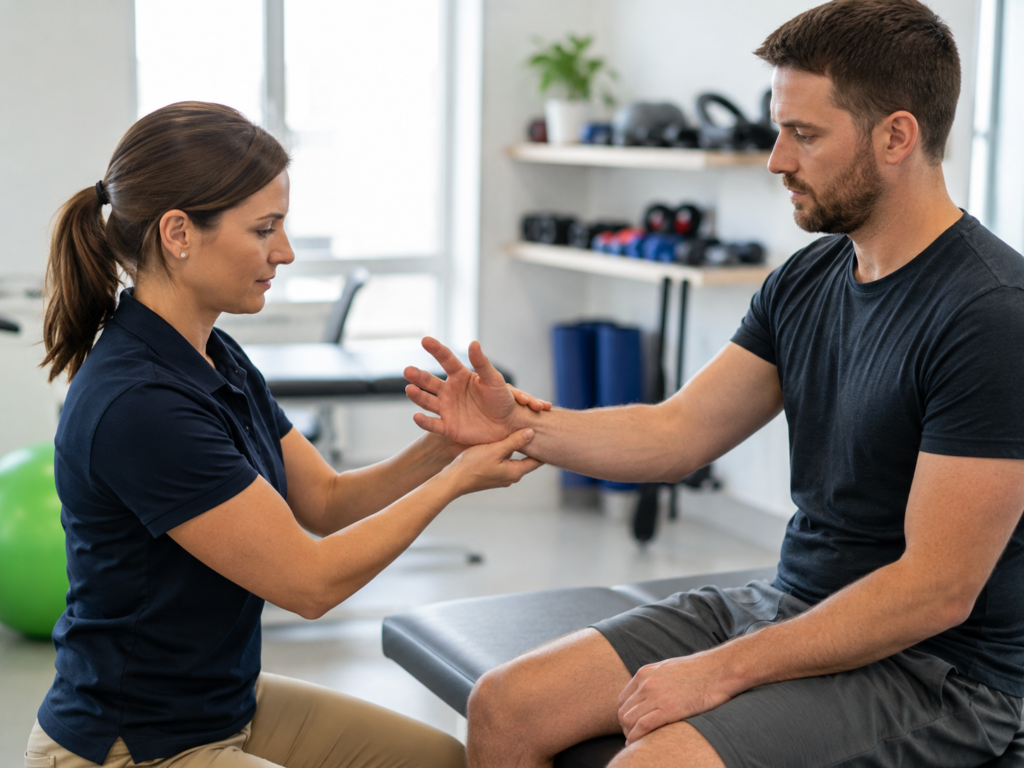
Your first appointment begins with a discussion about how the injury happened, when symptoms started, and which activities are currently difficult. Your therapist may ask about pain, swelling, numbness, tingling, previous fractures, surgery, work demands, sports, and daily activities. During the examination, finger and wrist movement may be assessed along with grip strength, hand coordination, sensation, swelling, and tenderness.
Certain injuries require special precautions. For example, repaired tendons and fractures may have specific movement restrictions from the surgeon. These findings help determine which exercises are safe and whether additional medical evaluation is needed.
Medical Imaging
X-rays are commonly used when a fracture or dislocation is suspected. MRI or ultrasound may be considered when a tendon, ligament, or other soft-tissue injury is difficult to identify. Nerve conduction studies may be used when numbness or weakness suggests nerve damage. The type of testing depends on the injury, symptoms, and findings during the physical examination.
Hand Injury Treatment
Hand injury treatment depends heavily on which tissue has been injured. A mild sprain may need protection followed by early movement and strengthening. A fracture may need a period in a cast or splint before more movement begins. Tendon and nerve repairs often require carefully controlled rehabilitation. Physical therapy may focus on restoring motion, strength, coordination, and normal use of the hand after the injured tissue is safe to load. The plan should progress gradually, so the hand becomes prepared for everyday activity without placing too much stress on healing structures.
Swelling Management
Swelling is common after hand injuries and can make the fingers stiff. Elevation may help during the early stages, especially when the hand is kept above heart level. MedlinePlus notes that elevation can help reduce swelling after some fractures. Gentle movement may also help when it is medically safe. Compression or other swelling-management techniques may be recommended depending on the injury. A sudden increase in swelling, numbness, tingling, or pain should be reported to a medical provider.
Restoring Finger Movement
Finger stiffness can develop quickly after injury or immobilization. Gentle bending and straightening exercises may begin once the injured tissue is stable enough. Movement should not be forced through sharp pain or against surgical restrictions. As healing progresses, the goal is to restore enough motion for gripping, releasing objects, and completing normal daily tasks.
Wrist and Hand Mobility
The wrist often becomes stiff when the hand has been protected in a cast or splint. Mobility exercises may include gentle wrist bending, straightening, and rotation when appropriate. A physical therapist may also use hands-on techniques to improve movement after a wrist fracture or other injury. The amount of movement allowed depends on the injury and stage of healing.
Grip Strengthening
Grip strength is often reduced after injury, surgery, or immobilization. Early strengthening may involve soft putty, a towel, light resistance, or carefully controlled gripping. As the hand improves, exercises can progress toward heavier objects, tools, sports equipment, and work tasks. Grip strengthening should begin only when the injured bones, tendons, and ligaments are ready for additional force.
Finger and Thumb Strengthening
The fingers and thumb need strength for pinching, writing, buttoning, carrying, and manipulating small objects. Exercises may involve elastic resistance, putty, clips, or other hand tools. The goal is not simply to squeeze as hard as possible. Good control and pain-free movement are more important early in rehabilitation. Resistance can increase as healing and strength improve.
Coordination and Fine Motor Training
Hand injuries may affect coordination even after basic strength returns. Tasks involving coins, buttons, keys, utensils, pens, tools, or small objects can help rebuild fine motor control. Rehabilitation may gradually reproduce the tasks required at work or home. Improving coordination is particularly important when nerve injuries or prolonged immobilization are involved.
Scar Management
Surgery or deep cuts can leave scar tissue that affects comfort and movement. Once the incision is fully healed and the medical provider approves, treatment may include scar massage, mobility exercises, and sensitivity work. The goal is to help the skin and underlying tissue move more freely. Scar management may be especially important after tendon repairs or surgical treatment of fractures.
Hands-On Treatment
Manual therapy may be used to improve mobility in stiff joints and surrounding tissues. Treatment can include gentle joint movement, soft-tissue techniques, or assisted stretching when medically appropriate. Hands-on care should not interfere with healing fractures, tendon repairs, or surgical restrictions. It works best when combined with active exercises that restore strength and function.
Splints and Braces
Splints may be used to protect a healing fracture, tendon, ligament, or joint. Some need to be worn nearly full time, while others are used only during certain activities or at night. The exact wearing schedule depends on the injury. A splint should not cause new numbness, severe pressure, skin changes, or increasing pain. Any of these symptoms should be reported.
Returning to Lifting
Lifting should return gradually after a hand injury. Early tasks may involve small, lightweight objects. As grip strength and confidence improve, weight can increase. The shape of an object matters too. A heavy item with a large handle may be easier to hold than a lighter object that requires a strong fingertip grip. Your rehabilitation plan can gradually reproduce the types of objects you need to lift at home or work.
Returning to Work
Work demands vary greatly. An office worker may need typing and mouse control, while a mechanic may need strong gripping and tool use. Healthcare workers may need lifting and patient handling. Hand injury treatment should prepare the hand for the actual demands of the job. Later rehabilitation may include repeated gripping, carrying, pushing, pulling, or tool use so returning to work feels more realistic.
Returning to Sports
Athletes may need strength, mobility, reaction time, and confidence before returning to play. Ball sports may require catching or gripping. Racquet sports require repeated hand and wrist control, while gymnastics or weight training may place body weight through the hands. Protective taping or bracing may be recommended for certain injuries. Full return should occur after the hand can tolerate the forces required by the sport without worsening symptoms.
Home Exercise Program
Your home exercise program may include finger movement, wrist mobility, grip exercises, coordination work, scar care, and activity guidance. The exercises should match the specific injury. Someone recovering from a tendon repair should not follow the same program as a person recovering from a mild sprain. As healing progresses, the program can become more challenging.
Rehabilitation After Hand Surgery
Surgery may be needed for displaced fractures, complete tendon tears, severe ligament injuries, nerve damage, or other serious conditions. Rehabilitation afterward depends on what was repaired. Early treatment may focus on protecting the surgical area while keeping safe joints moving. Later stages may include scar management, mobility, strengthening, grip work, and return to activity. Following the surgeon’s restrictions is especially important because starting certain exercises too soon may damage a repair.
Recovery Time
Recovery time depends on the structure injured and the severity of the damage. A mild sprain may improve within several weeks. Fractures often require a period of immobilization before strength and movement return. Some hand fractures need a cast, splint, or surgery. Tendon and nerve injuries may take significantly longer. Progress may include less swelling, easier finger movement, improved grip strength, better coordination, and greater confidence using the hand.
Preventing Long-Term Stiffness
Stiffness is one of the most common problems after a hand injury. Movement should begin as soon as it is medically safe, but not before the healing tissue is ready. Following the prescribed exercise plan can help reduce unnecessary stiffness while still protecting the injury. Continuing to use the fingers and wrist within approved limits may also help maintain function during recovery.
Medical Warning Signs
Seek prompt medical care when a hand injury causes visible deformity, severe swelling, an open wound, or an inability to move a finger or thumb normally. New numbness, tingling, or weakness may indicate nerve damage. Nerves can be injured by pressure, stretching, or cutting. A deep cut with loss of finger movement may indicate tendon damage and should be evaluated promptly. A cold, pale, blue, or severely numb hand may indicate a circulation problem and requires urgent care. Rapidly increasing swelling, severe pain, or symptoms that are not improving as expected should also be assessed.
Hand Injury Treatment in Maine
Reform Physical Therapy provides one-on-one hand injury treatment at our Maine clinic locations. We help patients recovering from fractures, sprains, tendon injuries, hand weakness, stiffness, sports injuries, work injuries, and surgery. Your hand injury treatment plan may include mobility exercises, strengthening, swelling management, scar care, hands-on treatment, activity guidance, and a gradual return to work or sports. The goal is not simply to decrease pain. Treatment also helps restore movement, strength, coordination, and confidence using the hand.
Schedule a Hand Injury Evaluation
A hand injury can make work, exercise, cooking, driving, dressing, and everyday tasks difficult. Because the hand contains many small structures, persistent pain or loss of movement deserves a proper evaluation. A one-on-one assessment can help determine which movements are safe, whether physical therapy is appropriate, and whether additional medical care is needed.