

Scoliosis
Personalized Care for Spinal Curvature, Back Pain, and Mobility Limitations
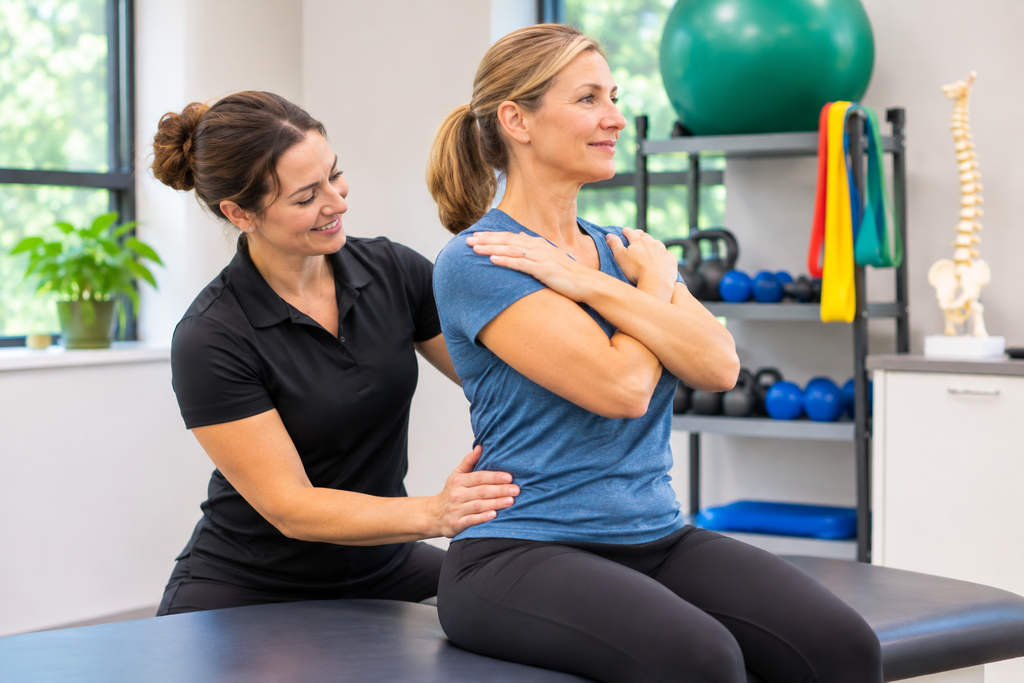
Living with scoliosis can affect more than the appearance of your spine. For some people, it means dealing with persistent back discomfort, muscle fatigue, stiffness, or difficulty finding a comfortable position throughout the day. Others may notice uneven shoulders, changes in posture, or limitations during activities they once enjoyed. Although scoliosis is commonly associated with children and teenagers, adults can also experience spinal curvature and related symptoms. At Reform Physical Therapy, we provide personalized scoliosis physical therapy to help individuals improve strength, mobility, movement tolerance, and everyday function.
Our licensed physical therapists focus on understanding how your spinal condition affects your life and developing a treatment plan that supports your individual goals. With seven convenient locations throughout Southern and Midcoast Maine, we’re here to help you move more comfortably and confidently.
What Is Scoliosis?
Scoliosis is a condition characterized by an abnormal sideways curvature of the spine, typically accompanied by rotation of the vertebrae. When viewed from behind, the spine may form a C-shaped or S-shaped curve rather than appearing relatively straight. A diagnosis of structural scoliosis is generally confirmed when spinal X-rays show a curvature measuring at least 10 degrees using the Cobb angle.
The condition may affect different areas of the spine, including:
- Thoracic spine: The upper and middle portion of the back
- Lumbar spine: The lower back
- Thoracolumbar spine: The area where the thoracic and lumbar regions meet
Some individuals develop a single spinal curve, while others have multiple curves. The severity, location, and progression of scoliosis vary from person to person. Importantly, scoliosis is not simply caused by poor posture. Structural scoliosis involves changes in spinal alignment that cannot necessarily be corrected by standing straighter. While physical therapy cannot guarantee that a structural spinal curve will straighten, rehabilitation can help address associated discomfort, weakness, stiffness, and movement limitations.
Types of Scoliosis
Understanding the type of scoliosis is important when determining the most appropriate treatment approach.
Idiopathic Scoliosis
Idiopathic scoliosis is the most common form, particularly among children and adolescents. The term idiopathic means that the exact cause is unknown. Adolescent idiopathic scoliosis often becomes noticeable during periods of rapid growth. Although many curves remain mild, some may progress as the spine develops. Medical monitoring is especially important for children and teenagers who are still growing.
Adult Degenerative Scoliosis
Adult degenerative scoliosis develops as age-related changes affect the spinal discs, joints, and surrounding structures. Uneven degeneration may gradually contribute to changes in spinal alignment. Some adults experience lower back pain, muscle fatigue, stiffness, or reduced walking tolerance. In certain cases, degenerative scoliosis occurs alongside spinal stenosis or nerve compression.
Congenital Scoliosis
Congenital scoliosis occurs when the vertebrae develop differently before birth. These structural changes may become more noticeable as a child grows. Treatment and monitoring depend on the characteristics of the curvature and recommendations from an appropriate medical specialist.
Neuromuscular Scoliosis
Neuromuscular scoliosis is associated with conditions that affect muscle control or the nervous system. Examples include certain forms of cerebral palsy and muscular dystrophy. Management depends on the underlying condition, the severity of the spinal curve, and the individual’s functional needs.
Common Signs and Symptoms of Scoliosis
Not everyone with scoliosis experiences pain or physical limitations. In fact, some people have mild spinal curves without realizing it. However, certain physical changes may suggest scoliosis.
Visible Signs
Common signs include:
- Uneven shoulder height
- One shoulder blade appearing more prominent
- Uneven hips or waistline
- A noticeable curve through the back
- One side of the rib cage appearing more prominent
- The body leaning or shifting toward one side
- Asymmetry when bending forward
These changes may become more noticeable as the curvature develops.
Physical Symptoms
Depending on the type and severity of scoliosis, symptoms may include:
- Persistent or recurring back pain
- Muscle tightness or fatigue
- Stiffness through the spine
- Reduced spinal mobility
- Discomfort during prolonged sitting or standing
- Difficulty walking longer distances
- Reduced tolerance for exercise
- Changes in balance or coordination
- Muscle weakness or reduced endurance
- Radiating leg symptoms when nerve structures are affected
Symptoms can vary considerably, and the size of a spinal curve does not always correspond directly with the amount of pain someone experiences. A thorough physical therapy evaluation can help identify which limitations may benefit from rehabilitation.
What Causes Scoliosis?
The causes of scoliosis depend on the type of spinal curvature. For idiopathic scoliosis, the exact cause remains unknown. Genetic and other biological factors are believed to contribute to its development.
Other forms may be associated with:
- Age-related spinal degeneration
- Abnormal vertebral development
- Neuromuscular conditions
- Certain connective tissue disorders
- Previous spinal injuries or surgery
- Changes in spinal structure over time
Contrary to common misconceptions, scoliosis is not generally caused by carrying a heavy backpack, sleeping incorrectly, or sitting with poor posture. Although daily habits may influence comfort and muscle fatigue, they do not typically explain the structural changes associated with scoliosis.
How Scoliosis Affects Movement and Everyday Activities
Your spine plays an important role in supporting your body, protecting the spinal cord, and allowing movement. When spinal alignment changes, the muscles and joints surrounding the spine may experience different physical demands.
Muscle Imbalances and Fatigue
Changes in spinal curvature can affect how muscles work to support the trunk. Some individuals experience increased muscle fatigue during activities that require prolonged standing or sitting.
Reduced Spinal Mobility
Certain movements may feel restricted or uncomfortable, particularly when stiffness develops in the spine or surrounding tissues.
Changes in Balance
Altered trunk alignment may influence balance and movement coordination. These challenges may become more noticeable in older adults or individuals with additional mobility limitations.
Difficulty With Daily Activities
Activities such as lifting, bending, walking, exercising, and completing household tasks may become more challenging when discomfort or reduced endurance is present.
Nerve-Related Symptoms
In some adults, scoliosis occurs alongside degenerative changes that narrow the spaces surrounding spinal nerves. This may contribute to radiating pain, numbness, tingling, or weakness. Physical therapy focuses on identifying how these changes affect your individual movement patterns and functional abilities.
Scoliosis in Adults vs. Adolescents
Although scoliosis can affect people of different ages, treatment considerations are not always the same.
Adolescent Scoliosis
Scoliosis identified during childhood or adolescence requires particular attention because spinal curves may progress during growth. Medical recommendations depend on the size of the curve, skeletal maturity, and risk of progression. Some individuals require observation, while others may benefit from bracing or specialist-directed treatment. Physical therapy may support strength, conditioning, movement awareness, and physical function. Specialized scoliosis-specific exercise programs may also be appropriate when provided by clinicians with the necessary training. However, general physical therapy should not replace prescribed bracing or medical monitoring.
Adult Scoliosis
Adults may have scoliosis that developed during adolescence or a new curvature associated with degenerative spinal changes. Treatment often focuses on managing symptoms and improving everyday function. For adults experiencing back pain, stiffness, weakness, or reduced mobility, physical therapy can be an important part of conservative care.
Scoliosis vs. Degenerative Disc Disease
Scoliosis and degenerative disc disease can both affect spinal health, particularly as people age. However, they describe different changes within the spine. Scoliosis involves an abnormal sideways curvature and rotation of the vertebrae. In comparison, degenerative disc disease refers to changes involving the discs that cushion the vertebrae. These conditions may occur together, particularly in adults with degenerative scoliosis. Uneven disc degeneration can contribute to changes in spinal alignment, while associated stiffness or discomfort may affect daily movement. Physical therapy may help improve strength, mobility, and activity tolerance when these conditions contribute to functional limitations.
Related Condition: Degenerative Disc Disease
Scoliosis vs. Spinal Stenosis
Although scoliosis and spinal stenosis are different conditions, they may produce overlapping symptoms. Spinal stenosis occurs when spaces within the spine become narrowed, potentially placing pressure on nearby nerves. Meanwhile, scoliosis involves changes in spinal curvature and alignment. In some adults, degenerative scoliosis may contribute to narrowing around spinal nerves. As a result, individuals may experience lower back discomfort, radiating leg pain, numbness, or difficulty walking longer distances. A comprehensive evaluation helps determine which factors are contributing to symptoms and whether additional medical assessment is necessary.
Scoliosis vs. Poor Posture
Uneven shoulders or changes in spinal alignment are sometimes attributed to poor posture. However, scoliosis involves structural changes that are different from everyday postural habits. Postural asymmetry may change when someone adjusts their position. Structural scoliosis generally includes vertebral rotation and a spinal curvature that cannot be completely corrected through conscious positioning. Although strengthening and movement training may improve comfort and functional positioning, physical therapy cannot reliably eliminate a structural spinal curve. The goal is to help patients move effectively and comfortably rather than pursue a perfectly straight posture.
How Is Scoliosis Diagnosed?
Scoliosis is generally diagnosed through a combination of medical history, physical examination, and imaging.
A healthcare professional may assess:
- Shoulder and pelvic alignment
- Spinal symmetry
- Trunk rotation
- Visible spinal curvature
- Movement limitations
- Neurological symptoms when present
The Adam’s forward bend test is commonly used to screen for spinal asymmetry. During this examination, the individual bends forward while the clinician observes the back for signs of rotational prominence. Standing spinal X-rays are typically used to confirm scoliosis and measure the degree of curvature. The Cobb angle helps healthcare professionals assess curve severity and monitor progression. When appropriate, your physical therapist may recommend additional medical evaluation to clarify symptoms or ensure that the condition is being monitored properly.
Can Physical Therapy Help Scoliosis?
Yes. Scoliosis physical therapy can help many individuals improve strength, mobility, endurance, and physical function. Although exercise cannot guarantee correction of a structural spinal curve, rehabilitation can address the movement limitations and symptoms that sometimes accompany scoliosis.
Physical therapy may help:
- Reduce associated back discomfort
- Improve spinal and hip mobility
- Strengthen supporting muscles
- Increase trunk endurance
- Improve balance and coordination
- Build tolerance for walking and standing
- Improve confidence during exercise
- Support participation in everyday activities
- Develop long-term symptom management strategies
Treatment should be individualized according to the patient’s age, symptoms, spinal characteristics, and functional goals. At Reform Physical Therapy, we focus on helping you move better and participate more comfortably in the activities that matter most.
How Reform Physical Therapy Treats Scoliosis
Our licensed physical therapists develop personalized treatment plans based on your medical history, movement limitations, and individual goals.
1. Comprehensive Physical Therapy Evaluation
Your therapist begins by understanding your symptoms, physical abilities, and daily activities. The evaluation may include spinal mobility, hip strength, trunk endurance, balance, walking mechanics, and functional movement. These findings help guide an individualized rehabilitation plan.
2. Core Strengthening
The muscles surrounding the abdomen and back help support the trunk during movement. Progressive strengthening may improve endurance and tolerance for everyday activities. Exercises are selected based on your comfort, abilities, and treatment goals.
3. Spinal Mobility Exercises
Some individuals with scoliosis experience stiffness or restricted movement. Gentle mobility exercises may help improve comfortable motion through the spine and surrounding areas. Your therapist will consider the characteristics of your curvature when recommending specific movements.
4. Hip and Lower Body Strengthening
Strong hips and legs contribute to efficient movement during walking, climbing stairs, lifting, and other daily tasks. Your treatment program may include progressive resistance exercises to improve lower-body strength and functional capacity.
5. Postural Awareness and Movement Training
Rather than focusing on achieving a perfectly straight spine, physical therapy helps you develop comfortable and efficient movement strategies. Treatment may include guidance for sitting, standing, lifting, and completing daily activities.
6. Manual Therapy
Hands-on techniques may help address associated muscle discomfort or movement restrictions. Manual therapy is generally used alongside exercise and education, not as a method of permanently correcting structural scoliosis.
7. Balance and Coordination Training
Changes in spinal alignment may influence balance or movement confidence for some individuals. When appropriate, rehabilitation may include controlled weight shifts, walking exercises, and functional balance activities.
8. Functional Rehabilitation
Treatment should prepare you for the activities you want and need to perform. Your therapist may incorporate exercises that simulate work responsibilities, household tasks, recreational activities, or fitness goals.
Exercises for Scoliosis
Exercise is often an important part of managing scoliosis-related symptoms. However, there is no single exercise routine that is appropriate for every individual or spinal curve. Depending on your needs, physical therapy may include the following.
Bird Dog Exercises
Bird dog exercises challenge trunk control and coordination while moving the arms and legs. Modifications can accommodate different strength and mobility levels.
Glute Bridges
Bridges strengthen the hips and surrounding muscles, supporting functional movements involving the pelvis and lower body.
Core Stabilization Exercises
Progressive abdominal and trunk exercises may help improve strength and endurance during daily activities.
Gentle Spinal Mobility
Controlled mobility exercises may help reduce stiffness and improve comfortable movement.
Resistance Training
Strengthening the upper body, lower body, and trunk can support overall physical capacity.
Walking and Aerobic Exercise
Appropriate cardiovascular activity can help maintain endurance and improve tolerance for everyday movement. Important: Exercises should be individualized, particularly for growing adolescents, individuals with significant spinal curves, or people experiencing nerve-related symptoms.
Can Scoliosis Be Corrected With Physical Therapy?
Physical therapy can help improve strength, movement, and function, but it does not reliably eliminate structural scoliosis.
Treatment recommendations depend on several factors, including:
- Age and skeletal maturity
- Degree of spinal curvature
- Risk of progression
- Associated symptoms
- Functional limitations
- Other medical conditions
For growing adolescents, specialized scoliosis-specific exercise programs may offer benefits in selected cases and are sometimes used alongside medical observation or bracing. Adults may benefit from rehabilitation focused on managing discomfort, improving physical conditioning, and maintaining mobility. More significant or progressive curves may require evaluation by an orthopedic or spine specialist.
How Long Does Scoliosis Physical Therapy Take?
The duration of treatment varies depending on the individual’s symptoms, physical abilities, and goals. Someone experiencing mild back discomfort may require a different approach than an adult managing longstanding scoliosis and reduced walking tolerance.
Factors that may influence rehabilitation include:
- Severity and duration of symptoms
- Strength and endurance
- Spinal and hip mobility
- Balance and coordination
- Associated spinal conditions
- Daily physical demands
- Response to treatment
- Consistency with an individualized exercise program
Some patients benefit from a shorter course of supervised rehabilitation followed by an independent home exercise program. Others may need a more gradual progression to improve strength, mobility, and activity tolerance. Your physical therapist will monitor your progress and adjust treatment as your needs change.
Living With Scoliosis: Tips for Everyday Movement
A scoliosis diagnosis does not mean you need to avoid exercise or give up activities you enjoy. Many individuals with scoliosis remain active and participate in recreational sports, strength training, walking, and other physical activities. Consider these strategies for managing everyday movement.
Stay Active
Regular physical activity supports strength, endurance, mobility, and overall health. Choose activities that feel manageable and gradually increase your participation.
Build Strength
Strengthening the trunk, hips, and lower body can help improve physical capacity and tolerance for daily tasks.
Change Positions Regularly
If prolonged sitting or standing causes discomfort, incorporate movement breaks throughout the day.
Avoid Unnecessary Movement Restrictions
Not every movement that feels unfamiliar or uncomfortable is harmful. Your physical therapist can help you understand which activities are appropriate for your condition.
Follow Medical Recommendations
Children and adolescents with scoliosis may require regular monitoring during growth. Adults experiencing progressive symptoms should also follow up with their healthcare provider when appropriate.
When Should You Seek Medical Attention?
Although many individuals with scoliosis experience minimal symptoms, certain changes warrant medical evaluation.
Contact a healthcare professional if you notice:
- Increasing spinal asymmetry
- Persistent or worsening back pain
- New radiating pain into the arms or legs
- Numbness or tingling
- Changes in walking ability
- Progressive muscle weakness
- Reduced physical function
- Concerns about spinal curvature in a growing child
Seek immediate medical attention for new bowel or bladder dysfunction, saddle numbness, or severe or rapidly worsening weakness. New breathing difficulties or other significant symptoms also require appropriate medical assessment.
Why Choose Reform Physical Therapy for Scoliosis?
At Reform Physical Therapy, we believe effective rehabilitation begins with understanding the person behind the diagnosis. Your symptoms, physical abilities, and goals deserve an individualized approach.
One-on-One Physical Therapy
Your appointments are focused on you, allowing time for personalized exercise instruction, movement assessment, and treatment.
The Same Physical Therapist Throughout Your Care
You’ll work with the same licensed physical therapist who understands your history, progress, and goals.
No Aides or Technicians
Your care is provided directly by a licensed physical therapist.
Personalized Treatment Plans
We develop rehabilitation programs around your individual needs rather than using a one-size-fits-all approach.
Independent, Locally Owned, and Woman-Owned
Reform Physical Therapy is proud to be an independent, woman-owned practice serving communities throughout Southern and Midcoast Maine.
Scoliosis Physical Therapy Near You in Maine
Reform Physical Therapy proudly serves patients at seven convenient locations:
Our team provides individualized rehabilitation for spinal conditions, back pain, mobility limitations, and other musculoskeletal concerns. Whether your goal is improving strength, managing discomfort, or returning to activities you enjoy, we’re here to help you move forward.
Take the Next Step Toward Better Movement
Living with scoliosis doesn’t mean you have to accept ongoing discomfort or limit the activities that matter most. With individualized rehabilitation, many people can improve strength, mobility, endurance, and confidence in their movement. At Reform Physical Therapy, our licensed physical therapists are committed to helping you understand your symptoms and develop a treatment plan that supports your goals.
Ready to move more comfortably?
Schedule Your Physical Therapy Evaluation at Reform Physical Therapy Today.
Seven Maine locations. Personalized, one-on-one care. The same physical therapist throughout your treatment.