

Postpartum Recovery
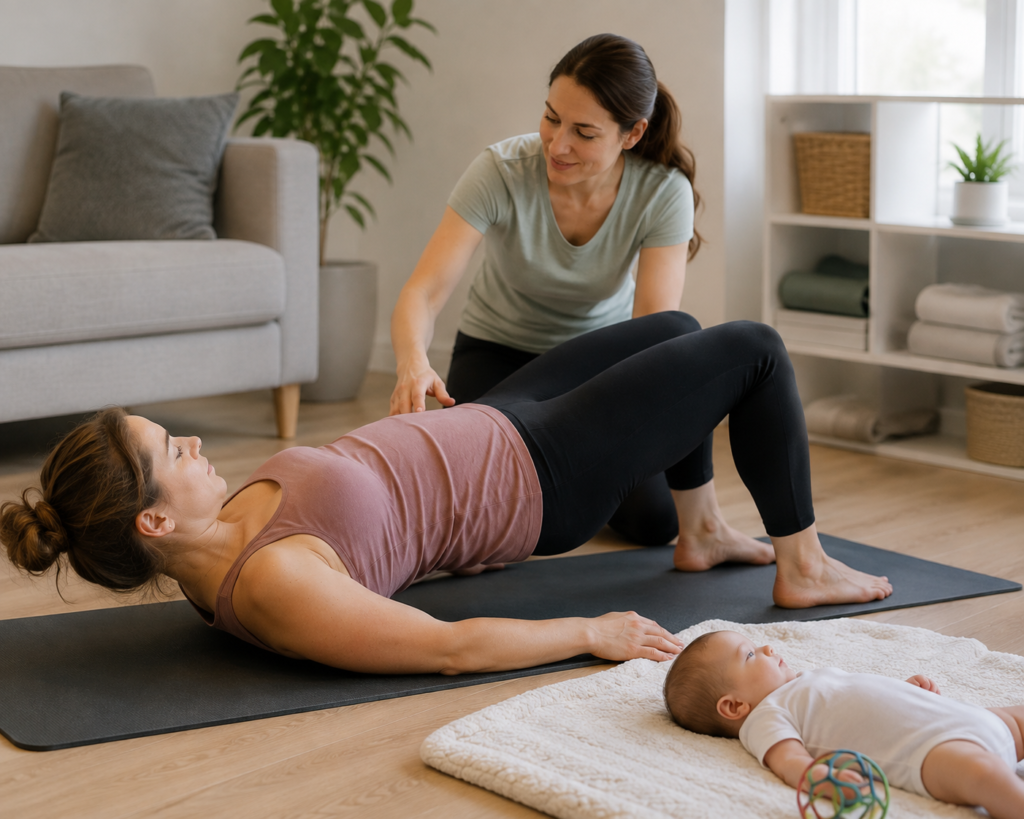
Postpartum recovery can look very different from one person to another. Pregnancy and birth place significant demands on the pelvic floor, abdominal muscles, hips, back, and surrounding tissues. After delivery, your body needs time to heal while also adjusting to feeding, lifting, carrying, walking, and caring for your baby.
At Reform Physical Therapy, postpartum recovery physical therapy is available through our pelvic health program at the South Portland clinic. Our goal is to help you understand what your body needs, rebuild strength gradually, address uncomfortable symptoms, and return to the activities that matter to you. Whether you delivered vaginally or by Cesarean birth, recovery is not about rushing back to your previous routine. Your treatment should reflect your delivery, symptoms, medical history, activity level, and personal goals.
Understanding Postpartum Recovery
The postpartum period brings major physical changes. Your abdominal wall has stretched during pregnancy. The pelvic floor has supported the increasing weight of the uterus and baby. Your hips, back, and posture have adapted to a changing center of gravity. After delivery, these areas do not immediately return to the way they felt before pregnancy. At the same time, daily life suddenly includes feeding positions, lifting your baby, carrying car seats, getting up throughout the night, and spending long periods sitting or holding your child. Postpartum recovery physical therapy can help your body gradually adapt to these new demands while addressing pain, weakness, leakage, pelvic pressure, or other symptoms.
Pelvic Floor Recovery After Birth
The pelvic floor is a group of muscles that supports the bladder, bowel, uterus, and other pelvic structures. Pregnancy alone places increased pressure on these muscles. Vaginal birth can create additional stretching and tissue changes, while Cesarean delivery still involves pregnancy related changes to the pelvic floor and core. Recovery does not always mean simply strengthening these muscles. Some patients have weakness, while others experience tightness, pain, or difficulty relaxing the pelvic floor.
A pelvic health physical therapist can evaluate how these muscles are functioning and determine whether your treatment should focus on strengthening, relaxation, coordination, or a combination.
Postpartum Core Recovery
Your abdominal muscles change significantly during pregnancy. After delivery, many people notice weakness through the abdomen or difficulty creating the same amount of support they had before pregnancy. Core recovery is not about immediately doing crunches or intense abdominal workouts. Instead, early treatment may focus on breathing, abdominal coordination, pressure management, and learning how to use the core during everyday movements. As healing progresses, exercises can gradually become more challenging. The goal is to rebuild strength that helps with lifting, carrying, exercising, working, and caring for your baby.
Diastasis Recti After Pregnancy
Diastasis recti describe separation and stretching of the connective tissue between the abdominal muscles. Some degree of separation is common during pregnancy because the abdominal wall must make room for the growing baby. After delivery, the abdominal wall may gradually recover. However, some people continue to notice weakness, doming, bulging, or difficulty controlling pressure through the abdomen. Physical therapy can assess more than the width of the separation. Your therapist may look at abdominal tension, coordination, breathing, strength, and how the abdominal wall responds during movement. Treatment can then focus on improving function rather than simply trying to close a gap.
Urinary Leakage After Pregnancy
Urinary leakage is common after pregnancy and birth, but common does not mean it should be ignored. Leakage may occur when coughing, sneezing, laughing, jumping, running, lifting, or exercising. Some patients notice symptoms immediately after delivery. Others only become aware of the problem when they return to higher impact exercise. Pelvic floor physical therapy can assess strength, coordination, breathing, and pressure management to determine what may be contributing to leakage. Reform’s South Portland pelvic health program specifically treats bladder dysfunction, including urinary leakage and urgency.
Pelvic Pressure and Heaviness
Some people notice a feeling of heaviness, pressure, or fullness in the pelvis after giving birth. Symptoms may increase after standing for a long period, walking, exercising, lifting, or reaching the end of a busy day. Pelvic pressure can have several causes and should be properly evaluated. Your physical therapist can assess pelvic floor function, strength, movement, and how your body manages pressure during daily activities. If symptoms suggest a condition requiring medical evaluation, your therapist can recommend that you speak with your obstetric or gynecologic provider.
Pelvic Pain After Delivery
Pelvic pain may develop around the pubic bone, tailbone, hips, lower abdomen, vagina, or deeper pelvic region. Pain can result from pregnancy related changes, tissue healing, muscle tension, tearing, prolonged labor positions, or other factors. Some patients experience pain while sitting, walking, exercising, using the bathroom, or having intercourse. A pelvic health evaluation can help determine which muscles and movements may be contributing to the symptoms. Reform’s South Portland pelvic health team provides individualized care for pelvic pain and postpartum recovery.
Back and Hip Pain After Pregnancy
Caring for a newborn creates new physical demands almost immediately. Feeding positions, carrying your baby, lifting a car seat, bending over a changing table, and getting up repeatedly during the night can all place stress on the back and hips. Pregnancy related weakness and changes in movement may still be present as well. Postpartum recovery physical therapy can address hip strength, back mobility, core control, lifting mechanics, and the positions you use during daily childcare. Small adjustments can make everyday activities much more comfortable.
Tailbone Pain After Birth
Tailbone pain can make sitting, feeding, driving, or getting up from a chair uncomfortable. Symptoms may begin after labor and delivery, particularly when the tailbone and surrounding tissues experience increased pressure. Treatment may include positioning changes, mobility work, pelvic floor treatment, and strategies for sitting more comfortably. Persistent or severe tailbone pain should be evaluated so your therapist can determine whether additional medical assessment is needed.
Recovery After a Vaginal Birth
Vaginal birth can affect the pelvic floor, perineal tissues, abdominal wall, and surrounding muscles. Recovery varies depending on labor length, pushing, tearing, assisted delivery, previous pregnancies, and other individual factors. Early postpartum care may focus on healing, comfortable movement, breathing, and gentle pelvic floor awareness. Later treatment can progress toward strengthening, lifting, walking farther, and returning to exercise. There is no single recovery timeline that works for everyone.
Recovery After a Cesarean Birth
A Cesarean birth involves abdominal surgery in addition to the physical changes caused by pregnancy. Early recovery requires protecting the surgical area while gradually returning to normal movement according to your medical provider’s guidance. Getting out of bed, standing from a chair, coughing, carrying your baby, and walking may feel uncomfortable at first. Physical therapy can later help address abdominal weakness, scar mobility, movement, posture, back discomfort, and the gradual return to exercise. Because surgical recovery varies, your physical therapist will work within any restrictions provided by your obstetric or surgical team.
Cesarean Scar Mobility
After a Cesarean incision has healed and your medical provider has cleared the area, scar mobility may become part of postpartum recovery. Some people notice pulling, tightness, numbness, sensitivity, or discomfort around the scar. A physical therapist may use education, gentle mobility techniques, and movement exercises to help the tissues move more comfortably. Scar work should only begin when the incision has healed appropriately.
Returning to Exercise After Pregnancy
Returning to exercise should happen gradually. ACOG states that activity can generally resume progressively once it is medically safe, depending on the type of delivery and whether medical or surgical complications occurred. Patients recovering from Cesarean birth or pregnancy complications should speak with their obstetric provider before increasing exercise.
Early exercise may include walking, gentle breathing exercises, pelvic floor coordination, and basic strengthening. Over time, your program may progress toward squats, lunges, resistance exercises, cardiovascular activity, running, jumping, or other activities that match your goals. The goal is not to return as quickly as possible. Instead, postpartum recovery should help you return with enough strength and control for the activity you want to perform.
Returning to Running
Running places greater demands on the pelvic floor, abdominal wall, hips, and legs than walking. Before returning to running, it can be helpful to rebuild basic strength and assess whether symptoms such as leakage, pelvic pressure, pain, or abdominal doming occur during lower impact activities. Your therapist can gradually progress strength, balance, single leg control, and impact exercises based on your abilities. If running causes worsening pelvic symptoms, that does not necessarily mean you can never run again. It may simply mean your body needs more preparation first.
Returning to Strength Training
Strength training can be an important part of postpartum recovery. Early exercises may use body weight or light resistance. As your body becomes stronger, the amount of weight can gradually increase. Breathing and pressure management may also be addressed during lifting. Your therapist can help you build toward squats, deadlifts, pushing, pulling, carrying, and other movements in a way that feels appropriate for your recovery.
Lifting and Carrying Your Baby
Postpartum life involves repeated lifting. You may lift your baby from a bassinet, crib, floor, car seat, stroller, or changing table many times each day. As your baby grows, these tasks become progressively more demanding. Physical therapy can help you practice lifting strategies that use the hips, legs, core, and upper body efficiently. The goal is not to make every movement perfect. Instead, treatment helps your body become strong enough to handle the movements you repeat every day.
Car Seats and Baby Gear
Car seats, strollers, diaper bags, and other baby equipment can be surprisingly heavy and awkward. Carrying these items on one side may increase strain through the hips, back, shoulders, and abdominal muscles. Your therapist can help you find more comfortable ways to lift and carry these items while gradually improving overall strength.
Feeding Positions and Posture
Breastfeeding, bottle feeding, and pumping often involve sitting in one position for extended periods. Neck, shoulder, and upper back pain may develop when you repeatedly look downward or hold your baby without enough support. Pillows, chair support, arm positioning, and regular position changes can help. Postpartum recovery may include upper back mobility and strengthening when feeding positions contribute to discomfort.
Bowel Symptoms After Pregnancy
Pelvic floor function also affects bowel movements. Some postpartum patients experience constipation, straining, urgency, or difficulty coordinating the pelvic floor. These symptoms can sometimes be influenced by pelvic floor tension, weakness, movement habits, hydration, medications, or other medical factors. Reform’s South Portland pelvic health program includes treatment for bowel dysfunction as part of pelvic floor care.
Pain With Intercourse After Birth
Pain with intercourse can occur after pregnancy and delivery. Scar tissue, pelvic floor muscle tension, hormonal changes, tissue sensitivity, and fear of pain may all contribute. A pelvic health physical therapist can assess muscle tension, mobility, scar tissue, and pelvic floor coordination when appropriate. Treatment should always respect your comfort and goals. Persistent pain should not be something you feel pressured to ignore.
Pelvic Floor Strengthening
Pelvic floor exercises can be helpful for some postpartum patients. However, more strengthening is not always the answer. A patient with tight or overactive muscles may need relaxation and coordination work before strengthening becomes appropriate. ACOG notes that pelvic floor exercises can be introduced during the postpartum period, but rehabilitation should still be individualized. Your therapist can help determine what your pelvic floor actually needs.
Breathing and Pressure Management
Breathing plays an important role in postpartum movement. The diaphragm, abdominal muscles, and pelvic floor work together when you lift, cough, stand, exercise, and complete normal daily tasks. Physical therapy may include breathing strategies that help these areas coordinate more effectively. This does not mean you have to think about breathing during every movement forever. Instead, early practice can help rebuild coordination until the movement begins to feel natural again.
Postpartum Physical Therapy Evaluation
Your first visit begins with a conversation about your pregnancy, delivery, symptoms, medical history, daily activities, and goals. Your therapist may ask about pain, leakage, bowel symptoms, pelvic pressure, exercise, abdominal weakness, and activities that currently feel difficult. Movement, strength, breathing, abdominal function, hips, back, and pelvic floor coordination may be assessed depending on your symptoms. Pelvic floor assessment is only performed when appropriate and with your consent. Reform’s South Portland pelvic health care is provided as individualized, one on one treatment.
Postpartum Recovery Treatment
Postpartum recovery treatment may include pelvic floor rehabilitation, abdominal strengthening, hip and back strengthening, mobility exercises, breathing work, scar treatment, activity modification, and hands on care. Your program will depend on your symptoms and goals. Someone who wants to return to running may need a different treatment plan than someone whose main concern is pelvic pain or urinary leakage. Exercises can gradually become more demanding as your body heals and becomes stronger.
Postpartum Recovery Is Not Just About Exercise
Recovery also includes learning how to manage the physical demands of your new routine. Sleep may be interrupted. Feeding can take hours each day. Your baby becomes heavier each week. Finding time for exercise may be difficult. A realistic postpartum treatment plan should fit into your life. Rather than giving you an overwhelming list of exercises, your therapist can focus on the movements and strategies that will have the greatest impact.
When to Begin Postpartum Physical Therapy
There is no single perfect time for every patient to begin postpartum physical therapy. Some gentle activity may begin relatively soon after an uncomplicated delivery when your medical provider says it is safe. More demanding exercise progresses later based on healing and the type of delivery.
If you had a Cesarean birth, significant tearing, complications, or another medical concern, your obstetric provider may recommend additional healing time or specific restrictions. You can also contact the South Portland clinic to discuss whether your symptoms and stage of recovery are appropriate for an evaluation.
Postpartum Warning Signs
Physical therapy does not replace postpartum medical care. Contact your obstetric or medical provider for symptoms such as heavy bleeding, fever, worsening incision problems, severe abdominal or pelvic pain, significant leg swelling, severe headaches, vision changes, chest pain, shortness of breath, or other new or concerning symptoms. Changes in mood, anxiety, or emotional health after delivery also deserve medical support. If you are unsure whether a symptom is related to normal recovery, contact your medical provider before assuming it is a physical therapy issue.
Postpartum Recovery in South Portland, Maine
Reform Physical Therapy provides postpartum recovery and pelvic floor physical therapy at our South Portland clinic. The South Portland clinic specifically offers care for postpartum recovery, pelvic pain, bladder and bowel dysfunction, and core and pelvic floor strengthening.
Mackenzie Foley, PT, DPT, is the Clinical Supervisor at the South Portland clinic and has advanced training in orthopedic and pelvic health rehabilitation, including postpartum recovery and core dysfunction. Your postpartum recovery plan can be built around your symptoms, delivery, activity level, and the things you want to return to. Our goal is to help you feel stronger, more comfortable, and more confident using your body again.
Schedule a Postpartum Recovery Evaluation
Your body went through months of change during pregnancy and another major physical event during delivery. Recovery deserves the same individualized attention. Whether you are experiencing leakage, pelvic pressure, pain, abdominal weakness, difficulty returning to exercise, or simply want guidance rebuilding strength, postpartum physical therapy may help.