


Cervical Radiculopathy

Have you ever experienced neck pain that travels into your shoulder, arm, or hand? Maybe you’ve noticed tingling in your fingers, an uncomfortable burning sensation down your arm, or weakness when gripping everyday objects. These symptoms can make even simple activities, such as working at a computer, driving, or sleeping comfortably, more challenging. One possible cause is cervical radiculopathy, a condition involving irritation or compression of a nerve root in the neck. Many people find that cervical radiculopathy physical therapy provides significant relief for these symptoms.
Although cervical radiculopathy can cause significant discomfort, many individuals improve with appropriate conservative treatment. At Reform Physical Therapy, we provide personalized cervical radiculopathy physical therapy to help patients address nerve-related symptoms, improve neck mobility, restore strength, and regain confidence with everyday movement. Our physical therapists take the time to understand your symptoms, evaluate how your neck and upper body move, and develop a treatment plan based on your individual needs. Whether you’re experiencing persistent neck discomfort, radiating arm pain, or difficulty completing daily activities, our team is here to help you understand your rehabilitation options.
What Is Cervical Radiculopathy?
Cervical radiculopathy occurs when a nerve root in the cervical spine becomes irritated or compressed. Your cervical spine consists of seven vertebrae located in your neck. These bones support your head, allow movement, and protect the spinal cord. Between most of the vertebrae sit intervertebral discs that help distribute pressure and allow your neck to move. Spinal nerve roots exit through small openings between the vertebrae before traveling into the shoulders, arms, and hands. When a cervical nerve root becomes irritated, symptoms may develop along the areas supplied by that nerve.
Depending on the nerve involved, you may experience neck discomfort, radiating arm pain, tingling, numbness, or muscle weakness. Some individuals experience noticeable neck pain, while others primarily feel symptoms in the shoulder, arm, or hand. Cervical radiculopathy is sometimes described as a pinched nerve in the neck, although not every case involves direct mechanical compression. Inflammation and nerve irritation can also contribute to symptoms.
What Are the Symptoms of Cervical Radiculopathy?
Cervical radiculopathy symptoms vary depending on which nerve root is affected and the severity of the irritation. Some people experience intermittent discomfort, while others notice persistent pain or changes in sensation.
Common symptoms may include:
- Neck pain or stiffness
- Pain extending into the shoulder or shoulder blade
- Sharp, shooting, or burning pain down the arm
- Tingling or pins-and-needles sensations
- Numbness in parts of the arm or hand
- Weakness in the shoulder, arm, or hand
- Difficulty gripping or holding objects
- Discomfort during certain neck movements
- Symptoms that worsen with prolonged sitting or particular positions
- Reduced tolerance for work, exercise, or everyday activities
Symptoms may affect one side of the body, although presentations vary. For example, someone may notice tingling in their fingers after working at a desk. Another person might experience discomfort extending from the neck into the shoulder and upper arm. The location of symptoms can help healthcare professionals identify which nerve root may be involved. However, similar complaints can result from shoulder conditions, peripheral nerve compression, or other medical problems. A thorough evaluation helps determine the likely source of your symptoms.
What Does Cervical Radiculopathy Feel Like?
People often describe cervical radiculopathy as more than ordinary neck soreness. Instead of remaining in one location, discomfort may travel along the shoulder, arm, or hand. Some individuals experience an electric-like sensation when turning their head. Others notice burning pain, numbness, tingling, or an unusual feeling in their fingers. Certain movements may temporarily increase symptoms, particularly when they place additional stress on an irritated nerve root. In some cases, resting the arm in a supported position or changing neck posture provides relief.
Symptoms can also fluctuate throughout the day. Because cervical radiculopathy affects nerve function, muscle weakness or changes in sensation may occur even when neck pain is relatively mild. New or progressive weakness, increasing hand clumsiness, or worsening balance requires prompt medical evaluation.
Which Cervical Nerves Can Cause Arm Pain?
Different cervical nerve roots contribute to sensation and muscle function in different areas of the upper body. Although symptoms don’t always follow an exact pattern, certain findings may help identify the affected nerve.
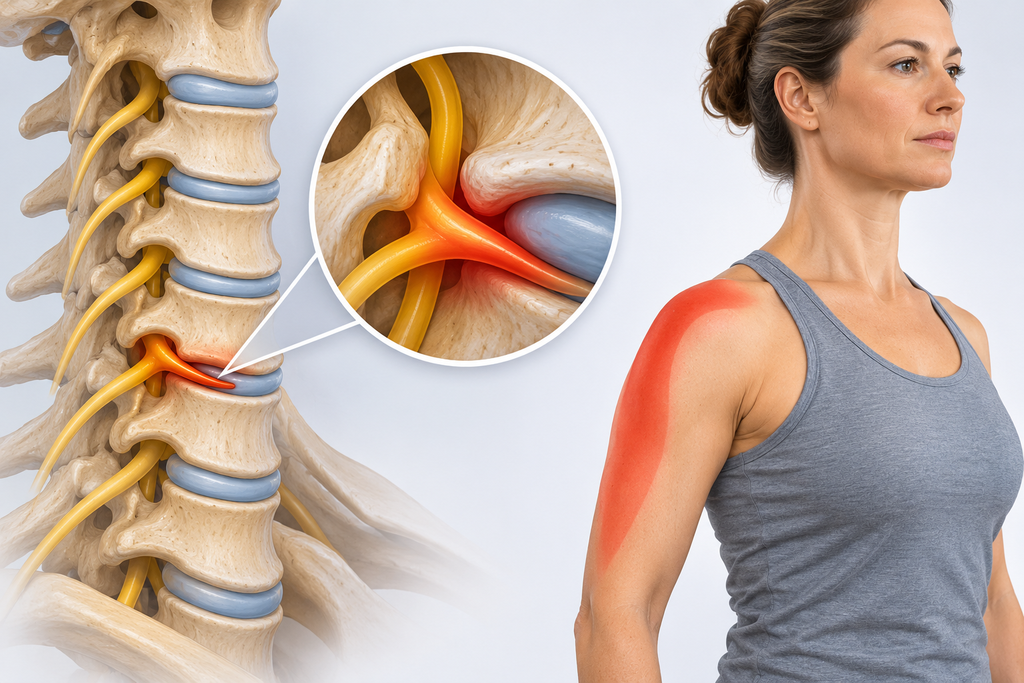
C5 Nerve Root
C5 nerve root irritation may contribute to discomfort around the neck, shoulder, and upper arm. Some individuals experience weakness when lifting their arm away from the body.
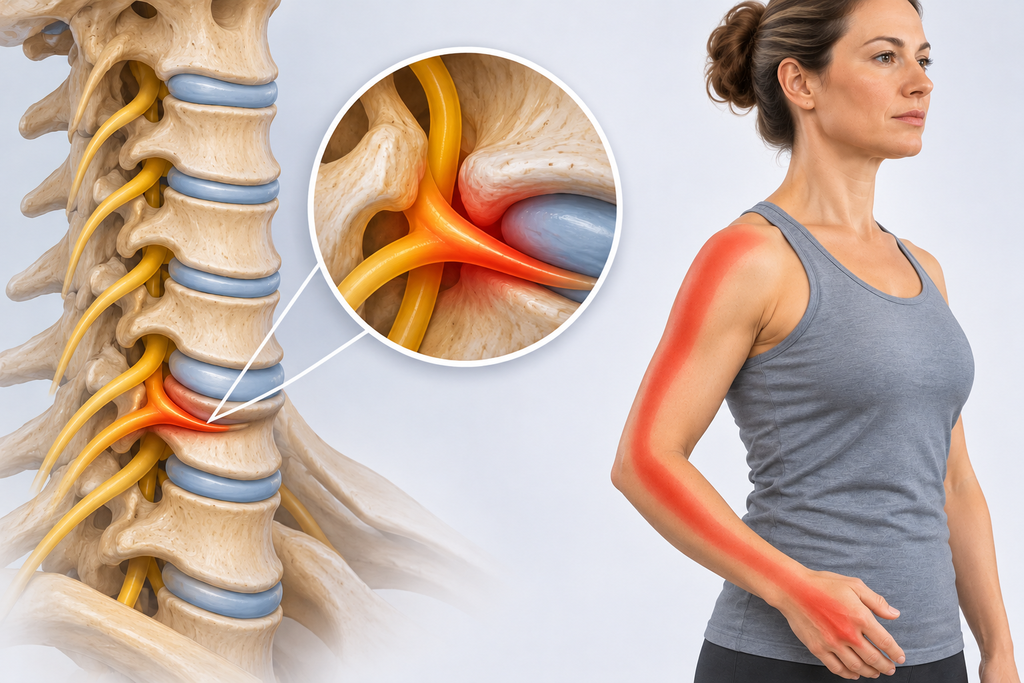
C6 Nerve Root
C6 involvement may cause symptoms extending toward the thumb side of the forearm and hand. Changes in sensation or weakness during certain elbow and wrist movements may also occur.
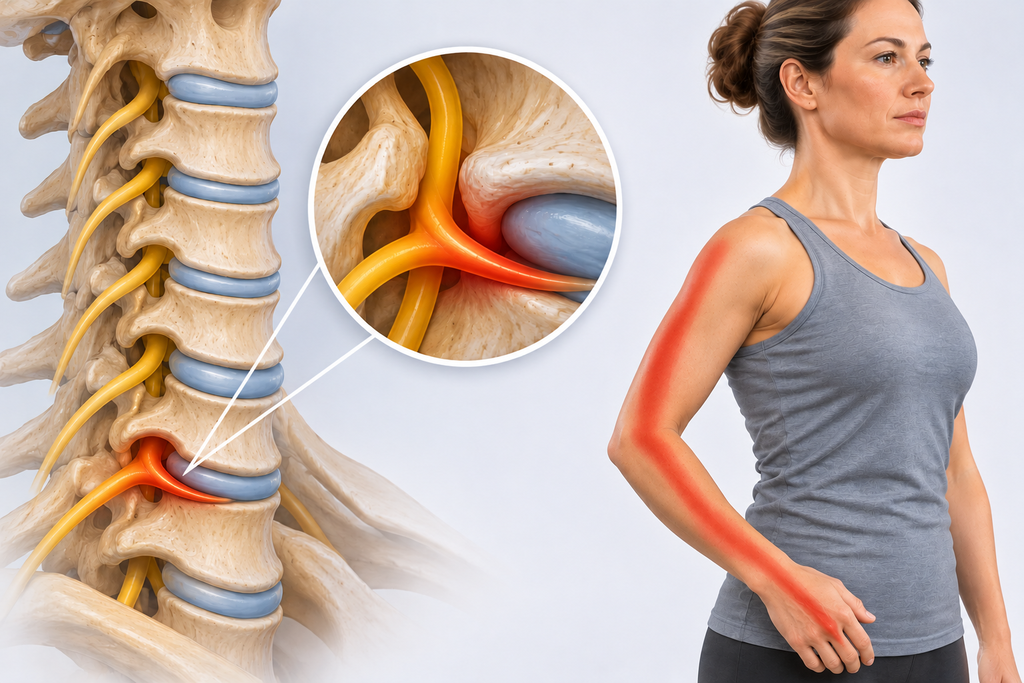
C7 Nerve Root
C7 radiculopathy may produce symptoms extending toward the middle finger. Depending on the severity, individuals may experience changes in triceps strength or other upper-extremity movements.
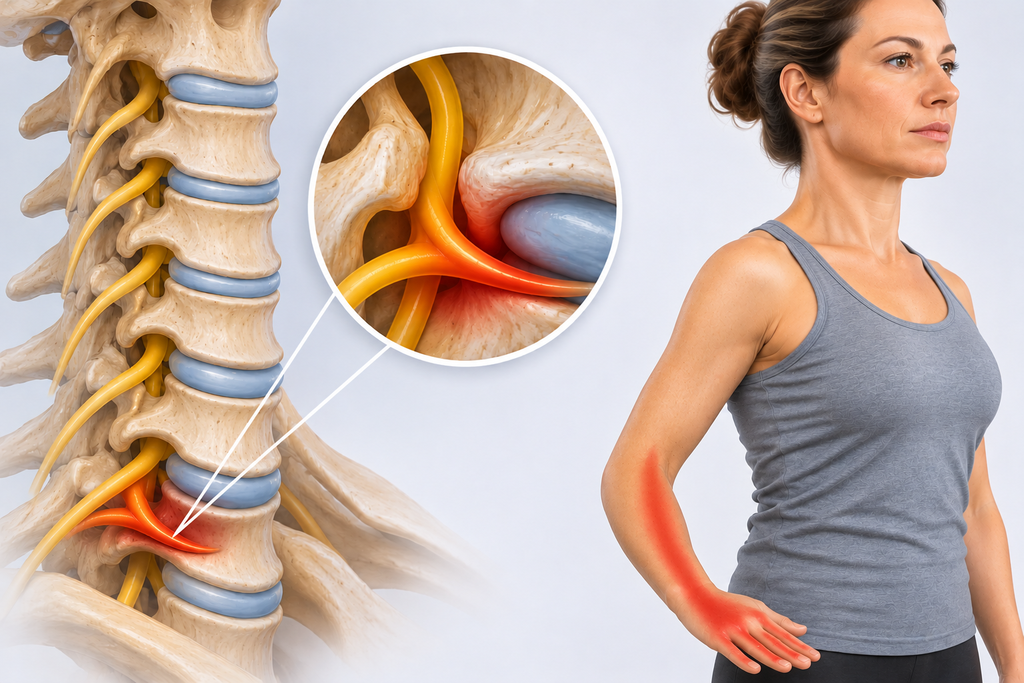
C8 Nerve Root
C8 nerve root irritation may affect sensation along portions of the forearm and the ring or little fingers. Some individuals also experience weakness involving certain hand and finger movements. These patterns provide general guidance rather than a definitive diagnosis. Your physical therapist will consider your symptoms, strength, sensation, reflexes, and other examination findings to determine whether cervical nerve root involvement is likely.
What Causes Cervical Radiculopathy?
Several conditions can contribute to irritation or compression of cervical nerve roots. The underlying cause may involve spinal discs, joints, or other structures surrounding the nerves.
Cervical Herniated Disc
A cervical herniated disc occurs when disc material extends beyond its normal boundaries. In some cases, this material irritates or compresses a nearby nerve root. Symptoms may include neck pain, radiating arm discomfort, numbness, tingling, or weakness.
Degenerative Disc Disease
Spinal discs naturally undergo structural changes as people age. These changes may include reduced disc height or altered disc structure. When degeneration occurs alongside narrowing around a nerve root, symptoms of cervical radiculopathy may develop. However, degenerative disc changes don’t always cause pain or nerve problems.
Cervical Foraminal Stenosis
The neural foramina are small openings where spinal nerve roots exit the spine. Cervical foraminal stenosis occurs when these openings become narrower. This narrowing may place pressure on a nearby nerve root and contribute to radiating arm symptoms.
Arthritis and Bone Spurs
Age-associated changes in cervical joints may contribute to the development of bone spurs. These bony changes can reduce available space around spinal nerve roots.
Injuries
Certain neck injuries may contribute to inflammation, disc changes, or nerve irritation. Symptoms following significant trauma require appropriate medical evaluation.
Other Contributing Factors
Medical history, anatomy, occupational demands, and individual movement tolerance may influence symptoms. However, cervical radiculopathy doesn’t always result from a specific activity or injury.
Can Poor Posture Cause Cervical Radiculopathy?
Posture may influence symptoms, but no single sitting or standing position causes every case of cervical radiculopathy. Some individuals notice increased discomfort after spending extended periods looking at a computer, reading, or using a phone. Prolonged positions can affect neck muscle activity and may aggravate existing symptoms. However, cervical radiculopathy typically involves irritation or compression of a spinal nerve root rather than simply having poor posture. Physical therapy may help you identify comfortable positions, improve movement tolerance, and incorporate regular activity breaks. Instead of trying to maintain one perfect posture throughout the day, your therapist may encourage comfortable movement and position changes.
Cervical Radiculopathy vs. a Pinched Nerve
Although cervical radiculopathy and a pinched nerve are closely related, the terms aren’t always interchangeable. Cervical radiculopathy specifically describes symptoms associated with irritation or compression of a spinal nerve root in the neck. In contrast, pinched nerve is a broader term that can describe nerve compression in different areas of the body. For example, carpal tunnel syndrome involves compression of the median nerve at the wrist rather than a cervical nerve root. Both conditions may cause numbness, tingling, or weakness in the hand.
A thorough physical therapy evaluation can help identify the source of your symptoms and determine an appropriate treatment approach. In contrast, pinched nerve is a broader term that can describe nerve compression in many locations throughout the body. For example, carpal tunnel syndrome involves compression of the median nerve at the wrist rather than a cervical nerve root. Both conditions may cause numbness, tingling, or weakness in the hand. A physical examination helps distinguish between these possible sources.
Cervical Radiculopathy vs. Cervical Myelopathy
Although both conditions involve the cervical spine, cervical radiculopathy and cervical myelopathy affect different neurological structures.
Cervical Radiculopathy
Cervical radiculopathy involves irritation or compression of a spinal nerve root. Symptoms commonly include radiating arm pain, numbness, tingling, or weakness. Many individuals improve with conservative treatment, including appropriate physical therapy.
Cervical Myelopathy
Cervical myelopathy occurs when the spinal cord becomes compressed or otherwise damaged.
Possible symptoms include:
- Difficulty with balance or walking
- Hand clumsiness
- Trouble buttoning clothing or handling small objects
- Progressive weakness
- Changes in coordination
- Numbness or altered sensation
- Bladder or bowel dysfunction in more advanced cases
Suspected cervical myelopathy requires prompt medical evaluation because spinal cord compression can cause lasting neurological impairment.
Physical therapy should not delay appropriate specialist assessment or necessary medical treatment.
Cervical Radiculopathy vs. Shoulder Pain
Cervical radiculopathy can sometimes feel similar to a shoulder injury. Both conditions may cause discomfort around the shoulder or upper arm. However, cervical radiculopathy often produces symptoms associated with nerve irritation, such as tingling, numbness, burning pain, or weakness extending farther down the arm. Certain shoulder conditions primarily cause pain during specific shoulder movements. Because symptoms can overlap, your physical therapist will evaluate both the neck and shoulder when appropriate. The goal is to identify relevant movement limitations and determine whether symptoms likely originate from the cervical spine, shoulder, or another structure.
Can Cervical Radiculopathy Get Better Without Surgery?
Many individuals with cervical radiculopathy improve through conservative treatment. Depending on the underlying cause, symptoms may gradually decrease over several weeks or months. Conservative management may include physical therapy, appropriate activity modifications, and medical treatment when necessary. Physical therapy focuses on improving mobility, strength, and function while helping patients manage symptoms.
However, recovery varies. Some individuals experience persistent symptoms or neurological changes that require additional medical evaluation. Progressive weakness, signs of spinal cord compression, or other concerning findings may change the recommended treatment approach.
How Can Physical Therapy Help Cervical Radiculopathy?
Cervical radiculopathy physical therapy focuses on improving comfortable movement, addressing functional limitations, and helping patients manage nerve-related symptoms. Your therapist will evaluate your neck, shoulders, upper back, and relevant neurological findings before developing a treatment plan.
Improving Neck Mobility
Neck pain and nerve irritation may make turning your head uncomfortable. Your therapist may introduce gentle mobility exercises that help restore comfortable movement. Exercise selection depends on your symptoms and response to different positions.
Addressing Radiating Arm Symptoms
Certain movements may increase or decrease nerve-related symptoms. Your physical therapist can assess these responses and select appropriate exercises. Treatment may help improve movement tolerance and reduce symptom-related limitations.
Strengthening Supporting Muscles
The muscles surrounding your neck, shoulders, and upper back contribute to movement and physical function. Targeted strengthening may help improve endurance and tolerance for daily activities.
Improving Upper-Body Function
Cervical radiculopathy may interfere with reaching, lifting, carrying, or working with your hands. Functional exercises can help address these limitations as symptoms improve.
Increasing Activity Tolerance
Persistent discomfort sometimes leads people to reduce physical activity. A progressive rehabilitation program may help you gradually rebuild strength and confidence.
Supporting Long-Term Symptom Management
Your therapist may provide education about activity modifications, exercise progression, comfortable positioning, and strategies for managing occasional symptom flare-ups. The goal is to help you participate in everyday activities with greater confidence.
Physical Therapy Treatments for Cervical Radiculopathy
At Reform Physical Therapy, treatment begins with an individualized evaluation. Your physical therapist considers your symptoms, medical history, neurological findings, and functional goals before recommending appropriate interventions.
Therapeutic Exercise
Therapeutic exercise often plays an important role in conservative cervical radiculopathy treatment. Your therapist may recommend gentle mobility exercises, strengthening, and progressive movement activities. Exercises should match your current abilities and avoid unnecessarily aggravating neurological symptoms.
Cervical Mobility Exercises
Controlled neck movements may help improve range of motion and movement tolerance. Your therapist will assess which movements are comfortable and appropriate. Certain positions may increase radiating symptoms, so exercise selection requires individual consideration.
Deep Neck Flexor Strengthening
The deep neck flexor muscles contribute to cervical movement control and endurance. When appropriate, your therapist may incorporate gentle exercises that strengthen these muscles. Treatment progression depends on your symptoms and physical abilities.
Scapular Strengthening
The muscles surrounding your shoulder blades support upper-body movement. Strengthening these muscles may help improve endurance during activities such as reaching, lifting, and working at a computer.
Thoracic Mobility Exercises
The thoracic spine forms the middle portion of your back. Improving mobility in this region may help support comfortable upper-body movement for certain patients. Your therapist may incorporate gentle thoracic exercises when appropriate.
Manual Therapy
Your physical therapist may use hands-on techniques to address associated muscle discomfort or joint mobility limitations. Manual therapy may provide short-term symptom relief for some individuals and typically complements an active exercise program.
Cervical Traction
In selected cases, a physical therapist may consider cervical traction as part of a treatment plan. Traction applies a controlled pulling force to the cervical spine and may provide symptom relief for some patients. However, traction isn’t appropriate for everyone, particularly individuals with certain forms of instability, spinal cord involvement, or other medical contraindications. Your therapist will determine whether this intervention is appropriate based on your examination findings.
Nerve-Mobility Exercises
Certain individuals may benefit from carefully selected nerve-gliding exercises. These movements aim to improve tolerance for nerve movement relative to surrounding tissues. Aggressive stretching or exercises that worsen neurological symptoms may aggravate an irritated nerve. Your therapist will determine whether nerve-mobility exercises belong in your rehabilitation program.
Neuromuscular Re-Education
Neuromuscular re-education focuses on improving movement control, coordination, and muscle activation. These exercises may help patients experiencing altered movement patterns or functional limitations.
Functional Movement Training
Functional exercises connect rehabilitation to everyday activities. Your therapist may incorporate reaching, lifting, carrying, and other movements based on your goals.
Patient Education and Home Exercises
Understanding your symptoms can help you make informed decisions about activity. Your therapist may discuss comfortable sleeping positions, workstation adjustments, exercise progression, and symptom-management strategies. A personalized home exercise program can help support consistency between appointments.
What Are the Best Exercises for Cervical Radiculopathy?
The best exercises depend on the underlying cause, neurological findings, and individual response to movement. No single exercise program works for everyone. Your physical therapist may recommend several types of activities.
Gentle Neck Range-of-Motion Exercises
Controlled cervical movements may help improve comfortable mobility. Depending on your symptoms, your therapist may recommend gentle rotations or other movements within a tolerable range.
Chin Tucks and Cervical Retraction
Certain individuals benefit from controlled cervical retraction exercises, sometimes called chin tucks. These movements may help improve neck muscle control or movement tolerance. However, cervical retraction can aggravate symptoms in some patients, so it shouldn’t be prescribed automatically.
Shoulder Blade Exercises
Scapular strengthening may help improve upper-body endurance and movement control. Exercises might include resistance-band rows or other controlled movements when appropriate.
Thoracic Mobility
Gentle upper-back movements may support comfortable neck and shoulder function. Your therapist will determine which exercises are suitable for your symptoms.
Upper-Body Strengthening
Progressive strengthening may help restore physical capacity as symptoms improve. Exercises can target the shoulders, arms, and surrounding muscles based on your functional goals.
Nerve Gliding
Certain nerve-mobility exercises may help selected patients manage nerve sensitivity. However, these exercises require careful selection and progression.
Avoid forcing movements that increase radiating arm pain, numbness, tingling, or weakness. New or worsening neurological symptoms require appropriate medical assessment.
Is Stretching Good for Cervical Radiculopathy?
Stretching may help address associated muscle tightness, but it doesn’t always relieve cervical nerve root irritation. In some cases, aggressive stretching can increase discomfort or aggravate neurological symptoms. For example, certain neck stretches may place additional tension on sensitive nerve structures. Your physical therapist can help distinguish between muscle-related restrictions and nerve-related symptoms. When appropriate, treatment may emphasize gentle mobility, strengthening, or movement modifications rather than prolonged stretching. The goal is to improve comfortable movement without unnecessarily aggravating symptoms.
Can Cervical Radiculopathy Cause Headaches?
Cervical radiculopathy primarily affects spinal nerve roots that contribute to sensation and muscle function in the upper body. However, neck pain and certain cervical conditions may occur alongside headaches. Not every headache associated with neck discomfort results from cervical radiculopathy. Headaches can have many causes, including muscle-related pain, migraine, and other medical conditions. Your physical therapist can evaluate relevant neck mobility and muscle function while considering whether additional medical assessment is appropriate. Sudden, unusually severe headaches or headaches accompanied by new neurological symptoms require emergency medical evaluation.
How Should You Sleep With Cervical Radiculopathy?
Cervical radiculopathy symptoms can interfere with sleep, particularly when certain positions increase arm discomfort. The most comfortable sleeping position varies among individuals. Some people benefit from using a pillow that supports the neck in a comfortable position. Others find relief by supporting the affected arm with an additional pillow.
Sleeping on Your Back
Back sleeping may feel comfortable when a pillow provides appropriate neck support. Some individuals also benefit from placing a pillow beneath their arms.
Sleeping on Your Side
Side sleeping may be comfortable when your pillow helps keep your neck in a supported position. Avoiding prolonged pressure on a symptomatic arm may also help.
Sleeping on Your Stomach
Stomach sleeping often requires sustained neck rotation, which may aggravate symptoms in some individuals. However, comfort varies, and no single position works best for everyone. Your therapist can help you explore positioning strategies that match your symptoms.
Cervical Radiculopathy and Working at a Computer
Long periods of computer work may aggravate symptoms for some individuals with cervical radiculopathy. Sitting in one position for extended periods can increase discomfort or reduce movement tolerance.
Your physical therapist may recommend practical adjustments such as:
- Changing positions regularly
- Taking brief movement breaks
- Adjusting monitor height for comfort
- Keeping frequently used items within easy reach
- Supporting your arms when appropriate
- Alternating between sitting and standing when tolerated
- Performing appropriate mobility exercises during the day
Rather than trying to maintain one rigid posture, the goal is to find comfortable working positions and incorporate regular movement. Your therapist can help identify adjustments that fit your daily routine.
Can Cervical Radiculopathy Cause Hand Weakness?
Yes. Cervical nerve roots contribute to muscle function in the arms and hands. When irritation or compression affects motor nerve function, weakness may develop. Some individuals notice difficulty gripping objects, extending the wrist, or performing certain finger movements. However, hand weakness can also result from peripheral nerve entrapment, neurological conditions, or other medical problems.
New or progressive hand weakness requires prompt medical evaluation.
If weakness occurs alongside hand clumsiness, balance changes, or walking difficulties, healthcare professionals must also consider possible cervical spinal cord involvement. Physical therapy may help address appropriate strengthening needs, but rehabilitation shouldn’t delay necessary neurological assessment.
How Long Does Cervical Radiculopathy Take to Heal?
Recovery varies depending on the underlying cause, symptom severity, neurological findings, and overall health. Some individuals notice improvement within several weeks. Others experience symptoms for several months or require additional medical treatment. Many patients with uncomplicated cervical radiculopathy improve through conservative management. However, significant nerve compression or progressive neurological deficits may require further evaluation. Your physical therapist will monitor your response to treatment and adjust your rehabilitation program as appropriate. Rather than focusing only on a specific recovery timeline, treatment emphasizes improving movement, strength, and everyday function.
Does Cervical Radiculopathy Require Surgery?
Most individuals with uncomplicated cervical radiculopathy do not require surgery. Conservative treatment may include physical therapy, appropriate activity modifications, and medical management. However, surgery may become an option when symptoms remain significantly disabling despite appropriate treatment or when neurological function deteriorates. Certain cases involving progressive weakness, significant nerve compression, or spinal cord involvement require specialist evaluation. Your healthcare provider can help determine whether additional imaging, medication, injections, or surgical treatment is appropriate.
Physical Therapy After Cervical Spine Surgery
Some individuals undergo surgery to address significant cervical nerve compression. Depending on the underlying condition, procedures may include cervical decompression, disc replacement, or spinal fusion. After surgery, physical therapy may help patients gradually restore strength, mobility, and functional independence.
Rehabilitation may include:
- Gentle mobility exercises when permitted
- Shoulder and upper-body strengthening
- Functional movement training
- Postural endurance exercises
- Walking and general conditioning
- Education about activity progression
- Return-to-work planning
- Guidance regarding surgical precautions
Your rehabilitation timeline will depend on the procedure and your surgeon’s recommendations. Physical therapists follow applicable post-surgical precautions and adjust treatment as recovery progresses.
When Should You Seek Medical Attention for Cervical Radiculopathy?
Many individuals improve with conservative treatment, but certain neurological symptoms require urgent assessment.
Seek emergency medical care if you experience:
- Sudden or rapidly worsening arm or leg weakness
- Severe new difficulty walking
- New loss of bladder or bowel control
- Sudden facial drooping or difficulty speaking
- New one-sided weakness or other stroke-like symptoms
- Severe neck pain following significant trauma
Additionally, new hand clumsiness, worsening balance, increasing weakness, or changes in walking coordination may indicate cervical spinal cord involvement. These symptoms warrant prompt medical evaluation. Persistent numbness, tingling, or radiating arm pain should also receive appropriate assessment, particularly when symptoms continue to worsen. Physical therapy should never delay necessary emergency or specialist care.
What to Expect During Your First Cervical Radiculopathy Physical Therapy Appointment
Your first appointment at Reform Physical Therapy begins with a conversation about your symptoms, medical history, and rehabilitation goals. Your therapist may ask when your discomfort began, whether symptoms extend into your arm or hand, and which movements or positions make them better or worse. If you’ve received imaging or a medical diagnosis, your provider can consider those findings alongside your physical examination.
Depending on your symptoms, the evaluation may include:
- Cervical range of motion
- Shoulder and upper-back mobility
- Upper-extremity muscle strength
- Sensation and reflex testing when appropriate
- Relevant neurological screening
- Functional movement patterns
- Posture and movement tolerance
- Activities that reproduce or relieve symptoms
- Balance or coordination screening when indicated
- Assessment of work-related or recreational limitations
Your physical therapist will use these findings to determine whether rehabilitation is appropriate and develop an individualized treatment plan. Some patients begin with gentle mobility exercises, while others may benefit from strengthening or movement modifications. As your symptoms and abilities change, your therapist will adjust the program to support continued progress. When examination findings suggest a condition requiring additional medical evaluation, your therapist can recommend appropriate follow-up.
Why Choose Reform Physical Therapy for Cervical Radiculopathy?
Neck pain and radiating arm symptoms can affect your work, sleep, exercise routine, and everyday responsibilities. At Reform Physical Therapy, we understand that your symptoms involve more than a diagnosis. Our approach focuses on personalized treatment, meaningful goals, and helping you improve your ability to move with confidence.
Personalized, One-on-One Physical Therapy
Reform Physical Therapy is an independent, locally owned, woman-owned practice that prioritizes individualized care. Our patients receive one-on-one treatment with a licensed physical therapist rather than relying on aides or technicians. Your therapist takes the time to understand your symptoms, evaluate your movement, and develop a rehabilitation plan tailored to your needs.
The Same Therapist Throughout Your Care
Consistency is especially important when monitoring nerve-related symptoms. At Reform Physical Therapy, you’ll work with the same therapist throughout your rehabilitation. Your provider can track changes in strength, sensation, and movement tolerance while adjusting your treatment plan as needed.
Rehabilitation Focused on Real-Life Goals
Your treatment should reflect the activities that matter most to you. Maybe you want to work comfortably at your computer, sleep without frequent discomfort, return to the gym, or complete household activities without persistent arm symptoms. Our physical therapists focus on helping you work toward meaningful improvements in your daily life.
Seven Convenient Maine Locations
Reform Physical Therapy proudly serves patients throughout Southern and Midcoast Maine with seven clinic locations:
- Topsham
- Brunswick
- Freeport
- Yarmouth
- South Portland
- Kennebunk
- Eliot
Contact your preferred clinic to discuss your symptoms and available physical therapy services.
Take the Next Step Toward Better Neck and Arm Mobility
Cervical radiculopathy can cause uncomfortable symptoms that interfere with work, sleep, exercise, and everyday movement. Although recovery depends on the underlying cause, many individuals benefit from conservative rehabilitation focused on improving mobility, strength, and function. At Reform Physical Therapy, our team provides personalized treatment designed around your symptoms and rehabilitation goals. Whether you’re experiencing neck discomfort, radiating arm pain, tingling, or movement limitations associated with cervical nerve irritation, we’re here to help you explore your options.