

Post-Surgical Rehabilitation
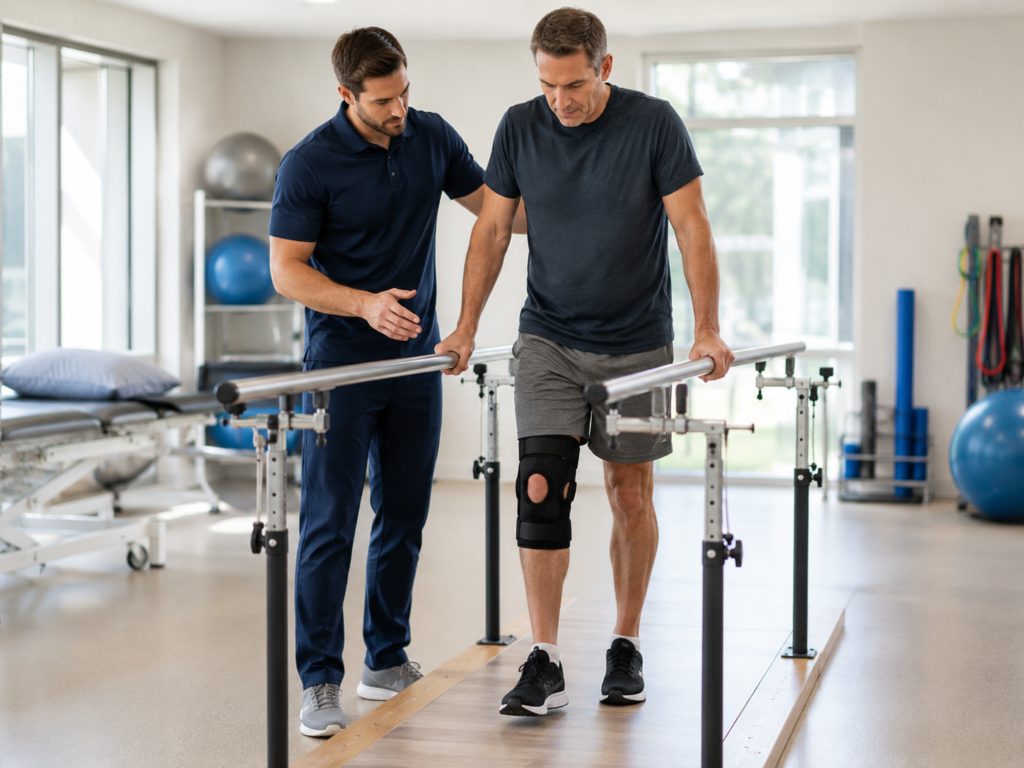
Surgery can repair damaged tissue, replace a worn joint, stabilize an injured area, or relieve pressure on a nerve. Even when the procedure goes well, the body still needs time to heal and relearn how to move. Muscles may be weak, joints may feel stiff, and daily activities may feel harder than expected during the early stages of recovery.
Post-surgical physical therapy helps guide that process. Treatment is built around the exact procedure you had, your surgeon’s instructions, your current ability, and the activities you want to return to. Early treatment may focus on swelling, pain, safe movement, and basic tasks such as walking or getting dressed. Later care may focus on strength, balance, endurance, work duties, exercise, and sports.
At Reform Physical Therapy, each patient receives one-on-one post-surgical rehabilitation. Your physical therapist will monitor your progress, protect the healing area, and adjust your plan as your body becomes ready for more movement and resistance.
What Is Post-Surgical Physical Therapy?
Post-surgical physical therapy is a guided recovery program used after surgery involving the muscles, bones, joints, tendons, ligaments, or spine. The goal is to help the repaired area heal while also reducing the loss of motion, strength, and function that often happens after surgery.
The recovery plan must match the procedure. A knee replacement does not follow the same timeline as an ACL reconstruction. A rotator cuff repair must be protected differently from a shoulder replacement. Even two patients who had the same surgery may receive different instructions based on the condition of the tissue, the type of repair, age, overall health, and whether more than one procedure was completed. Your surgeon may provide a protocol that explains when certain movements and exercises are allowed. Your physical therapist uses this information to guide each phase of treatment.
The plan may address:
- How much weight you may place on the area
- How long you need a brace, sling, boot, walker, or crutches
- Which movements are safe
- Which movements must be limited
- When strengthening can begin
- When resistance can be increased
- When you may return to driving
- When work tasks may resume
- When running, lifting, or sports may begin
- Which symptoms should be reported to the surgeon
Physical therapy should not rush healing. Progress is based on tissue healing, symptoms, motion, strength, and your surgeon’s guidance.
Why Physical Therapy Matters After Surgery
Surgery may correct the damaged structure, but it does not automatically restore movement, strength, or confidence. Pain before surgery may have caused you to favor one side, avoid certain movements, or lose muscle strength. A period of rest, bracing, or limited weight-bearing after surgery may create even more weakness and stiffness.
Without a clear plan, some patients become afraid to move, while others do too much too soon. Both can slow recovery. Physical therapy provides a safer middle ground by helping you move enough to make progress without placing unnecessary stress on the healing area.
Post-surgical rehabilitation may help:
- Reduce swelling
- Improve pain control
- Restore joint motion
- Rebuild muscle strength
- Prevent severe stiffness
- Improve balance
- Restore normal walking
- Improve arm or leg control
- Use a sling, brace, cane, walker, or crutches safely
- Return to stairs and household tasks
- Return to work
- Prepare for exercise or sports
- Build trust in the repaired area
- Correct movement habits that developed before surgery
The goal is not only to complete exercises in the clinic. It is to help you safely return to the tasks and activities that matter in your daily life.
The Stages of Post-Surgical Recovery
Recovery usually happens in phases. The exact timeline depends on the procedure, but many rehabilitation plans follow a similar pattern.
Early Protection and Healing
The first stage focuses on protecting the surgical area while reducing swelling and helping you move safely. Some patients may begin physical therapy within days of surgery. Others may need to wait longer before certain movements are allowed. During this stage, you may still use a sling, brace, boot, walker, cane, or crutches. Your therapist will make sure the equipment fits correctly and teach you how to use it safely.
Treatment may include:
- Swelling control
- Gentle movement within allowed limits
- Safe bed mobility
- Chair and toilet transfers
- Walking with an assistive device
- Brace or sling education
- Basic muscle activation
- Positioning and sleeping advice
- Home safety
- A simple exercise plan
This phase can feel slow, but it is important. Small goals such as fully straightening the knee, activating a weak muscle, or walking safely can have a major effect on later recovery.
Restoring Motion
Stiffness is common after surgery. It may be caused by swelling, pain, scar tissue, joint changes, or time spent in a brace or sling. During this phase, your therapist may help you gradually improve motion without placing too much stress on the healing tissue. Some movements may be done by the therapist. Others may be assisted with your opposite arm, a strap, or another tool.
Treatment may include:
- Guided range-of-motion exercises
- Gentle stretching
- Joint mobility work
- Scar care after the incision heals
- Muscle activation
- Posture training
- Walking practice
- Movement education
Restoring motion does not mean forcing the joint. The therapist will watch how your body responds and adjust the amount of movement based on pain, swelling, and the surgeon’s limits.
Rebuilding Strength and Control
Once the healing area can tolerate more force, strengthening becomes a larger part of treatment. Muscles may be weak from pain, surgery, swelling, or limited use. Strengthening starts at a level your body can manage. The goal is to rebuild control before adding heavy resistance.
Exercises may include:
- Muscle-setting exercises
- Resistance bands
- Body-weight movements
- Light weights
- Exercise machines
- Core strengthening
- Balance activities
- Step training
- Lifting practice
- Work-related movement
Your therapist may also focus on the muscles above and below the surgical area. For example, hip strength may be important after knee surgery, and shoulder blade control may be important after shoulder surgery.
Returning to Work, Exercise, and Sports
The final stage focuses on the highest-level activities you want to regain. Daily movement may feel comfortable before the body is ready for running, heavy lifting, repeated overhead work, or competitive sports.
This phase may include:
- Running
- Jumping and landing
- Agility drills
- Throwing
- Heavy lifting
- Repeated overhead activity
- Job-specific tasks
- Sport-specific drills
- Endurance training
- Return-to-work testing
- Return-to-sport testing
Returning to activity should not be based only on how many weeks have passed. Strength, motion, balance, movement quality, pain, swelling, endurance, and confidence should also be considered.
Post-Surgical Conditions We Treat
ACL Reconstruction
The anterior cruciate ligament, or ACL, is one of the main ligaments that helps stabilize the knee. It is especially important during running, jumping, pivoting, cutting, and quick changes in direction. ACL reconstruction uses a graft to replace the torn ligament. The graft may come from the patient’s own tissue or from donor tissue. In some cases, the surgeon may also repair the meniscus or other structures during the same procedure. This can change the recovery timeline.
Early ACL rehabilitation often focuses on reducing swelling, restoring knee motion, and helping the quadriceps muscle work again. The knee may feel weak, stiff, or unstable at first. Some patients have difficulty fully straightening the knee, which can affect walking.
Early goals may include:
- Reducing swelling
- Restoring full knee straightening
- Improving knee bending
- Activating the quadriceps
- Walking safely
- Using a brace or crutches
- Improving confidence with weight-bearing
As healing continues, treatment becomes more active. Strengthening may focus on the hips, thighs, calves, and core. Balance and single-leg control are also important because the knee must manage force during running, landing, and direction changes.
Later treatment may include:
- Squats
- Step-ups
- Single-leg strength
- Balance training
- Running preparation
- Jumping and landing
- Agility drills
- Cutting and direction changes
- Sport-specific exercises
- Return-to-sport testing
Returning to sports too early can place the graft at risk. A patient may feel good during daily activity but still lack the strength and control needed for fast, unpredictable movement.
Total Knee Replacement
A total knee replacement removes damaged joint surfaces and replaces them with artificial parts. It is often performed when arthritis or joint damage causes severe pain, stiffness, and loss of function. After surgery, the knee may be swollen, painful, and difficult to bend or straighten. The thigh muscles often feel weak, and walking may require a walker or cane.
Early physical therapy focuses on restoring enough motion and strength for basic daily tasks. Fully straightening the knee is especially important for walking. Improving bending helps with sitting, stairs, and getting in and out of a vehicle.
Early treatment may include:
- Swelling control
- Knee-straightening exercises
- Knee-bending exercises
- Quadriceps activation
- Walking with a walker or cane
- Chair transfers
- Stair training
- Home exercises
As the knee becomes stronger and less swollen, treatment may progress to more demanding activities.
Later treatment may include:
- Progressive leg strengthening
- Sit-to-stand practice
- Step-ups
- Balance exercises
- Stationary cycling
- Walking longer distances
- Household tasks
- Work preparation
- Low-impact exercise
Recovery varies. Some patients regain motion quickly, while others need more time because of swelling, stiffness, weakness before surgery, or other health concerns. The American Academy of Orthopaedic Surgeons also offers a helpful guide to exercises and activity after knee replacement.
Total Hip Replacement
A total hip replacement removes the damaged parts of the hip joint and replaces them with artificial parts. The surgery may reduce pain and improve movement, but the muscles around the hip still need time to regain strength and control. Your surgeon may give temporary movement precautions based on the surgical approach. These may affect bending, twisting, crossing the legs, or sleeping positions. Early physical therapy often focuses on safe movement at home. Simple tasks such as getting into bed, standing from a low chair, or getting into a car may require new strategies during the first few weeks.
Treatment may include:
- Walking with a walker, cane, or crutches
- Bed mobility
- Chair and toilet transfers
- Getting into and out of a vehicle
- Hip and leg strengthening
- Balance
- Stair use
- Walking endurance
- Home safety
Later rehabilitation may focus on restoring a smoother walking pattern and improving strength around the hip and pelvis.
Exercises may include:
- Bridges
- Standing hip exercises
- Step training
- Balance activities
- Stationary cycling
- Functional lifting
- Low-impact fitness
- Return to work or hobbies
Patients should follow the surgeon’s precautions even if the hip begins to feel better quickly.
Rotator Cuff Repair
The rotator cuff is made up of muscles and tendons that help lift, rotate, and control the shoulder. A rotator cuff repair attaches a torn tendon back to the bone. The repaired tendon needs time to heal securely. During the early stage, the shoulder is often protected in a sling. Lifting, reaching, and active shoulder movement may be limited. The first phase may focus more on protection than strength. The therapist may guide the arm through safe motion while the patient avoids using the repaired muscles too soon.
Early rehabilitation may include:
- Sling education
- Hand, wrist, and elbow movement
- Gentle assisted shoulder motion
- Posture work
- Shoulder blade exercises
- Pain and swelling control
- Sleeping-position advice
As healing continues, the patient may begin using the arm more actively. Strengthening usually starts later and progresses slowly.
Later treatment may include:
- Active shoulder motion
- Rotator cuff strengthening
- Shoulder blade control
- Reaching
- Light lifting
- Overhead movement
- Work-related tasks
- Throwing or sports preparation
Trying to lift or strengthen too early may stress the repair. Even when pain improves, the tendon may still be healing.
Shoulder Replacement
Shoulder replacement surgery removes damaged joint surfaces and replaces them with artificial parts. It may be performed for severe arthritis, fractures, or other joint damage. There are different types of shoulder replacement. A standard replacement and a reverse replacement use the shoulder muscles in different ways. This affects the rehabilitation plan. Early treatment may focus on protecting the shoulder and helping with basic tasks such as dressing, sleeping, and using the hand.
Treatment may include:
- Sling use
- Pain and swelling control
- Gentle shoulder motion
- Elbow, wrist, and hand movement
- Posture
- Shoulder blade control
- Safe dressing strategies
- Sleeping-position advice
As the shoulder heals, rehabilitation may progress to more active movement and strengthening.
Later goals may include:
- Reaching into cabinets
- Washing and grooming
- Carrying light items
- Improving shoulder strength
- Returning to household tasks
- Returning to hobbies
- Building endurance for daily use
The therapist will follow the surgeon’s instructions and avoid movements that may place the new joint at risk.
Meniscus Repair
The meniscus is a piece of cartilage that helps absorb force and support knee stability. A meniscus repair uses stitches or other devices to preserve the damaged tissue. A repair often needs more protection than a procedure that simply trims damaged cartilage. The surgeon may limit knee bending, weight-bearing, twisting, or squatting during the early stage. Treatment may begin with swelling control, safe walking, and muscle activation.
Early rehabilitation may include:
- Brace and crutch training
- Swelling control
- Knee motion within allowed limits
- Quadriceps activation
- Hip strengthening
- Safe walking
- Home exercises
As the meniscus heals, the patient may progress to more active strengthening and balance work.
Later treatment may include:
- Squats
- Step exercises
- Single-leg balance
- Running preparation
- Jumping
- Direction changes
- Return to sports
The location and type of tear can affect healing. Patients should follow the surgeon’s limits even if the knee starts to feel strong.
Labral Repair
The labrum is a ring of tissue that helps support a joint. Labral repairs are often performed in the shoulder or hip.
Shoulder Labral Repair
The shoulder labrum helps deepen the socket and improve joint stability. It may tear after a dislocation, repeated instability, or an overhead sports injury.
The shoulder may need to be protected in a sling after surgery. Early movement is often limited so the repair can heal.
Treatment may include:
- Sling education
- Protected shoulder motion
- Shoulder blade control
- Posture
- Gradual active movement
- Rotator cuff strengthening
- Stability exercises
- Throwing preparation
- Return to overhead activity
Athletes who throw or perform repeated overhead movement often need a long, gradual return program.
Hip Labral Repair
The hip labrum helps support the hip socket and may be repaired during hip arthroscopy. The surgeon may also correct bone shape or other joint problems during the procedure. Early rehabilitation may include crutches and limits on weight-bearing or hip motion.
Treatment may include:
- Crutch training
- Protected weight-bearing
- Hip motion within limits
- Core strengthening
- Hip strengthening
- Walking mechanics
- Balance
- Squatting
- Running preparation
- Return to sports
The therapist must consider all procedures completed during surgery, not only the labral repair.
Ankle Surgery Recovery
Ankle surgery may be performed after a fracture, ligament tear, tendon injury, cartilage problem, or severe joint damage. The recovery plan depends heavily on what was repaired. Some patients may be unable to place weight on the ankle for several weeks. Others may begin protected weight-bearing sooner in a boot. Early treatment may focus on safe movement without placing too much force on the surgical area.
Treatment may include:
- Crutch or walker training
- Knee scooter education
- Boot or brace use
- Swelling control
- Foot and ankle movement when allowed
- Leg strengthening
- Safe stairs
- Home mobility
After the patient is allowed to place more weight on the ankle, treatment may focus on restoring a normal walking pattern and rebuilding calf strength.
Later treatment may include:
- Ankle mobility
- Calf strengthening
- Foot control
- Balance
- Single-leg stability
- Stair training
- Running preparation
- Jumping and landing
- Return to work or sports
Ankle stiffness and calf weakness are common after a period of limited weight-bearing. These issues often need gradual, repeated training.
Spine Surgery Rehabilitation
Spine surgery may be used to relieve nerve pressure, improve stability, remove damaged disc material, or treat fractures and other structural problems.
Common procedures include:
- Discectomy
- Laminectomy
- Decompression
- Spinal fusion
- Disc replacement
- Surgery for a fracture or instability
Recovery depends on the procedure, the area of the spine, and whether nerve symptoms were present before surgery. Early treatment may focus on walking and safe daily movement. Patients may have limits on lifting, bending, twisting, or prolonged sitting.
Early rehabilitation may include:
- Walking
- Bed mobility
- Chair transfers
- Posture
- Gentle movement
- Safe use of stairs
- Following lifting limits
- Managing daily activities
As healing continues, physical therapy may help restore strength and endurance.
Later treatment may include:
- Core and trunk control
- Hip and leg strengthening
- Neck and shoulder strengthening
- Walking endurance
- Balance
- Lifting mechanics
- Work tasks
- Gradual return to exercise
If a nerve was compressed before surgery, weakness, numbness, or balance problems may take longer to improve. Some nerve symptoms may not fully resolve, but physical therapy can still help improve movement and function.
Treatment Methods Used After Surgery
Range-of-Motion Exercises
Range-of-motion exercises help restore movement while respecting the surgeon’s limits. Some movements may be passive, meaning the therapist moves the joint. Others may be assisted or completed independently. The goal is to reduce stiffness without placing too much stress on the healing area.
Strengthening
Strengthening begins at a safe level and becomes more challenging over time. Early exercises may involve tightening a muscle without moving the joint. Later exercises may use bands, weights, machines, or body weight. The therapist will choose exercises based on the surgery, the stage of healing, and the tasks you need to regain.
Walking and Gait Training
Pain, weakness, swelling, and assistive devices can change the way you walk. Gait training helps restore a safer and more natural walking pattern.
Treatment may focus on:
- Step length
- Weight shifting
- Foot position
- Knee and hip control
- Walking speed
- Stairs
- Uneven ground
- Safe use of a cane, walker, or crutches
Balance Training
After surgery, balance may decline because of weakness, pain, limited weight-bearing, or time spent using a brace or assistive device. Treatment may include weight shifting, stepping, reaching, standing on different surfaces, and single-leg control.
Manual Therapy
Manual therapy may help address joint stiffness, muscle tightness, swelling, or scar restrictions. The techniques used depend on the surgery and stage of healing. Manual therapy should support active recovery rather than replace exercise.
Scar Care
Once the incision is closed and cleared for treatment, scar work may help reduce sensitivity and improve how the skin and tissue move. Scar care may include gentle massage, movement, and desensitization. It should not be performed over an open or draining incision.
Functional Training
Functional training focuses on the movements you need at home, work, and during recreation.
This may include:
- Getting out of bed
- Standing from a chair
- Using stairs
- Reaching
- Carrying
- Squatting
- Kneeling
- Lifting
- Returning to work
- Returning to sports
Home Exercise Program
Your home exercise program is an important part of recovery. It helps maintain gains between visits and gives you a clear plan to follow. Do not add exercises from the internet without checking with your therapist or surgeon. A movement that is safe after one surgery may not be safe after another.
What to Expect at Your First Appointment
Your first visit will include a detailed review of your surgery, symptoms, precautions, current abilities, and goals.
Bring any instructions provided by your surgeon, including:
- Surgical protocol
- Weight-bearing limits
- Brace or sling instructions
- Movement restrictions
- Follow-up schedule
- Imaging or surgical notes
Your therapist may ask:
- What surgery did you have?
- When was it performed?
- Were other repairs completed?
- What instructions did the surgeon provide?
- Are you allowed to place weight on the area?
- Are you using a brace, sling, walker, cane, or crutches?
- Which activities are difficult?
- Have you noticed any new symptoms?
- What do you want to return to?
The physical evaluation may include:
- Swelling
- Joint motion
- Muscle activation
- Strength
- Walking
- Balance
- Transfers
- Use of an assistive device
- Daily tasks
Your therapist will then create a plan that matches the surgeon’s instructions and your current stage of healing.
At Reform Physical Therapy, appointments are one-on-one without aides or double-booked visits. This gives your therapist time to closely watch your movement, answer questions, and adjust exercises as you progress.
Preparing for Your Appointment
Before your first visit:
- Wear loose, comfortable clothing
- Bring your brace, sling, walker, cane, or crutches
- Bring your surgeon’s instructions
- Bring a current medication list
- Arrange transportation if you cannot drive
- Write down your questions
- Report any changes in symptoms
Choose clothing that allows your therapist to see and move the surgical area.
When to Contact Your Surgeon
Some pain, swelling, bruising, weakness, and stiffness may be expected after surgery. However, new or worsening symptoms should be reported.
Contact your surgeon or medical team for:
- An incision that opens
- Increasing redness
- Drainage or pus
- Fever or chills
- Pain that suddenly becomes much worse
- New numbness or weakness
- Loss of movement that was previously present
- A fall onto the surgical area
- A new popping event followed by pain or weakness
- Severe swelling
- New calf pain
- Problems with a brace, sling, or surgical hardware
Call 911 or seek urgent care for:
- Chest pain
- Trouble breathing
- Sudden shortness of breath
- Coughing up blood
- Fainting
- Sudden severe weakness
- Signs of a stroke
- Loss of bowel or bladder control
- Severe symptoms after a major fall
One-on-One Post-Surgical Rehabilitation in Maine
Reform Physical Therapy provides post-surgical rehabilitation at our clinics in Topsham, Brunswick, Freeport, Yarmouth, South Portland, Kennebunk, and Eliot.
We help patients recover after:
- ACL reconstruction
- Knee replacement
- Hip replacement
- Rotator cuff repair
- Shoulder replacement
- Meniscus repair
- Shoulder or hip labral repair
- Ankle surgery
- Spine surgery
- Other orthopedic procedures
Your treatment plan will be based on your surgeon’s instructions, your current ability, and the activities you want to regain.
Your goals may include:
- Walking without a device
- Climbing stairs
- Returning to work
- Driving
- Lifting
- Caring for family
- Returning to the gym
- Running
- Playing sports
- Hiking
- Gardening
- Sleeping more comfortably
- Regaining independence
Schedule Post-Surgical Physical Therapy
A clear rehabilitation plan can help you move through recovery with greater safety and confidence. Your physical therapist will work within your surgeon’s guidelines while helping you restore motion, strength, balance, and daily function.