


Quadriceps Injury Treatment
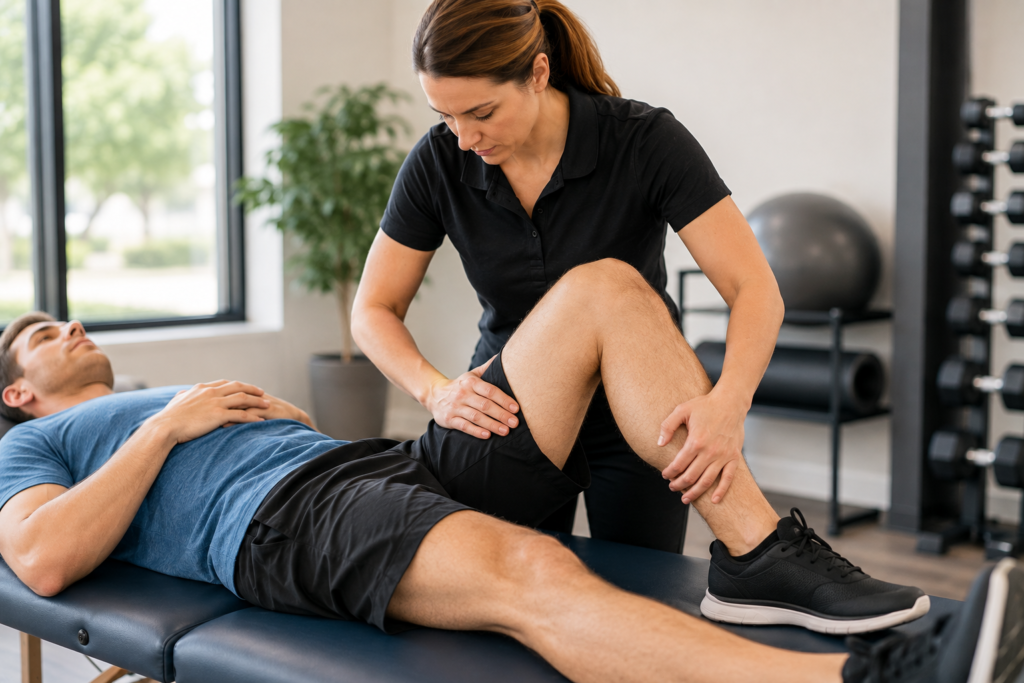
Quadriceps injury treatment can help when pain, swelling, bruising, or weakness along the front of the thigh makes walking, climbing stairs, squatting, running, or playing sports difficult. The quadriceps, often called the quads, are the large muscles along the front of the thigh. They help straighten the knee and control the leg during walking, running, jumping, kicking, and standing from a chair. Because they work across the hip and knee during powerful movements, the quadriceps can be injured during sports, exercise, falls, heavy lifting, or direct contact.
A quadriceps injury may involve a mild muscle strain, a deeper tear, a painful bruise, or damage to the quadriceps tendon above the kneecap. The right treatment depends on the location and severity of the injury. At Reform Physical Therapy, we provide one-on-one care based on your symptoms, movement, strength, activity level, and goals. Your therapist will examine the injured thigh while also checking the hip, knee, balance, walking pattern, and activities that increase your pain.
What Is a Quadriceps Injury?
A quadriceps injury affects one or more muscles or tendons along the front of the thigh. The main quadriceps muscles work together to straighten the knee. One of them, the rectus femoris, also crosses the hip and helps lift the thigh. A strain happens when a muscle or tendon is stretched beyond what it can safely handle. The injury may involve a small amount of overstretched tissue, a partial tear, or a complete tear.
Some injuries develop during one sudden movement. For example, a person may feel a sharp pull while sprinting, kicking, jumping, or slipping. Other problems build slowly after repeated exercise, heavy training, or a quick increase in activity. Quadriceps injuries may occur near the front of the hip, through the middle of the thigh, or close to the knee. Therefore, the location of the pain can help guide the evaluation.
A quadriceps strain may involve overstretched muscle fibers or a partial or complete tear. Learn more about quadriceps strains and thigh injuries from the American Academy of Orthopaedic Surgeons.
What Does a Quadriceps Injury Feel Like?
A mild quadriceps strain may feel like tightness, soreness, or tenderness along the front of the thigh. You may still be able to walk, although faster movement, stairs, squatting, or kicking may feel uncomfortable. A moderate injury may cause sharper pain, swelling, bruising, weakness, and a noticeable limp. Bending the knee stretches the quadriceps, so this movement may also become painful.
More serious injuries can cause sudden severe pain, major weakness, or a popping sensation. The muscle may look different, or a gap may be felt in the injured area. Pain directly above the kneecap may involve the quadriceps tendon. A complete tendon tear can make it difficult or impossible to straighten the knee. This injury often needs surgical repair and prompt medical care.
Where Is Quadriceps Pain Located?
Pain through the middle of the front thigh commonly occurs with a muscle strain or contusion. Running, kicking, lunging, squatting, or stretching the front of the thigh may increase the discomfort. Pain closer to the front of the hip may involve the upper portion of the rectus femoris. Since this muscle crosses the hip, symptoms may become worse while lifting the knee, sprinting, or moving the leg behind the body.
Discomfort just above the kneecap may involve the lower quadriceps or quadriceps tendon. Stairs, jumping, squatting, and standing from a chair may become difficult. Sudden weakness in this area should be evaluated quickly.
Common Types of Quadriceps Injuries
Quadriceps Muscle Strain
A quadriceps strain happens when muscle fibers are overstretched or torn. It often occurs during sprinting, jumping, kicking, slipping, or a sudden change in direction. The injury may be mild, moderate, or severe. A mild strain may cause soreness and tightness without much bruising. In contrast, a larger tear may cause swelling, weakness, a limp, and difficulty using the leg. Thigh strains commonly affect the quadriceps because these muscles cross major joints and experience strong forces during sports and exercise.
Quadriceps Contusion
A quadriceps contusion is a deep bruise caused by a direct blow to the front of the thigh. It may happen during football, soccer, hockey, basketball, a fall, or another accident. The injured area may become swollen, firm, tender, and difficult to move. Bending the knee may feel limited because it stretches the bruised muscle. A severe contusion should be assessed because heavy swelling and pressure within the thigh can sometimes lead to more serious concerns.
Quadriceps Tendon Injury
The quadriceps tendon connects the muscles at the front of the thigh to the kneecap. It plays an important role in straightening the knee. Tendon irritation may develop slowly after repeated jumping, running, squatting, or heavy lifting. However, a tear may happen suddenly when the leg takes on a heavy load while the foot is planted and the knee is partly bent. A partial tear may cause pain, swelling, and weakness. A complete tear often prevents the person from straightening the knee normally.
Common Causes of Quadriceps Injuries
Quadriceps injuries often occur during movements that require speed, force, or sudden control. Sprinting and jumping place a large demand on the muscles because they must quickly produce and absorb force. Kicking can also cause an injury because the quadriceps shorten quickly to straighten the knee. Soccer players, football players, martial artists, and dancers may be especially exposed to this movement.
A slip or awkward landing may suddenly stretch or overload the muscle. Similarly, lifting something heavy while the legs are tired or poorly positioned may strain the front of the thigh. Direct contact can cause a contusion. In this case, the muscle is compressed against the thigh bone, leading to pain, bruising, and swelling.
Training changes are another common factor. A person may develop symptoms after adding sprint workouts, increasing squat weight, starting hill training, or returning to sports after time away. Fatigue may also increase the risk. When muscles are tired, they may not control movement as well. Therefore, injuries can happen near the end of a game, workout, race, or long work shift.
Quadriceps Injury Grades
A Grade 1 injury is a mild strain involving a small amount of tissue. The person may feel soreness or tightness but can often continue walking with little difficulty.
A Grade 2 injury is a partial tear. Pain, bruising, weakness, swelling, and limping are more common. Running and sports usually need to stop while the tissue heals.
A Grade 3 injury is a severe or complete tear. This may cause major pain, weakness, bruising, and loss of normal leg function. Medical imaging or surgical evaluation may be required.
The grade cannot always be confirmed by pain alone. A physical examination helps determine how well the muscle and tendon are working.
How Quadriceps Injuries Affect Daily Life
The quadriceps help control the knee during many everyday tasks. As a result, even a mild injury can make normal movement uncomfortable. Walking may become difficult when the muscle is painful or weak. Some people shorten their steps or begin limping to avoid using the injured leg.
Stairs may be especially challenging because the quadriceps help lift and lower the body. Going downstairs often requires strong control as the knee bends. Standing from a chair, getting into a car, squatting, kneeling, lifting, and getting on or off the floor may also become painful.
Athletes may have trouble running, jumping, kicking, or changing direction. Returning too quickly may lead to another injury, especially if strength and speed have not fully recovered.
How a Quadriceps Injury Is Evaluated
Your first appointment begins with a conversation about how the injury happened and how it affects your daily activities. Your therapist will ask about the location of the pain, whether you felt a pop, and whether swelling or bruising developed. They will also want to know if you can walk, use stairs, bend the knee, and straighten the leg normally. The physical examination may include gentle testing of hip and knee movement, quadriceps strength, walking, balance, and functional movements such as sitting, standing, stepping, or squatting.
Your therapist may also examine the kneecap and quadriceps tendon. If the knee cannot straighten or a complete tear is suspected, you may be referred for medical evaluation.
How Quadriceps Injury Treatment May Help
Quadriceps injury treatment may help reduce pain, restore movement, rebuild strength, and prepare the leg for everyday activity or sports. During the early stage, care may focus on protecting the injured area and maintaining comfortable movement. As the tissue heals, exercises can gradually become more challenging.
A complete program may address the quadriceps as well as the hips, hamstrings, calves, core, and balance. This helps prepare the entire leg for walking, stairs, lifting, running, and jumping. Treatment should match the injury. A mild muscle strain may progress quickly, while a tendon tear or major contusion may need more protection and a slower recovery plan.
Quadriceps Injury Treatment Options
Early Protection and Activity Changes
During the first stage of recovery, activities that sharply increase pain may need to be reduced. This can include running, jumping, kicking, deep squatting, heavy lifting, or repeated stairs. Complete bed rest is usually unnecessary. Instead, the goal is to protect the injury while keeping the hip, knee, and ankle moving at a comfortable level. Ice may help with pain and swelling during the first few days. It should be wrapped in a cloth rather than placed directly on the skin.
Restoring Knee and Hip Movement
Pain and swelling can make the knee feel stiff. Gentle movement may begin with bending and straightening the leg within a comfortable range. Hip mobility may also be included, especially when pain is located higher in the thigh. Movement should not be forced through sharp pain. Instead, the range can gradually increase as the injury settles.
Early Quadriceps Activation
Pain and swelling may make it difficult for the quadriceps to tighten normally. Early exercises may involve gently pressing the knee downward, tightening the thigh, or lifting the leg while keeping the knee straight. These exercises help reconnect the muscle with normal movement without placing a large load on the healing tissue.
Progressive Strengthening
As pain and movement improve, strengthening may become more challenging. Treatment may progress from seated or lying exercises to standing movements such as squats, step-ups, lunges, and controlled chair stands. Later stages may include heavier resistance, single-leg exercises, and faster movements. The amount of weight and depth of movement should match the patient’s strength and symptoms.
Hip and Hamstring Strengthening
The quadriceps do not work alone. The hip muscles and hamstrings help control the pelvis and knee during walking, stairs, running, and lifting. Therefore, treatment may include bridges, hip exercises, hamstring curls, step training, and controlled lifting patterns. Building strength around the entire leg can improve movement and reduce the amount of stress placed on one muscle group.
Balance and Movement Training
Pain and weakness may affect balance or cause the person to rely more heavily on the uninjured leg. Balance training may begin withstanding evenly on both feet. Later, the patient may practice single-leg standing, reaching, stepping, or changing direction. Functional exercises can also prepare the leg for work, sports, and daily tasks.
Walking and Stair Training
A painful quadriceps injury may cause limping or difficulty controlling the knee. Your therapist may help you practice taking even steps, bending the knee during walking, and safely using stairs. A cane or crutches may be recommended for a short period if walking causes severe pain or the leg cannot safely support your weight.
Running and Return-to-Sport Training
Running is usually added after normal walking, basic strength, and controlled single-leg movements have improved. The return may begin with fast walking and short jogging intervals. Over time, the patient can progress toward longer runs, faster speeds, jumping, kicking, and direction changes.
Athletes should prepare for the actual demands of their sport. For example, a soccer player may need sprinting and kicking drills, while a basketball player may need jumping, landing, and cutting practice.
Manual Therapy
Hands-on treatment may be used to reduce nearby muscle tightness or improve hip and knee movement. However, direct pressure over a fresh tear or heavy bruise may be uncomfortable. Manual therapy should match the injury stage and should not replace progressive exercise.
Home Exercise Program
Your home program may include mobility, strengthening, balance, walking, or return-to-activity goals. The exercises should change as the injury improves. A short program completed consistently is often more useful than a long plan that is difficult to follow.
Should You Stretch a Quadriceps Injury?
Strong stretching may not be appropriate during the early stage of a strain or contusion. Bending the knee deeply stretches the quadriceps and may increase pain if the tissue is freshly injured. Gentle movement can usually begin first. As healing continues, stretching may help restore comfortable hip and knee movement. Your therapist can determine when it is safe to increase the stretch. Sharp pain, increased bruising, numbness, or a strong tearing sensation are signs to stop and seek guidance.
Returning to Running and Sports
A return to sports should be based on movement and strength rather than only the number of days since the injury. Before running, you should be able to walk comfortably and complete basic strengthening without a sharp increase in pain. Later, treatment may include jogging, faster running, jumping, kicking, landing, and direction changes. Strength and confidence should continue improving before full competition. Returning too early may increase the risk of another strain.
Quadriceps Tendon Surgery and Rehabilitation
Most muscle strains do not need surgery. However, a complete quadriceps tendon tear often requires surgical repair. After surgery, the knee may be protected in a brace. Weight-bearing and movement limits will depend on the surgeon’s instructions. Rehabilitation usually begins with protecting the repair and restoring safe walking. Later, treatment progresses toward knee movement, quadriceps activation, strength, balance, stairs, and daily activities. Running, jumping, and sports are added much later after the tendon has healed and the leg has regained enough strength.
When to Seek Immediate Medical Care
Seek prompt medical care if you cannot straighten the knee, cannot place weight on the leg, or notice severe weakness after an injury. A loud pop, visible muscle gap, rapidly increasing swelling, or major bruising may also suggest a serious tear. Immediate care is also needed if the foot becomes cold, pale, blue, or numb, or if severe thigh pain and swelling continue to increase. A hot, red area with fever may be a sign of infection and should be checked promptly.
Quadriceps Injury Treatment in Maine
Reform Physical Therapy provides one-on-one quadriceps injury treatment at our Maine clinic locations. We help patients recover from muscle strains, thigh contusions, quadriceps weakness, tendon injuries, and pain after surgery. Your therapist will create a plan based on the injury and the activities that matter most to you. Treatment may focus on returning to walking, work, lifting, running, sports, or everyday movement.
Schedule a Quadriceps Injury Evaluation
A quadriceps injury can affect nearly every activity that requires the knee to bend or straighten. You do not have to guess when to stretch, strengthen, walk farther, or return to sports. A one-on-one evaluation can help determine the likely severity of the injury and create a safe plan for recovery.