

Pregnancy and Birth Preparation
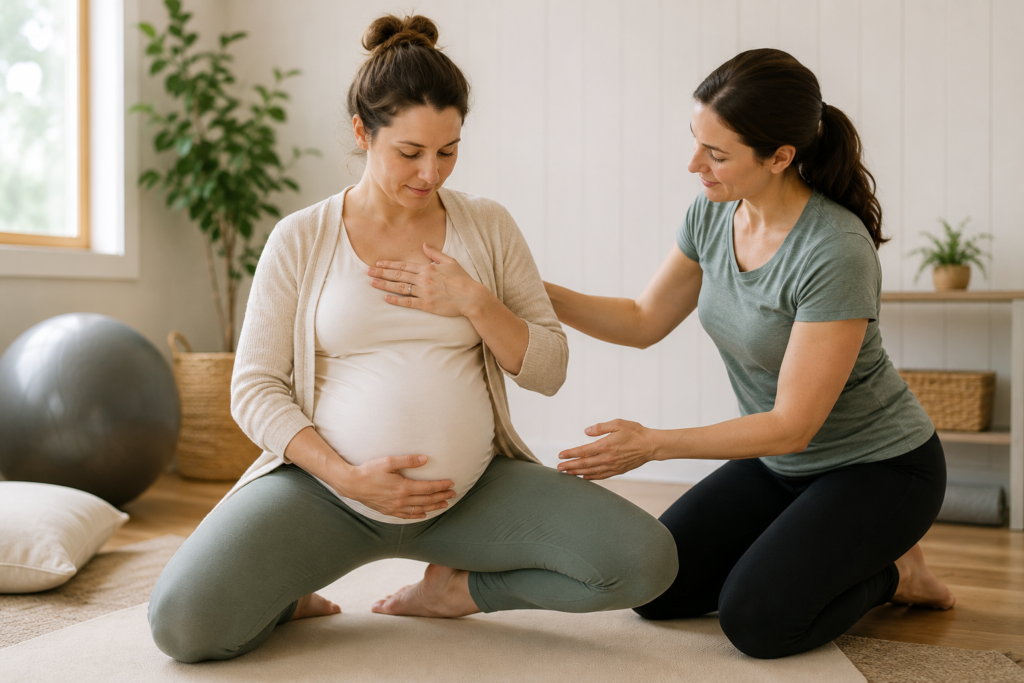
Pregnancy and birth preparation physical therapy can help you better understand your changing body, prepare your muscles for labor and delivery, and feel more confident as you approach birth. Pregnancy places new demands on the pelvic floor, abdominal muscles, hips, back, and surrounding tissues. As your body changes, you may also have questions about breathing, pushing, labor positions, pelvic floor function, exercise, or how to prepare for postpartum recovery.
At Reform Physical Therapy, pregnancy and birth preparation is provided through our pelvic health physical therapy program at our South Portland clinic. Care is personalized to your pregnancy, symptoms, birth goals, activity level, and recommendations from your medical provider. The goal is not to promise a certain type of birth. Instead, physical therapy can help you understand your body, improve movement and strength, and give you practical tools you can use during pregnancy, labor, and recovery.
Preparing Your Body for Birth
Labor and delivery require coordination between many parts of the body. The pelvic floor, abdominal muscles, diaphragm, hips, pelvis, and surrounding muscles all play a role. Pregnancy and birth preparation can help you learn how these areas work together before labor begins. For some patients, preparation focuses on maintaining strength and mobility. Others may need help with pelvic pain, back pain, muscle tension, pelvic floor coordination, or finding comfortable positions as pregnancy progresses. Your physical therapist will build treatment around what your body needs rather than following the same routine for every pregnancy.
Understanding the Pelvic Floor During Pregnancy
The pelvic floor is a group of muscles located at the bottom of the pelvis. These muscles support the bladder, bowel, uterus, and other pelvic structures. During pregnancy, the pelvic floor experiences increasing pressure as the baby grows. Although pelvic floor strengthening can be helpful for some patients, preparing for birth is not simply about doing more Kegel exercises. The pelvic floor also needs to relax and lengthen. Learning when to contract these muscles and when to release them can be an important part of pregnancy and birth preparation.
Pelvic Floor Relaxation
A strong pelvic floor is not necessarily a pelvic floor that remains tight. During vaginal delivery, the pelvic floor must be able to lengthen and accommodate the baby. Therefore, patients may benefit from learning how to recognize and release unnecessary pelvic floor tension. Breathing exercises, positioning, mobility work, and pelvic floor awareness may be used to practice relaxation. The goal is better coordination rather than forcing the muscles to relax.
Breathing and Pelvic Floor Coordination
The diaphragm and pelvic floor naturally work together during breathing. When you inhale, the diaphragm moves downward and the pelvic floor normally responds to changes in pressure. During exhalation, these muscles work differently as pressure changes again. Pregnancy and birth preparation may include breathing exercises that help you become more aware of this relationship. Practicing breathing in different positions can also help you discover which techniques feel most natural and comfortable before labor.
Preparing for Pushing
Many patients have questions about pushing before giving birth. A pelvic health physical therapist can provide education about breathing, pressure management, pelvic floor relaxation, and different positions that may be used during the pushing stage. This preparation is meant to give you options rather than teach one perfect pushing technique. Your obstetric team will guide you during delivery based on your health, your baby’s health, and how labor progresses.
Labor Positions
Different labor positions can change how the hips and pelvis move. Some people feel comfortable standing or leaning forward. Others may prefer side lying, hands and knees, supported squatting, sitting, or using a birth ball. Physical therapy gives you an opportunity to practice several positions before labor begins. Your therapist can help you explore which positions feel comfortable for your hips, back, pelvis, and pelvic floor so you have more options available when the time comes.
Hip and Pelvic Mobility
Comfortable hip movement can be useful throughout pregnancy and during labor. Exercises may work on gentle hip rotation, pelvic movement, supported squatting, or other positions based on your mobility and symptoms. Mobility work should not involve forcing your body into extreme positions. Instead, pregnancy and birth preparation focuses on maintaining useful movement and helping you feel comfortable changing positions.
Strength During Pregnancy
Strength remains important as pregnancy progresses. The hips, legs, back, abdominal muscles, and upper body all help support daily movement. They also prepare you for the physical demands that come after delivery, including lifting, carrying, feeding, and caring for your baby. Your physical therapist may use squats, resistance exercises, functional movements, and other strengthening activities when appropriate. Exercise recommendations should always consider your pregnancy and guidance from your obstetric provider. ACOG includes physical activity and exercise as part of prenatal health guidance.
Core Function During Pregnancy
Your abdominal muscles stretch and change as your baby grows. Rather than trying to keep your core tight throughout the day, pregnancy and birth preparation can focus on using these muscles naturally during movement. Breathing, lifting, standing, getting out of bed, and exercising all require different amounts of abdominal muscle activity. Your therapist can help you find strategies that provide support without creating unnecessary tension or pressure.
Preparing for Changes in Your Abdomen
Abdominal separation, commonly called diastasis recti, can occur during pregnancy as the abdominal wall stretches. Changes in the space between the abdominal muscles are common and do not automatically mean something is wrong. Instead of focusing only on the width of the separation, physical therapy can look at abdominal function, pressure management, strength, and how your abdominal wall responds during movement. These skills can also provide a foundation for postpartum rehabilitation.
Managing Pregnancy Pain While Preparing for Birth
You do not have to wait until after delivery to address musculoskeletal pain. Lower back pain, pelvic girdle pain, hip discomfort, pubic pain, and other symptoms can interfere with exercise, sleep, walking, and daily activities. Treatment may include strengthening, mobility work, positioning, activity modifications, and hands on care when appropriate. Addressing these symptoms can make it easier to remain active and continue preparing for labor.
Preparing for Birth With Pelvic Girdle Pain
Pelvic girdle pain can make certain movements difficult during pregnancy. Rolling in bed, climbing stairs, standing on one leg, getting dressed, or getting into a car may become uncomfortable. Your physical therapist can help you modify these movements while also working on strength and mobility. Labor positions can be practiced with your symptoms in mind, so you have options that feel more comfortable for your pelvis.
Preparing for Birth With Back Pain
Back pain does not necessarily mean you have to stop exercising or preparing for labor. Your therapist can assess the movements and positions that increase your symptoms and help you find alternatives. Strengthening, mobility exercises, posture changes, and activity modifications may help you stay active as your pregnancy progresses. Birth preparation can then be adapted so labor positions do not unnecessarily aggravate your back.
Perineal Preparation
Some patients ask about perineal massage as they approach delivery. Perineal massage involves gently stretching and preparing the tissues around the vaginal opening before birth. Whether this is appropriate and when to begin should be discussed with your obstetric provider. A pelvic health physical therapist can provide education about the pelvic floor and perineal tissues and discuss appropriate preparation based on your individual situation. You should never perform techniques that cause significant pain, bleeding, or other concerning symptoms.
Preparing for a Cesarean Birth
Pregnancy and birth preparation is not limited to people planning a vaginal delivery. A planned Cesarean birth still places significant physical demands on the body. Physical therapy can help you maintain strength and mobility during pregnancy while discussing movement strategies that may be useful after surgery. Getting in and out of bed, standing from a chair, lifting your baby, walking, breathing comfortably, and gradually returning to activity are all important parts of recovery.
Preparing for Postpartum Movement
The first days and weeks after birth involve a major change in physical demands. You may suddenly spend hours feeding, holding, carrying, and caring for your baby while your own body is recovering. Pregnancy and birth preparation can include strategies for getting out of bed, lifting safely, feeding positions, carrying your baby, and managing everyday movement. Thinking about these activities before delivery can make the transition into postpartum recovery feel less overwhelming.
Preparing for Postpartum Pelvic Floor Recovery
Pelvic floor recovery looks different for every patient. Some people experience weakness, while others develop pain or excessive muscle tension. Urinary leakage, bowel symptoms, pelvic pressure, and pain with intercourse can also occur after pregnancy and delivery. ACOG recognizes urinary and fecal continence as important parts of postpartum assessment and notes that referral to physical therapy may be appropriate. A postpartum pelvic health evaluation can help determine what your body needs after delivery instead of assuming everyone should immediately begin the same exercises.
Physical Therapy Evaluation
Your first pregnancy and birth preparation appointment begins with a conversation. Your therapist may ask about your pregnancy, symptoms, previous pregnancies or births, exercise habits, medical history, daily activities, and goals for treatment. Movement, strength, breathing, posture, hip mobility, abdominal function, and pelvic floor coordination may be assessed depending on your needs. Pelvic health care is individualized, and your therapist will explain what is being assessed and why. Any pelvic floor assessment should only occur when appropriate and with your informed consent.
When Should You Start Birth Preparation?
You do not need to wait until the final weeks of pregnancy to see a pelvic health physical therapist. Earlier care can be helpful when you are experiencing pelvic pain, back pain, urinary leakage, difficulty exercising, or other symptoms. Patients primarily interested in preparing for labor may also benefit from an evaluation later in pregnancy. There is no single week that is right for everyone. Your obstetric provider and physical therapist can help determine what makes sense based on your pregnancy.
Pregnancy and Birth Preparation Treatment
Treatment is based on your individual needs and may change as your pregnancy progresses. Sessions may include breathing and pelvic floor coordination, strengthening, hip and pelvic mobility, labor position practice, activity modifications, and education about postpartum recovery. Patients experiencing pain may also receive treatment directed toward their specific symptoms. The purpose is to give you practical tools you can use rather than overwhelm you with a long list of exercises.
Working With Your Medical Team
Pelvic health physical therapy complements your prenatal medical care. It does not replace it. Your obstetrician, midwife, or other prenatal provider remains responsible for monitoring your pregnancy and your baby’s health. Physical therapy focuses on movement, muscles, pelvic health, pain, strength, function, and physical preparation. Communication with your medical team may be appropriate when symptoms or pregnancy related concerns require additional evaluation.
When to Contact Your Medical Provider
Not every symptom during pregnancy is a physical therapy issue. New or severe abdominal or pelvic pain, vaginal bleeding, fluid leakage, contractions that may indicate labor, fever, significant swelling, shortness of breath, chest pain, severe headache, vision changes, or other concerning symptoms should be discussed with your medical provider promptly. If you are unsure whether it is safe to exercise or participate in physical therapy, contact your prenatal care provider.
Pregnancy and Birth Preparation in South Portland, Maine
Reform Physical Therapy provides pregnancy and birth preparation exclusively through our pelvic health program at our South Portland clinic. Our South Portland pelvic health physical therapists can help patients better understand pelvic floor function, breathing, movement, strength, labor positions, and physical preparation for birth. Care can also address pregnancy related pelvic pain, back pain, urinary symptoms, and other pelvic health concerns when appropriate. Most importantly, your care is personalized. Your pregnancy, symptoms, goals, and birth plans are unique, and your physical therapy should be too.
Schedule a Pregnancy and Birth Preparation Visit
You do not have to wait until something hurts to see a pelvic health physical therapist during pregnancy. Pregnancy and birth preparation can give you time to learn about your pelvic floor, practice breathing and movement strategies, build strength, explore labor positions, and ask questions before your baby arrives.
Contact Reform Physical Therapy to schedule a pregnancy and birth preparation appointment with our pelvic health team at the South Portland clinic.