

Concussion Rehabilitation
A concussion can affect much more than your head. Even after the initial injury, you may experience headaches, dizziness, balance problems, neck pain, fatigue, or difficulty concentrating. Activities that once felt simple, such as working, exercising, driving, or spending time on a computer, may suddenly feel overwhelming, which is why concussion rehabilitation can be so important for recovery.
For some people, concussion symptoms improve within a few weeks. Others experience lingering challenges that interfere with their daily routines, work responsibilities, school activities, or recreational interests. These symptoms can be frustrating, especially when you look and feel physically capable of doing more but struggle to return to your usual activities.
At Reform Physical Therapy, we understand how important it is to feel confident and comfortable with movement again. Concussion rehabilitation may help address dizziness, balance difficulties, neck-related symptoms, exercise intolerance, and other physical challenges following a concussion. Through an individualized rehabilitation approach, physical therapy can support your recovery and help you gradually return to the activities that matter most.
What Is a Concussion?
A concussion is a type of mild traumatic brain injury that occurs when a bump, blow, or jolt to the head or body causes the brain to move rapidly within the skull. This sudden movement can temporarily disrupt normal brain function and lead to a variety of physical, cognitive, emotional, and sleep-related symptoms.
Although concussions are commonly associated with sports injuries, they can happen to anyone. Falls, motor vehicle accidents, workplace injuries, and recreational activities are also common causes. You do not have to lose consciousness to experience a concussion, and symptoms may appear immediately or develop over the following hours or days.
Most people recover with appropriate care, but recovery timelines vary. Some individuals experience symptoms that continue beyond the expected recovery period. Understanding your symptoms and receiving appropriate medical guidance can help you determine when additional rehabilitation may be beneficial.
What Causes a Concussion?
A concussion occurs when a sudden impact or force causes rapid movement of the brain. This movement can affect how brain cells communicate and temporarily change normal neurological function.
Common causes of concussions include:
- Sports-related collisions or impacts
- Slips, trips, and falls
- Motor vehicle accidents
- Workplace injuries
- Bicycle accidents
- Recreational injuries
- Direct blows to the head
- Sudden acceleration or deceleration of the head and neck
A concussion can occur even without a visible injury, bruising, or loss of consciousness. Because symptoms are not always immediately apparent, anyone with a suspected concussion should receive appropriate medical assessment.
Common Symptoms of a Concussion
Concussion symptoms can vary significantly from person to person. Some individuals primarily experience headaches or dizziness, while others notice difficulty concentrating, changes in sleep, or increased sensitivity to light and noise.
Symptoms may include:
- Headaches or pressure in the head
- Dizziness or lightheadedness
- Balance difficulties or unsteadiness
- Neck pain or stiffness
- Blurred vision or visual discomfort
- Sensitivity to light or noise
- Nausea
- Fatigue or reduced energy
- Difficulty concentrating
- Memory problems or mental fog
- Sleep disturbances
- Irritability or changes in mood
- Difficulty tolerating physical activity
- Symptoms that increase with movement or busy environments
Not everyone experiences the same combination of symptoms. Some symptoms may also result from neck injuries, vestibular disorders, or other conditions that occur alongside a concussion.
When to Seek Immediate Medical Attention
Certain symptoms following a head injury may indicate a more serious medical problem. Seek emergency medical care for a worsening headache that does not go away, repeated vomiting, seizures, increasing confusion, unusual behavior, weakness or numbness, slurred speech, unequal pupils, or difficulty waking the injured person.
A suspected concussion should be medically assessed before beginning rehabilitation. Physical therapy does not replace emergency evaluation or medical diagnosis.
How Long Does Concussion Recovery Take?
Recovery varies depending on the individual, the nature of the injury, previous concussion history, and other health factors. Many people improve substantially within the first several weeks, although some experience symptoms that last longer. During the early stages of recovery, relative rest and a gradual return to light daily activities are generally recommended under medical guidance. Prolonged complete inactivity is not usually helpful, and returning to demanding physical or mental activities too quickly may worsen symptoms.
If dizziness, headaches, balance problems, neck pain, or exercise intolerance continue, targeted rehabilitation may help address the specific physical factors contributing to those difficulties. The goal is not to rush recovery. Instead, treatment should help you safely rebuild tolerance for movement and everyday activities at a pace that matches your symptoms and abilities.
What Is Concussion Rehabilitation?
Concussion rehabilitation is a personalized approach to addressing physical problems that may develop after a concussion. Treatment may focus on balance, dizziness, eye and head movement tolerance, neck mobility, physical conditioning, and functional activities. Rather than treating every concussion the same way, rehabilitation considers the symptoms you are experiencing and the activities you are having difficulty performing. Some people need support with dizziness and balance, while others benefit from neck rehabilitation, guided exercise, or gradual exposure to movements that trigger symptoms.
Physical therapy is often one part of a broader concussion recovery plan. Depending on your needs, care may also involve your primary care provider, a sports medicine specialist, neurologist, or other healthcare professionals.
How Can Physical Therapy Help After a Concussion?
Physical therapy may help address movement-related symptoms and functional limitations that persist following a concussion. Your therapist can evaluate the physical challenges affecting your recovery and recommend exercises or activities based on your individual needs.
Vestibular Rehabilitation for Dizziness
The vestibular system helps your brain understand head movement and maintain balance. Following a concussion, some people experience dizziness, motion sensitivity, or difficulty feeling steady when moving their head. Vestibular rehabilitation uses targeted exercises to address certain balance and dizziness problems. Treatment may include controlled head movements, gaze stabilization activities, balance exercises, and gradual exposure to movements that trigger symptoms.
The exercises are selected based on your symptoms and examination findings. Some people may also develop benign paroxysmal positional vertigo (BPPV) after a head injury, which requires a different assessment and treatment approach.
Balance and Coordination Training
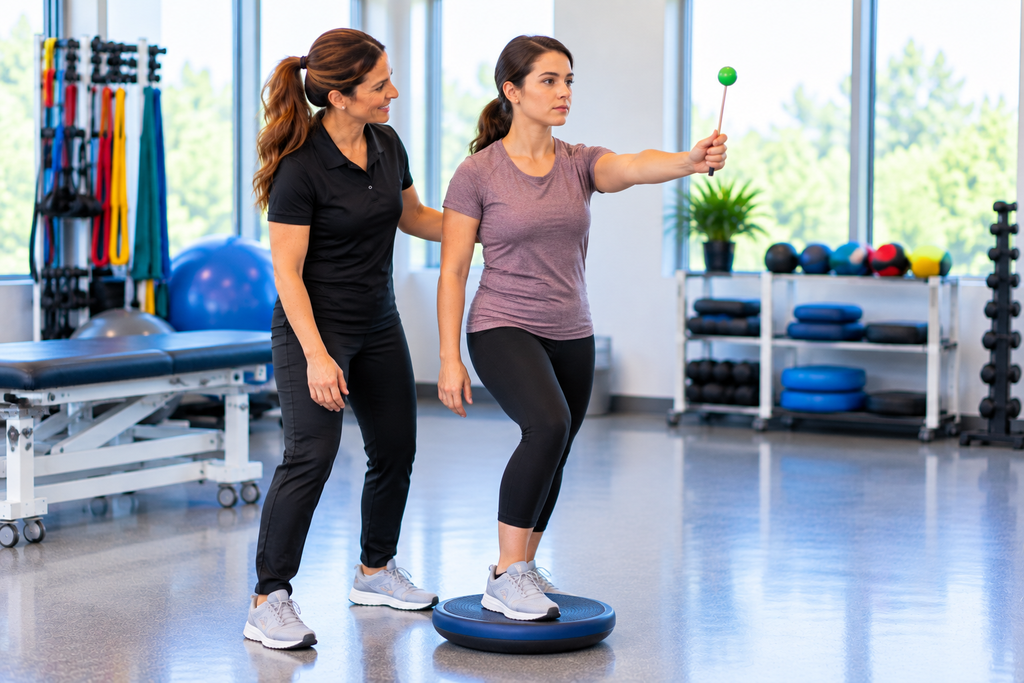
Balance problems can make walking, turning, climbing stairs, or moving through busy environments more difficult. You may notice increased unsteadiness when standing with your feet close together, looking around while walking, or navigating uneven surfaces. Physical therapy may include standing balance exercises, controlled stepping, weight shifting, walking activities, and coordination training. As your balance improves, exercises can be adjusted to include more challenging movements and everyday situations.
Neck Pain and Cervical Rehabilitation
Concussions frequently occur alongside sudden movements of the head and neck. As a result, some people experience neck pain, stiffness, headaches, or limited movement following the injury. Neck-related symptoms can overlap with concussion symptoms, making a thorough evaluation important. Physical therapy may include gentle mobility exercises, postural training, strengthening, and other appropriate treatments to address cervical discomfort and movement limitations.
Improving neck function may help reduce certain movement-related symptoms and make everyday activities more comfortable.
Headache Management
Headaches are among the most common symptoms following a concussion. They may be influenced by several factors, including changes in neurological function, neck injuries, sleep disturbances, and physical activity tolerance. Physical therapy may be helpful when headaches are associated with neck stiffness, muscle tension, posture, or specific movement patterns. Treatment may focus on cervical mobility, strengthening, exercise tolerance, and strategies for managing physical demands.
Persistent or worsening headaches require medical evaluation to determine whether additional treatment is needed.
Eye Movement and Visual-Motion Exercises
Some individuals experience difficulty focusing, tracking moving objects, or tolerating visually busy environments after a concussion. Reading, using a computer, shopping, or riding in a vehicle may trigger dizziness or discomfort. When appropriate, rehabilitation may include exercises that coordinate eye and head movements or gradually improve tolerance for visual motion. More complex visual problems may require evaluation by a qualified eye care or vision rehabilitation specialist.
Gradual Return to Physical Activity
Exercise intolerance is another common challenge following a concussion. Activities such as walking, climbing stairs, or exercising may increase headaches, dizziness, or fatigue. Under appropriate medical guidance, physical therapy may incorporate carefully monitored aerobic exercise below the level that significantly worsens symptoms. Walking, stationary cycling, and other low-impact activities may be used to gradually rebuild exercise tolerance. Progression should be individualized. Returning to contact sports or activities with a risk of another head injury requires appropriate medical clearance.
Functional Movement Training
Concussion symptoms can affect everyday activities such as walking through a grocery store, turning your head while driving, working at a computer, or navigating crowded environments. Functional rehabilitation focuses on gradually improving your ability to tolerate these activities. Exercises may combine balance, head movement, walking, and other tasks that reflect your daily routine.
Dizziness and Balance Problems After a Concussion
Dizziness following a concussion can feel different for everyone. Some people describe a spinning sensation, while others feel lightheaded, unsteady, or disconnected from their surroundings. Symptoms may become more noticeable when turning the head, changing positions, walking, or looking at moving objects. These problems may involve the vestibular system, vision, neck function, or other factors. Because several conditions can cause similar symptoms, identifying the underlying source is an important part of treatment.
When vestibular rehabilitation is appropriate, your physical therapist may use specific exercises to improve gaze stability, balance, and movement tolerance. Progress is monitored to help ensure that activities remain manageable throughout recovery.
Neck Pain and Headaches Following a Concussion
Head and neck injuries often occur together. A sudden impact may place stress on the muscles, joints, and other structures of the cervical spine, contributing to neck stiffness, discomfort, and headaches. Some individuals notice pain when turning their head, looking down at a phone, sitting at a desk, or maintaining one position for an extended period. Others experience headaches that seem connected to neck movement or posture.
Physical therapy may help address these concerns through individualized strengthening, mobility exercises, postural education, and appropriate hands-on treatment. However, not every headache following a concussion originates in the neck, so medical assessment remains important.
Concussion Rehabilitation for Athletes
Sports-related concussions can affect athletes of all ages and activity levels. Whether the injury occurred during football, soccer, basketball, hockey, skiing, or another activity, returning to sports requires a careful, individualized approach. Athletes may experience dizziness, headaches, balance changes, slower reaction times, or difficulty tolerating exercise. Even when symptoms begin to improve, returning to full activity too quickly can increase the risk of another injury.
Physical therapy may support recovery through balance training, vestibular rehabilitation, cervical exercises, and gradual aerobic conditioning when appropriate.
Returning to Sports After a Concussion
Return-to-sport progression should follow current medical guidance and be supervised by qualified healthcare professionals. Athletes typically progress through increasingly demanding activities as symptoms and recovery allow. These stages may include light aerobic activity, moderate exercise, sport-specific movements, non-contact training, and eventually full participation after appropriate clearance.
An athlete should never return to play on the same day a concussion is suspected. Physical therapy can support the rehabilitation process, but clearance for contact sports must come from an appropriately qualified healthcare professional.
Concussion Rehabilitation After a Fall or Car Accident
Concussions are not limited to athletes. Falls, car accidents, and workplace injuries can cause head trauma that affects balance, neck movement, and physical activity tolerance. Following an accident, you may notice dizziness when getting out of bed, headaches after using a computer, difficulty walking through crowded places, or increased fatigue during your normal routine.
Physical therapy may help address movement-related limitations that interfere with work, household responsibilities, and recreational activities. Treatment should be coordinated with your medical provider, especially when additional injuries are present.
Persistent Symptoms After a Concussion
Some people continue to experience symptoms beyond the usual recovery period. These may include headaches, dizziness, neck discomfort, fatigue, exercise intolerance, or difficulty managing daily activities. Persistent symptoms do not always have one cause. Vestibular problems, neck injuries, sleep disturbances, migraines, mood changes, and other medical conditions may contribute to ongoing difficulties. A comprehensive medical assessment can help identify which factors require treatment. When physical impairments are present, targeted rehabilitation may support improvement in movement, balance, and activity tolerance.
What to Expect During Your First Concussion Rehabilitation Visit
Your first appointment begins with a conversation about your injury, symptoms, medical history, and recovery goals. Your physical therapist may ask when the injury occurred, whether you have received medical evaluation, which activities trigger symptoms, and how your condition affects everyday life.
Depending on your symptoms and medical clearance, the physical examination may include assessments of neck mobility, balance, coordination, walking, eye and head movement tolerance, and physical activity capacity. Not every test is appropriate for every person, so the evaluation should reflect your individual needs.
Based on the findings, your therapist can discuss whether outpatient rehabilitation is appropriate and develop a treatment plan focused on the physical challenges affecting your recovery.
How Often Will I Need Concussion Rehabilitation?
The frequency and duration of physical therapy depend on your symptoms, recovery progress, and treatment goals. Some people benefit from a relatively short rehabilitation program, while others need additional time to address persistent dizziness, balance problems, or neck-related limitations. Your physical therapist may recommend supervised appointments along with exercises to practice at home. Activities should be adjusted according to your response, and progress should be reviewed regularly.
Tips for Supporting Concussion Recovery
Recovering from a concussion involves more than simply waiting for symptoms to disappear. Appropriate daily habits and medical guidance can help support the recovery process.
Helpful strategies may include:
- Following your healthcare provider’s recovery recommendations
- Getting consistent, adequate sleep
- Returning to daily activities gradually
- Taking breaks when symptoms increase
- Staying hydrated and eating regular meals
- Avoiding activities that risk another head injury
- Following your prescribed rehabilitation exercises
- Communicating changes in symptoms to your healthcare team
During the first day or two, relative rest is generally recommended. After that, light activities that do not substantially worsen symptoms can often be resumed as tolerated, following medical advice. Extended bed rest or complete avoidance of all activity is generally not recommended.
Why Choose Reform Physical Therapy?
At Reform Physical Therapy, we believe rehabilitation should focus on the person, not just the injury. A concussion can affect your ability to work, exercise, move comfortably, and participate in activities you enjoy. Understanding these challenges helps guide an individualized approach to care. When concussion-related physical rehabilitation is appropriate, treatment may focus on improving balance, reducing movement-related dizziness, addressing neck discomfort, and gradually rebuilding activity tolerance.
Our goal is to help you feel more confident with movement and work toward returning to your daily routine. Because concussion care may require specialized evaluation, our team can help determine whether the appropriate services are available at your preferred Reform Physical Therapy location.
Take the Next Step Toward Recovery
Lingering dizziness, headaches, neck pain, or balance problems after a concussion can make everyday life more difficult. You do not have to ignore these symptoms or push through activities that leave you feeling worse. With appropriate medical guidance and an individualized rehabilitation plan, physical therapy may help address physical limitations and support a gradual return to the activities that matter most.