

TMJ Dysfunction Treatment
TMJ dysfunction treatment can help reduce jaw pain, clicking, stiffness, headaches, and difficulty with chewing, talking, or opening the mouth. The temporomandibular joint, often called the TMJ, connects the lower jaw to the skull. You have one joint on each side of your jaw, just in front of the ears. These joints help you open and close your mouth, chew, speak, yawn, and move your jaw from side to side. When the joint, muscles, or surrounding tissues are irritated, painful jaw symptoms can develop. The National Institute of Dental and Craniofacial Research explains that temporomandibular disorders can affect the jaw joints and the muscles that control jaw movement.
At Reform Physical Therapy, we provide one-on-one TMJ dysfunction treatment based on your symptoms, jaw movement, muscle tension, posture, daily habits, and goals. Your therapist will assess the jaw while also looking at the neck, upper back, posture, and activities that may be making your symptoms worse.
Understanding TMJ Dysfunction
TMJ dysfunction is a general term used for problems involving the jaw joint and the muscles that help move the jaw. Some people have pain mainly in the joint itself. Others feel more pain in the muscles of the jaw, face, temples, or neck. Symptoms may begin after clenching, grinding, dental work, stress, poor posture, chewing tough foods, or an injury to the jaw or face. In some cases, the symptoms build slowly over time instead of starting from one clear event.
The jaw does not work alone. It is closely connected to the muscles of the face, head, and neck. Because of this, TMJ dysfunction treatment often includes more than the jaw itself.
Where TMJ Pain Is Felt
TMJ pain is often felt near the joint just in front of the ear. However, pain may also spread into the cheek, temple, lower face, teeth, head, or neck. Some people feel soreness when chewing or talking. Others notice pain with yawning, opening wide, or eating harder foods. The area may feel tender to touch, tight, tired, or irritated after long periods of speaking or clenching. Pain may affect one side or both sides. In some people, the symptoms switch sides or move into nearby areas.
Common TMJ Dysfunction Symptoms
TMJ dysfunction symptoms can vary from person to person. Some people mainly notice pain, while others are more bothered by clicking, locking, or stiffness. Common symptoms may include jaw pain, facial pain, clicking, popping, limited opening, pain while chewing, headaches, ear-area discomfort, muscle tightness, and neck pain. Some people also feel that their bite feels different, even when no dental problem is present.
A clicking jaw does not always mean something is seriously wrong. Some people have clicking without pain. However, clicking along with pain, locking, or major movement limits should be evaluated.
Jaw Clicking and Popping
A clicking or popping sound may happen when the tissues inside the joint do not move smoothly during opening and closing. This can happen with or without pain. Some people notice the click every time they open their mouth. Others only notice it during chewing, yawning, or opening wide. If the jaw clicks but still moves normally and does not hurt, treatment may not always be urgent. However, if the clicking is painful or the jaw begins to catch or lock, TMJ dysfunction treatment may help improve movement and reduce irritation.
Jaw Stiffness and Limited Opening
TMJ dysfunction may make it harder to open the mouth fully. The jaw may feel tight, stuck, or painful at the end of the movement. This can make eating, yawning, brushing the teeth, and dental visits more uncomfortable. Some people feel like the jaw shifts to one side when opening. Limited movement may be related to joint irritation, muscle tightness, clenching, guarding, or a problem with how the joint structures are moving. A physical therapy evaluation can help determine which factors may be involved.
Jaw Locking
Jaw locking can happen when the mouth becomes difficult to open or close. In some cases, the jaw briefly catches and then moves again. In other cases, the person may need to gently shift the jaw before it relaxes. Locking should not be ignored, especially when it happens often or becomes more severe. A jaw that repeatedly locks may need additional medical or dental evaluation. TMJ dysfunction treatment may still help by addressing muscle tension, joint movement, posture, and habits that are increasing stress on the area.
Headaches and Face Pain
Some TMJ problems are linked with headaches, especially around the temples or sides of the face. The jaw muscles may become overworked from clenching, grinding, chewing, or stress. People may also feel pressure around the cheeks or soreness into the forehead or around the ears. Because jaw and head pain can come from several causes, a full evaluation is important. Headaches that are sudden, severe, or different from usual should be medically evaluated.
Neck Pain and Posture
The jaw and neck often affect each other. Poor posture, especially a forward head position, can place more stress on the muscles around the jaw and upper neck. People who spend long hours at a computer, on a phone, or driving may notice that jaw symptoms get worse as the day goes on. Neck tension may also increase clenching or make the jaw muscles work harder. For this reason, TMJ dysfunction treatment often includes the neck, upper back, and posture rather than focusing only on the jaw.
Common Causes of TMJ Dysfunction
TMJ dysfunction can develop for several different reasons. Stress is a common factor because it may lead to clenching or grinding, especially at night or during focused work. Repeated jaw tension can overload the joint and nearby muscles. Chewing gum often, biting nails, chewing ice, or eating tough foods can also irritate the jaw. Long dental procedures, poor posture, and previous injuries to the head, neck, or face may contribute as well. In some people, the symptoms begin without one clear cause. Instead, several smaller factors build up over time and make the jaw more sensitive.
Clenching and Grinding
Jaw clenching and teeth grinding can place a high load on the jaw joints and muscles. Some people know they clench during the day. Others only discover it after waking with jaw soreness or hearing from a dentist that they grind at night. This repeated pressure can lead to muscle fatigue, joint irritation, headaches, and jaw tightness. A nighttime mouthguard may help some people, but it may not fully address muscle tension, neck posture, or movement problems. TMJ dysfunction treatment may help reduce the strain caused by clenching by improving awareness, teaching relaxation strategies, and restoring more comfortable jaw movement.
Chewing and Daily Habits
Daily habits can affect the jaw more than many people realize. Chewing gum often, eating large sandwiches, biting pens, or opening the mouth very wide may keep the joint irritated. Sleeping positions may also matter. Resting with pressure against the jaw or sleeping face-down may increase symptoms in some people. A treatment plan may include temporary changes in these habits while the jaw calms down and becomes stronger.
TMJ Dysfunction and Ear Symptoms
Because the jaw joint sits close to the ear, TMJ symptoms are sometimes mistaken for an ear problem. People may feel pressure, fullness, or soreness near the ear even though the ear itself is not the cause. TMJ dysfunction does not usually cause an ear infection, but it can create pain in the same area. If symptoms include fever, drainage, sudden hearing loss, or severe ear pain, medical care is important.
Effects on Daily Life
TMJ dysfunction can make normal daily activities harder. Eating, talking, laughing, singing, brushing the teeth, yawning, and even sleeping may become uncomfortable. Some people begin avoiding certain foods because chewing hurts. Others speak less or avoid social situations because the jaw feels tired or painful. When jaw pain leads to headaches, neck pain, poor sleep, or stress, it can affect concentration, energy, and mood as well. A complete TMJ dysfunction treatment plan should address these daily-life effects, not just the joint itself.
Physical Therapy Evaluation
Your first appointment begins with a discussion about your symptoms, where the pain is felt, when it began, and what activities make it worse or better. Your therapist may ask about clicking, locking, headaches, dental work, clenching, grinding, posture, stress, and previous injuries. You may also be asked about eating habits, sleep, and neck symptoms.
During the physical examination, the therapist may assess how far the jaw opens, whether it shifts to one side, how the joint feels during movement, and whether the muscles are tender. The neck, upper back, posture, and muscle tension around the face and jaw may also be examined. This process helps create a TMJ dysfunction treatment plan based on your symptoms and the way your jaw and surrounding areas are working together.
Medical or Dental Referral
Some people with TMJ symptoms may also need support from a dentist, oral surgeon, or medical provider. Referral may be important when there are major locking, significant bite change, suspected tooth problems, severe joint damage, or symptoms that do not match a muscle or movement problem. Physical therapy can often work alongside dental or medical care when needed.
TMJ Dysfunction Treatment
TMJ dysfunction treatment usually begins by reducing the movements or habits that are keeping the jaw irritated. This may include changing chewing habits, reducing gum chewing, avoiding very hard foods, and becoming more aware of clenching. Rehabilitation may also include jaw movement exercises, posture training, muscle relaxation, neck treatment, and gradual return to normal jaw function. The goal is to improve comfort without overloading the joint. Physical therapists can help people improve movement, reduce pain, and restore function for conditions involving the muscles and joints.
Jaw Movement Exercises
Gentle exercises may help the jaw move more smoothly and comfortably. These exercises can focus on opening and closing in a controlled way, relaxing tight muscles, or improving side-to-side motion. The exercises should be done carefully. Forcing the jaw open wide or pushing into strong pain may increase irritation. As symptoms improve, movement can become easier and more controlled.
Hands-On Treatment
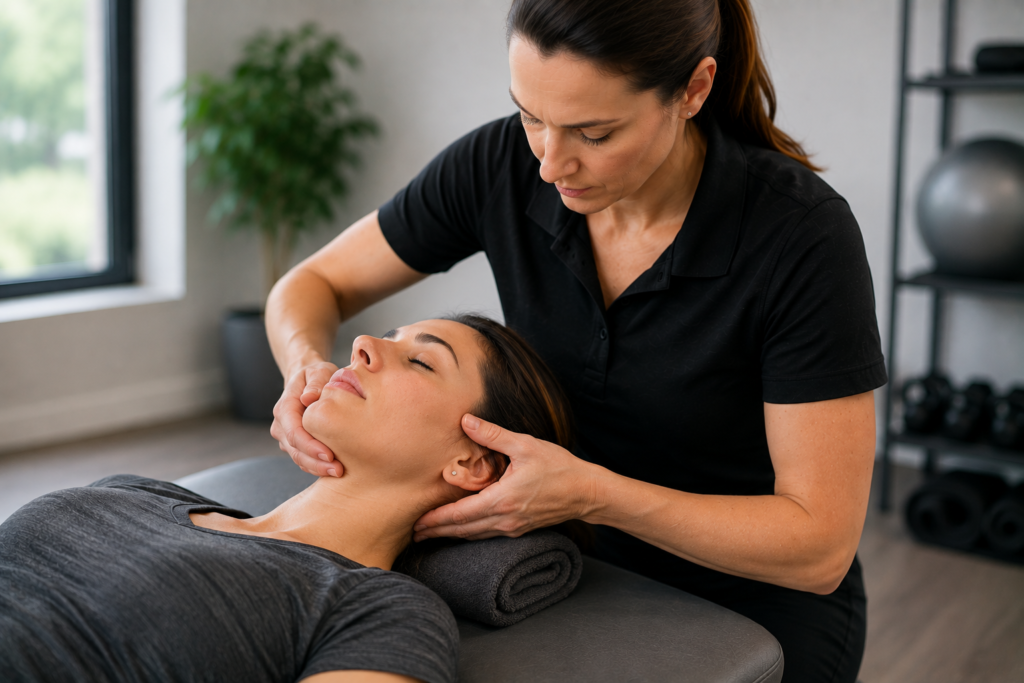
Hands-on care may be used to reduce muscle tension, improve joint movement, and help the jaw and neck move more comfortably. This may include gentle work to the jaw muscles, face, neck, or upper back. Some therapists also use carefully selected treatment inside the mouth when appropriate and when the patient is comfortable with it. Manual treatment may provide short-term relief, but it usually works best when combined with exercise and habit changes.
Neck and Posture Treatment
Neck stiffness and poor posture can add strain to the jaw. Treatment may include stretching, strengthening, and posture training for the neck and upper back. People who sit at a desk or look down at a phone for long periods may benefit from learning how to position the head, shoulders, and upper back with less strain. Improving posture does not mean sitting stiffly all day. The goal is to reduce repeated stress and help the muscles work more efficiently.
Relaxation and Habit Training
Stress and muscle guarding can keep the jaw tense throughout the day. Some people do not realize they are clenching until they are asked to notice where their teeth and tongue rest. Treatment may include learning a more relaxed jaw position, using rest breaks during the day, and practicing breathing or relaxation strategies. Small habit changes can make a big difference when they reduce repeated strain on the joint and muscles.
Food and Activity Changes During Recovery
While symptoms are irritated, softer foods may be more comfortable than hard, chewy, or very large foods. Cutting food into smaller pieces may also help. People may also need to limit chewing gum, nail biting, or wide yawning for a short time. These are usually temporary changes, not permanent restrictions. As pain improves and movement becomes easier, the jaw can gradually return to more normal daily use.
Home Exercise Program
A home program may include gentle jaw exercises, posture work, neck stretches, relaxation strategies, and reminders about chewing or clenching habits. Exercises should be simple enough to complete regularly and should match the person’s symptoms and stage of recovery. Consistency matters. A short program done often is usually more helpful than a long routine that is hard to maintain.
Recovery Time
Recovery time depends on how long the symptoms have been present and what factors are contributing to the problem. Some people improve within a few weeks when the problem is mainly related to muscle tension and daily habits. Others need a longer period of care, especially when symptoms have been present for months or when the neck, posture, and joint are all involved. Progress may include less pain, easier chewing, fewer headaches, less clicking, better jaw opening, and less tension during the day.
Preventing Symptoms From Returning
Preventing future flare-ups often means paying attention to habits that overload the jaw. This may include limiting gum chewing, avoiding frequent clenching, taking breaks during stressful work, improving desk posture, and continuing with selected exercises. A nightguard may still be helpful for some people if recommended by a dental provider, especially when grinding is part of the problem.
Medical Warning Signs
Prompt medical or dental evaluation is important if the jaw becomes locked and will not move normally, if severe swelling develops, or if there is sudden major difficulty chewing or speaking. Fever, facial redness, drainage, new numbness, major bite changes, or symptoms after a significant injury should also be evaluated. Severe headaches, chest symptoms, or neurological symptoms such as facial weakness or sudden dizziness should not be assumed to be caused by TMJ dysfunction.
TMJ Dysfunction Treatment in Maine
Reform Physical Therapy provides one-on-one TMJ dysfunction treatment at our Maine clinic locations. We help patients with jaw pain, clicking, stiffness, headaches, chewing discomfort, neck tension, and movement problems that affect daily life. Your TMJ dysfunction treatment plan may include education, jaw exercises, hands-on care, neck and posture treatment, relaxation strategies, and guidance for returning to normal daily activities. The goal is not only to reduce pain. Treatment also helps the jaw move better and feel less irritated during the things you do every day.
Schedule a TMJ Dysfunction Evaluation
TMJ dysfunction can make eating, talking, sleeping, and daily life more difficult than many people realize. If your jaw pain, clicking, stiffness, or headaches are not improving, a one-on-one evaluation can help identify the likely cause of your symptoms and whether physical therapy may help.