


Hip Pain Treatment
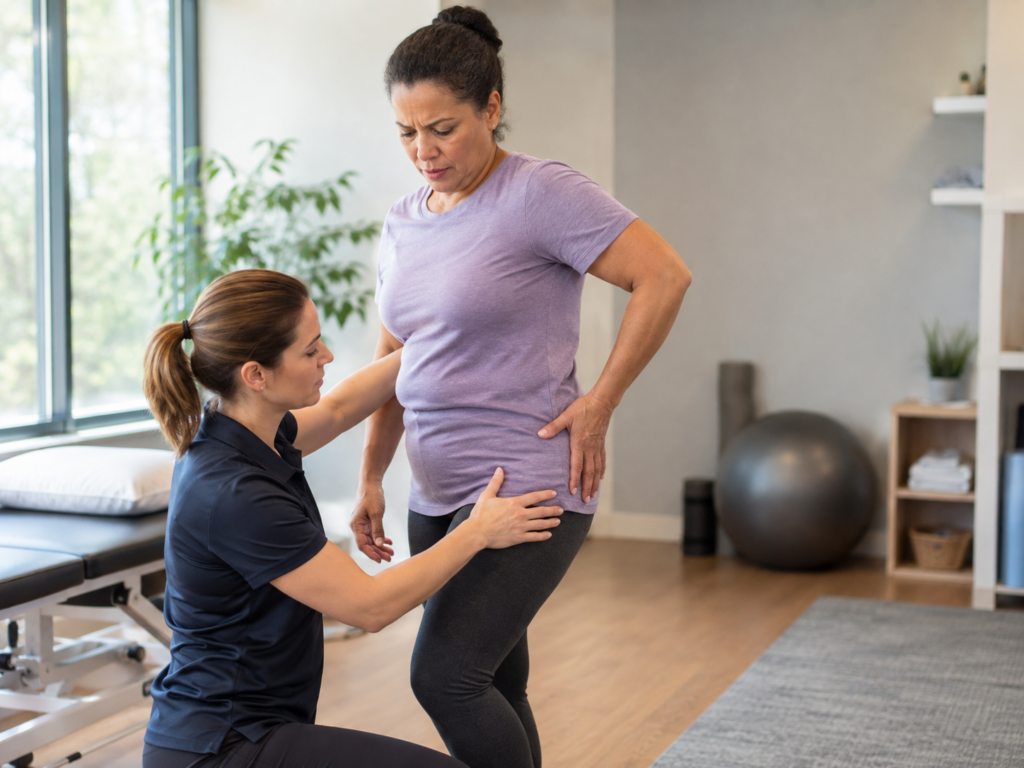
Hip pain treatment can help when aching, stiffness, weakness, or sharp pain makes it harder to walk, climb stairs, exercise, sleep, or complete daily tasks. The hip is a strong ball-and-socket joint. The top of the thigh bone fits into a socket in the pelvis. This design gives the hip stability while allowing the leg to move in many directions. Pain may begin in the joint, muscles, tendons, bursae, bones, or nearby nerves.
At Reform Physical Therapy, we provide one-on-one care based on your symptoms, movement, strength, activity level, and personal goals. Your therapist will work to identify what may be causing the pain and create a plan to help you move with greater comfort and confidence. Treatment may include gentle mobility exercises, hip and core strengthening, balance training, walking practice, hands-on care, education, and a personalized home exercise program.
What Does Hip Pain Feel Like?
Hip pain does not feel the same for everyone. For example, some people feel pain deep in the groin or front of the hip. Meanwhile, others notice discomfort along the outside of the hip, in the buttock, or down the upper leg.
Pain may develop suddenly after an injury. However, it can also build slowly over time. Symptoms may remain in one location, or they may spread into the thigh, lower back, or knee.
Symptoms may include:
- A deep ache in the hip
- Sharp pain during movement
- Groin pain
- Pain along the outside of the hip
- Buttock pain
- Hip stiffness
- Muscle weakness
- Clicking or popping
- Catching or locking
- Trouble walking
- A limp
- Pain while climbing stairs
- Pain when getting out of a chair
- Pain while lying on one side
- Pain during running or sports
- Reduced hip movement
Pain may develop suddenly after an injury. However, it can also build slowly over time. Symptoms may remain in one area, or they may spread into the thigh, lower back, or knee. For additional information, MedlinePlus explains common hip injuries and disorders involving the joint, muscles, tendons, bursae, and bones.
Where Is Hip Pain Located?
The location of your symptoms can help guide the evaluation, however it does not always reveal the exact cause.
Front of the Hip or Groin
Pain in the groin or front of the hip may involve the hip joint, hip flexor muscles, cartilage, or labrum.
It may become worse during:
- Deep squatting
- Running
- Pivoting
- Getting into a car
- Putting on shoes
- Sitting in a low chair
- Bringing the knee toward the chest
Outside of the Hip
Pain on the outside of the hip may involve the tendons or bursa near the greater trochanter, which is the bony area on the side of the upper thigh.
This pain may become worse when:
- Lying on the painful side
- Climbing stairs
- Walking for a long time
- Standing on one leg
- Getting up from a chair
- Running
- Crossing the legs
Back of the Hip or Buttock
Pain in the buttock may come from the hip muscles, tendons, sacroiliac joint, lower back, or nearby nerves. Symptoms connected to the lower back may also cause numbness, tingling, burning, or pain that travels farther down the leg.
Pain Near the Knee
Hip problems can sometimes cause pain that is felt closer to the thigh or knee. This is one reason a full evaluation should include the hip, knee, lower back, strength, balance, and walking pattern.
Common Causes of Hip Pain
Hip pain can have several possible causes. Some conditions begin after a clear injury. However, others develop slowly because of repeated activity, age-related changes, weakness, or changes in movement.
Hip Muscle Strain
A hip strain occurs when a muscle or tendon is stretched or injured. For example, this may happen during running, lifting, sports, slipping, or a sudden change in direction. They can cause pain, tenderness, swelling, weakness, or difficulty moving the hip.
Common areas include the:
- Hip flexors
- Gluteal muscles
- Inner-thigh muscles
- Hamstrings
- Muscles along the outside of the hip
Mild strains may improve with activity changes and gradual exercise. More serious injuries may require medical testing or a longer recovery period.
Hip Bursitis
Bursae are small, fluid-filled sacs that help reduce friction near joints. Irritation of a bursa on the outside of the hip is often called trochanteric bursitis. The main symptom is usually pain over the outside of the hip.
It may become worse when lying on that side, climbing stairs, walking, or standing for long periods. In many cases, nearby tendons are also involved. Treatment may focus on reducing irritation, strengthening the hip, improving movement, and changing activities that place extra pressure on the area.
Gluteal Tendon Pain
The gluteal tendons connect important hip muscles to the upper thigh bone. These tendons help control the pelvis while walking, climbing stairs, and standing on one leg. When they become irritated, pain is often felt along the outside of the hip.
Symptoms may increase during:
- Side sleeping
- Walking uphill
- Climbing stairs
- Running
- Standing on one leg
- Sitting with the legs crossed
Treatment may include gradual strengthening, movement retraining, and temporary changes to painful activities.
Hip Osteoarthritis
Hip osteoarthritis develops when cartilage in the joint changes over time. It may cause pain, stiffness, reduced movement, and trouble with daily activities. Pain is often felt in the groin, front of the hip, thigh, or buttock. Some people also notice stiffness after resting or trouble putting on socks and shoes.
Exercise and physical therapy can help improve function and reduce pain for many patients with mild to moderate hip osteoarthritis.
Treatment may focus on:
- Hip mobility
- Leg strength
- Core strength
- Walking
- Balance
- Activity planning
- Joint protection
- Staying active safely
Hip Impingement
Hip impingement is also called femoroacetabular impingement, or FAI. It occurs when the bones of the hip make abnormal contact during certain movements. This can limit smooth motion and may irritate the joint or nearby cartilage.
Symptoms may include:
- Groin pain
- Pain with deep bending
- Pain during squatting
- Stiffness
- Clicking or catching
- Pain after sitting
- Pain during sports that involve turning
Treatment may include activity changes, hip and core strengthening, movement retraining, and improved control during squatting, running, or sports.
Hip Labral Tear
The labrum is a ring of firm tissue around the edge of the hip socket. It helps support and deepen the joint. A labral tear may develop after an injury or through repeated movement. Symptoms may include groin pain, clicking, catching, locking, stiffness, or pain during twisting.
Physical therapy may address strength, movement, exercise choices, training demands, and other factors that add stress to the hip. Not every labral tear causes symptoms, and imaging findings should be compared with the person’s pain and physical examination.
Snapping Hip Syndrome
Snapping hip syndrome can cause a snapping, clicking, or popping feeling during movement. The sensation may occur when a muscle or tendon moves over a bony area. Some people feel the snapping without pain, while others notice soreness or irritation.
Treatment may include:
- Hip mobility
- Strengthening
- Movement retraining
- Activity changes
- Hands-on care
- A gradual return to sports
Hip Flexor Pain
The hip flexors help lift the knee and move the leg forward. Pain may develop after sprinting, kicking, climbing, repeated sitting, or a sudden increase in exercise. Symptoms are often felt in the front of the hip or groin. Treatment may include reducing painful activity for a short time, restoring comfortable movement, and gradually rebuilding strength.
Osteoporosis and Hip Fracture
Osteoporosis weakens bones and increases the risk of fractures. A hip fracture may happen after a fall, especially in an older adult. It can cause severe pain, difficulty standing, inability to place weight on the leg, or a leg that appears shortened or turned outward. Suspected fractures require immediate medical care. Physical therapy is often an important part of recovery after medical or surgical treatment.
Hip Dysplasia
Hip dysplasia occurs when the ball of the hip does not fit securely within the socket. Some people are diagnosed as babies, while others may not develop symptoms until adolescence or adulthood. Over time, uneven pressure in the joint may contribute to pain or cartilage changes. Treatment depends on the person’s age, symptoms, joint structure, and activity level.
Osteonecrosis
Osteonecrosis occurs when part of the hip bone does not receive enough blood. Hip pain is often the first symptom. Pain may begin during weight-bearing activity and later occur at rest. This condition requires medical evaluation. Treatment depends on the amount of bone affected and whether the joint has begun to collapse.
Pain From the Lower Back
Not all pain around the hip begins inside the hip joint. A lower-back or nerve condition may cause pain in the buttock, outer hip, groin, or thigh. Numbness, tingling, burning, or pain traveling below the knee may suggest nerve involvement. Your therapist may examine the lower back as well as the hip to identify which movements affect your symptoms.
Who May Be More Likely to Develop Hip Pain?
Hip pain can affect people of all ages.
Possible risk factors include:
- A recent fall
- Sports participation
- Running or repeated impact
- A sudden increase in exercise
- Repeated lifting
- Long periods of sitting
- Muscle weakness
- Reduced balance
- A past hip injury
- Hip surgery
- Age-related joint changes
- Osteoporosis
- Arthritis
- Repeated side sleeping
- Work that requires bending or climbing
- Limited ankle or lower-back movement
Having one or more risk factors does not mean that hip pain is certain to develop. It may simply increase the amount of stress placed on the joint or nearby tissues.
How Hip Pain Can Affect Daily Life
Hip pain can make simple activities feel difficult.
You may notice problems with:
- Walking
- Standing
- Climbing stairs
- Getting out of a chair
- Getting into a car
- Putting on socks or shoes
- Sleeping on your side
- Carrying groceries
- Lifting a child
- Exercising
- Running
- Yard work
- Housework
- Working
- Sitting for long periods
Some patients begin moving less because they are worried about making the pain worse. A short period of activity changes may be helpful, but avoiding movement for too long can lead to more stiffness, weakness, and reduced confidence.
How Hip Pain Is Evaluated
Your first appointment begins with a conversation about your pain, health history, work, exercise, and goals.
Your therapist may ask:
- When did the pain begin?
- Was there an injury?
- Where do you feel the pain?
- Does it spread into the leg?
- Do you notice clicking or catching?
- Is the hip stiff?
- Does it hurt while sitting?
- Can you lie on the painful side?
- Does walking increase the pain?
- Have you noticed weakness?
- What activities have you stopped?
- Have you had previous hip surgery?
- Have you had an X-ray or MRI?
- What would you like to return to?
The physical examination may include:
- Hip movement
- Lower-back movement
- Leg strength
- Core strength
- Balance
- Walking
- Squatting
- Stepping
- Single-leg control
- Joint testing
- Muscle testing
- Activities that reproduce your symptoms
Your therapist may also check the knee, ankle, lower back, and nerves when needed. The goal is to understand how your pain responds to movement and which limits may be affecting your daily life.
Do You Need an X-Ray or MRI?
Not every person with hip pain needs imaging. X-rays may help identify fractures, arthritis, changes in joint shape, or other bone concerns. An MRI may be used to examine muscles, tendons, cartilage, the labrum, or other soft tissues.
Imaging may be more important when:
- Pain began after a major fall
- You cannot place weight on the leg
- A fracture is suspected
- Symptoms are severe or worsening
- The hip locks
- Surgery is being considered
- Symptoms are not improving as expected
- A serious condition is suspected
Your symptoms, physical examination, and activity limits should be considered along with any imaging results.
How Hip Pain Treatment May Help
Hip pain treatment may help reduce discomfort, improve movement, rebuild strength, and make daily tasks easier.
A personalized treatment plan may help you:
- Walk more comfortably
- Improve hip movement
- Increase leg strength
- Climb stairs
- Improve balance
- Return to work
- Sleep more comfortably
- Return to exercise
- Improve running or sports movement
- Reduce repeated flare-ups
- Avoid unnecessary activity limits
- Prepare for or recover from surgery
There is no single exercise that is right for every person with hip pain. Your therapist will select treatment based on the location of your symptoms, suspected cause, strength, mobility, and goals.
Treatment Options for Hip Pain
Improving Hip Mobility
Targeted mobility exercises may reduce stiffness and help your hip move more comfortably during everyday activities.
Exercises may focus on:
- Bending the hip
- Moving the leg outward
- Moving the leg behind the body
- Hip rotation
- Lower-back movement
- Gentle stretching
Stretching should not be forced into sharp pain or strong pinching.
Hip Strengthening
The muscles around the hip help control the pelvis, support the leg, and reduce stress during walking and stairs.
Strengthening may include:
- Bridge exercises
- Side-lying leg exercises
- Standing hip exercises
- Resistance-band exercises
- Step-ups
- Squats
- Lunges
- Carrying exercises
- Single-leg exercises
Your therapist will choose a starting level that feels challenging but manageable.
Strengthening the Core
The muscles around your trunk and pelvis help support walking, lifting, running, and sports.
Exercises may include:
- Abdominal bracing
- Controlled leg movements
- Modified planks
- Standing resistance exercises
- Carrying exercises
- Balance activities
This type of training should improve control during movement without making you feel that your spine must stay stiff at all times.
Balance Training
Hip pain and weakness can affect balance.
Your therapist may use:
- Weight shifting
- Single-leg standing
- Stepping exercises
- Reaching
- Walking around obstacles
- Balance surfaces
- Reaction training
Balance exercises may be especially important after surgery, injury, or a fall.
Walking and Stair Training
Pain, weakness, or stiffness may cause limping or make stairs difficult.
Your therapist may help you practice:
- Walking without excessive leaning
- Improving step length
- Using stairs
- Getting up from a chair
- Using a cane or walker when needed
- Gradually increasing walking distance
The goal is to improve safety and reduce extra stress on the hip and other joints.
Manual Therapy
Manual therapy is hands-on treatment used to improve movement or reduce muscle tightness.
It may include:
- Gentle joint movement
- Soft tissue work
- Assisted stretching
- Guided movement
- Scar treatment after surgery
Hands-on treatment may provide short-term relief, but it is usually paired with exercise and active movement.
Activity Changes
Some activities may need to be temporarily adjusted while the hip settles.
This may include changing:
- Running distance
- Hill training
- Squat depth
- Lifting volume
- Stair use
- Sitting time
- Side-sleeping position
- Sports practice
- Work duties
The goal is usually to adjust activity rather than stop all movement.
Running and Movement Analysis
Runners and athletes may benefit from an assessment of how the hip moves during running, jumping, squatting, or landing.
Your therapist may examine:
- Hip and knee position
- Pelvic control
- Step rate
- Foot position
- Trunk movement
- Training volume
- Shoe wear
- Side-to-side differences
Recommendations should be based on your symptoms and goals rather than one “perfect” movement style.
Home Exercise Program
Your home program may include mobility, strengthening, balance, walking, or activity goals. A short program that fits your schedule is often more helpful than a long routine that is difficult to follow. Your therapist will explain how often to complete each exercise and how to adjust it when symptoms change.
Should You Rest When Your Hip Hurts?
A short period of reduced activity may help after an injury or strong flare-up. However, complete rest for a long time can lead to more stiffness and weakness.
You may need to temporarily reduce:
- Running
- Jumping
- Heavy lifting
- Deep squatting
- Long walks
- Hills
- Repeated stairs
- Painful sports movements
Try to keep some comfortable movement in your day when it is safe. Short walks, gentle exercises, and regular position changes may be easier to manage than one long period of activity.
Sleeping With Hip Pain
Pain along the outside of the hip often becomes worse when lying on the painful side.
You may try:
- Sleeping on the opposite side
- Placing a pillow between your knees
- Sleeping on your back
- Placing a pillow under your knees
- Avoiding direct pressure on the painful hip
- Using pillows to support the upper leg
Avoid allowing the top knee to drop far across the body when side sleeping, as this may increase pressure on the outside of the hip.
Sitting With Hip Pain
Sitting may increase groin or front-of-hip pain, especially in a low or soft chair.
Helpful changes may include:
- Using a firmer chair
- Keeping the hips slightly higher than the knees
- Changing position regularly
- Avoiding very low seats
- Standing up during long meetings
- Adjusting the car seat
- Avoiding sitting with the legs crossed
The best sitting position may change depending on the cause of your symptoms.
Walking With Hip Pain
Walking can help maintain strength and mobility, but too much distance may increase symptoms during a flare-up. You may begin with shorter walks and slowly increase the distance. Contact a healthcare provider if you suddenly cannot place weight on the leg or if walking becomes much more difficult after a fall.
Returning to Exercise
You may not need to wait until every symptom is gone before returning to exercise.
A gradual plan may begin with:
- Walking
- Stationary cycling
- Pool exercise
- Light strength training
- Controlled squats
- Step exercises
- Balance work
Running, jumping, cutting, or heavy lifting can be added as strength and movement improve. Your therapist can help you decide when the hip is ready for harder activity.
Hip Pain After Surgery
Physical therapy may be recommended before or after:
- Total hip replacement
- Hip arthroscopy
- Labral repair
- Fracture repair
- Tendon surgery
- Other hip procedures
Treatment after surgery may focus on:
- Swelling management
- Safe walking
- Using a walker or cane
- Hip movement
- Leg strength
- Balance
- Stairs
- Daily tasks
- Returning to work
- Returning to exercise
Your plan will follow the surgeon’s instructions and any movement or weight-bearing limits.
How Long Does Hip Pain Treatment Take?
Recovery time depends on the cause of the pain, the severity of the problem, your overall health, and how long symptoms have been present. A mild muscle strain may improve within several weeks. Tendon pain, arthritis, surgery, or a more serious injury may require more time.
Signs of progress may include:
- Less pain while walking
- Improved sleep
- Easier stairs
- Better hip movement
- Greater strength
- Less limping
- Longer walking distance
- Returning to exercise
- Fewer flare-ups
- More confidence
Recovery does not always happen in a straight line. Some days may feel better than others.
When to Seek Immediate Medical Care
Seek immediate care if hip pain occurs with:
- A serious fall or accident
- Inability to stand or walk
- Inability to place weight on the leg
- A leg that looks shortened or turned outward
- A hip that looks out of place
- Severe swelling
- Sudden severe pain
- Loss of feeling
- A cold, pale, or blue leg
- Fever with a hot, red, swollen joint
- Sudden weakness
- Loss of bowel or bladder control
Severe pain after a fall or injury may indicate a fracture or dislocation and should not wait for a regular physical therapy appointment.
When to Contact Your Medical Provider
Contact your healthcare provider if:
- Pain is getting worse
- You develop a fever
- The hip is red, hot, or swollen
- Pain regularly wakes you at night
- You have unexplained weight loss
- You notice a growing lump
- You have new numbness or weakness
- The hip locks
- You cannot walk normally
- Symptoms began after an injury
- Pain is not improving
- You have a history of cancer
- You are unsure whether exercise is safe
Your physical therapist may also recommend further evaluation if another condition appears to be causing the symptoms.
One-on-One Hip Pain Treatment in Maine
Reform Physical Therapy provides one-on-one care for hip pain at our seven Maine clinic locations.
We help patients dealing with:
- Hip strains
- Hip bursitis
- Gluteal tendon pain
- Hip osteoarthritis
- Hip impingement
- Labral injuries
- Hip weakness
- Pain after surgery
- Running-related hip pain
- Balance problems
- Difficulty walking
- Repeated hip discomfort
Your therapist will listen to your concerns, examine your movement, and create a plan based on the activities that matter most to you.
Schedule a Hip Pain Evaluation
Hip pain can interfere with walking, sleep, work, exercise, and everyday life. You do not have to guess which stretches, exercises, or activities are right for your symptoms. A complete evaluation can help identify what may be causing your pain and what steps may help you return to comfortable movement.