


IT Band Syndrome Treatment
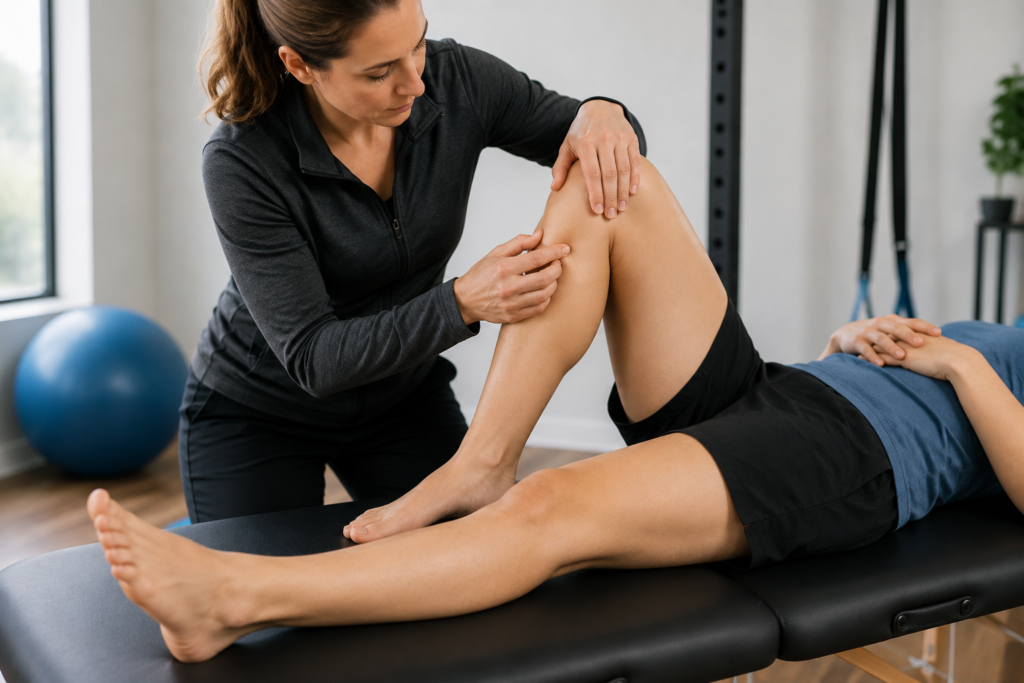
IT band syndrome treatment can help when pain along the outside of the knee or thigh makes it difficult to run, cycle, use stairs, walk downhill, or stay active. The iliotibial band, commonly called the IT band, is a thick band of connective tissue that runs along the outside of the thigh. It begins near the hip and attaches below the knee. The IT band helps support the hip and knee during walking, running, and other repeated leg movements.
IT band syndrome often develops when repeated movement irritates tissues along the outside of the knee. It is especially common among runners, cyclists, and people taking part in endurance sports. At Reform Physical Therapy, we provide one-on-one care based on your symptoms, strength, movement, training routine, and goals. Your therapist will examine more than the painful area. They may also evaluate the hips, knees, ankles, balance, running form, cycling position, and recent changes in activity.
Treatment may include hip and leg strengthening, mobility exercises, movement retraining, activity changes, running or cycling assessments, hands-on care, and a personalized home exercise program.
What Is IT Band Syndrome?
IT band syndrome is an overuse condition that commonly causes pain along the outside of the knee. Some people also feel discomfort along the outer thigh or outside of the hip. Repeated bending and straightening of the knee may irritate the tissues where the IT band passes near the outside of the joint. As a result, pain may develop during running, cycling, hiking, or other repeated leg activity.
The condition may also be called:
- Iliotibial band syndrome
- ITBS
- Iliotibial band friction syndrome
- IT band irritation
- Outer knee overuse pain
IT band syndrome is sometimes called runner’s knee. However, patellofemoral pain syndrome is also commonly given that nickname. Therefore, a proper evaluation is important to determine where the pain is coming from.
What Does IT Band Syndrome Feel Like?
Pain is usually felt along the outside of the knee. At first, symptoms may appear only after several minutes or miles of activity. Over time, the pain may begin sooner or continue after exercise.
Symptoms may include:
- Sharp pain along the outside of the knee
- Burning or aching during running
- Tenderness near the outer knee
- Pain while walking downhill
- Pain during stairs
- Discomfort while cycling
- Pain after increasing mileage
- Tightness along the outside of the thigh
- Clicking or snapping near the knee
- Pain along the outside of the hip
- Symptoms that improve with rest
- Pain that returns when activity resumes
Some people describe the pain as a sharp or burning feeling each time the knee bends.
Swelling is usually limited. However, the outside of the knee may feel sore when pressed.
Where Is IT Band Pain Located?
Pain Along the Outside of the Knee
The most common location is near the bony area on the outside of the knee.
Pain may become worse during:
- Running
- Walking downhill
- Cycling
- Repeated stairs
- Hiking
- Bending and straightening the knee
- Long periods of exercise
Pain Along the Outside of the Thigh
Some people notice tightness or aching along the outer thigh. However, pain spread across the entire thigh may also involve muscles, tendons, nerves, or the lower back. Your therapist will examine the full area rather than assuming every symptom is caused by the IT band.
Pain Along the Outside of the Hip
The IT band begins near muscles and connective tissues around the outer hip. Therefore, symptoms may sometimes be felt near the hip as well as the knee. Outer hip pain may also be caused by gluteal tendon problems or hip bursitis. A full evaluation can help determine which tissues are involved.
Common Causes of IT Band Syndrome
IT band syndrome often develops when the leg is exposed to more repeated stress than it can currently manage. Several factors may contribute at the same time.
Sudden Increases in Running
A quick increase in mileage, speed, hills, or frequency can place more stress on the outside of the knee.
For example, symptoms may begin after:
- Adding several miles at once
- Running more days per week
- Starting hill workouts
- Increasing speed work
- Returning after time off
- Training for a long-distance race
- Switching to harder surfaces
Instead of stopping all activity, treatment may involve temporarily reducing the amount and rebuilding it in smaller steps.
Hill Training
Running downhill requires the knee and hip muscles to control the body repeatedly. As a result, downhill running may increase symptoms. Running on sloped or banked roads may also place uneven stress on the legs.
Cycling Position
Cyclists repeat the same knee motion many times during a ride. A saddle that is too high, a difference in leg length, or poor cleat position may contribute to IT band symptoms. A professional bike fitting may help identify whether the bicycle setup is adding stress.
Hip Weakness
The hip muscles help control the pelvis and thigh during running, walking, and cycling. When these muscles are weak or tire quickly, the leg may move differently. Therefore, hip strengthening is commonly included in IT band syndrome treatment.
Reduced Movement Control
Running and other sports require the hip, knee, ankle, and trunk to work together. Poor control during a single-leg stance may place extra demand on the outside of the knee.
Movement concerns may include:
- The pelvis dropping to one side
- The knee moving inward
- Excessive side-to-side motion
- Reduced trunk control
- Uneven stride length
- Poor landing control
A movement difference does not always mean something is wrong. Your therapist will determine whether it is connected to your symptoms.
Limited Hip or Ankle Mobility
Reduced movement at the hip or ankle may change how the leg absorbs force. For example, limited ankle movement may cause the knee or hip to compensate during running, stairs, or squatting.
Training on the Same Surface
Repeatedly running in the same direction on a track or on the same side of a sloped road may place uneven stress on the legs. Changing routes or direction may help when surface angle is contributing to symptoms.
Reduced Recovery
Training without enough recovery may prevent tissues from adapting.
Contributing factors may include:
- Too few rest days
- Poor sleep
- Back-to-back hard workouts
- Sudden increases in training
- Returning too quickly after injury
- Limited strength training
- Continuing through increasing pain
Is the IT Band a Muscle?
No. The IT band is thick connective tissue rather than a muscle. Because of this, it does not stretch in the same way a muscle does. However, mobility exercises for the hips and nearby muscles may still help reduce tension and improve movement. Treatment usually focuses on more than trying to stretch the band itself.
Is IT Band Syndrome the Same as Knee Arthritis?
No.
Knee arthritis involves changes within the joint and may cause stiffness, swelling, reduced movement, and pain during daily activities.
IT band syndrome usually causes more focused pain along the outside of the knee during repeated activity.
However, more than one condition can be present at the same time.
Is IT Band Syndrome the Same as a Meniscus Injury?
No. The meniscus is cartilage inside the knee joint. A meniscus injury may cause joint-line pain, swelling, catching, or locking. IT band pain is usually located closer to the outer surface of the knee and commonly increases during repeated bending, running, or cycling. A knee that becomes truly locked or cannot fully bend or straighten should be evaluated.
Is IT Band Syndrome the Same as Patellofemoral Pain?
No. Patellofemoral pain is usually felt around or behind the kneecap. IT band syndrome is more often felt along the outside of the knee. Both conditions may become worse with running, stairs, or changes in training. Therefore, the location of the pain and the physical examination are important.
How IT Band Syndrome Can Affect Daily Life
Although IT band syndrome is common among athletes, symptoms may also affect daily activities.
You may notice trouble with:
- Walking downhill
- Using stairs
- Hiking
- Running
- Cycling
- Standing from a chair
- Repeated bending
- Working on your feet
- Sports practice
- Long walks
- Sleeping on the painful side
- Returning to exercise
Some people stop activity as soon as pain appears. However, complete rest for a long time may lead to weakness and make returning more difficult. Instead, treatment usually focuses on reducing painful activity temporarily while maintaining movement and strength.
How IT Band Syndrome Is Evaluated
Your first appointment begins with a conversation about your symptoms, activity level, training history, work, and goals.
Questions About Your Symptoms
Your therapist may ask:
- When did the pain begin?
- Where is the pain located?
- How long can you run before it starts?
- Does walking downhill make it worse?
- Do stairs increase symptoms?
- Have you changed your mileage?
- Have you added hills or speed work?
- Do you cycle?
- Have you changed your bike or saddle position?
- Have you changed shoes?
- Does the knee swell?
- Does the knee catch or lock?
- What activities do you want to return to?
Physical Tests During the Evaluation
Next, your therapist may examine:
- Hip movement
- Knee movement
- Ankle movement
- Hip strength
- Leg strength
- Core control
- Balance
- Walking
- Squatting
- Step-down control
- Single-leg movement
- Running form
- Cycling position
- Areas of tenderness
The evaluation may also include the lower back, hip, and nerves when symptoms do not follow a typical pattern. Physical therapists can help people with IT band syndrome reduce pain, restore movement, and return to activity or sport.
Do You Need an X-Ray or MRI?
Most people with IT band syndrome do not need imaging right away. The condition is often identified through the symptom history and physical examination. An X-ray may be used when a bone injury, arthritis, or another joint condition is suspected.
An MRI may be considered when:
- Symptoms are not improving
- The diagnosis is unclear
- The knee locks
- A meniscus injury is suspected
- A major injury occurred
- Severe swelling is present
- Surgery or further medical care is being considered
Imaging should be considered along with the person’s symptoms and examination.
How IT Band Syndrome Treatment May Help
IT band syndrome treatment may help reduce outer knee pain, improve strength, restore movement, and support a gradual return to activity.
A personalized plan may help you:
- Run more comfortably
- Walk downhill
- Use stairs
- Return to cycling
- Improve hip strength
- Improve single-leg control
- Manage training changes
- Reduce repeated flare-ups
- Improve balance
- Return to sports
- Build confidence
IT band syndrome is commonly managed with physical therapy and temporary activity changes.
IT Band Syndrome Treatment Options
Temporary Activity Changes
Painful activities may need to be reduced for a short time.
For example, your therapist may recommend adjusting:
- Running mileage
- Running frequency
- Hills
- Speed work
- Downhill running
- Cycling distance
- Resistance during cycling
- Stair workouts
- Jumping
- Sports practice
The goal is usually to lower the stress enough for symptoms to settle without stopping all movement.
Hip Strengthening
The hip muscles help control the pelvis and thigh during single-leg activities.
Exercises may include:
- Bridges
- Side-lying leg raises
- Standing hip exercises
- Resistance-band walking
- Step-ups
- Step-downs
- Squats
- Lunges
- Single-leg exercises
Strengthening may begin with simple movements and progress as symptoms improve.
Knee and Leg Strengthening
The muscles around the knee help absorb force during running, walking, and stairs.
Exercises may include:
- Squats
- Leg presses
- Step exercises
- Hamstring exercises
- Calf raises
- Split squats
- Controlled single-leg movements
Core and Trunk Strengthening
The trunk helps control the pelvis and leg during running and other activities.
Core exercises may include:
- Modified planks
- Standing resistance exercises
- Carrying exercises
- Controlled leg movements
- Balance activities
The goal is to improve control without making the body feel stiff.
Improving Hip Mobility
Hip mobility exercises may help when stiffness affects running or cycling movement.
Treatment may include:
- Hip rotation exercises
- Hip flexor mobility
- Gluteal mobility
- Gentle stretching
- Guided joint movement
However, stretching should not be forced into sharp pain.
Improving Ankle Mobility
Limited ankle movement may affect how the knee and hip move.
Exercises may include:
- Calf stretching
- Ankle mobility drills
- Heel raises
- Foot strengthening
- Balance work
Balance and Single-Leg Training
Running requires repeated balance on one leg.
Exercises may include:
- Single-leg standing
- Reaching
- Step-downs
- Direction changes
- Uneven surfaces
- Landing practice
- Sport-specific drills
Movement Retraining
Your therapist may assess how the hip, knee, foot, and trunk move together.
Movement retraining may focus on:
- Running
- Squatting
- Stairs
- Jumping
- Landing
- Walking
- Cycling
- Changing direction
Small changes may be introduced when they improve control or reduce symptoms.
Running Assessment
A running assessment may review:
- Weekly mileage
- Recent mileage changes
- Hills
- Running surface
- Step rate
- Stride length
- Foot position
- Knee control
- Hip control
- Trunk movement
- Shoe wear
- Recovery days
There is no single perfect running form. Recommendations should match the runner’s symptoms, goals, and current movement.
Professional Bike Fitting
Cyclists may benefit from a professional bike fitting.
Your therapist may examine:
- Saddle height
- Saddle position
- Handlebar reach
- Cleat position
- Knee angle
- Hip movement
- Pedaling pattern
- Side-to-side differences
Bike setup concerns such as a saddle that is too high or a poorly positioned cleat may contribute to IT band symptoms.
Manual Therapy
Hands-on treatment may be used to improve movement or reduce tightness in nearby muscles.
Treatment may include:
- Soft tissue work
- Gentle joint movement
- Assisted stretching
- Guided mobility
- Movement with pressure
Manual therapy may provide short-term relief. However, exercise and activity changes are often needed for longer-term progress.
Foam Rolling
Foam rolling may help some people reduce the feeling of tightness in the outer thigh and nearby muscles. However, pressing directly over a painful outer knee may increase irritation. Your therapist can show you where and how much pressure to use.
Home Exercise Program
Your home program may include strength, mobility, balance, walking, cycling, or running goals. A short program completed regularly is often more helpful than a long routine that is difficult to follow.
Should You Stretch the IT Band?
Stretching may help the muscles around the hip and thigh. However, the IT band itself is thick connective tissue and does not lengthen easily.
Your therapist may recommend mobility work for the:
- Hip flexors
- Gluteal muscles
- Quadriceps
- Hamstrings
- Calves
Stretching alone may not address weakness, movement control, or training problems.
Should You Rest With IT Band Syndrome?
A short break from the activity that causes sharp pain may help. However, complete rest is not always required.
You may be able to continue:
- Short walks
- Gentle strength training
- Pool exercise
- Easy cycling when pain-free
- Upper-body exercise
- Other low-impact activity
Your therapist can help you choose activities that maintain fitness without causing a strong flare-up.
Can You Walk With IT Band Syndrome?
Walking is often manageable when symptoms remain mild.
During a flare-up, consider:
- Shorter walks
- Flatter routes
- Avoiding steep downhill areas
- Taking more breaks
- Wearing comfortable shoes
- Increasing distance slowly
Stop and seek medical guidance if the pain is severe, the knee gives out, or you cannot place weight on the leg.
Can You Run With IT Band Syndrome?
Some runners can continue with changes. Others may need a short break.
A temporary plan may include:
- Reducing mileage
- Avoiding hills
- Removing speed work
- Using run-walk intervals
- Running every other day
- Choosing flat routes
- Stopping before pain becomes sharp
- Strengthening on non-running days
The return plan should be based on your symptoms rather than one fixed schedule.
Returning to Running
A gradual return may begin after walking, stairs, and basic strengthening are manageable.
Your therapist may progress you through:
- Pain-free walking
- Short run-walk intervals
- Easy continuous running
- Increased distance
- Hills
- Speed work
- Normal training
Only one major training factor should usually be increased at a time.
Returning to Cycling
Cyclists may begin with:
- Shorter rides
- Lower resistance
- Flat routes
- Easier cadence
- More recovery time
- Bike adjustments when needed
Distance and resistance can increase as symptoms settle.
How Long Does IT Band Syndrome Treatment Take?
Recovery time depends on how long symptoms have been present, training demands, strength, movement, and how well activity can be adjusted.
Some people improve within a few weeks. However, symptoms that have been present for months may require more time.
Signs of progress may include:
- Running farther before pain begins
- Less pain on stairs
- Easier downhill walking
- Improved hip strength
- Better single-leg balance
- Returning to cycling
- Fewer flare-ups
- Greater confidence
Progress does not always happen in a straight line. Even so, improvements in activity and function are important.
Can IT Band Syndrome Return?
Yes.
Symptoms may return after:
- A sudden increase in mileage
- Adding hills too quickly
- Reduced strength
- Limited recovery
- Bike-fit changes
- Returning to sports too quickly
- Ignoring early symptoms
A long-term plan may include strength training, gradual activity increases, recovery days, and early changes when pain returns.
When to Seek Immediate Medical Care
Seek immediate medical care if knee or leg pain occurs with:
- A serious accident
- A visible deformity
- Inability to place weight on the leg
- Severe or rapidly increasing swelling
- A hot, red joint with fever
- Sudden calf swelling
- Chest pain
- Trouble breathing
- A cold, pale, or blue foot
- Loss of feeling
- Severe weakness
These symptoms may point to a fracture, infection, blood clot, circulation problem, or another condition that requires prompt care.
When to Contact Your Medical Provider
Contact your healthcare provider if:
- Pain continues to worsen
- Swelling does not improve
- The knee catches or locks
- The knee repeatedly gives out
- You cannot fully bend or straighten it
- Symptoms began after a major injury
- Pain regularly wakes you at night
- You develop fever or redness
- You notice numbness or weakness
- You are unsure whether exercise is safe
Your physical therapist may also recommend further testing when symptoms do not match IT band syndrome.
IT Band Syndrome Treatment in Maine
Reform Physical Therapy provides one-on-one IT band syndrome treatment at our Maine clinic locations.
We help runners, cyclists, athletes, and active adults who want to:
- Reduce outer knee pain
- Return to running
- Return to cycling
- Walk downhill comfortably
- Use stairs
- Improve hip strength
- Improve balance
- Manage training changes
- Reduce repeated flare-ups
- Return to sports
Your therapist will assess your movement, strength, training habits, and goals before building your treatment plan.
Schedule an IT Band Syndrome Evaluation
Pain along the outside of the knee can make running, cycling, hiking, and everyday movement difficult.
You do not have to guess whether the problem is caused by tightness, weakness, training, running form, or bike position. A complete evaluation can help identify the factors affecting your symptoms.