

Functional Movement Training
Have you ever noticed that everyday movements feel more difficult than they used to? Maybe bending down to pick something up causes discomfort, getting out of a chair requires extra effort, or lifting groceries leaves you feeling unsteady. Even simple activities can become frustrating when your body doesn’t move as comfortably or efficiently as you’d like. Your body performs hundreds of movements throughout the day, often without much thought. Functional movement training can help improve how you walk, reach, squat, lift, and change positions by teaching your muscles, joints, and nervous system to work together. When pain, weakness, injury, or reduced mobility interferes with these movements, everyday activities can become challenging.
At Reform Physical Therapy, functional movement training focuses on improving the strength, mobility, coordination, and movement control needed for daily activities. Our physical therapists develop individualized treatment plans that address specific movement limitations while helping you build confidence in your physical abilities. Whether you’re recovering from surgery, managing a chronic condition, or working toward a more active lifestyle, our goal is to help you move more comfortably and confidently during the activities that matter most.
What Is Functional Movement Training?
Functional movement training is a physical therapy approach that uses purposeful exercises and movement practice to improve your ability to perform everyday activities. Unlike exercises that focus on a single muscle, functional movement training often incorporates multiple muscle groups and joints working together. These activities reflect the movements your body performs during daily life, work, exercise, and recreation. For example, standing up from a chair requires coordinated strength and control through your hips, knees, ankles, and trunk. Reaching overhead involves shoulder mobility, muscle coordination, and postural stability. Carrying groceries requires strength, balance, and the ability to control your body while moving.
When these movement patterns become difficult, physical therapists can identify contributing limitations and develop exercises that address them. Your treatment plan may include strengthening, mobility exercises, balance activities, and task-specific movement practice. Rather than focusing only on how an exercise looks, your therapist considers how well you can perform meaningful activities safely and comfortably.
Why Is Functional Movement Important?
Functional movement allows you to complete everyday tasks efficiently while adapting to different physical demands. Your muscles and joints must work together to produce movement, maintain stability, and respond to changes in position. When one area becomes weak, stiff, painful, or difficult to control, other parts of your body may compensate. These compensations can sometimes make activities less efficient or contribute to additional discomfort.
Improving functional movement may help support:
- Greater comfort during everyday activities
- Improved strength and mobility
- Better balance and coordination
- More efficient movement patterns
- Increased confidence with physical tasks
- Improved ability to bend, lift, reach, and squat
- Greater independence with daily activities
- A more comfortable return to exercise or recreation
The specific benefits depend on your condition, physical abilities, and rehabilitation goals.
What Can Affect Your Functional Movement?
Movement limitations can develop gradually or appear following an injury, surgery, illness, or change in activity level. Several factors may contribute to difficulty performing everyday movements.
Muscle Weakness
Your muscles provide the strength needed to support your body and complete physical tasks. Weakness in your legs, hips, core, or upper body may make activities such as standing, climbing stairs, or lifting objects more difficult. Targeted strengthening exercises can help address these limitations when appropriate.
Limited Joint Mobility
Your joints need adequate mobility to perform movements comfortably. Stiffness in your hips, knees, ankles, shoulders, or spine may affect how you bend, reach, walk, or change positions. Physical therapists can assess joint mobility and incorporate exercises that address relevant restrictions.
Reduced Balance and Stability
Balance helps you maintain control while standing, walking, reaching, and shifting your weight. When stability decreases, certain movements may feel unpredictable or unsafe. Functional movement training may include balance exercises that help improve control during everyday activities.
Changes in Coordination
Your nervous system coordinates the timing and sequence of muscle activity during movement. Injuries, neurological conditions, and sensory changes can interfere with this coordination. Movement retraining may help improve your ability to perform specific tasks with greater accuracy and control.
Pain or Previous Injuries
Pain can change how you move, particularly when certain positions or activities feel uncomfortable. Some individuals begin avoiding movements or relying on compensatory strategies to reduce discomfort. Your physical therapist can help identify appropriate ways to restore movement while respecting your symptoms and recovery needs.
Reduced Physical Endurance
Even when you have enough strength to complete an activity, limited endurance may make it difficult to continue for an extended period. Functional movement training may incorporate gradually progressed exercises to improve activity tolerance and support daily routines.
Common Signs You May Benefit From Functional Movement Training
Movement difficulties don’t always involve severe pain or a major injury. Sometimes, small changes in your physical abilities make everyday activities more demanding.
You may benefit from a physical therapy evaluation if you experience:
- Difficulty standing up from a chair
- Discomfort when bending or squatting
- Trouble lifting or carrying objects
- Limited ability to reach overhead
- Difficulty getting down to or up from the floor
- Reduced confidence with stairs
- Trouble maintaining balance while moving
- Stiffness during everyday activities
- Difficulty returning to exercise after an injury
- Fatigue during routine physical tasks
- Changes in movement following surgery
- Reduced mobility or independence
A physical therapist can evaluate your movement patterns and determine which limitations may benefit from targeted rehabilitation.
How Does Functional Movement Training Work?
Functional movement training combines movement assessment, targeted exercises, and task-specific practice. Your physical therapist begins by identifying activities that feel difficult and examining the physical factors contributing to those challenges. Treatment may focus on improving strength, mobility, stability, and coordination while gradually introducing movements that reflect your everyday needs.
Movement Assessment
Your therapist may observe how you perform activities such as squatting, bending, reaching, stepping, or standing from a chair. These assessments help identify limitations in joint mobility, strength, balance, and movement control. Rather than assuming that every patient should move in exactly the same way, your therapist considers your anatomy, symptoms, and functional goals.
Strength and Stability Training
Functional activities often require several muscle groups to work together. Your therapist may introduce exercises that strengthen the hips, legs, core, shoulders, or other areas involved in your movement difficulties. These activities can help improve your ability to support and control your body during daily tasks.
Mobility and Flexibility Exercises
Limited mobility may affect your ability to reach certain positions comfortably. When appropriate, your therapist may incorporate stretching, joint mobility exercises, or controlled movements that help improve your available range of motion. The goal is to support the mobility needed for your specific activities rather than pursuing flexibility for its own sake.
Movement Pattern Retraining
Movement retraining focuses on practicing activities that have become uncomfortable, inefficient, or difficult. Your therapist may guide you through different movement strategies, adjust exercise difficulty, or help you improve control during specific tasks. Repeated practice can help you become more comfortable performing meaningful movements.
Progressive Functional Exercises
As your strength and movement control improve, your therapist may gradually increase exercise demands. Progressions might involve adding resistance, increasing movement complexity, or practicing activities in different positions. Your rehabilitation program will reflect your abilities and response to treatment.
Common Functional Movement Training Exercises
Physical therapists use a variety of exercises to address different movement challenges. Your treatment plan may include the following activities, depending on your needs.
Sit-to-Stand Exercises
Standing up from a chair requires strength and coordination through your hips, knees, ankles, and trunk. Sit-to-stand exercises help you practice this important daily movement while improving lower-body control. Your therapist may adjust chair height, assistance, or resistance to match your abilities.
Squatting Exercises
Squatting involves coordinated movement through several joints and muscle groups. These exercises may help improve your ability to lower your body, lift objects, and complete household activities. Your therapist will adjust squat depth, support, and resistance according to your mobility and comfort.
Bending and Hip-Hinge Training
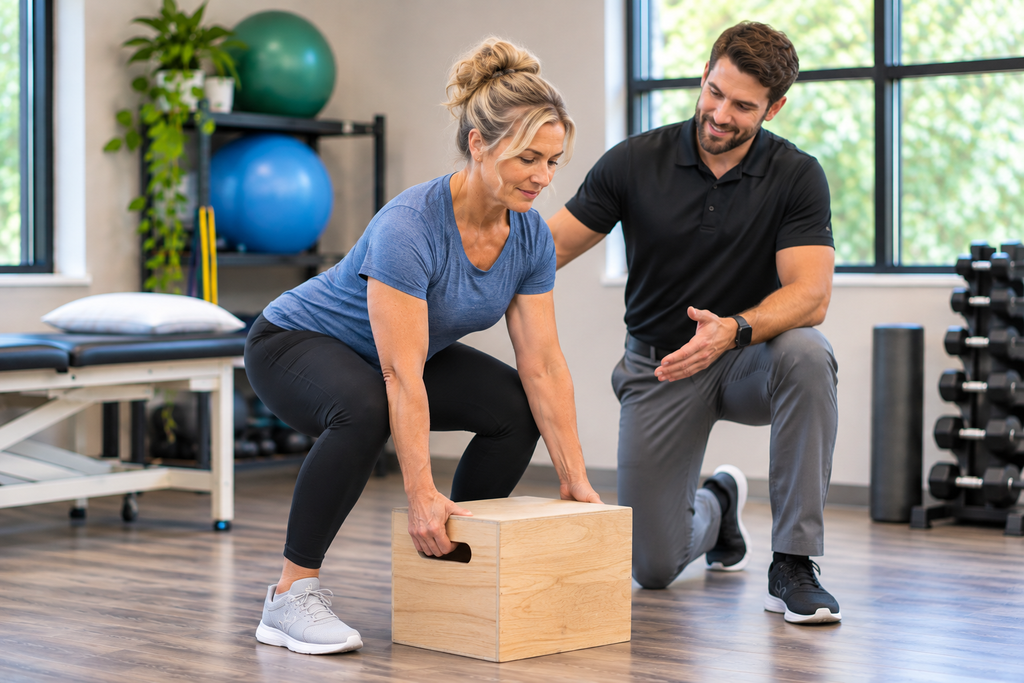
Bending forward is part of many daily activities, including picking up objects, reaching into cabinets, and completing household tasks. Hip-hinge exercises help you practice coordinated movement through your hips and trunk. Your therapist may introduce different strategies based on your physical abilities and the demands of your activities.
Reaching and Lifting Activities
Reaching and lifting require adequate mobility, strength, and coordination. Exercises may involve moving objects between different heights, practicing controlled lifting, or improving upper-body movement patterns. Your therapist will consider your symptoms and functional goals when selecting appropriate activities.
Step-Ups and Stair Training
Navigating stairs requires lower-body strength, balance, and movement control. Step-up exercises may help improve your ability to transfer weight, control your legs, and move between different heights. Treatment can progress toward stair-related activities when appropriate.
Carrying and Walking Exercises
Carrying objects while walking challenges your strength, balance, and coordination. Your therapist may incorporate controlled carrying exercises or walking activities that reflect everyday responsibilities. These exercises can help prepare you for tasks such as carrying groceries, moving household items, or returning to work.
Floor Transfer Training
Getting down to the floor and returning to standing can be challenging after an injury or during periods of reduced mobility. When appropriate, your therapist may teach movement strategies that help you perform floor transfers more safely and efficiently. These activities can be especially valuable for individuals who need to kneel, garden, play with children, or complete tasks near the floor.
Functional Movement Training for Balance and Vestibular Disorders
Vestibular disorders can affect your ability to maintain stability during head movements, changes in position, and everyday activities. Some individuals experience dizziness when bending forward, reaching overhead, turning, or moving between sitting and standing. Others develop movement limitations because they avoid activities that trigger symptoms. Functional movement training may complement vestibular rehabilitation by helping patients practice meaningful activities while addressing strength, balance, and coordination. Your physical therapist may incorporate controlled reaching, weight shifting, stepping, and position changes into your treatment plan.
Depending on your symptoms, rehabilitation may also include balance training, gait training, gaze-stabilization training, or habituation exercises. Not every vestibular condition requires the same treatment approach. Your therapist will determine which activities are appropriate based on your evaluation findings.
Functional Movement Training After Surgery
Surgery can temporarily affect your strength, mobility, balance, and confidence with movement. Pain, swelling, muscle weakness, and activity restrictions may make everyday tasks more challenging during recovery. As healing progresses, functional movement training can help patients practice the activities they need to regain independence.
After Knee Replacement
Following knee replacement surgery, some individuals struggle with standing from a chair, climbing stairs, or bending their knee during everyday activities. Functional exercises may help improve lower-body strength, knee control, and mobility as recovery progresses.
After Hip Replacement
Hip replacement recovery may involve changes in muscle strength, balance, and movement control. Your therapist may incorporate sit-to-stand exercises, stepping activities, and functional strengthening while following your surgeon’s recommendations.
After Shoulder Surgery
Shoulder procedures can temporarily limit your ability to reach, lift, carry, or perform household tasks. Once your recovery protocol allows, functional movement exercises may help restore appropriate upper-body movement and strength.
After Other Orthopedic Procedures
Functional movement training may also support rehabilitation following certain ankle, foot, spine, or other orthopedic surgeries. Your therapist will consider healing timelines, weight-bearing restrictions, and medical precautions before progressing activities.
Functional Movement Training for Neurological Conditions
Neurological conditions can affect strength, coordination, balance, sensation, and movement control. These changes may interfere with everyday activities, even when a person can perform individual exercises successfully. Functional movement training emphasizes practicing meaningful tasks while addressing the physical challenges that make those activities difficult.
Stroke Rehabilitation
A stroke may affect muscle control, strength, balance, or coordination. Functional movement exercises may focus on standing, transferring between surfaces, reaching, stepping, and walking. Your therapist will consider the effects of the stroke and develop activities that support your individual rehabilitation goals.
Parkinson’s Disease
Parkinson’s disease can affect movement initiation, posture, step length, and the ability to perform certain movements smoothly. Functional training may include practicing larger movements, standing from a chair, turning, and completing activities that require coordinated movement. Your therapist may also incorporate movement cues and balance exercises when appropriate.
Multiple Sclerosis
Multiple sclerosis can contribute to weakness, fatigue, coordination changes, and reduced mobility. Functional movement training may help individuals practice daily activities while improving strength and movement control. Treatment should account for fatigue, heat sensitivity, symptom fluctuations, and the need for appropriate recovery periods.
Peripheral Neuropathy
Peripheral neuropathy may reduce sensation in the feet and interfere with balance or awareness of body position. Functional movement exercises can help address certain challenges with standing, stepping, and walking while accounting for sensory limitations. Your therapist may also incorporate balance training and gait training to support safer mobility.
Functional Movement Training for Older Adults
Everyday movements can become more difficult when strength, balance, flexibility, or endurance decreases. Some older adults notice challenges getting out of low chairs, climbing stairs, reaching into cabinets, or carrying household items. Functional movement training may help address these limitations through exercises that reflect daily activities. Your therapist may focus on improving lower-body strength, standing stability, movement coordination, and the ability to change positions comfortably. For individuals concerned about falling, treatment may also include fall prevention strategies. The goal is to support independence and help patients continue participating in meaningful activities.
Functional Movement Training for Athletes and Active Individuals
Functional movement training isn’t limited to individuals recovering from surgery or managing chronic conditions. Athletes and physically active individuals may also benefit from movement retraining following injuries or periods of reduced activity. Sports and recreational activities often require coordinated strength, balance, mobility, and control. Your therapist may assess movements such as squatting, stepping, lunging, reaching, or changing directions to identify limitations that affect your activity goals. Rehabilitation may include progressive strengthening, movement control exercises, and task-specific training.
When appropriate, your therapist can help you transition toward more demanding activities as your recovery progresses.
Functional Movement Training for Work and Daily Responsibilities
Many jobs require repetitive movements, prolonged standing, lifting, carrying, reaching, or changing positions throughout the day. When pain or reduced mobility interferes with these activities, completing work responsibilities may become difficult. Functional movement training can help address the physical demands of your job through targeted exercises and movement practice. For example, someone who frequently lifts objects may benefit from strengthening and practicing appropriate lifting strategies. Another individual who spends long periods standing may need exercises that address endurance, stability, and lower-body strength. Your therapist will consider your work responsibilities and individual limitations when developing your rehabilitation plan.
Functional Movement Training vs. Strength Training
Although functional movement training often includes strengthening exercises, the two approaches have different primary goals. Strength training focuses on improving the ability of your muscles to produce force. Functional movement training focuses on applying strength, mobility, balance, and coordination to meaningful activities. For example, improving leg strength may help support standing and walking. Functional training builds on that ability by practicing activities such as standing from a chair, climbing stairs, or lifting an object. Many physical therapy programs combine both approaches to support functional improvement.
Functional Movement Training vs. Coordination Training
Functional movement training and coordination training also share important similarities. Coordination training emphasizes movement timing, accuracy, sequencing, and control. Functional movement training applies these abilities to activities that reflect everyday tasks and personal goals. For example, coordination exercises may help improve controlled foot placement, while functional training may incorporate stepping over obstacles or navigating stairs. Your physical therapist may combine these approaches when movement control contributes to functional limitations.
What to Expect During Your First Functional Movement Training Appointment
Your first visit begins with a conversation about your medical history, symptoms, and activities that feel difficult. Your physical therapist may ask which movements cause discomfort, how your limitations affect daily life, and what you hope to accomplish through rehabilitation.
The evaluation may include assessments of:
- Functional movement patterns
- Muscle strength and endurance
- Joint mobility and flexibility
- Balance and postural control
- Coordination and body awareness
- Walking and stepping ability
- Squatting, bending, or reaching movements
- Sit-to-stand performance
- Pain or movement-related symptoms
- Activity tolerance
Your therapist will use these findings to identify specific limitations and develop a personalized treatment plan. Some patients begin with gentle strengthening or supported movements. Others may progress directly into more challenging functional exercises. As your abilities improve, your therapist will adjust exercise difficulty and introduce activities that reflect your personal goals. A home exercise program may also help you practice appropriate movements between appointments.
Is Functional Movement Training Safe?
Functional movement training should challenge your physical abilities while respecting your symptoms and medical needs. Your physical therapist will consider factors such as pain, balance, strength, recent surgery, and other health conditions before selecting exercises. Some activities may require modifications, supportive equipment, or additional assistance. Exercises should not force you through severe pain or movements that violate medical precautions. Your therapist can adjust resistance, movement range, repetitions, and exercise complexity to help you participate safely.
How Long Does Functional Movement Training Take?
The length of rehabilitation varies depending on your condition, physical abilities, and functional goals. Some individuals begin noticing improvements in movement confidence or comfort within several weeks, while others require longer treatment programs. Recovery following surgery may follow a different timeline than rehabilitation for a chronic neurological condition. Your therapist will monitor your progress and adjust exercises as your abilities change. Rather than following a fixed schedule, treatment focuses on meaningful improvements in your ability to perform everyday activities.
Why Choose Reform Physical Therapy for Functional Movement Training?
At Reform Physical Therapy, we understand that movement limitations can affect more than your physical abilities. They may influence your confidence, independence, and participation in activities you enjoy. Our team focuses on identifying the challenges that matter most to you and developing an individualized rehabilitation program.
Personalized, One-on-One Physical Therapy
Our independent, woman-owned practice emphasizes personalized treatment and one-on-one appointments. Your physical therapist will take the time to evaluate your movement, understand your symptoms, and develop exercises that reflect your rehabilitation goals.
Consistency Throughout Your Care
At Reform Physical Therapy, you’ll work with the same physical therapist throughout your treatment. This continuity allows your provider to monitor your progress, recognize changes in your abilities, and adjust your program as needed.
Rehabilitation That Supports Everyday Life
Our goal extends beyond helping you complete exercises in the clinic. We want to help you work toward meaningful improvements in the activities that matter most, whether that means lifting groceries, navigating stairs, returning to exercise, or moving more comfortably throughout your day. With seven clinics throughout Southern and Midcoast Maine, our team can help you identify the location and rehabilitation services that best meet your needs.
Move Better, Feel Stronger, and Regain Confidence
Everyday movement shouldn’t feel like an obstacle. When pain, weakness, stiffness, or reduced coordination makes physical activities more difficult, individualized rehabilitation may help you work toward greater comfort and independence. Through functional movement training, physical therapy may help improve strength, mobility, stability, and movement control while supporting your ability to complete meaningful activities. Whether you’re recovering from an injury, managing a chronic condition, or working toward a more active lifestyle, Reform Physical Therapy is here to support your goals.
If you experience sudden weakness, new difficulty walking, facial drooping, or trouble speaking, call 911. These symptoms may indicate a medical emergency.