


Bowel Dysfunction
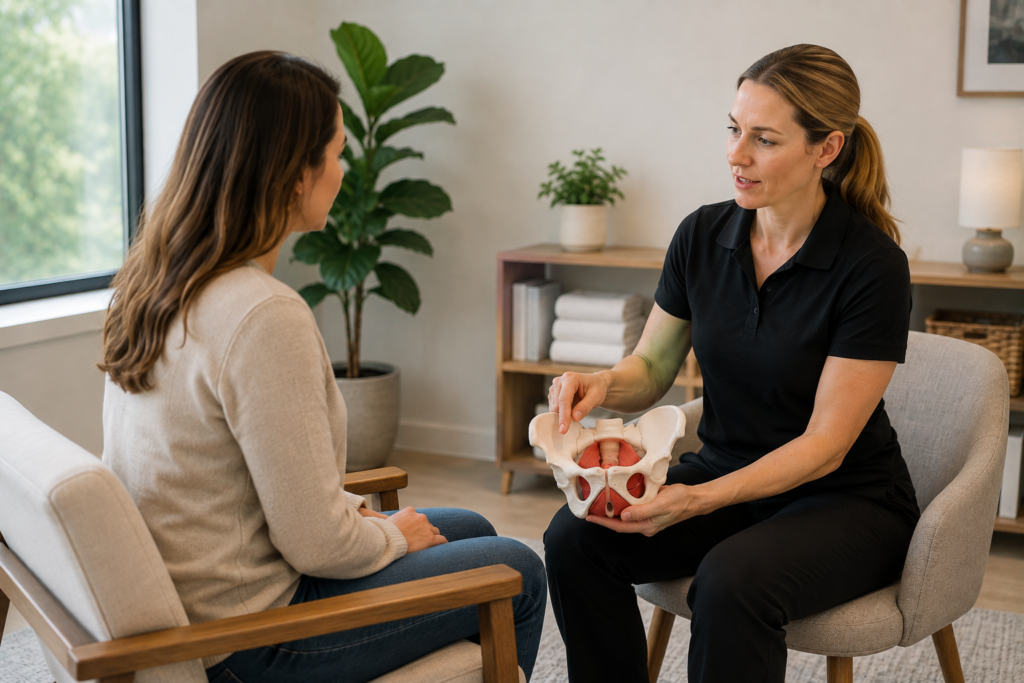
Bowel dysfunction can make something as routine as using the bathroom feel stressful, uncomfortable, or unpredictable. You may struggle with constipation, frequent straining, difficulty completely emptying your bowels, sudden urgency, or accidental bowel leakage. These symptoms can have many causes. Sometimes the digestive system is responsible. In other cases, the pelvic floor muscles may be too tight, weak, or poorly coordinated.
The pelvic floor plays an important role in bowel control. These muscles need to contract when you need to hold stool and relax appropriately when you are ready to have a bowel movement. Problems with strength, relaxation, or coordination can make this process more difficult. At Reform Physical Therapy, pelvic floor physical therapy for bowel dysfunction is available at our South Portland clinic. Treatment is private and individualized based on your symptoms, medical history, pelvic floor function, and goals.
Understanding Bowel Dysfunction
Bowel dysfunction is a broad term rather than one specific diagnosis. It can include difficulty having a bowel movement, problems controlling bowel movements, or changes in how the muscles around the rectum and pelvic floor work together. Symptoms can range from occasional difficulty to problems that interfere with work, travel, exercise, social activities, or everyday life. Because bowel problems have many possible causes, medical evaluation is important when symptoms are new, persistent, severe, or unexplained.
Common Symptoms of Bowel Dysfunction
Bowel symptoms can look very different from person to person. You may experience constipation, frequent straining, difficulty starting a bowel movement, incomplete emptying, pain while using the bathroom, bowel urgency, or accidental leakage. Some people need a long time to have a bowel movement. Others feel as though stool is still present even after they finish. Understanding exactly what happens when you use the bathroom can help determine whether pelvic floor dysfunction may be involved.
How the Pelvic Floor Helps With Bowel Movements
Your pelvic floor muscles surround and support the lower portion of the pelvis. These muscles help control the opening and closing around the rectum and anus. When you are not using the bathroom, the muscles help maintain bowel control. During a bowel movement, the pelvic floor needs to relax and coordinate with changes in abdominal pressure. If the muscles tighten instead of relaxing, passing stool may become much more difficult. On the other hand, muscles that are weak or injured may have difficulty maintaining bowel control.
Constipation and the Pelvic Floor
Constipation does not always come from the pelvic floor. Diet, hydration, medications, digestive conditions, activity levels, and other medical factors can contribute. However, some people experience constipation because the pelvic floor does not relax correctly during a bowel movement. Instead of allowing stool to pass, the muscles may remain tense or contract at the wrong time. This can lead to straining, prolonged bathroom trips, discomfort, or the feeling that you have not completely emptied.
Difficulty Emptying the Bowels
Feeling like you cannot completely empty your bowels can be frustrating. You may finish using the bathroom only to still feel pressure or the sensation that stool remains. Some people return to the bathroom repeatedly because they never feel completely finished. Pelvic floor coordination is one factor that may contribute to incomplete emptying. A pelvic health physical therapist can evaluate whether the muscles are relaxing and coordinating appropriately during the bowel movement process.
Straining During Bowel Movements
Occasional straining can happen to almost anyone. Regularly needing to push hard to have a bowel movement is different. Repeated straining can place additional pressure through the pelvic floor. Over time, it may also contribute to other pelvic health concerns. Your therapist can look at breathing, positioning, pelvic floor relaxation, and how you manage abdominal pressure while using the bathroom. The goal is to make bowel movements easier without excessive pushing.
Pelvic Floor Dyssynergia
The pelvic floor muscles need to coordinate during a bowel movement. When that coordination does not happen correctly, the muscles may tighten when they should relax. This is sometimes called pelvic floor dyssynergia or a defecatory disorder. Someone with this type of problem may feel the urge to have a bowel movement but still struggle to pass stool. Symptoms can include straining, incomplete emptying, prolonged bathroom trips, or the need to change positions repeatedly. Physical therapy may focus on retraining this muscle coordination.
Tight Pelvic Floor Muscles and Bowel Dysfunction
A tight pelvic floor can make bowel movements difficult. If the muscles surrounding the rectum remain tense, it may be harder for them to relax enough for stool to pass comfortably. Other symptoms may occur alongside bowel problems, including pelvic pain, pain with intercourse, urinary symptoms, or discomfort with sitting. Treatment may focus on relaxation rather than strengthening when excessive muscle tension is present.
Weak Pelvic Floor Muscles
Weakness can create a different type of bowel problem. The pelvic floor and anal sphincter muscles help maintain bowel control. When these muscles are weak or injured, it may become more difficult to hold stool or control gas. Muscle injury can occur for several reasons, including trauma, surgery, and childbirth. NIDDK notes that injury or weakness involving the anus, pelvic floor, or rectal muscles can contribute to fecal incontinence. When weakness is identified, an individualized strengthening program may be appropriate.
Are Kegel Exercises Helpful?
Kegel exercises may help some bowel control problems, but they are not appropriate for every type of bowel dysfunction. If weakness is contributing to accidental bowel leakage, pelvic floor strengthening may be useful. NIDDK includes pelvic floor muscle exercises among the conservative treatments used for fecal incontinence. However, someone who cannot relax the pelvic floor during a bowel movement may need a very different approach. Your therapist can determine whether your muscles need strengthening, relaxation, coordination training, or a combination.
Accidental Bowel Leakage
Accidental bowel leakage is also called fecal incontinence or bowel incontinence. It means stool or mucus passes when you do not intend it to. Some people experience a strong urge but cannot reach the bathroom quickly enough. Others experience leakage without realizing they needed to have a bowel movement. Even small amounts of leakage can affect confidence and everyday routines. Physical therapy may help when pelvic floor weakness or poor muscle coordination contributes to the problem.
Bowel Urgency
Bowel urgency is the sudden feeling that you need to use the bathroom immediately. Sometimes you can maintain control. Other times, the urge is difficult to hold. You may begin planning errands around bathrooms, avoiding long drives, or worrying about being somewhere without quick bathroom access. Bowel urgency can have several causes, including digestive conditions, diarrhea, and problems with bowel control. A medical provider can help determine the cause while pelvic floor physical therapy addresses muscular factors when appropriate.
Passive Bowel Leakage
Not everyone feels an urge before leakage occurs. Passive fecal incontinence occurs when stool or mucus passes without the person realizing it is happening. Changes in sensation, nerve function, muscle strength, and other medical factors can contribute. Because this symptom can have several causes, medical evaluation is important. Pelvic floor rehabilitation may be one part of treatment when muscle or coordination problems are identified.
Bowel Dysfunction After Childbirth
Pregnancy and childbirth can affect the pelvic floor muscles. During vaginal birth, the pelvic floor and surrounding tissues undergo significant stretching. In some cases, the muscles involved in bowel control can also be injured. NIDDK identifies vaginal childbirth as one potential cause of injury to the anal sphincters that can contribute to fecal incontinence. Postpartum bowel symptoms may include constipation, straining, difficulty emptying, urgency, or leakage. Pelvic floor physical therapy can help determine whether weakness, tension, coordination, or healing tissues are contributing.
Bowel Dysfunction After Cesarean Birth
Having a Cesarean birth does not mean pelvic floor symptoms cannot occur. Pregnancy itself changes pressure through the abdomen and pelvis. Abdominal surgery also requires a period of healing and may temporarily affect movement, abdominal strength, and bowel habits. Constipation can be especially common during recovery due to medications, decreased activity, changes in routine, or other factors. Once medically appropriate, rehabilitation can address abdominal function, breathing, movement, and pelvic floor coordination.
Bowel Dysfunction in Men
Bowel dysfunction can affect men as well as women. Men may experience constipation, difficulty emptying, excessive straining, urgency, bowel leakage, or pelvic pain associated with bowel movements. Pelvic floor muscles perform the same important bowel functions in men. When muscle tension, weakness, or poor coordination contributes to symptoms, pelvic floor physical therapy may be appropriate.
Pelvic Pain With Bowel Movements
Having a bowel movement should not regularly cause pelvic pain. Pain can have several possible causes, including gastrointestinal conditions, hemorrhoids, fissures, inflammation, pelvic floor muscle tension, and other medical problems. When pelvic floor muscles remain overly tense, the effort required to pass stool may increase discomfort. Your physical therapist can address muscular factors, but persistent or unexplained pain should also be medically evaluated.
Rectal Pressure or Fullness
Some people experience pressure or fullness around the rectum even after having a bowel movement. This sensation can sometimes occur alongside incomplete emptying or pelvic floor muscle tension. However, rectal pressure can have other causes. A healthcare provider should evaluate persistent symptoms, especially if they are new or accompanied by bleeding, significant pain, or other bowel changes.
Constipation and Urinary Symptoms
The bowel and bladder are located close together within the pelvis. Constipation may occur alongside urinary urgency, frequency, leakage, or difficulty emptying the bladder. Pelvic floor dysfunction can also affect both systems because the same group of muscles participates in urinary and bowel control. For this reason, your pelvic health therapist may ask about bladder symptoms even when bowel dysfunction is your primary concern.
Bowel Dysfunction and Pelvic Organ Prolapse
Some people with pelvic organ prolapse experience bowel symptoms. Depending on the type of prolapse, you may notice pelvic pressure, difficulty emptying, or the need to change positions during a bowel movement. Straining can also increase pressure through the pelvic floor. A pelvic health evaluation can help determine whether strength, pressure management, positioning, or other factors should be addressed. Medical evaluation may also be necessary depending on your symptoms.
Toilet Positioning
How you sit on the toilet can affect the mechanics of a bowel movement. Your therapist may recommend changes to foot position, hip position, breathing, or posture to make emptying easier. For some people, placing the feet on a small stool creates a more comfortable position. The goal is to reduce unnecessary straining and allow the pelvic floor to relax more naturally.
Breathing During a Bowel Movement
Holding your breath and pushing as hard as possible is not always the best way to have a bowel movement. Your diaphragm, abdominal muscles, and pelvic floor work together to manage pressure. Learning how to breathe while allowing the pelvic floor to relax may make emptying easier for people with coordination problems. Your therapist can teach strategies based on your individual symptoms.
Diet, Fiber, and Hydration
Pelvic floor physical therapy is only one piece of bowel health. What you eat and drink can also affect stool consistency and bowel habits. For people whose fecal incontinence is related to constipation, NIDDK notes that increased fiber and fluids may sometimes be recommended. When diarrhea contributes, dietary recommendations may be different. Rather than making major dietary changes on your own, discuss persistent bowel symptoms with your healthcare provider or dietitian.
Keeping a Bowel Diary
A bowel diary can help identify patterns that are difficult to notice day to day. You may track when you have a bowel movement, stool consistency, urgency, leakage, straining, pain, and whether you felt completely empty afterward. You can also note foods or activities that appear to affect your symptoms. This information may help your healthcare team better understand what is happening and determine which treatments are appropriate.
Bowel Training
Some people benefit from developing a more predictable bowel routine. Bowel training may involve attempting bowel movements at consistent times, often when the digestive system is naturally more active. NIDDK includes bowel training among the conservative approaches that may be recommended for fecal incontinence. Your healthcare provider or pelvic health therapist can determine whether this approach makes sense for your symptoms.
Exercise and Bowel Function
Movement can support healthy bowel habits, but exercise can also reveal pelvic floor problems. Some people experience bowel urgency or leakage while walking, running, or exercising. Others become constipated when activity levels decrease. Your physical therapist can help you return to activity while addressing pelvic floor strength, coordination, breathing, and pressure management.
Biofeedback for Bowel Dysfunction
Biofeedback can be helpful for certain bowel control and pelvic floor coordination problems. It provides information about how your muscles are working so you can learn to contract or relax them more effectively. NIDDK notes that biofeedback therapy may help people strengthen pelvic floor muscles, improve awareness of rectal filling, and better control strong bowel urgency in certain cases. Whether biofeedback is appropriate depends on your symptoms and evaluation.
Pelvic Floor Physical Therapy Evaluation
Your first visit begins with a private conversation about your symptoms. Your therapist may ask how often you have bowel movements, whether you strain, whether you feel completely empty, and if you experience urgency, leakage, constipation, or pain. Bladder symptoms, pelvic pain, pregnancy and childbirth history, surgeries, medications, exercise, and daily habits may also be discussed when relevant. The physical evaluation may include breathing, abdominal function, hip mobility, movement, strength, and pelvic floor coordination. An internal or external pelvic floor assessment may sometimes be appropriate. Your therapist will explain what the assessment involves and why it may be helpful. Any pelvic floor examination is performed only with your informed consent.
Physical Therapy for Bowel Dysfunction
Treatment should be based on the cause of your symptoms. Someone struggling with constipation because the pelvic floor will not relax needs a different treatment plan from someone experiencing accidental bowel leakage because of muscle weakness. Your program may include pelvic floor relaxation or strengthening, coordination exercises, breathing techniques, toilet positioning, bowel habit education, abdominal and hip exercises, manual therapy, or biofeedback. Treatment can also address the movements and activities affected by your symptoms.
Bowel Dysfunction Treatment in South Portland, Maine
Reform Physical Therapy provides pelvic floor physical therapy for bowel dysfunction at our South Portland clinic. Pelvic floor symptoms can include more than bladder leakage or pelvic pain. Reform’s existing pelvic health information also recognizes the role of the pelvic floor in supporting the bowel. Treatment is private and individualized. Your therapist can evaluate pelvic floor strength and relaxation along with breathing, abdominal function, mobility, movement, and daily bowel habits. Whether you are struggling with constipation, incomplete emptying, straining, urgency, or bowel leakage, the goal is to understand what is contributing and create a practical treatment plan.
When to See a Medical Provider
Not every bowel problem comes from the pelvic floor. Digestive conditions, medications, infections, neurological conditions, inflammation, diarrhea, constipation, and other medical issues can cause bowel dysfunction. Talk with your healthcare provider about persistent or significant changes in bowel habits. Prompt medical evaluation is particularly important for symptoms such as blood in the stool, unexplained weight loss, severe or worsening abdominal or rectal pain, fever, black or tarry stools, or other sudden and concerning changes. Physical therapy should complement appropriate medical care rather than replace it.
Schedule a Bowel Dysfunction Evaluation
Bowel symptoms can affect much more than bathroom habits. They can influence work, travel, exercise, relationships, and how comfortable you feel leaving home. If pelvic floor dysfunction may be contributing to constipation, difficulty emptying, straining, urgency, or bowel leakage, pelvic floor physical therapy may be an appropriate part of your care.