

Coordination Training
Have you noticed that certain movements feel less smooth or controlled than they used to? Perhaps you struggle to maintain your balance while walking, have difficulty coordinating your arms and legs, or find yourself moving more slowly to avoid stumbling. When your body doesn’t respond the way you expect, even familiar activities can become frustrating. Coordination plays an important role in nearly everything you do, from reaching for a glass of water to walking across an uneven surface. Your brain, nerves, muscles, and sensory systems must work together to produce controlled, purposeful movement. When that communication becomes less effective, everyday tasks may require additional concentration and effort.
At Reform Physical Therapy, coordination training focuses on improving movement control, timing, balance, and functional mobility through individualized physical therapy. Our physical therapists identify the factors contributing to coordination difficulties and develop targeted exercises that support more efficient, confident movement. Whether you’re recovering from an injury, managing a neurological condition, or experiencing changes in balance and body awareness, our goal is to help you regain confidence in your movements and participate more comfortably in daily activities.
What Is Coordination Training?
Coordination training is a specialized physical therapy approach that uses targeted exercises and repetitive movement practice to improve how different parts of your body work together. Your nervous system coordinates muscle activity to help you perform movements smoothly, accurately, and efficiently. This process involves your brain, spinal cord, peripheral nerves, muscles, joints, and sensory systems. When these systems struggle to communicate effectively, you may experience difficulty controlling movement speed, direction, timing, or accuracy.
For example, someone with reduced coordination may struggle to place their foot accurately while stepping over an obstacle. Another individual may have difficulty reaching for an object without overshooting the intended target. Physical therapists use coordination training to address these challenges through controlled exercises that emphasize movement accuracy, repetition, and gradual progression. Rather than following a general exercise routine, your therapist develops a program that reflects your physical abilities, medical history, and functional goals.
Why Is Coordination Important?
Coordination allows your body to perform movements that require multiple muscles and joints to work together. Even simple activities involve complex communication between your nervous system and muscles. Walking, for example, requires your legs to move in a coordinated pattern while your trunk maintains stability and your arms help support natural movement. When coordination decreases, everyday activities may become less efficient or more difficult.
Improving movement coordination may help support:
- Smoother, more controlled movements
- Greater accuracy during reaching and stepping
- Improved balance and postural control
- More consistent walking patterns
- Better body awareness
- Increased confidence with everyday activities
- Greater independence with functional tasks
The specific benefits depend on the underlying cause of your coordination difficulties and your response to rehabilitation.
How Does Your Body Coordinate Movement?
Your body relies on several systems to produce controlled, purposeful movement. Each system contributes information that helps your brain plan, perform, and adjust physical activities.
The Brain and Nervous System
Your brain plans and coordinates movement by sending signals through your nervous system to activate specific muscles. Different brain regions contribute to movement planning, timing, balance, and coordination. The cerebellum, in particular, plays an important role in refining movements and maintaining accuracy. Neurological conditions or injuries that affect these pathways may interfere with smooth, coordinated movement.
Muscles and Joints
Your muscles produce movement while your joints allow different body parts to move through their available ranges of motion. Strength, flexibility, and joint control influence your ability to perform movements accurately. When weakness, stiffness, or injury affects these structures, your body may develop compensatory movement patterns.
Proprioception and Body Awareness
Proprioception helps your brain recognize where your body is positioned without requiring you to look at every movement. Sensory receptors in your muscles, joints, and other tissues provide information about body position and movement. Reduced proprioception may make it harder to control foot placement, maintain stability, or coordinate movements when visual information is limited.
The Vestibular System
Your vestibular system, located within the inner ear, helps your brain detect head movement and maintain balance. It works alongside your visual and sensory systems to support movement coordination and spatial orientation. When vestibular dysfunction affects stability, certain activities may become more challenging, particularly those involving head movements or changes in direction. Effective coordination training considers how these systems interact and identifies which areas may benefit from rehabilitation.
What Causes Coordination Difficulties?
Coordination problems can develop for several reasons. Some appear following an injury or medical event, while others progress gradually as physical or neurological function changes.
Common contributing factors include:
- Neurological conditions
- Stroke or other neurological injuries
- Vestibular disorders
- Reduced proprioception
- Peripheral neuropathy
- Muscle weakness
- Joint injuries or orthopedic surgery
- Changes in balance and postural control
- Reduced mobility or prolonged inactivity
- Certain medications or medical conditions
- Age-related changes in sensory or physical function
Conditions such as Parkinson’s disease, multiple sclerosis, and certain forms of ataxia can also affect movement coordination. Because coordination difficulties may have several possible causes, an appropriate evaluation helps determine whether physical therapy may be beneficial. Sudden coordination problems require immediate medical attention, especially when they occur alongside weakness, difficulty speaking, vision changes, or a severe headache.
Common Signs You May Benefit From Coordination Training
Coordination difficulties can affect different parts of the body and may become more noticeable during activities that require precise movements.
You may benefit from a physical therapy evaluation if you experience:
- Difficulty controlling arm or leg movements
- Frequent stumbling or missteps
- Trouble stepping over obstacles
- Unsteady or irregular walking patterns
- Difficulty changing directions
- Reduced accuracy when reaching for objects
- Trouble performing movements in sequence
- Difficulty coordinating movements on both sides of the body
- Reduced confidence during physically demanding activities
- Changes in balance or body awareness
- Difficulty completing activities that require controlled movement
Some individuals experience these challenges alongside muscle weakness, dizziness, or fatigue. A physical therapist can assess your movement patterns and help identify strategies that may improve coordination and functional mobility.
How Does Coordination Training Work?
Coordination training uses carefully selected exercises to challenge movement accuracy, timing, and control. Your physical therapist will identify specific movement difficulties and develop a program that gradually increases the demands placed on your nervous system and muscles.
Repetitive Movement Practice
Repetition helps your nervous system practice specific movement patterns. Your therapist may guide you through controlled stepping, reaching, or limb movements that emphasize accuracy and consistency. As your control improves, exercises may become more complex or incorporate additional functional challenges.
Movement Timing Exercises
Some coordination difficulties affect your ability to initiate, sequence, or time movements appropriately. Training may involve alternating movements, rhythmic stepping, or activities that require you to coordinate multiple body parts. Your therapist will adjust exercise speed and complexity according to your abilities.
Hand-Eye and Foot-Eye Coordination
Visual information helps guide many everyday movements. Exercises may involve reaching toward targets, placing your feet on designated markers, or following controlled movement patterns. These activities can help improve accuracy when visual guidance plays an important role in your movement difficulties.
Bilateral Coordination Exercises
Bilateral coordination involves using both sides of your body together. Walking, climbing stairs, and many recreational activities require coordinated movement between your right and left sides. Your therapist may incorporate exercises that encourage controlled, alternating, or simultaneous movements.
Functional Movement Training
Coordination training becomes especially meaningful when exercises reflect real-life activities. Your therapist may incorporate stepping, reaching, turning, walking, or other functional movements that address your specific challenges. This approach helps connect improvements during therapy with the activities you want to perform more comfortably.
Types of Coordination Training Exercises
Physical therapists use different exercises depending on the movement limitations identified during an evaluation.
Targeted Reaching Exercises
Reaching activities challenge your ability to move your arms accurately toward specific objects or positions. Your therapist may adjust target distance, movement speed, or body position to match your abilities. These exercises may help improve controlled upper-body movements when coordination difficulties affect reaching.
Alternating Movement Exercises
Alternating movements require your body to perform actions in a specific sequence. Examples may include alternating hand movements, controlled foot taps, or coordinated stepping patterns. Your therapist may gradually increase the complexity of these exercises as your control improves.
Stepping and Foot Placement Activities
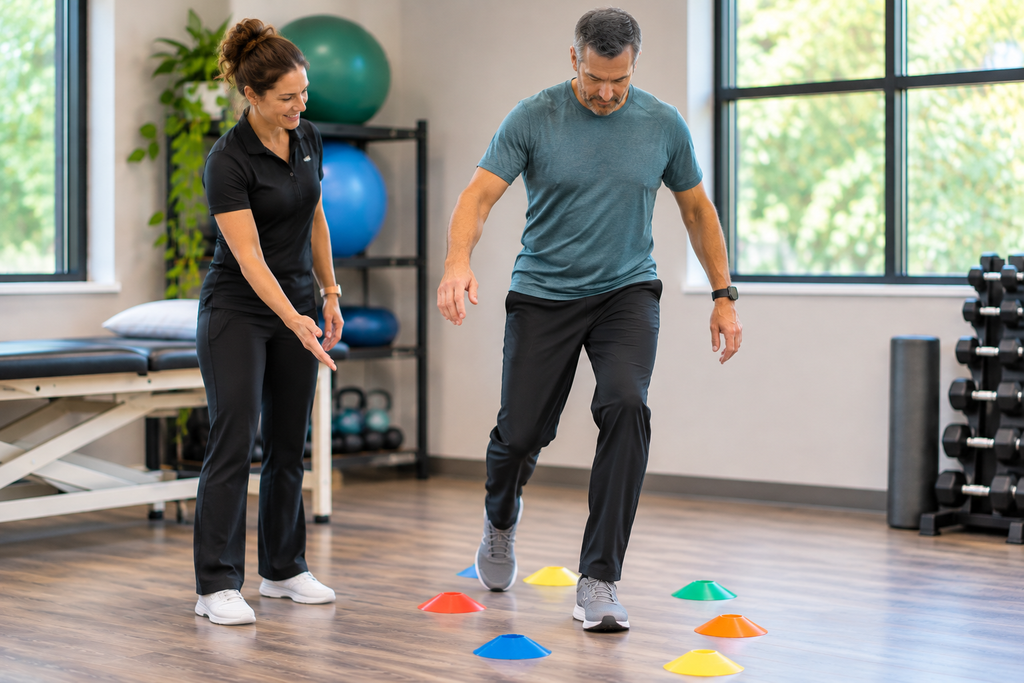
Foot placement exercises focus on improving accuracy and control during lower-body movements. Activities may involve stepping toward floor markers, navigating low obstacles, or practicing specific movement sequences. These exercises can help address difficulties with stepping consistency and functional mobility.
Weight-Shifting Exercises
Weight shifting requires you to move your body’s center of mass while maintaining control. Your therapist may guide you through supported side-to-side or forward-and-backward movements. These activities can help improve coordination between your trunk and lower-body muscles.
Coordination Exercises With Balance Challenges
Some treatment plans combine coordination activities with balance exercises. For example, your therapist may introduce controlled reaching or stepping while you maintain an appropriate standing position. Exercises should match your balance abilities and include support when necessary.
Walking Coordination Exercises
Walking requires your arms, legs, trunk, and sensory systems to work together. Your therapist may incorporate activities that address stepping rhythm, movement timing, directional changes, and foot placement. These exercises may form part of a broader gait training program.
Coordination Training for Vestibular Disorders
Vestibular disorders can affect balance, spatial orientation, and your ability to maintain stability during movement. When your inner ear sends inaccurate or reduced information about head position and motion, everyday activities may become more difficult. Some individuals notice problems walking while turning their heads, changing directions, or navigating visually complex environments. Coordination training may complement vestibular rehabilitation by addressing controlled stepping, movement sequencing, and functional mobility.
Your physical therapist may combine coordination exercises with balance training, gait training, or other vestibular rehabilitation techniques. Depending on your evaluation findings, treatment may also include gaze-stabilization training or habituation exercises. Not every vestibular condition requires coordination training. Your therapist will determine which approaches best address your symptoms.
Coordination Training for Neurological Conditions
Neurological conditions can affect how your brain and nervous system control movement. These changes may influence coordination, muscle activation, timing, balance, and walking ability. When appropriate, physical therapists incorporate coordination training into individualized neurological rehabilitation programs.
Stroke Rehabilitation
A stroke may affect movement control, coordination, sensation, and strength. Some individuals experience difficulty coordinating movements on one side of the body or performing activities that require both sides to work together. Coordination exercises may help support functional movement practice, stepping control, and everyday mobility. Your therapist will consider the location and effects of the stroke when developing your rehabilitation plan.
Parkinson’s Disease
Parkinson’s disease can affect movement initiation, speed, rhythm, and coordination. Individuals may notice smaller movements, difficulty changing directions, or challenges performing multiple movements at once. Physical therapy may include rhythmic movement exercises, external cues, stepping activities, and functional movement training. These approaches can help address specific mobility challenges associated with Parkinson’s disease.
Multiple Sclerosis
Multiple sclerosis can affect coordination, muscle strength, balance, and physical endurance. Some individuals experience tremors, reduced movement accuracy, or difficulty controlling their limbs. Coordination training may help support functional movement and improve the ability to perform certain daily activities. Treatment should account for fatigue, symptom variability, and individual rehabilitation needs.
Ataxia
Ataxia refers to impaired coordination that can affect walking, balance, speech, and limb movements. People with ataxia may experience irregular stepping patterns, difficulty controlling movement direction, or reduced accuracy when reaching for objects. Physical therapists may incorporate task-specific coordination exercises, balance activities, and gait training to help improve functional abilities. The rehabilitation approach depends on the underlying cause and severity of the condition.
Peripheral Neuropathy
Peripheral neuropathy can reduce sensation and affect your awareness of foot placement or body position. These changes may interfere with coordination during walking or standing activities. Treatment may include controlled stepping, balance exercises, strengthening, and movement strategies that account for sensory limitations.
Coordination Training After an Injury or Surgery
Injuries and orthopedic procedures can temporarily affect how your muscles and joints work together. Pain, swelling, weakness, and reduced mobility may interfere with normal movement patterns. For example, an ankle injury can affect joint position awareness and stepping control. Knee or hip surgery may temporarily change weight distribution, balance, and lower-body coordination. As recovery progresses, physical therapists may incorporate coordination exercises to help restore controlled movement. Treatment might include weight shifting, stepping activities, balance exercises, or functional movement practice. Your therapist will consider healing timelines, weight-bearing restrictions, and medical precautions before introducing more challenging activities.
Coordination Training for Older Adults
Coordination can change with age, particularly when muscle weakness, reduced sensation, or balance difficulties affect movement. Some older adults notice that walking on uneven surfaces, changing directions, or performing multiple movements at once becomes more challenging. Targeted physical therapy may help address certain coordination difficulties through controlled movement practice, strengthening, and balance exercises. Your therapist may focus on functional activities such as stepping over obstacles, turning safely, navigating stairs, or maintaining stability while reaching. For individuals concerned about falling, coordination exercises may also complement a comprehensive fall prevention program. The goal is to support safer movement, greater confidence, and continued independence.
Coordination Training for Athletes and Active Individuals
Coordination plays an important role in sports, exercise, and recreational activities. Running, jumping, changing directions, and reacting to unexpected movements require precise communication between your nervous system and muscles. Following an injury, some individuals experience changes in movement timing, control, or confidence. Physical therapists may incorporate coordination exercises into rehabilitation to address these challenges. Treatment may involve controlled footwork, stepping patterns, balance activities, or sport-specific movements when appropriate. Your therapist will adjust exercise intensity and complexity based on your recovery and activity goals.
Coordination Training vs. Balance Training
Although coordination training and balance training often overlap, they emphasize different aspects of movement. Coordination training focuses on improving movement accuracy, timing, sequencing, and control. Balance training focuses on maintaining stability and controlling your body’s position during standing and movement. For example, a patient may have enough strength and balance to stand comfortably but struggle to place their feet accurately during a stepping activity. Another individual may demonstrate good movement accuracy while seated but experience difficulty maintaining stability while standing. Because coordination and balance work closely together, many rehabilitation programs include both approaches.
Coordination Training vs. Gait Training
Coordination training and gait training also share several important goals. Gait training focuses specifically on improving walking mechanics, stepping patterns, and functional mobility. Coordination training addresses the broader ability to control and sequence movements, including those involving the arms, legs, and trunk. When coordination difficulties affect walking, your physical therapist may combine both approaches. This helps address movement accuracy while supporting improved walking stability and efficiency.
What to Expect During Your First Coordination Training Appointment
Your first visit begins with a conversation about your medical history, symptoms, and activities that feel difficult. Your physical therapist may ask when you first noticed coordination changes, whether you’ve experienced falls, and which movements require additional effort or concentration.
The evaluation may include assessments of:
- Movement accuracy and control
- Balance and postural stability
- Walking patterns
- Muscle strength
- Joint mobility
- Proprioception and body awareness
- Functional stepping and reaching
- Movement timing and sequencing
- Coordination between the arms and legs
Your therapist will use these findings to identify specific challenges and develop a personalized treatment plan. Some patients begin with simple, supported exercises that emphasize controlled movement. Others may progress to more complex activities involving balance, walking, or multiple movement patterns. A home exercise program may also help you practice appropriate movements between appointments.
Is Coordination Training Safe?
Coordination training should challenge your movement abilities without creating unnecessary risks. Your physical therapist will consider your balance, strength, medical history, and risk of falling before selecting exercises. Some activities may require supportive equipment, handholds, or direct assistance. As your movement control improves, your therapist can gradually adjust exercise difficulty. Avoid attempting advanced coordination activities without appropriate support, particularly if you experience significant instability or frequent falls. If exercises cause severe dizziness, unusual weakness, or other concerning symptoms, stop the activity and notify your healthcare provider.
How Long Does Coordination Training Take to Work?
The time needed to improve coordination varies depending on the underlying cause, symptom severity, and individual rehabilitation goals. Some people notice improvements in movement control within several weeks, while others require a longer rehabilitation period. Recovery following an orthopedic injury may differ from rehabilitation for a chronic neurological condition. Consistent participation in an appropriate exercise program can support progress, although results vary. Your physical therapist will monitor your response and adjust treatment as your abilities change. Rather than following a fixed timeline, your program will focus on meaningful improvements in the movements that matter most to you.
Why Choose Reform Physical Therapy for Coordination Training?
At Reform Physical Therapy, we understand how frustrating it can feel when your body doesn’t move as smoothly or predictably as it once did. Coordination difficulties can affect your confidence, independence, and ability to participate in everyday activities. Our team focuses on identifying the challenges that matter most to you and developing a treatment plan that supports your goals.
Personalized, One-on-One Physical Therapy
Our independent, woman-owned practice emphasizes individualized care and one-on-one appointments. Your physical therapist will take the time to evaluate your movement, understand your symptoms, and develop exercises that reflect your needs.
Consistency Throughout Your Rehabilitation
At Reform Physical Therapy, you’ll work with the same physical therapist throughout your treatment. This continuity allows your provider to monitor your progress, recognize changes in movement control, and adjust your rehabilitation program as needed.
Treatment Focused on Everyday Movement
Our goal extends beyond helping you perform exercises in the clinic. We want to help you work toward meaningful improvements in everyday activities, whether that means walking more confidently, navigating stairs, returning to exercise, or improving movement control during daily tasks. With seven locations throughout Southern and Midcoast Maine, our team can help you identify the clinic and rehabilitation services that best meet your needs.
Improve Coordination and Move With Greater Confidence
Changes in coordination can make everyday movements feel challenging, but targeted rehabilitation may help you improve movement control and functional mobility. Through individualized coordination training, physical therapy may help address movement accuracy, balance, timing, and body awareness.
Whether you’re recovering from an injury, managing a neurological condition, or experiencing changes in movement control, Reform Physical Therapy is here to help you explore your rehabilitation options.
If you experience sudden coordination problems, especially alongside facial drooping, weakness, difficulty speaking, double vision, or a severe headache, call 911. These symptoms may indicate a medical emergency.