

Labral Repair Rehabilitation
Labral repair surgery can restore stability to an injured shoulder, but surgery is only the beginning of the recovery process. During the first several weeks, your shoulder needs time to heal. You may wear a sling, have restrictions on certain movements, and need help with everyday activities. As healing progresses, rehabilitation gradually shifts toward restoring movement, rebuilding strength, and preparing your shoulder for the things you want to do again.
At Reform Physical Therapy, labral repair rehabilitation is built around your specific surgery, your surgeon’s protocol, and your personal goals. Whether you want to comfortably use your arm again, return to work, get back to the gym, throw a ball, play golf, kayak, swim, or compete in sports, your physical therapist will help you progress safely through each stage of recovery.
Physical Therapy After Labral Repair
The labrum is a ring of cartilage around the socket of the shoulder joint. It helps deepen the socket and contributes to shoulder stability. A labral tear can occur during a traumatic injury, shoulder dislocation, fall, repetitive overhead activity, or sports. When the labrum is surgically repaired, the damaged tissue is reattached so it can heal. That repair needs protection. Early rehabilitation is usually more conservative because certain shoulder positions and movements can place stress on the healing tissue. As recovery progresses, physical therapy gradually introduces more movement, strength, and functional activity.
Why Is Rehabilitation Important After Labral Surgery?
Your shoulder depends on a combination of mobility, strength, stability, and coordination. After surgery, each of these areas can be affected. Time in a sling can contribute to stiffness and weakness. Your shoulder muscles may also lose strength because you are temporarily unable to use the arm normally. Physical therapy helps restore these abilities in a controlled progression. The goal is not simply to make the shoulder stronger. We want to help you regain a shoulder that can safely handle the movements required for your everyday life, work, exercise, or sport.
Different Types of Labral Tears
Not every labral injury is the same. The location of the tear can influence your symptoms, surgical procedure, and rehabilitation. A SLAP tear involves the upper portion of the labrum. Other tears may affect the front or back of the shoulder. Some labral injuries occur along with shoulder instability or dislocation. Your surgeon may also perform additional procedures during surgery.
Because of these differences, your rehabilitation should follow the protocol for your specific repair rather than a general timeline.
SLAP Repair Rehabilitation
A SLAP tear involves the superior, or upper, portion of the shoulder labrum. The biceps tendon attaches near this area, which can influence rehabilitation after a SLAP repair. Certain movements and resistance exercises involving the biceps may be restricted during early healing. Your therapist will follow your surgeon’s instructions regarding shoulder movement, strengthening, and loading of the biceps. As healing progresses, rehabilitation can gradually prepare you for lifting, reaching, throwing, and other activities.
Labral Repair After Shoulder Dislocation
A shoulder dislocation can damage the labrum and other structures responsible for keeping the shoulder stable. If the labrum is repaired following recurrent instability or dislocation, rehabilitation focuses on restoring movement without compromising the surgical repair. Later treatment places greater emphasis on shoulder strength, control, and stability. For athletes, rehabilitation may eventually include movements that prepare the shoulder for contact, overhead activity, throwing, or other sport-specific demands.
When Does Physical Therapy Start?
Your surgeon determines when physical therapy should begin and which movements are appropriate during each stage. The location of the labral repair, additional surgical procedures, tissue healing, and your surgeon’s preferences can all influence your rehabilitation. Early treatment may focus on protected movement rather than strengthening. Over time, your program progresses as the repaired tissue heals. Following these restrictions is important even when the shoulder begins feeling better.
Your First Physical Therapy Visit
During your first appointment, we will review your surgery and determine where you are in the healing process. Your therapist will look at the procedure performed, current symptoms, precautions, sling instructions, movement restrictions, and any rehabilitation protocol provided by your surgeon. We also want to know what you are working toward. Maybe you need to return to a physical job. Perhaps your goal is lifting weights, swimming, throwing, golfing, kayaking, playing pickleball, or returning to competitive sports.\ Those goals help shape the later stages of rehabilitation.
The Early Stage of Labral Repair Recovery
Early rehabilitation is primarily about protecting the repair. You may be wearing a sling and have temporary restrictions on shoulder movement. Exercises during this stage are usually gentle. Depending on your surgical protocol, treatment may include protected shoulder movement along with appropriate elbow, wrist, and hand exercises. Your therapist can also help you understand how to safely perform everyday activities while following your precautions. This stage may feel slow, especially if you are an active person. However, allowing the repaired tissue time to heal creates the foundation for everything that comes later.
Wearing a Sling After Labral Repair
Many patients wear a sling after shoulder labral surgery. Your surgeon will determine how long it should be used and when you can begin spending more time without it. The sling helps protect the shoulder during early healing. Although it may be inconvenient, you should not discontinue it earlier than recommended simply because your pain has improved. Your physical therapist can help you manage daily activities while you are using it.
Restoring Shoulder Movement
Shoulder mobility is gradually restored throughout rehabilitation. Certain movements may initially be limited to protect the repaired portion of the labrum. Your therapist will follow your surgeon’s protocol when determining how far and in which directions your shoulder should move. As healing progresses, these restrictions can gradually change. The goal is to restore functional movement without unnecessarily stressing the repair.
Passive Shoulder Movement
Passive movement means your shoulder is moved without the surgical arm actively doing the work. During early rehabilitation, your therapist may gently move the shoulder within the range permitted by your surgeon. You may also learn exercises that allow your other arm to assist. This can begin restoring mobility while keeping muscular effort low.
Active-Assisted Shoulder Movement
As your shoulder heals, you may progress to active-assisted movement. The surgical arm begins participating while receiving help from your other arm, a cane, or another form of assistance. This provides a gradual transition toward independently moving your shoulder. Your therapist will determine when this progression is appropriate.
Active Shoulder Movement
Eventually, you will begin moving the surgical arm without assistance. This stage can feel surprisingly difficult at first. Weeks of protection and reduced activity can leave the shoulder weak. Your therapist will help you improve movement while limiting compensations such as shrugging or leaning. As control improves, reaching and other everyday movements should gradually become easier.
Rebuilding Shoulder Strength
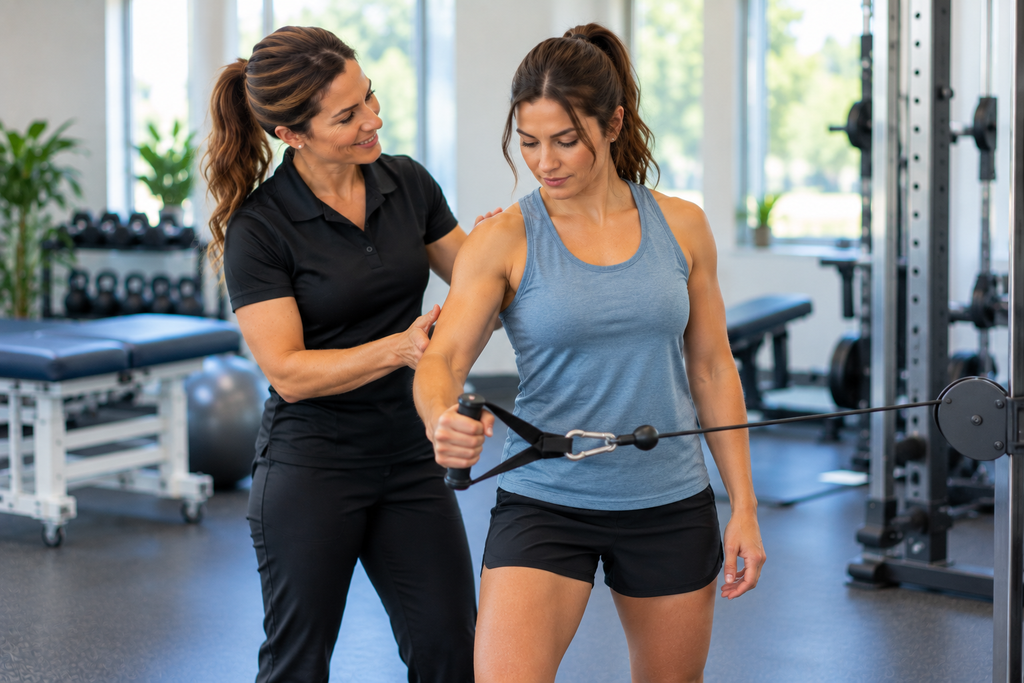
Strengthening becomes increasingly important once the repaired tissue has reached an appropriate stage of healing. Exercises usually begin with relatively light resistance. As your shoulder adapts, the program can become more challenging. Resistance bands, weights, cables, bodyweight exercises, and functional movements may eventually become part of rehabilitation. The type and amount of resistance depend on your surgery and goals.
Rotator Cuff Strength
The rotator cuff helps control and stabilize the shoulder joint. Rebuilding rotator cuff strength is often an important part of later labral rehabilitation. Exercises may initially involve light resistance and controlled movements. Over time, strengthening can progress into more demanding positions. Athletes and people with physical jobs may eventually require greater strength and endurance than someone whose primary goal is comfortable everyday activity.
Shoulder Blade Strength and Control
Your shoulder blade provides a foundation for arm movement. The muscles surrounding it help control shoulder mechanics during reaching, lifting, pushing, pulling, and overhead activity. Rehabilitation may include exercises designed to improve shoulder blade control and upper-body strength. This becomes increasingly important as you return to more demanding activities.
Getting Dressed After Labral Surgery
Dressing can be frustrating while your arm is protected in a sling. Pulling shirts overhead, putting your arm through a sleeve, fastening clothing, or reaching behind your body may initially be difficult. Your therapist can help you find strategies for dressing while protecting the surgical shoulder. As restrictions change and mobility improves, these tasks should gradually become easier.
Sleeping After Labral Repair
Finding a comfortable sleeping position can be challenging after shoulder surgery. The sling and soreness around the surgical area may make your normal position uncomfortable. Some patients find sleeping more upright helpful during early recovery. Follow your surgeon’s instructions regarding positioning. As healing progresses and you are allowed greater freedom of movement, sleep often becomes easier.
Reaching Overhead
Reaching overhead is an important goal for many patients. You need this movement for household tasks, work, exercise, and sports. Overhead movement is gradually restored rather than rushed. Later rehabilitation can build the strength and control needed to use the arm overhead with greater confidence.
Reaching Behind Your Back
Reaching behind your body may remain difficult for some time after surgery. This movement is needed for dressing, bathing, and other everyday activities. Your therapist will gradually address mobility while respecting the restrictions associated with your repair. Progress should occur based on healing rather than forcing the shoulder into uncomfortable positions.
Returning to Work
Your rehabilitation should reflect what your job requires. Someone who works at a desk has very different shoulder demands than someone working in construction, healthcare, manufacturing, landscaping, or another physical occupation. If your job involves lifting, carrying, reaching, pushing, pulling, or overhead work, those demands can become part of later rehabilitation. The goal is to prepare your shoulder for your actual workday.
Returning to a Physical Job
Physical jobs often require more than basic shoulder mobility. You may need strength, endurance, stability, and the ability to repeatedly lift or carry. Later treatment can become increasingly job specific. Your therapist may incorporate lifting, carrying, pushing, pulling, or overhead movements once your shoulder is ready.
Returning to the Gym
Getting back to strength training after labral repair takes time. Even if the shoulder feels good, the repaired tissue still needs adequate healing before heavier resistance is introduced. Your therapist can help you gradually rebuild your workouts. Exercises may initially be modified, and certain movements may need to wait until later in recovery. As strength and stability improve, you can progressively return to more demanding training.
Bench Pressing After Labral Repair
Many people who lift weights want to know when they can return to bench pressing. This movement can place significant stress on the front of the shoulder, particularly depending on grip, depth, and load. Returning should happen gradually. Your therapist can help you rebuild pressing strength while monitoring shoulder control and tolerance. Heavier lifting should only be resumed when your shoulder has reached the appropriate stage of healing, and your healthcare team considers it safe.
Returning to Throwing
Throwing is one of the more demanding activities for the shoulder. It requires mobility, strength, stability, coordination, and the ability to generate and control high forces. Athletes returning to baseball, softball, football, or another throwing sport may require a structured throwing progression. Before beginning, your therapist will assess whether your shoulder has developed enough strength and control for the demands of throwing.
Returning to Swimming
Swimming involves repeated overhead shoulder movement. Adequate mobility alone is not enough. The shoulder also needs strength and endurance to tolerate repeated strokes. Your therapist can help you prepare for these demands before returning to the pool. A gradual return may begin with shorter sessions or modified strokes before progressing toward normal training.
Returning to Golf
Golf involves shoulder movement, trunk rotation, and upper-body control. If returning to golf is one of your goals, later rehabilitation can prepare you for the movements involved in your swing. You may initially return with putting or shorter swings before gradually progressing toward longer clubs and full rounds.
Returning to Pickleball or Tennis
Racquet sports require reaching, quick reactions, force production, and repeated shoulder movement. Serving and overhead shots place greater demands on the repaired shoulder. Later rehabilitation can include movements that prepare you for these activities. A gradual return gives your shoulder time to adapt.
Returning to Contact Sports
Contact sports require additional shoulder stability and confidence. Athletes may need to tolerate pushing, pulling, impact, reaching, and unexpected forces. Returning should be based on more than simply how much time has passed since surgery. Strength, movement, stability, confidence, sport demands, and your surgeon’s recommendations should all be considered.
Returning to Kayaking
Kayaking requires repeated pulling and shoulder rotation. The shoulder also needs enough endurance to perform these movements repeatedly. If kayaking is one of your goals, tell your therapist. Later rehabilitation can incorporate pulling movements and endurance exercises that help prepare you to safely return to the water.
Why Does My Shoulder Still Feel Weak?
Weakness is expected after labral surgery. Your arm may spend several weeks protected while the repaired tissue heals. During that time, the shoulder muscles are not working at their normal level. Even when pain decreases, strength may still be limited. Progressive strengthening helps rebuild the capacity required for lifting, work, exercise, and sports.
Why Does My Shoulder Feel Stiff?
Stiffness can develop after time in a sling and periods of restricted movement. Your therapist will gradually restore shoulder mobility within the guidelines for your repair. Some movements may return more quickly than others. Consistency with your rehabilitation program is important, but forcing movement aggressively is not necessarily better.
How Long Does Labral Repair Rehabilitation Take?
Recovery from labral repair generally takes months rather than weeks. The exact timeline depends on the location and size of the tear, surgical procedure, additional repairs, tissue healing, your overall health, and the activities you want to return to. Everyday function typically returns before the shoulder is ready for heavy lifting or demanding sports. Athletes may require additional rehabilitation to rebuild higher levels of strength, stability, power, and endurance.
Why Can’t I Strengthen My Shoulder Right Away?
A repaired labrum needs time to heal. Heavy resistance too early can place unnecessary stress on the surgical repair. That is why rehabilitation progresses in stages. Early protection and controlled movement provide the foundation for strengthening later. Feeling less pain does not automatically mean the shoulder is ready for heavier resistance.
What If I Had Another Procedure During Surgery?
Labral repairs may sometimes be performed along with other shoulder procedures. Additional procedures can affect your rehabilitation timeline and restrictions. Your therapist needs to know everything that was performed during surgery. Bring your surgical information and rehabilitation protocol to your evaluation when available.
What If My Surgery Was Months Ago?
Physical therapy may still help if your shoulder remains weak, stiff, unstable, or limited. Some patients regain basic everyday function but notice difficulty when they return to heavier lifting, work, throwing, or sports. An evaluation can identify remaining mobility, strength, stability, and movement limitations. From there, your therapist can develop a plan for continuing your recovery.
When Should I Contact My Surgeon?
Your surgical team should provide instructions about symptoms that require medical attention. Contact your healthcare provider if you experience rapidly worsening pain, significant redness or warmth, drainage from the incision, fever, or another concerning change. A new injury to the surgical shoulder, another dislocation, or an unexpected major loss of function should also be reported. When you are unsure whether something is part of normal recovery, contact your medical team.
Why Choose Reform for Labral Repair Rehabilitation?
Labral repair rehabilitation is about more than restoring shoulder motion. It is about rebuilding trust in your shoulder. At Reform Physical Therapy, we want to understand what you need your shoulder to do. Maybe your goal is simply reaching and lifting comfortably throughout the day. Perhaps you need your shoulder for a physically demanding job. You may be working toward the gym, golf course, swimming pool, pickleball court, baseball field, kayak, or another activity you love. Those goals help guide your rehabilitation. Treatment progresses within your surgeon’s recommendations while helping you restore movement, strength, stability, endurance, and confidence. As your shoulder heals, your program becomes progressively more challenging and specific to your life.
Start Your Labral Repair Recovery With Reform
If you recently had shoulder labral surgery or are preparing for an upcoming repair, Reform Physical Therapy can help guide you through recovery. Your therapist will create an individualized labral repair rehabilitation program based on your surgery, surgeon’s protocol, current abilities, and goals. From those first protected movements to reaching, strengthening, working, lifting, and returning to sports, we will help you keep moving forward.
Contact Reform Physical Therapy to schedule your post-surgical rehabilitation evaluation.