

Diastasis Recti
Diastasis recti is a separation of the abdominal muscles that commonly develops during pregnancy as the abdomen expands to make room for a growing baby. The separation occurs along the Linea alba, the connective tissue running down the center of the abdomen between the two sides of the rectus abdominis muscles. After pregnancy, this tissue can gradually regain tension as the body recovers. However, some people continue to notice abdominal separation, weakness, bulging, or difficulty using their core effectively.
You might notice doming or coning through the middle of your abdomen when sitting up, lifting your baby, exercising, or getting out of bed. Others notice a persistent abdominal bulge or feel that their core is weaker than it was before pregnancy. At Reform Physical Therapy, physical therapy for diastasis recti can focus on rebuilding abdominal strength, improving pressure management, restoring comfortable movement, and helping you return to everyday activities and exercise. When diastasis recti occurs alongside pelvic floor or postpartum pelvic health concerns, specialized pelvic health physical therapy is available at our South Portland clinic.
What Is Diastasis Recti?
Your rectus abdominis muscles run vertically along the front of your abdomen. Between the left and right sides is connective tissue called the linea alba. During pregnancy, the abdomen expands and the linea alba stretches to accommodate the growing uterus. Some amount of abdominal separation is expected during pregnancy. After delivery, the abdominal wall begins recovering. For some people, the separation remains more noticeable and affects how effectively the abdominal muscles generate and manage force. This is known as diastasis recti, or diastasis rectus abdominis.
What Does Diastasis Recti Look Like?
Diastasis recti does not look exactly the same for everyone. You may notice a bulge through the center of your abdomen, particularly when getting out of bed or performing an abdominal exercise. Another common sign is coning or doming. This happens when the middle of the abdomen pushes outward during a movement instead of effectively managing the pressure being created inside the abdomen. Some people notice these changes above the belly button. Others experience separation below or directly around it.
Is Diastasis Recti Painful?
The abdominal separation itself does not necessarily cause pain. However, some people with diastasis recti also experience low back discomfort, pelvic or hip pain, weakness, or difficulty performing everyday activities. For example, you might notice that lifting your child, carrying groceries, getting off the floor, or completing a workout feels more difficult than it did before pregnancy. Physical therapy can evaluate your entire movement system rather than simply measuring the space between your abdominal muscles.
Diastasis Recti During Pregnancy
Abdominal separation is a normal response to the physical changes that occur during pregnancy. As your uterus grows, your abdominal wall needs to expand. This places increasing tension through the linea alba and surrounding abdominal muscles. Instead of trying to prevent every amount of separation, physical therapy during pregnancy may focus on maintaining strength, managing pressure, modifying activities when needed, and helping you continue moving comfortably. Your program should always consider your stage of pregnancy and guidance from your prenatal healthcare provider.
Diastasis Recti After Pregnancy
After your baby is born, your abdominal wall begins recovering. Some separation may naturally decrease as the tissues heal and muscle function returns. However, recovery does not happen on an identical timeline for everyone. You may continue noticing weakness, abdominal bulging, or difficulty generating core tension several months or even years after giving birth. Diastasis recti can still be addressed long after pregnancy. Physical therapy and appropriate exercise may help improve abdominal function even years after delivery.
Diastasis Recti After Vaginal Birth
A vaginal delivery does not directly cause every case of diastasis recti. Much of the abdominal stretching occurs during pregnancy itself. Following delivery, however, your body needs time to recover from months of physical changes along with the demands of childbirth. Postpartum rehabilitation can gradually rebuild abdominal and pelvic floor function while helping you return to lifting, carrying, exercise, and other activities.
Diastasis Recti After Cesarean Section
Diastasis recti can also occur after a Cesarean birth. Again, abdominal separation primarily develops as the abdominal wall stretches during pregnancy. Cesarean delivery adds another consideration because the abdominal region must also recover from surgery. Once your medical provider determines that exercise and rehabilitation are appropriate, physical therapy can gradually address abdominal strength, scar mobility when needed, breathing, movement, and core coordination.
Abdominal Doming and Coning
One of the most noticeable signs of diastasis recti is doming or coning through the center of the abdomen.
You might notice it while:
- Sitting up in bed
- Getting off the floor
- Lifting your child
- Performing abdominal exercises
- Planking
- Carrying something heavy
- Exercising
Doming can provide useful information about how your abdominal wall is managing pressure during a particular movement. Instead of becoming afraid of every movement that creates a visible change, physical therapy can help you understand how to modify and gradually progress the activity.
Core Weakness After Pregnancy
Having a baby changes your core. Your abdominal muscles have spent months adapting to a growing uterus. Your breathing mechanics, posture, pelvic floor, and movement strategies may also change. After delivery, it can take time to feel strong and coordinated again. You may notice weakness while rolling out of bed, carrying the baby carrier, lifting a stroller, picking something up from the floor, or returning to exercise. A physical therapist can help rebuild strength progressively rather than jumping immediately into intense abdominal workouts.
Diastasis Recti and the Pelvic Floor
Your abdominal muscles and pelvic floor do not work independently. They coordinate with your diaphragm, back muscles, and hips to help manage pressure and support movement. Some people with diastasis recti also experience urinary leakage, pelvic pressure, pelvic pain, or other pelvic floor symptoms. Cleveland Clinic lists urinary leakage and pelvic or hip pain among possible problems associated with more significant abdominal separation.
When pelvic floor symptoms are present, your treatment plan may need to address both the abdominal wall and pelvic floor. At Reform, specialized pelvic health treatment is available at the South Portland clinic.
Diastasis Recti and Urinary Leakage
Bladder leakage can sometimes occur alongside postpartum abdominal weakness. You may notice leakage when coughing, sneezing, laughing, running, jumping, or lifting. This does not necessarily mean the diastasis itself caused the urinary incontinence. Instead, both problems may occur as part of changes involving the abdominal wall, pelvic floor, breathing system, and pressure management. A pelvic health physical therapist can evaluate how these systems work together.
Diastasis Recti and Pelvic Organ Prolapse
Some people experience both abdominal separation and pelvic organ prolapse after pregnancy. Symptoms of prolapse can include vaginal heaviness, pressure, bulging, or changes in bladder and bowel function. Having diastasis recti does not automatically mean you have prolapse. However, if you are experiencing pelvic pressure or heaviness along with abdominal weakness, tell your healthcare provider or pelvic health physical therapist. Both conditions can be considered when developing your rehabilitation program.
Diastasis Recti and Lower Back Pain
Low back discomfort may occur alongside diastasis recti. Your abdominal muscles contribute to trunk control during movement. However, the answer is rarely as simple as strengthening one abdominal muscle. Hip strength, back strength, breathing, movement habits, activity level, sleep, lifting demands, and other factors may contribute to back symptoms. Physical therapy can evaluate the entire picture and build a program around what your body actually needs.
Breathing and Diastasis Recti
Breathing is an important part of core function. Your diaphragm moves as you breathe, while the abdominal wall and pelvic floor respond to changes in pressure. Holding your breath during lifting or exercise can change the amount of pressure moving through your abdomen. Physical therapy may teach you how to coordinate breathing with core activation during movement. Eventually, this should become something your body does naturally rather than something you need to constantly think about.
Pressure Management
You create pressure inside your abdomen every day. Coughing, sneezing, lifting, carrying, running, standing from a chair, and exercising all require your body to manage different amounts of force. The goal of rehabilitation is not to eliminate abdominal pressure. Instead, treatment can help your abdominal wall, diaphragm, pelvic floor, hips, and trunk manage that pressure effectively. This becomes especially important when returning to heavier lifting or higher-level exercise.
Are Kegels Enough for Diastasis Recti?
Kegel exercises specifically target the pelvic floor muscles. They may be appropriate when pelvic floor weakness is present, but they are not a complete treatment for diastasis recti. Your abdominal wall also needs to regain strength and coordination. Some people may need pelvic floor strengthening. Others may have excessive pelvic floor tension and need to improve relaxation. Your physical therapist can determine which approach fits your symptoms rather than automatically prescribing Kegels.
Deep Core Strengthening
Early rehabilitation often focuses on learning how to engage and control the abdominal muscles without excessive straining. Exercises may initially look simple. As your strength improves, however, the program should become progressively more challenging. The goal is not to spend the rest of your life performing gentle postpartum exercises. Your core eventually needs enough strength to handle whatever you want to return to, whether that means carrying children, gardening, running, strength training, or participating in sports.
Can I Do Crunches With Diastasis Recti?
You may have heard that anyone with diastasis recti should never perform crunches again. Exercise recommendations are more individualized than that. Certain abdominal exercises may need to be modified early in recovery, particularly if they cause significant bulging or you cannot yet control the movement. Cleveland Clinic recommends working with a physical therapist to choose appropriate exercises and progress them safely. Your long-term rehabilitation should focus on building capacity rather than creating a permanent list of forbidden exercises.
Can I Plank With Diastasis Recti?
Planks create significant demand through the abdominal wall. Some people may not be ready for them early in rehabilitation. That does not necessarily mean planks need to be avoided forever. Your therapist may begin with modified positions and gradually increase the challenge as you improve your strength and pressure control. Eventually, you may progress toward full planks if they are appropriate for your goals.
Can I Lift Weights With Diastasis Recti?
Strength training can be an important part of recovery. Your abdominal muscles need to tolerate load to prepare you for real life. The appropriate weight depends on your current strength, symptoms, healing, and ability to manage the movement. You may start lighter and gradually increase resistance. Breathing, technique, and progressive loading can all be addressed during physical therapy.
Lifting Your Baby With Diastasis Recti
Parents do not have the luxury of avoiding lifting. Your baby needs to be picked up many times every day. Then babies grow into heavier toddlers. Physical therapy should prepare your body for those demands rather than simply telling you not to lift. Your program may include squatting, carrying, floor transfers, lifting, and other movements that closely resemble what you actually do at home.
Getting Out of Bed
Sitting straight up from bed can sometimes create noticeable abdominal doming. Early in postpartum recovery, rolling onto your side and using your arms to help push yourself upright can reduce demand through the abdominal wall. Cleveland Clinic specifically recommends this strategy during early recovery. As your abdominal strength improves, you can gradually work toward more challenging movements.
Returning to Running
Running requires more than strong legs. Your core and pelvic floor need to repeatedly manage impact as you move. Before returning to running after pregnancy, your therapist may assess abdominal strength, pelvic floor symptoms, hip strength, balance, impact tolerance, and overall recovery. Your progression may begin with walking and lower-level strengthening before advancing toward jogging and running. The goal is to build enough capacity for running rather than simply waiting a certain number of weeks.
Returning to the Gym
Going back to the gym after having a baby can feel intimidating, especially if your abdomen looks or feels different. Your first workouts do not need to look like your pre-pregnancy workouts. Physical therapy can help you gradually progress toward squats, deadlifts, presses, rows, core exercises, cardio, and other movements. Over time, rehabilitation should become less about “postpartum exercises” and more about rebuilding the strength needed for the activities you enjoy.
Does Diastasis Recti Mean My Core Is Damaged?
A visible abdominal separation can be alarming. However, diastasis recti does not mean your abdomen is permanently damaged. The linea alba is designed to stretch during pregnancy. Some abdominal separation is expected as the uterus expands. Recovery focuses on improving how your abdominal wall generates tension and handles movement. The size of the gap is only one piece of information. How you feel and function matters too.
Measuring Diastasis Recti
A healthcare provider or physical therapist can assess abdominal separation. The evaluation may consider the distance between the abdominal muscles, where separation occurs, tissue tension, abdominal control, and what happens during different movements. Providers may use their fingers, measuring tools, or ultrasound depending on the setting. Rather than focusing only on achieving a specific gap measurement, rehabilitation should also consider strength and function.
Physical Therapy Evaluation for Diastasis Recti
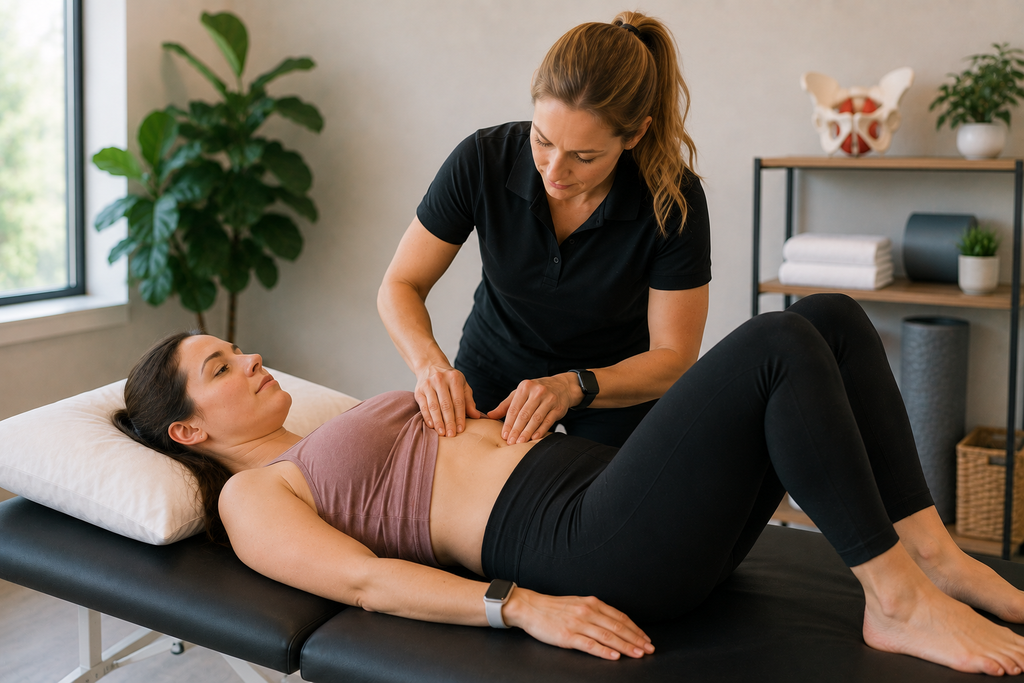
Your first appointment begins with a conversation about what you are noticing. Your therapist may ask about pregnancy and delivery, how long ago you gave birth, pain, abdominal weakness, exercise, bladder or bowel symptoms, pelvic pressure, and the activities you want to return to. The physical evaluation may include your abdominal wall, breathing, hips, back, strength, movement, and functional activities. Your therapist can also observe whether doming or coning occurs during specific movements. When pelvic floor symptoms are involved, a pelvic health assessment may be discussed. Any pelvic floor examination should be explained beforehand and performed only with your informed consent.
Physical Therapy for Diastasis Recti
Treatment should be based on your individual evaluation. Your program may include abdominal strengthening, breathing exercises, pressure management, hip and back strengthening, functional movement, lifting practice, and gradual progression toward exercise. Early exercises may focus on control. Later rehabilitation can become considerably more challenging as your strength improves. Cleveland Clinic recommends individualized physical therapy and exercise as a nonsurgical treatment approach for diastasis recti.
How Long Does Diastasis Recti Take to Improve?
There is no single recovery timeline. The amount of separation, tissue changes, strength, number of pregnancies, activity level, consistency with rehabilitation, and other factors can influence recovery. Some improvement may happen naturally after pregnancy as tissues recover. Others continue working on strength and function months or years later. Rather than comparing your stomach to someone else’s postpartum body, your rehabilitation should focus on your own progress.
Can Diastasis Recti Improve Years After Pregnancy?
Yes. You do not have to be newly postpartum to work on abdominal function. Cleveland Clinic notes that appropriate exercises can help address diastasis recti even years after someone’s last pregnancy. If your youngest child is several years old and you still notice abdominal weakness or doming, an evaluation can still be worthwhile.
Does Diastasis Recti Require Surgery?
Most people do not begin with surgery. Exercise and physical therapy are commonly recommended first. Surgery may sometimes be considered when there are additional concerns such as an umbilical hernia or when someone is pursuing surgical abdominal repair. Your medical provider can determine whether additional evaluation is appropriate. Physical therapy can focus on improving strength and function regardless of the appearance of your abdomen.
When to See a Medical Provider
A bulge in the abdomen should not automatically be assumed to be diastasis recti. Hernias and other conditions can also cause abdominal bulging. Talk with your healthcare provider if you notice a new or painful abdominal bulge, significant abdominal pain, digestive symptoms, or other concerning changes. If you recently gave birth, follow your obstetric provider’s recommendations regarding healing and return to exercise. Physical therapy should complement appropriate medical care.
Diastasis Recti Physical Therapy in South Portland, Maine
Reform Physical Therapy can help people experiencing diastasis recti, postpartum core weakness, and difficulty returning to normal activity. Treatment can address abdominal strength, breathing, pressure management, movement, lifting, and exercise progression. When diastasis recti occurs alongside urinary leakage, pelvic pressure, pelvic pain, bowel symptoms, or other pelvic floor concerns, Reform’s specialized pelvic health services are available at the South Portland clinic. Your rehabilitation can be built around what matters in your life, whether that’s carrying your child without feeling weak, getting back to running, returning to strength training, or simply feeling more confident using your core again.
Schedule a Diastasis Recti Evaluation
You do not need to spend years avoiding core exercises because you are afraid of making your abdominal separation worse. A physical therapy evaluation can help you understand how your abdominal wall is functioning and which exercises are appropriate for your current strength.