


Hip, Knee, and Leg
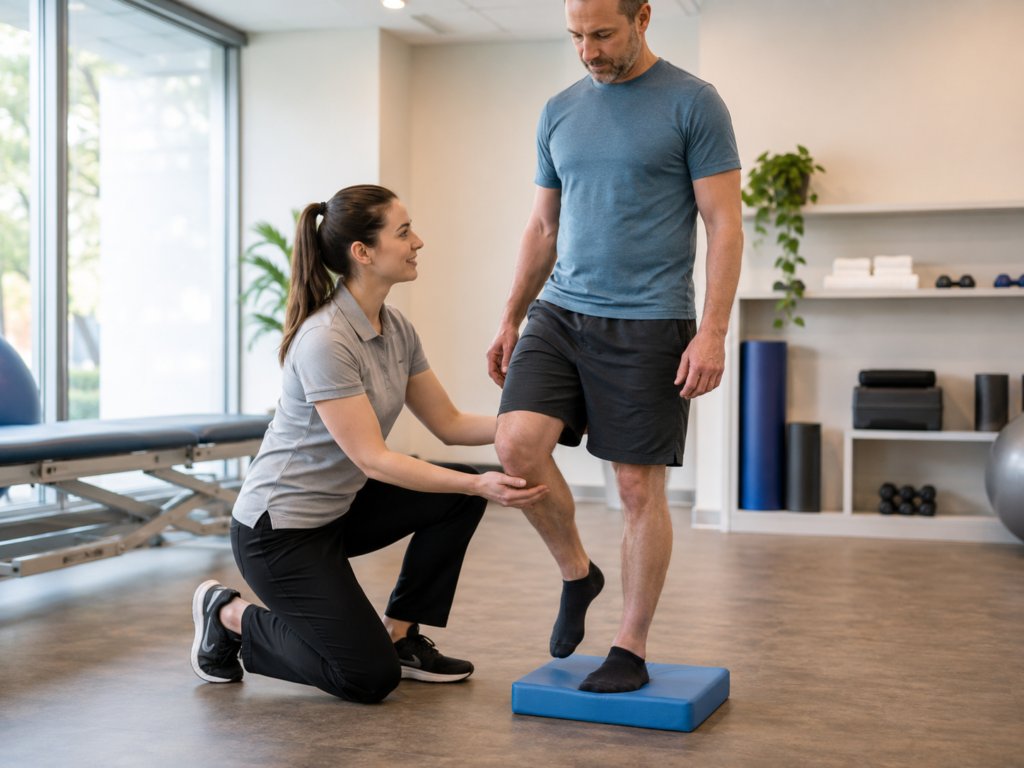
Hip, knee, and leg physical therapy can help people who are dealing with pain, weakness, stiffness, or trouble moving. These problems may affect your ability to walk, climb stairs, work, exercise, play sports, or complete simple tasks at home. Lower-body pain can begin after a fall, twist, sports injury, or sudden increase in activity. It may also build slowly because of repeated movement, weak muscles, joint stiffness, poor balance, or changes in the way you walk or run.
Pain in one area may also be linked to a problem somewhere else. Hip weakness can place more stress on the knee. Ankle stiffness may change the way the leg moves. Foot pain may cause you to walk differently, which can affect the knee, hip, or back. At Reform Physical Therapy, we provide one-on-one care for hip, knee, leg, ankle, and foot conditions. Your therapist will look at the painful area while also checking nearby joints, muscles, balance, strength, and movement habits.
Treatment may include hands-on care, stretching, strengthening, balance training, walking or running practice, and a home exercise plan. The goal is to help you move with less pain and return to the activities that matter to you.
How the Hip, Knee, Ankle, and Foot Work Together
The joints and muscles of the lower body work as a team. The hip helps control the thigh and knee. The knee bends and straightens during walking, stairs, running, and squatting. The ankle and foot help absorb force and keep the body steady. A problem in one area may place more stress on another. For example, limited ankle movement may make it harder to squat or climb stairs. Weak hip muscles may allow the knee to move inward during running or jumping. Foot pain may cause a limp that places added strain on the hip.
During your evaluation, your physical therapist may check:
- Hip, knee, ankle, and foot movement
- Leg and core strength
- Balance
- Walking pattern
- Running form
- Squatting
- Stair use
- Single-leg control
- Foot position
- Muscle tightness
- Joint stiffness
- Shoes or braces
- Work or sports movements
- Activities that make symptoms better or worse
The goal is to understand what may be adding to your pain instead of only treating the spot that hurts.
Conditions We Treat
Hip Pain
Hip pain may be felt in the front, side, or back of the hip. It may also spread into the groin, buttock, thigh, or lower back. The hip is a large joint that supports the body during standing, walking, stairs, running, and lifting. Pain may begin after a fall or sports injury, but it can also develop from arthritis, muscle strain, tendon irritation, weakness, or repeated movement.
Common signs may include:
- Groin pain
- Pain on the outside of the hip
- Buttock pain
- Stiffness
- Trouble walking
- Pain while climbing stairs
- Pain while getting into a vehicle
- Trouble putting on shoes
- Pain while sleeping on one side
- Clicking or catching
- Pain during exercise
- Reduced hip movement
Physical therapy may help improve hip movement, strength, balance, and walking. Your therapist may also check the lower back, pelvis, knee, and foot because these areas can affect how the hip works.
Treatment may include:
- Hip mobility exercises
- Glute and leg strengthening
- Core exercises
- Balance training
- Walking practice
- Hands-on care
- Activity changes
- Gradual return to exercise
- A home exercise plan
Hip pain after a fall or a sudden injury may need a medical exam to rule out a fracture or another serious injury.
Knee Pain
Knee pain can affect people of all ages. It may begin after a fall, twist, sports injury, or direct blow. Other cases develop over time because of arthritis, overuse, weakness, or repeated stress. The knee handles force during walking, stairs, squatting, jumping, running, and lifting. Pain may make people avoid bending the knee or putting weight on the leg. Over time, this can lead to more weakness and stiffness.
Common signs may include:
- Pain in front of the knee
- Pain along the inside or outside
- Pain behind the knee
- Swelling
- Stiffness
- Weakness
- Clicking or popping
- Trouble climbing stairs
- Pain during squats
- Trouble standing from a chair
- Pain while running or jumping
- The knee giving way
Physical therapy for knee pain may include strength, balance, motion, and movement training. The therapist may also check the hip, ankle, and foot because lower-body movement in these areas can affect knee stress.
Treatment may include:
- Knee and hip strengthening
- Range-of-motion exercises
- Balance training
- Step and squat practice
- Walking or running review
- Hands-on care
- Bracing guidance when needed
- Activity changes
- A home exercise plan
Sudden swelling, severe pain, locking, or an inability to place weight on the leg should be checked by a medical provider.
Patellofemoral Pain Syndrome
Patellofemoral pain syndrome causes pain around or behind the kneecap. It is sometimes called runner’s knee, but it can affect people who do not run. The kneecap moves through a groove at the front of the knee. Pain may develop when the tissues around the kneecap become irritated or when the hip, knee, ankle, and foot do not control movement well.
Symptoms often become worse during:
- Stairs
- Squatting
- Running
- Jumping
- Kneeling
- Sitting for a long time
- Standing from a chair
- Walking downhill
- Sports
Some patients notice grinding, clicking, or popping. These sounds do not always mean that the knee is damaged, but pain or swelling should be checked. Physical therapy may focus on improving hip and leg strength, knee control, ankle mobility, balance, and activity tolerance. Shoe support may also help some patients by improving foot and ankle position.
Treatment may include:
- Hip strengthening
- Quadriceps strengthening
- Ankle mobility
- Balance exercises
- Squat and step training
- Running or jumping form
- Activity changes
- Taping or brace guidance
- A gradual return to exercise
IT Band Syndrome
The iliotibial band, or IT band, is a strong band of tissue that runs along the outside of the thigh. IT band syndrome often causes pain near the outside of the knee, though some people also feel tightness or pain near the outer hip. This condition is common in runners, cyclists, and people who perform repeated bending and straightening of the knee. Symptoms may begin after a fast increase in mileage, hills, longer rides, or a change in training.
Common signs may include:
- Sharp pain on the outside of the knee
- Burning or stinging
- Tightness along the outer thigh
- Pain after running a certain distance
- Pain while walking downhill
- Pain during stairs
- Pain while cycling
- A snapping feeling near the knee
- Pain after activity
Physical therapy may look at hip strength, knee control, ankle movement, running form, cycling position, footwear, and training changes. IT band syndrome is often treated with physical therapy and a short-term change in painful activity.
Treatment may include:
- Hip and glute strengthening
- Core exercises
- Leg mobility
- Balance training
- Running-form review
- Training changes
- Cycling-position guidance
- A gradual return to activity
Rest alone may not solve the problem if weakness or training habits are still placing too much stress on the leg.
Hamstring Injuries
The hamstrings are a group of muscles along the back of the thigh. They help bend the knee and move the hip backward. A hamstring injury may happen during sprinting, jumping, kicking, lifting, or a sudden stretch. Injuries can range from mild muscle irritation to a larger tear.
Common signs may include:
- Sudden pain in the back of the thigh
- A pulling or tearing feeling
- Bruising
- Swelling
- Weakness
- Pain while walking
- Pain during running
- Pain while bending forward
- Trouble climbing stairs
- Tenderness
Early care may focus on protecting the muscle and reducing pain. Stretching too hard too soon can slow healing. As recovery continues, physical therapy may help rebuild strength and prepare the hamstring for faster movement. The hamstrings play an important role in bending the knee and extending the hip.
Treatment may include:
- Gentle movement
- Gradual hamstring strengthening
- Hip and core exercises
- Balance
- Walking and running progressions
- Sprint preparation
- Jumping or sport drills
- A home exercise plan
A large bruise, severe weakness, or a sudden injury near the buttock may need a medical exam.
Quadriceps Injuries
The quadriceps are the large muscles along the front of the thigh. They straighten the knee and help control sitting, standing, stairs, running, and jumping. A quadriceps injury may happen during sprinting, kicking, jumping, lifting, or a sudden change in speed. The muscle can also become irritated after repeated activity or a quick increase in training.
Symptoms may include:
- Pain in the front of the thigh
- Tenderness
- Swelling
- Bruising
- Weakness
- Pain while walking
- Trouble climbing stairs
- Pain while kicking
- Trouble straightening the knee
- Pain during squats
Treatment depends on how serious the injury is. A mild strain may need a short period of activity changes, while a larger tear may require more time and medical care.
Physical therapy may include:
- Gentle motion
- Quadriceps muscle activation
- Hip and core strengthening
- Stretching when safe
- Balance exercises
- Squat and step training
- Running and jumping progressions
- Return-to-sport drills
A patient who cannot straighten the knee or lift the leg should seek a medical exam right away.
Shin Splints
Shin splints cause pain along the inner edge of the shinbone. The medical name is medial tibial stress syndrome. Shin splints often develop after repeated running, jumping, marching, or impact activity. They may begin after a sudden increase in mileage, harder training, hill work, or a change in shoes or surface. Pain may begin only during activity. As the condition gets worse, it may continue after exercise or become painful during walking.
Common signs may include:
- Pain along the inner shin
- Tenderness
- Mild swelling
- Pain during running
- Pain after exercise
- Pain that improves during warm-up but returns later
- Tight calves
- Trouble with impact activity
Physical therapy may look at ankle movement, foot position, calf strength, hip control, running form, training habits, and shoes. Shin splints involve irritation of the muscles, tendons, and bone tissue around the shinbone.
Treatment may include:
- Activity changes
- Calf and foot strengthening
- Ankle mobility
- Hip strengthening
- Balance
- Running-form review
- A gradual return to impact
- Shoe or support guidance
Pain in one small spot, pain at rest, or pain that keeps getting worse may be a sign of a stress injury and should be checked.
Achilles Tendonitis
The Achilles tendon connects the calf muscles to the heel. It helps the body push off during walking, running, jumping, and climbing stairs. Achilles tendonitis, also called Achilles tendinopathy, may develop after repeated stress or a sudden increase in activity. Runners, athletes, and active adults are often affected.
Symptoms may include:
- Pain above the heel
- Morning stiffness
- Pain during the first few steps
- Tenderness
- Swelling
- Thickening of the tendon
- Pain during running
- Pain while climbing stairs
- Weakness while pushing off
- Pain after exercise
Physical therapy often focuses on gradually building the tendon’s ability to handle force. Complete rest may reduce pain for a short time, but the tendon also needs safe loading to regain strength.
Treatment may include:
- Calf strengthening
- Gradual tendon loading
- Ankle mobility
- Foot and hip strengthening
- Balance
- Activity changes
- Running or jumping progressions
- Shoe guidance
- A home exercise plan
A sudden pop, sharp pain, or trouble pushing off the foot may be a sign of an Achilles tear and needs urgent medical care.
Plantar Fasciitis
The plantar fascia is a strong band of tissue along the bottom of the foot. It helps support the arch. Plantar fasciitis is a common cause of heel pain. Symptoms are often worst during the first few steps in the morning or after sitting for a long time. This happens because the tissue may tighten while the foot is at rest.
Common signs may include:
- Pain under the heel
- Pain along the arch
- Morning pain
- Pain after sitting
- Pain during long periods of standing
- Pain after walking or running
- Tight calves
- Stiff ankle movement
Physical therapy may help improve calf and foot strength, ankle motion, walking habits, and the amount of stress placed on the plantar fascia. Learn more about Plantar Fasciitis.
Treatment may include:
- Calf stretching
- Foot strengthening
- Ankle mobility
- Balance exercises
- Walking review
- Activity changes
- Shoe or insert guidance
- Taping
- A home exercise plan
Heel pain may also come from a stress injury, nerve problem, or Achilles tendon issue. A full evaluation can help find the likely cause.
Foot Pain
The foot contains many small bones, joints, muscles, tendons, and ligaments. Pain may develop after an injury, repeated stress, changes in shoes, long periods of standing, or a change in activity. Foot pain may affect the heel, arch, top of the foot, ball of the foot, toes, or outer edge.
Common causes may include:
- Plantar fasciitis
- Tendon irritation
- Arthritis
- Sprains
- Stress injuries
- Weak foot muscles
- Stiff joints
- Nerve pressure
- Changes in walking
- Poor shoe support
Symptoms may include:
- Pain while standing
- Pain during walking
- Swelling
- Stiffness
- Burning
- Numbness or tingling
- Trouble pushing off
- Pain while running
- Pain in certain shoes
- Balance problems
Physical therapy may help improve foot and ankle strength, movement, balance, and walking. Strong lower-leg, ankle, and foot muscles can support the lower limb and may help reduce pain or future injury.
Treatment may include:
- Foot and toe exercises
- Calf strengthening
- Ankle mobility
- Balance training
- Walking review
- Shoe guidance
- Activity changes
- A gradual return to exercise
Pain after a hard impact, severe swelling, or trouble placing weight on the foot may need imaging.
Ankle Sprains
An ankle sprain happens when one or more ligaments around the ankle are stretched or torn. It often occurs when the foot rolls inward during walking, running, jumping, or landing. Ankle sprains can range from mild to severe. Pain, bruising, swelling, and reduced stability are common signs.
Symptoms may include:
- Ankle pain
- Swelling
- Bruising
- Trouble walking
- Stiffness
- Weakness
- A feeling that the ankle may give way
- Pain on uneven ground
- Reduced balance
- Trouble returning to sports
A mild sprain may improve within a short time, but the ankle can remain weak or unstable if strength and balance are not restored.
Physical therapy may include:
- Swelling control
- Ankle movement
- Calf and leg strengthening
- Balance exercises
- Walking practice
- Step training
- Jumping and landing
- Agility drills
- Brace guidance
- Return-to-sport testing
An ankle that looks deformed, cannot hold weight, or has severe swelling should be checked for a fracture.
How Physical Therapy May Help
Physical therapy for hip, knee, leg, ankle, and foot conditions is based on the cause of your symptoms and the activities you want to regain.
Treatment may help:
- Reduce pain
- Improve joint movement
- Build leg and hip strength
- Improve balance
- Restore walking
- Improve running form
- Return to stairs
- Increase standing tolerance
- Improve foot and ankle control
- Return to work
- Return to exercise
- Reduce the risk of repeated injuries
- Build confidence with movement
Early treatment may focus on reducing pain and restoring basic movement. Later visits may include more strength, balance, running, jumping, or job-related tasks.
Treatment Methods
Hands-On Treatment
Hands-on care may be used to improve joint movement, reduce muscle tightness, or address swelling. Your therapist may work on the hip, knee, ankle, foot, or nearby muscles based on the condition.
Stretching and Mobility
Mobility exercises may help improve movement in the hips, knees, ankles, calves, and feet.
Stretching should be gentle and should not cause sharp pain.
Strengthening
Strength exercises may focus on:
-Glutes
-Hips
-Quadriceps
-Hamstrings
-Calves
-Ankles
-Feet
-Core
Stronger muscles can help the lower body handle walking, lifting, stairs, running, and sports.
Balance Training
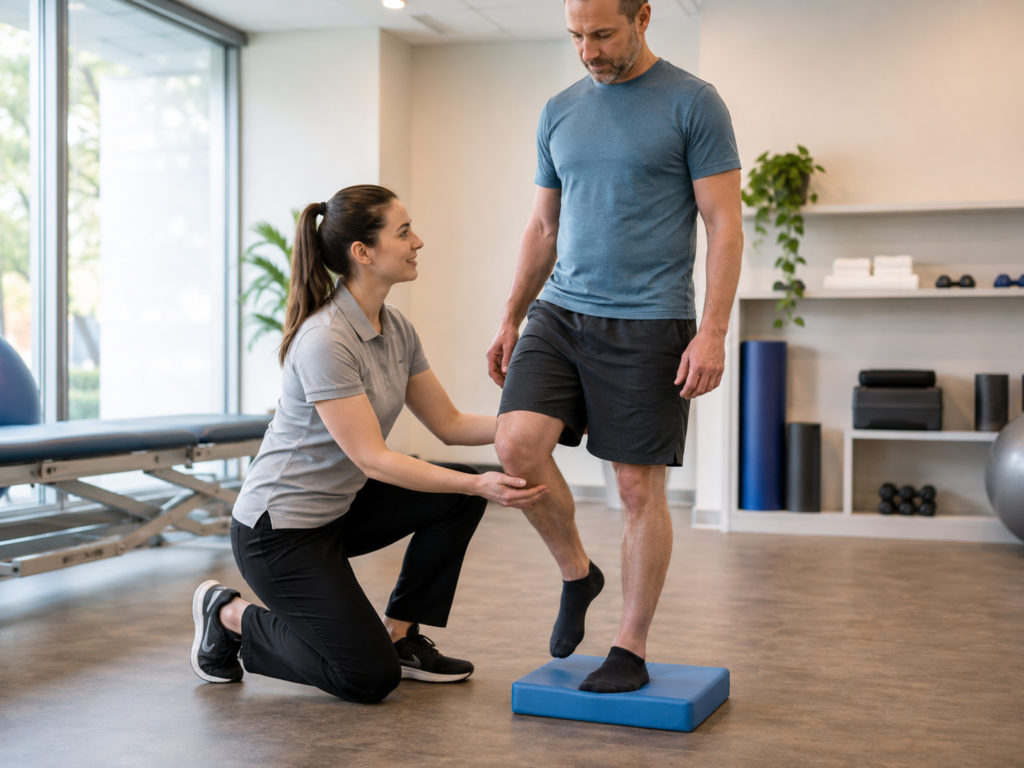
Balance work may include standing on one leg, stepping, reaching, or using different surfaces.
This is often important after ankle sprains, knee injuries, or long periods of reduced activity
Walking and Running Training
Your therapist may watch how you walk or run to look for movement habits that add stress to the leg.
The goal is not to make everyone move the same way. Changes are based on your pain, strength, and goals.
Activity Changes
You may not need to stop every activity. Your therapist can help you change the amount, speed, weight, or length of activity while the area heals.
Home Exercise Program
Your home plan may include movement, strength, balance, or activity changes.
Following the plan can help you continue making progress between visits.
What to Expect at Your First Appointment
Your first visit will begin with a conversation about your pain, health history, work, exercise, and goals.
Your therapist may ask:
- When did the pain begin?
- Was there an injury?
- Where is the pain located?
- Which movements make it worse?
- Is there swelling?
- Does the joint give way or lock?
- Have you changed your training?
- What shoes do you wear?
- Does pain affect sleep?
- What activities do you want to return to?
The physical exam may include:
- Hip, knee, ankle, and foot movement
- Leg strength
- Balance
- Walking
- Squatting
- Stair use
- Single-leg control
- Running or jumping when safe
- Foot position
- Muscle tightness
- Joint movement
Your therapist will explain what may be adding to the problem and create a personal treatment plan. At Reform Physical Therapy, appointments are one-on-one without aides or double-booked visits. This gives your therapist time to watch your movement, answer questions, and adjust treatment.
When to Seek Medical Care
Most lower-body pain can be checked during a planned appointment. Some symptoms need faster care.
Seek urgent medical help for:
- A visible deformity
- A bone coming through the skin
- Sudden severe swelling
- Inability to place weight on the leg
- A cold, pale, or blue foot
- Loss of feeling
- A sudden pop with severe weakness
- New calf pain with swelling or warmth
- Chest pain
- Trouble breathing
- Severe pain after a fall or crash
Contact a medical provider if pain keeps getting worse, occurs at rest, or does not improve with activity changes.
One-on-One Hip, Knee, and Leg Physical Therapy in Maine
Reform Physical Therapy provides care for hip, knee, leg, ankle, and foot conditions at our Maine clinics in Topsham, Brunswick, Freeport, Yarmouth, South Portland, Kennebunk, and Eliot.
We help patients who want to:
- Walk with less pain
- Climb stairs
- Return to work
- Sleep more comfortably
- Run again
- Return to sports
- Stand for longer periods
- Hike
- Cycle
- Play golf or pickleball
- Return to the gym
- Improve balance
- Prevent repeated ankle sprains
- Keep up with family
- Move with more confidence
Patients recovering from lower-body surgery may also benefit from our post-surgical physical therapy services. Runners, athletes, and active adults may benefit from our sports and active lifestyle physical therapy page.
Schedule a Physical Therapy Evaluation
Hip, knee, leg, ankle, and foot pain can make everyday movement more difficult. You do not have to wait until pain becomes severe before asking for help. A physical therapy evaluation can help find weakness, stiffness, balance problems, or movement habits that may be adding to your symptoms.