


Patellofemoral Pain Syndrome Treatment
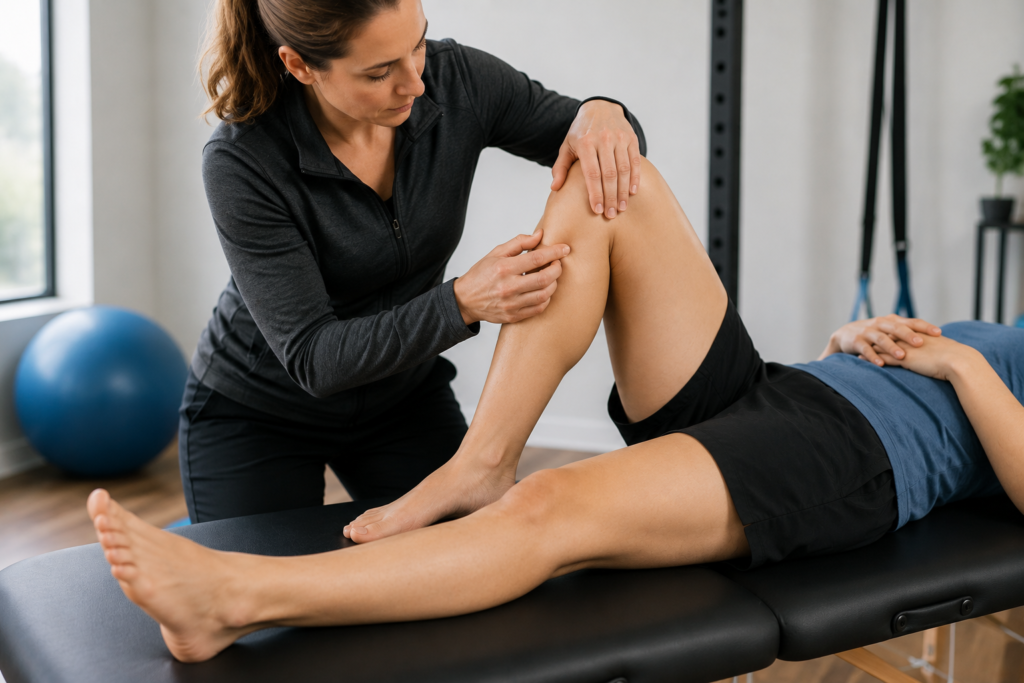
Patellofemoral pain syndrome treatment can help when pain around or behind the kneecap makes it difficult to use stairs, squat, run, jump, sit, or exercise. Patellofemoral pain syndrome is a broad term for pain in the front of the knee and around the patella, which is also called the kneecap. It is sometimes called runner’s knee, although it can affect athletes and nonathletes.
At Reform Physical Therapy, we provide one-on-one care based on your symptoms, strength, mobility, activity level, and goals. Your therapist will examine the knee while also looking at the hips, ankles, balance, walking pattern, and activities that may be placing extra stress on the kneecap. Treatment may include knee and hip strengthening, mobility exercises, activity changes, movement retraining, balance work, taping, hands-on care, and a personalized home exercise program.
What Is Patellofemoral Pain Syndrome?
The patellofemoral joint is where the kneecap meets the thigh bone. As the knee bends and straightens, the kneecap moves within a groove at the end of the thigh bone. Muscles, tendons, ligaments, cartilage, and nearby tissues help guide and support this movement. Patellofemoral pain syndrome occurs when the tissues around the kneecap become painful or irritated. The condition does not always involve one clear injury. Instead, symptoms may develop when the knee is exposed to more stress than it can currently manage.
Possible contributing factors include:
- A sudden increase in running or exercise
- Repeated jumping
- Hill training
- Frequent stairs
- Muscle weakness
- Reduced hip control
- Limited ankle movement
- Changes in footwear
- Changes in running form
- Returning to activity too quickly
- Long periods of sitting
- A direct hit to the kneecap
- A previous knee injury
Several factors may be present at the same time. Therefore, treatment should be based on the individual rather than one standard exercise routine.
What Does Patellofemoral Pain Feel Like?
Pain is usually felt in the front of the knee, around the kneecap, or behind it Some people can point to one painful area. However, others describe a wider ache around the entire front of the knee.
Symptoms may include:
- Aching around the kneecap
- Pain behind the kneecap
- Pain during stairs
- Pain while squatting
- Pain when running
- Pain during jumping
- Pain when kneeling
- Pain after sitting for a long time
- Discomfort while getting out of a chair
- Grinding or crackling
- Clicking or popping
- Mild swelling
- Weakness
- A feeling that the knee may give out
Pain may begin during activity or appear later that day. In addition, symptoms may become worse after a sudden increase in exercise.
Why Does Patellofemoral Pain Hurt on Stairs?
Stairs require the knee to bend while the thigh muscles control the body’s weight. As the knee bends, pressure between the kneecap and thigh bone increases. Therefore, irritated tissues may become more painful while climbing or going downstairs.
Walking downstairs may feel especially difficult because the leg must slowly control the body as it lowers.
Treatment may focus on:
- Quadriceps strength
- Hip strength
- Knee movement
- Ankle mobility
- Balance
- Step control
- Gradual stair practice
A railing may provide extra support while strength and confidence improve.
Why Does the Knee Hurt After Sitting?
Patellofemoral pain may become worse after sitting with the knee bent for a long period. This is sometimes called the movie-theater sign because symptoms may appear while sitting through a movie, meeting, class, or long drive.
Helpful changes may include:
- Straightening the knee from time to time
- Standing during long meetings
- Taking walking breaks
- Adjusting the chair
- Avoiding very low seats
- Changing driving position
- Limiting long periods in one position
Sitting does not always damage the knee. However, changing positions may reduce pressure and stiffness.
Common Causes and Contributing Factors
Patellofemoral pain syndrome often develops from a combination of activity, strength, mobility, and movement factors.
Sudden Changes in Activity
A quick increase in training may place more stress on the knee than it is prepared to handle.
Examples include:
- Increasing running mileage
- Adding hills
- Starting a new sport
- Returning after time off
- Adding more jumping
- Increasing squat volume
- Beginning a new workout program
- Practicing on harder surfaces
Instead of stopping all activity, treatment may involve reducing the amount for a short time and rebuilding it gradually.
Hip Weakness
The hip muscles help control the thigh and pelvis during walking, running, squatting, and landing. When these muscles are weak or tire quickly, the knee may move differently during activity. Therefore, hip strengthening is often included in treatment for kneecap pain.
Quadriceps Weakness
The quadriceps muscles are located along the front of the thigh. They help straighten the knee and control movement during stairs, squatting, running, and jumping. Pain can lead to weakness because a person may avoid using the leg normally. As a result, strengthening the quadriceps is often an important part of recovery.
Limited Ankle Mobility
The ankle must bend during walking, squatting, running, and stair use. When ankle movement is limited, the knee or hip may need to move differently. Your therapist may examine ankle mobility even though the pain is located at the knee.
Poor Balance or Movement Control
Balance and control are important during single-leg activities.
Examples include:
- Running
- Stairs
- Jumping
- Landing
- Stepping off a curb
- Changing direction
- Standing from a chair
Balance and movement exercises may help the leg better manage these demands.
Running and Training Factors
Running-related symptoms may be affected by:
- Mileage
- Speed
- Hills
- Running surface
- Rest days
- Shoe changes
- Step rate
- Recent injuries
- Strength
- Recovery
There is no single perfect running style. Instead, recommendations should be based on the runner’s symptoms, goals, and movement.
Footwear Changes
New, worn, or different shoes may change how the body responds during walking and running. Shoes are not always the main cause of kneecap pain. However, your therapist may review footwear when symptoms begin after a recent change.
Direct Injury
A fall or direct blow to the kneecap may irritate the joint and nearby tissues. Pain that begins after a major injury should be evaluated, especially when swelling, instability, or difficulty placing weight on the leg is present.
Is Patellofemoral Pain the Same as Chondromalacia?
The terms are sometimes used together, but they do not mean exactly the same thing. Patellofemoral pain syndrome describes pain around the kneecap. Chondromalacia refers to changes or softening involving the cartilage beneath the kneecap. A person can have patellofemoral pain without confirmed cartilage damage.
Treatment decisions should be based on symptoms, movement, strength, and daily function rather than one word from an imaging report.
Is Patellofemoral Pain the Same as a Meniscus Tear?
No. A meniscus tear involves cartilage inside the knee joint. It may cause joint-line pain, swelling, catching, or locking. Patellofemoral pain is more often felt around or behind the kneecap. However, symptoms can overlap, so a complete evaluation may be needed.
Is Patellofemoral Pain the Same as Patellar Tendonitis?
No. Patellar tendon pain is usually felt in a more specific area just below the kneecap. It often becomes worse during jumping, running, or forceful knee movements. Patellofemoral pain is often spread around or behind the kneecap.
The treatment plans may share some exercises, but the amount and type of loading may differ.
Is Patellofemoral Pain the Same as Arthritis?
No. Knee arthritis involves changes in the joint tissues over time. It may cause stiffness, swelling, reduced movement, and pain during daily activity. Patellofemoral pain can affect younger or active people without arthritis. Still, arthritis can also involve the kneecap area.
How Patellofemoral Pain Can Affect Daily Life
Pain around the kneecap can make simple movements feel difficult.
You may notice trouble with:
- Stairs
- Squatting
- Kneeling
- Sitting
- Driving
- Getting out of a chair
- Walking downhill
- Running
- Jumping
- Exercising
- Work duties
- Playing sports
- Getting on or off the floor
Some people begin avoiding movement because they are afraid of causing damage. However, avoiding activity for too long may lead to weakness and lower confidence. Instead, treatment usually focuses on finding a manageable level of movement and building from there.
How Patellofemoral Pain Is Evaluated
Your first appointment begins with a conversation about your symptoms, activity level, training, work, and goals.
Questions About Your Symptoms
Your therapist may ask:
- When did the pain begin?
- Was there an injury?
- Where do you feel the pain?
- Do stairs make it worse?
- Does the knee hurt after sitting?
- Have you increased your activity?
- Does the knee swell?
- Does it catch or lock?
- Does it feel unstable?
- What sports or exercises do you do?
- Have you changed your shoes?
- Have you had knee surgery?
- What activities do you want to return to?
Physical Tests During the Evaluation
Next, your therapist may examine:
- Knee movement
- Hip movement
- Ankle movement
- Quadriceps strength
- Hip strength
- Core control
- Balance
- Walking
- Squatting
- Stepping
- Stairs
- Single-leg movement
- Running
- Jumping or landing
- Activities that reproduce symptoms
The evaluation may include the entire leg because movement at the hip or ankle can affect the knee.
Do You Need an X-Ray or MRI?
Most people with patellofemoral pain do not need imaging right away. An X-ray may be recommended when a fracture, arthritis, or another bone problem is suspected.
An MRI may be considered when:
- Symptoms are not improving
- The knee locks
- A cartilage injury is suspected
- A major injury occurred
- Surgery is being considered
- Another condition may be present
Patellofemoral pain is often diagnosed through the symptom history and physical examination.
How Patellofemoral Pain Syndrome Treatment May Help
Patellofemoral pain syndrome treatment may help reduce discomfort, improve strength, restore movement, and make daily activities easier.
A personalized plan may help you:
- Use stairs more comfortably
- Squat with better control
- Sit for longer periods
- Improve knee strength
- Improve hip strength
- Return to running
- Return to sports
- Improve balance
- Reduce repeated flare-ups
- Increase confidence
- Manage training safely
Physical therapy care may include exercise, activity changes, movement training, taping, and education based on the person’s needs.
Treatment Options for Patellofemoral Pain
Quadriceps Strengthening
The quadriceps help straighten the knee and control the body during stairs, squatting, and landing.
Exercises may include:
- Straight-leg raises
- Seated knee extensions
- Wall sits
- Squats
- Step-ups
- Leg presses
- Split squats
- Controlled step-downs
Your therapist will select the depth, resistance, and number of repetitions based on your symptoms.
Hip Strengthening
The hip muscles help control the pelvis, thigh, and knee.
Exercises may include:
- Bridges
- Side-lying leg raises
- Standing hip exercises
- Resistance-band walking
- Single-leg exercises
- Squats
- Lunges
- Step exercises
Hip and knee exercises are commonly used together in the treatment of patellofemoral pain.
Improving Knee Mobility
Some patients have stiffness that makes bending or straightening the knee difficult.
Mobility work may include:
- Heel slides
- Knee extension exercises
- Stationary cycling
- Gentle stretching
- Assisted movement
However, movement should not be forced through sharp pain.
Improving Ankle Mobility
Limited ankle movement may affect squatting, stairs, and running.
Your therapist may use:
- Calf stretching
- Ankle mobility exercises
- Joint movement
- Foot and ankle strengthening
- Balance activities
Balance and Single-Leg Training
Many daily and sports activities happen on one leg.
Balance exercises may include:
- Single-leg standing
- Reaching
- Step-downs
- Direction changes
- Uneven surfaces
- Landing practice
- Sport-specific drills
Patients may begin with support and progress toward more difficult activities.
Movement Retraining
Movement retraining focuses on how the knee, hip, foot, and trunk work together.
Your therapist may assess:
- Squatting
- Stairs
- Running
- Jumping
- Landing
- Walking
- Changing direction
- Standing from a chair
The goal is not to force one perfect form. Instead, small changes may be used when they reduce symptoms or improve control.
Running Assessment
Runners may benefit from an assessment of training and movement.
The therapist may review:
- Weekly mileage
- Recent mileage changes
- Hills
- Speed work
- Running surface
- Step rate
- Foot position
- Knee control
- Hip control
- Shoe changes
- Recovery days
Treatment may include temporary training changes and a gradual return-to-running plan.
Activity Changes
Painful activities may need to be reduced temporarily.
For example, your therapist may recommend changes to:
- Running distance
- Hills
- Jumping
- Deep squats
- Kneeling
- Sports practice
- Stair volume
- Sitting time
The goal is usually to adjust the amount rather than stop all movement.
Patellar Taping
Tape may be placed around the kneecap to provide support or change how the area feels during activity. Some patients notice short-term relief. However, taping is usually paired with strengthening and movement exercises rather than used alone.
Foot Supports
Shoe inserts may be considered for some patients. They are not needed for everyone. Your therapist may assess foot position, comfort, walking, and running before recommending them.
Manual Therapy
Hands-on treatment may be used to improve movement or reduce tightness.
It may include:
- Gentle joint movement
- Soft tissue work
- Assisted stretching
- Guided movement
Manual therapy may provide short-term relief. However, active exercise is usually needed for longer-term improvement.
Home Exercise Program
Your home program may include strength, mobility, balance, walking, or activity goals. A shorter plan completed regularly is often more useful than a long routine that is hard to follow.
Should You Rest With Patellofemoral Pain?
A short period of reduced activity may help during a strong flare-up. However, complete rest for a long time may cause more weakness and make it harder to return to activity.
You may need to temporarily reduce:
- Running
- Jumping
- Deep squatting
- Hills
- Kneeling
- Repeated stairs
- High-impact workouts
Instead, try to keep comfortable movement in your day when it is safe.
Can You Walk With Patellofemoral Pain?
Walking is often safe when symptoms remain manageable.
During a flare-up, consider:
- Shorter walks
- Flatter routes
- More breaks
- Supportive shoes
- Slower pace
- Gradual increases in distance
Pain that becomes sharp, severe, or continues to rise may be a sign that the amount needs to be reduced.
Can You Run With Patellofemoral Pain?
Some runners can continue with temporary changes. Others may need a short break from running.
A return plan may involve:
- Reducing mileage
- Avoiding hills
- Removing speed work
- Running every other day
- Using run-walk intervals
- Strengthening the hips and knees
- Slowly increasing distance
The plan should be based on your symptoms and goals.
Are Squats Bad for Patellofemoral Pain?
Not always. Squats can build useful hip and knee strength. However, the depth, resistance, speed, and number of repetitions may need to be adjusted. The American Academy of Orthopaedic Surgeons provides more information about pain around the kneecap, common symptoms, and factors that may contribute to the condition.
A therapist may begin with:
- A smaller squat
- A higher chair
- Hand support
- Fewer repetitions
- Lower resistance
The exercise can progress as strength and comfort improve.
Returning to Sports
Athletes may need to rebuild more than basic strength.
Return-to-sport care may include:
- Running
- Jumping
- Landing
- Cutting
- Direction changes
- Speed
- Endurance
- Sport-specific drills
- Confidence training
The goal is to prepare the knee for the demands of the sport rather than only reducing pain during daily activity.
How Long Does Patellofemoral Pain Treatment Take?
Recovery time varies. Symptoms may improve within several weeks for some people. However, pain that has been present for months may take longer.
Recovery may depend on:
- How long symptoms have been present
- Strength
- Mobility
- Training demands
- Work demands
- Activity changes
- Exercise consistency
- Previous injuries
- Overall health
Signs of progress may include:
- Less pain on stairs
- Easier squatting
- Sitting longer
- Greater strength
- Better balance
- Returning to running
- Fewer flare-ups
- More confidence
Progress does not always happen in a straight line. Even so, improvements in function are important signs of recovery.
When to Seek Immediate Medical Care
Seek immediate care if knee pain occurs with:
- A serious fall or accident
- A visible deformity
- Inability to place weight on the leg
- Severe or rapidly increasing swelling
- A locked knee after an injury
- A cold, pale, or blue foot
- Loss of feeling
- A hot, red joint with fever
- Sudden calf swelling
- Chest pain
- Trouble breathing
These symptoms may suggest a fracture, dislocation, infection, blood clot, or another condition that requires prompt medical care.
When to Contact Your Medical Provider
Contact your healthcare provider if:
- Pain continues to worsen
- The knee repeatedly gives out
- Swelling does not improve
- The knee catches or locks
- You cannot fully bend or straighten it
- Symptoms began after a major injury
- You develop fever or redness
- Pain regularly wakes you at night
- You notice unexplained weight loss
- You are unsure whether exercise is safe
Your physical therapist may also recommend further testing if the examination suggests another condition.
One-on-One Patellofemoral Pain Syndrome Treatment in Maine
Reform Physical Therapy provides one-on-one care for patellofemoral pain syndrome at our Maine clinic locations.
We help patients who want to:
- Use stairs comfortably
- Return to running
- Return to sports
- Squat and kneel
- Sit without aching
- Improve hip and knee strength
- Improve balance
- Manage training changes
- Reduce repeated flare-ups
- Move with greater confidence
Your therapist will listen to your concerns, assess your movement, and create a plan around the activities that matter most to you.
Schedule a Patellofemoral Pain Evaluation
Pain around the kneecap can interfere with exercise, stairs, work, sports, and daily life. You do not have to guess which exercises are right for your knee. A full evaluation can help identify the strength, mobility, training, and movement factors that may be affecting your symptoms.