


Meniscus Repair Rehabilitation
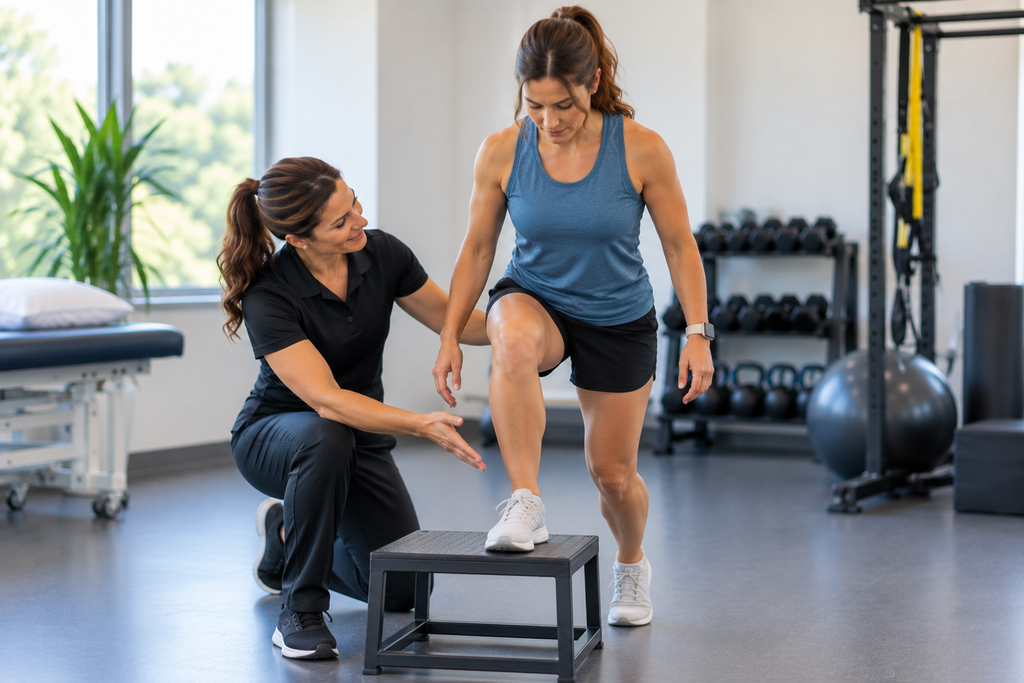
Meniscus repair surgery is designed to preserve and repair damaged cartilage inside your knee. Once the procedure is complete, the next step is helping the repaired tissue heal while gradually restoring your movement, strength, balance, and confidence. Proper meniscus repair rehabilitation is crucial during this phase to ensure the best possible recovery. Recovery can require patience. You may temporarily have restrictions on how much weight you can put through your leg or how far you can bend your knee. Walking, stairs, getting in and out of a chair, driving, exercising, and returning to sports may all look different for a while.
At Reform Physical Therapy, meniscus repair rehabilitation is built around your specific surgery, your surgeon’s protocol, and the activities you want to return to. The goal is to protect the healing meniscus early in recovery while progressively preparing your knee for everyday life, work, exercise, and sports.
Physical Therapy After Meniscus Repair
The meniscus is a piece of cartilage in your knee that helps distribute forces across the joint and contributes to knee stability. Each knee has two menisci. A meniscus can tear during a twisting injury, sports activity, or other movement. Tears can also develop as the tissue changes over time. When a surgeon repairs the meniscus, the damaged tissue is stitched or secured so it has an opportunity to heal. That healing process affects rehabilitation. Unlike some procedures where activity can progress relatively quickly, a repaired meniscus may need additional protection during the early stages of recovery. Your physical therapist will follow your surgeon’s recommendations regarding weight bearing, knee bending, brace use, strengthening, and return to activity.
Meniscus Repair vs. Meniscectomy
These procedures are not the same, and their rehabilitation plans can be very different. During a meniscus repair, the surgeon attempts to preserve the damaged meniscus by repairing the tear. The repaired tissue then needs time to heal. A partial meniscectomy removes the damaged portion of the meniscus rather than repairing it. Because there is no repaired tissue that needs to heal together after a partial meniscectomy, rehabilitation may progress differently. This is why it is important for your physical therapist to know exactly which procedure you had.
Why Is Physical Therapy Important After Meniscus Repair?
Your knee can become stiff and weak after surgery. Swelling may make it harder to bend or straighten your knee. Your quadriceps can also lose strength quickly when you are not walking and moving normally. Physical therapy helps address these changes while protecting the surgical repair. Early treatment may focus on swelling, knee movement, muscle activation, walking, and following your surgical precautions. Later rehabilitation progresses toward strength, balance, endurance, and more demanding activities.
When Does Physical Therapy Start?
Your surgeon will determine when rehabilitation should begin. The timing and early restrictions depend on factors such as the location and type of meniscus tear, how it was repaired, whether other procedures were performed, and your surgeon’s protocol. Some patients may initially have restrictions on weight bearing or knee flexion. Others may be allowed to progress differently. Rather than comparing your recovery with someone else’s, follow the instructions provided for your specific repair.
Your First Physical Therapy Visit
During your first appointment, we will take time to understand exactly what happened during surgery and where you are in the healing process. Your physical therapist will review the procedure performed, current symptoms, precautions, brace instructions, weight-bearing status, and any rehabilitation protocol provided by your surgeon.
We will also talk about what you want to get back to doing. Maybe your goal is walking comfortably again, returning to work, getting back to the gym, running, hiking, skiing, playing pickleball, or competing in your sport.
Those goals, along with your surgeon’s recommendations and current abilities, will help us build a rehabilitation plan that progresses with you throughout recovery.We will also talk about what you want to get back to doing. Maybe your goal is walking comfortably again. Perhaps you want to return to work, running, hiking, skiing, strength training, pickleball, or competitive sports. Those goals help shape your rehabilitation as your knee heals.
The Early Stage of Meniscus Repair Recovery
Early rehabilitation focuses heavily on protecting the repair. You may be using crutches and possibly a knee brace depending on your surgeon’s instructions. Treatment during this stage may include gentle exercises to maintain muscle activation, manage swelling, and restore appropriate knee movement. Your program will progress based on your surgical precautions. Although you may be eager to move faster, protecting the repair during this stage is an important part of your overall recovery.
Weight Bearing After Meniscus Repair
Your surgeon will determine how much weight you are allowed to put through your surgical leg. Some patients may initially have significant weight-bearing restrictions. Others may be allowed to place more weight through the leg sooner. The type and location of the repair can influence these instructions. Your physical therapist can teach you how to walk safely with crutches or another assistive device while following your restrictions. As you are cleared to place more weight through the leg, walking can gradually progress.
Using Crutches
Crutches are commonly used during early recovery from meniscus repair. They allow you to move while limiting the amount of force placed through the surgical leg when required. Your therapist can make sure your crutches are adjusted correctly and teach you how to use them safely. As your restrictions change and your walking improves, you can gradually work toward walking without them.
Wearing a Knee Brace
Some patients receive a knee brace after meniscus repair. The brace may limit knee movement or help protect the knee during walking. Follow your surgeon’s instructions about when the brace should be worn, how it should be positioned, and when it can be discontinued. Your physical therapist can help you understand how the brace fits into your rehabilitation plan.
Restoring Knee Extension
Being able to fully straighten your knee is important for normal walking and lower-body function. Swelling and soreness can make the knee want to remain slightly bent after surgery. Your therapist may introduce exercises designed to gradually restore knee extension while staying within your surgical guidelines. Improving extension can also make it easier to activate your quadriceps and regain a more natural walking pattern.
Restoring Knee Flexion
Bending the knee is also an important part of recovery. However, knee flexion may initially be limited after a meniscus repair. Your surgeon may provide specific guidelines about how far the knee can bend during different stages of healing. Physical therapy will gradually work toward restoring flexion without progressing beyond what is appropriate for the repair.
Rebuilding Quadriceps Strength
The quadriceps are the large muscles on the front of your thigh. These muscles help straighten your knee, support your body during walking, and control movements such as stairs and squatting. Quadriceps weakness can develop quickly after knee surgery. Early exercises may focus on simply getting the muscle to contract effectively again. As healing progresses, strengthening becomes increasingly challenging.
Hip and Glute Strength
Your hip muscles also play an important role in knee control. Strong glutes help control the position of your thigh during walking, stairs, running, jumping, and other activities. For this reason, meniscus rehabilitation should not focus only on the knee. Your program may include progressive hip and lower-body strengthening as you recover.
Walking Normally Again
Walking can feel awkward after spending time on crutches or protecting one leg. You may take shorter steps, move more slowly, or hesitate to put weight through the surgical side. Once your surgeon allows appropriate weight bearing, your therapist can help you gradually restore a more natural walking pattern. Strength, knee mobility, balance, and confidence all contribute to this process.
Going Up and Down Stairs
Stairs require more strength and knee control than level walking. During early recovery, you may need to use a railing, crutches, or a modified stepping pattern. As your knee becomes stronger, rehabilitation can progress toward more typical stair climbing. Step-ups, controlled step-downs, and other functional exercises may eventually become part of your program.
Balance After Meniscus Repair
Balance can change when you spend time favoring one leg. Rebuilding single-leg stability is especially important if you plan to return to running, sports, hiking, or other activities on uneven surfaces. Balance exercises typically begin simply and become progressively more challenging. Later activities may involve reaching, changing surfaces, or combining balance with other movements.
Squatting After Meniscus Repair
Squatting places greater demand on the knee as the depth of the movement increases. Because deeper knee bending may be restricted during certain stages of meniscus repair recovery, squatting should be progressed carefully. Your therapist will determine when different squat depths are appropriate based on your surgeon’s protocol. Eventually, squatting may become an important exercise for rebuilding strength and preparing for everyday and recreational activities.
Returning to Work
Your return to work depends partly on what your job requires. Someone working at a desk has different demands than someone who spends the day standing, walking, climbing, kneeling, lifting, or working on uneven ground. Tell your therapist what a typical workday looks like. Later rehabilitation can include exercises that prepare you for those specific demands.
Returning to the Gym
Strength training can become an important part of meniscus repair rehabilitation. Your initial workouts may look very different from what you did before surgery. As healing progresses, exercises can become more challenging. Squats, step exercises, resistance training, and other lower-body movements may gradually be introduced when appropriate. Your therapist can help you understand how to safely increase resistance without progressing too quickly.
Returning to Running
Running requires considerably more from the knee than walking. Before returning, you typically need adequate knee mobility, strength, control, and tolerance for impact. Your therapist can assess these areas and help determine when you are ready to begin a gradual running progression. The first runs may involve short intervals rather than immediately returning to your previous mileage. Distance and intensity can then build as your knee adapts.
Returning to Jumping
Jumping and landing place higher forces through the knee. These activities are generally introduced later in rehabilitation. Your therapist may first work on strength, balance, and lower-level impact activities. Once you are ready, rehabilitation can progress toward jumping and landing mechanics. Learning to absorb force with good control is particularly important for athletes.
Cutting and Changing Direction
Sports such as soccer, basketball, lacrosse, football, tennis, and pickleball involve rapid changes of direction. These movements require strength, balance, coordination, and confidence. Later-stage rehabilitation can include progressively more demanding change-of-direction exercises when appropriate. The goal is to prepare your knee for the movements your sport actually requires.
Returning to Sports
Being able to jog does not necessarily mean your knee is ready for sports. Sport involves acceleration, deceleration, jumping, landing, cutting, reacting, and performing movements while tired. Your therapist can gradually expose your knee to these demands. Return-to-sport decisions should consider more than the amount of time that has passed since surgery. Strength, movement quality, confidence, symptoms, and your surgeon’s recommendations all matter.
Returning to Hiking
Hiking requires strength and control on changing terrain. Uphill walking demands lower-body strength, while downhill walking requires the muscles around your knee to control your body as you descend. Uneven ground adds an additional balance challenge. If hiking is one of your goals, rehabilitation can gradually prepare you for hills, stairs, longer walking distances, and uneven surfaces.
Returning to Skiing
Skiing places significant demands on the knees. Strength, endurance, balance, and the ability to control rotational forces are all important. If returning to skiing is a goal, tell your therapist early in your rehabilitation. Later treatment can become more specific to the physical demands you will experience on the mountain.
Returning to Pickleball or Tennis
Pickleball and tennis require quick starts and stops, lateral movement, and frequent changes of direction. These activities may be introduced later in rehabilitation once your knee has developed adequate strength and control. Your therapist can help progress you from basic movement drills toward more sport-specific activities.
Why Is My Knee Still Swollen?
Swelling is common after knee surgery. It may increase temporarily as your activity level increases. Managing swelling can help improve comfort, knee mobility, and muscle function. Your therapist will monitor how your knee responds as exercises become more challenging. A sudden or significant increase in swelling should be discussed with your healthcare provider, particularly if it is accompanied by other concerning symptoms.
Why Does My Knee Still Feel Weak?
Weakness can remain even after your pain begins improving. The quadriceps often lose strength after surgery and periods of reduced activity. Your hip and other leg muscles may also need rebuilding. Strength develops gradually through consistent, progressive exercise. Feeling better is an important milestone, but it does not automatically mean your knee has regained the strength required for running or sports.
How Long Does Meniscus Repair Rehabilitation Take?
Recovery from meniscus repair usually takes months rather than weeks. The exact timeline depends on the type and location of the tear, surgical technique, surgeon’s protocol, other procedures performed, and the activities you want to return to. Someone whose goal is comfortable everyday walking may progress differently than an athlete preparing to return to cutting and jumping. Your rehabilitation should be based on your individual healing and function.
What If I Had an ACL Reconstruction Too?
Meniscus repair is sometimes performed at the same time as ACL reconstruction. When multiple procedures are performed, rehabilitation needs to account for both. Your surgeon may modify weight-bearing, knee movement, or other parts of the rehabilitation protocol. Your physical therapist will consider all procedures performed when developing your plan.
What If My Surgery Was Months Ago?
Physical therapy may still help if your knee remains weak, stiff, swollen, or limited. Some patients regain basic function but notice difficulty when they try to return to running, sports, hiking, or heavier exercise. An evaluation can identify remaining strength, mobility, balance, or movement limitations. From there, your therapist can develop a plan for continuing your recovery.
When Should I Contact My Surgeon?
Your surgical team should provide instructions about symptoms that require medical attention. Contact your healthcare provider if you experience unexpected or rapidly worsening pain, significant redness or warmth, drainage from your incision, fever, or a major change in your knee. New or significant calf pain and swelling should also be taken seriously. Seek immediate medical attention for symptoms such as chest pain or difficulty breathing. If something about your recovery does not feel right, contact your medical team.
Why Choose Reform for Meniscus Repair Rehabilitation?
Recovering from meniscus surgery is about more than getting your knee to bend again. You need your knee to work for your life. At Reform Physical Therapy, we want to know what you are trying to get back to doing. Maybe you want to walk comfortably at work. Perhaps you are hoping to return to the gym, running, hiking, skiing, pickleball, or competitive sports. Your goals help guide the progression of your rehabilitation. Treatment will follow your surgeon’s recommendations while gradually restoring mobility, strength, balance, control, and confidence. As your meniscus heals, your rehabilitation progresses with you.
Start Your Meniscus Repair Recovery With Reform
If you recently had meniscus repair surgery or are preparing for an upcoming procedure, Reform Physical Therapy can help guide you through recovery. Your therapist will create an individualized meniscus repair rehabilitation program based on your surgery, surgeon’s protocol, current abilities, and personal goals. From those first protected steps to walking, strengthening, running, working, and returning to sports, we will help you keep moving forward.
Contact Reform Physical Therapy to schedule your post-surgical rehabilitation evaluation.