


Ankle Sprain Treatment
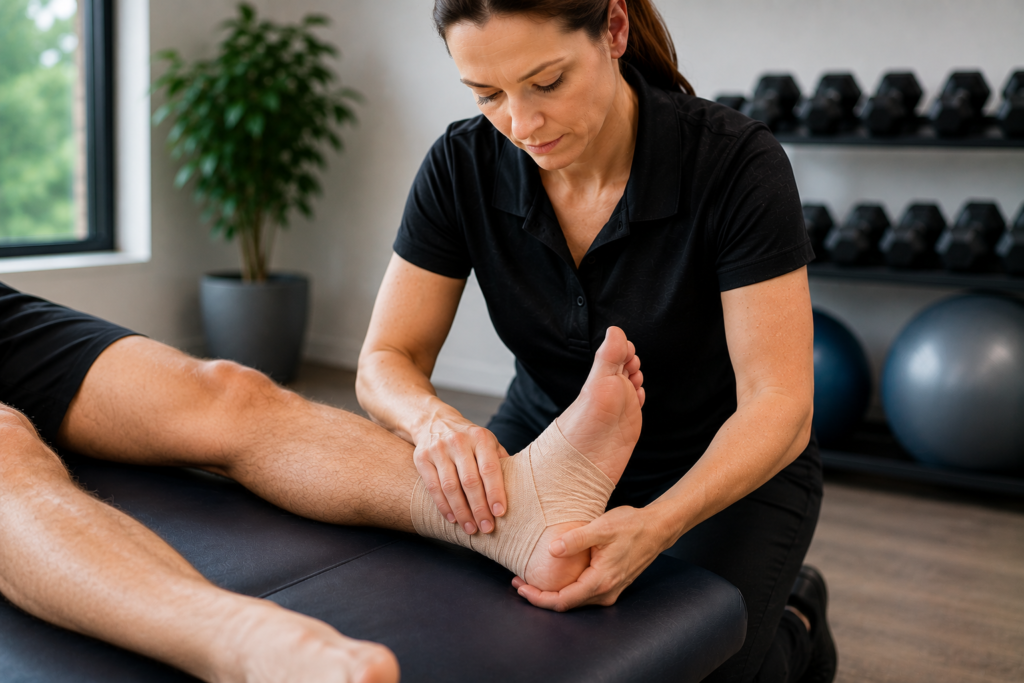
Ankle sprain treatment can help reduce pain, swelling, stiffness, weakness, and instability after the ankle twists or rolls unexpectedly. An ankle sprain happens when one or more ligaments supporting the ankle are stretched beyond their normal limit or torn. Ligaments are strong bands of tissue that connect bones and help keep the joint stable. Sprains can range from a mild stretch to a complete ligament tear.
Many ankle sprains happen when the foot turns inward during a fall, awkward step, jump, or sudden change in direction. The ligaments along the outside of the ankle are injured most often, although other parts of the joint can also be affected. At Reform Physical Therapy, we provide one-on-one ankle sprain treatment based on your injury, symptoms, movement, strength, balance, activity level, and goals. Your therapist will examine the ankle while also checking the foot, calf, knee, hip, walking pattern, and activities that make your symptoms worse.
Understanding Ankle Sprains
An ankle sprain is a ligament injury rather than a muscle strain or broken bone. The ligaments around the ankle guide movement and prevent the joint from moving too far in an unsafe direction. When the foot rolls or twists suddenly, these tissues may become overstretched or torn. A mild sprain may cause tenderness and slight swelling while still allowing the person to walk. A more serious injury can cause heavy bruising, significant weakness, difficulty bearing weight, and a feeling that the ankle may give way.
The amount of pain does not always show the full severity of the injury. Some people can walk despite a meaningful ligament tear, while others experience severe pain from a less serious sprain. A physical examination helps determine whether ankle sprain treatment is appropriate or whether imaging and medical evaluation are needed.
Common Ankle Sprain Symptoms
Pain is often felt around the outside of the ankle after the foot rolls inward. The injured area may become tender, swollen, warm, or bruised. Walking may feel uncomfortable, especially when pushing from the foot or moving across uneven ground. The ankle can also feel stiff after sitting, sleeping, or keeping the foot elevated.
Some people hear or feel a pop during the injury. A popping sensation does not always mean the ankle is broken, but it should be evaluated when it occurs with severe pain, major swelling, deformity, or an inability to bear weight. Weakness and instability may continue after the early swelling improves. The ankle may feel unreliable during stairs, quick turns, running, jumping, or sports. Pain, swelling, bruising, stiffness, and difficulty using the joint are common signs of a sprain.
Lateral Ankle Sprains
A lateral ankle sprain affects the ligaments on the outside of the ankle. This is the most common type. The injury often occurs when the foot turns inward while the body moves over it. This may happen after stepping off a curb, landing from a jump, walking on uneven ground, or changing direction during sports. Pain and swelling usually develop near the outside ankle bone. Bruising may spread into the foot or lower leg during the days after the injury. A mild lateral sprain may improve with early protection and exercise. More serious injuries may require a brace, temporary walking support, and a slower ankle sprain treatment plan.
Medial Ankle Sprains
A medial ankle sprain affects the strong ligaments along the inside of the ankle. This type of injury is less common because the inner ligaments are strong and the ankle is less likely to roll forcefully outward. Pain may develop below or around the inner ankle bone. Swelling, bruising, and difficulty walking may also occur. A forceful medial sprain may happen with a fracture or another significant ankle injury. Medical evaluation may be recommended when pain is severe, or the person cannot place weight on the foot.
High Ankle Sprains
A high ankle sprain affects the ligaments connecting the two lower-leg bones above the ankle joint. This area is known as the syndesmosis. The injury may happen when the foot rotates outward while it is planted or when the lower leg twists over the foot. Pain is often felt higher above the ankle than with a typical lateral sprain. Walking, turning, pushing from the foot, and squeezing the lower-leg bones together may increase symptoms. High ankle sprains can take longer to heal than common lateral ankle sprains. Some cases can be treated without surgery, but the recovery may require more protection and a slower return to activity.
Ankle Sprain Grades
A Grade 1 ankle sprain is a mild injury.
The ligament fibers are stretched or slightly torn. Swelling and tenderness may be limited, and the person can often continue walking with some discomfort.
A Grade 2 sprain is a partial ligament tear.
Pain, bruising, swelling, stiffness, and weakness are usually more noticeable. Walking may be difficult, and the ankle may feel unstable.
A Grade 3 sprain is a complete ligament tear.
This injury can cause significant swelling, bruising, weakness, and loss of stability. Medical protection, imaging, and orthopedic evaluation may be needed.
The grade should not be based on appearance alone. A physical examination helps determine how much ligament damage and functional loss may be present.
Common Causes of Ankle Sprains
Ankle sprains often happen during an awkward step, fall, jump, or sudden change in direction. Uneven sidewalks, trails, curbs, stairs, wet floors, and loose surfaces can cause the foot to roll unexpectedly. Sports involving jumping, cutting, sprinting, or physical contact also create a higher risk. Basketball, soccer, football, volleyball, tennis, pickleball, and trail running commonly place the ankle in positions where a sprain can occur.
Poor balance, reduced ankle strength, fatigue, and a previous sprain may make it harder to control the foot during sudden movement. Shoes that do not fit well or match the activity may contribute in some situations. However, footwear is only one factor. Strength, balance, surface, speed, fatigue, and movement control can all affect injury risk.
Previous Ankle Sprains and Instability
A previous ankle sprain can increase the chance of another injury. Pain and swelling may improve before strength, balance, and ligament control have fully returned. This can create a false sense that the ankle is ready for sports or demanding activity. Some people develop ongoing instability. The ankle may repeatedly roll, feel weak on uneven ground, or give way during quick movements. Incomplete rehabilitation is one possible reason symptoms return. Ankle sprain treatment should continue beyond basic pain relief so strength, balance, and confidence can also improve.
Ankle Sprains and Fractures
An ankle sprain and an ankle fracture can cause similar symptoms. Both injuries may cause pain, swelling, bruising, and difficulty bearing weight. A fracture involves a broken bone, while a sprain involves stretched or torn ligaments. Severe tenderness directly over a bone, visible deformity, inability to take several steps, or pain after a major fall may raise concern for a fracture. Some fractures allow limited walking, so being able to stand does not always rule out a broken bone. Medical imaging may be recommended when the injury pattern, symptoms, and examination suggest a fracture.
Other Conditions That Can Resemble an Ankle Sprain
Not every painful twisted ankle is a simple ligament sprain. A tendon injury may cause pain along the outside, inside, or back of the ankle. Tendons may become irritated, stretched, or torn during the same event that injures the ligaments. Cartilage injuries within the ankle joint can cause swelling, catching, locking, or deep joint pain.
A high ankle sprain, fracture, dislocation, bone bruise, nerve injury, or injury to the base of the fifth metatarsal may also produce similar symptoms. Persistent pain that does not follow the expected recovery pattern should be evaluated rather than repeatedly treated as a minor sprain.
Effects on Walking and Daily Activities
An ankle sprain can affect nearly every activity that involves standing or moving. Walking may become slow and uneven. Some people avoid placing weight on the injured side or turn the foot outward to reduce discomfort. Stairs can be difficult because the ankle must bend, support body weight, and help control the leg. Carrying groceries, caring for children, completing housework, and walking through a parking lot may also become challenging.
People with active jobs may struggle with prolonged standing, lifting, climbing, or walking across uneven surfaces. Athletes may lose the ability to run, jump, cut, pivot, or land confidently. A complete ankle sprain treatment plan should prepare the patient for these specific demands.
Physical Therapy Evaluation
Your first appointment begins with a conversation about how the injury happened, where you feel pain, and whether you could continue walking afterward. Your therapist may ask about swelling, bruising, popping, previous ankle injuries, and any feeling that the ankle gives way. During the examination, the therapist may assess tenderness, swelling, bruising, ankle movement, foot movement, strength, balance, and walking.
The ankle ligaments may be tested carefully to estimate which tissues are involved. The foot, calf, knee, and hip may also be checked because these areas affect balance and leg control. Functional testing may include standing, stepping, heel raises, squatting, or balancing on one leg. Running and jumping tests are usually saved for later when the injury can safely tolerate more force. This evaluation helps create an ankle sprain treatment plan based on the severity of the injury and the activities you need to resume.
Medical Imaging
Many ankle sprains can be evaluated without an MRI. An X-ray may be recommended when a fracture is possible. The decision may depend on the injury, location of tenderness, ability to bear weight, and clinical examination. MRI or ultrasound may be considered when symptoms remain severe, a tendon injury is suspected, or the ankle is not improving as expected. Imaging may also help evaluate a high ankle sprain, cartilage injury, complete ligament tear, or another condition inside the joint.
Ankle Sprain Treatment
Ankle sprain treatment often begins with protecting the injured ligaments while controlling pain and swelling. Complete rest is not always necessary. Safe movement and gradual weight-bearing may help restore function when a fracture or serious injury has been ruled out. Physical therapy can help reduce pain, restore ankle movement, rebuild strength, improve balance, and prepare the person to return to everyday activities or sports. Treatment should match the injury. A mild sprain may progress quickly, while a severe ligament tear or high ankle sprain may require more protection and a longer recovery.
Early Protection and Support
The ankle may need temporary protection during the first stage of recovery. A brace, supportive shoe, compression wrap, walking boot, cane, or crutches may be recommended depending on the severity of the injury. The goal is to reduce unnecessary stress while allowing safe movement. Staying completely off the ankle for too long can lead to greater stiffness and weakness. Your therapist or medical provider will determine how much weight can safely be placed on the foot.
Pain and Swelling Management
Cold packs may help reduce pain during the early stage. A cloth should be placed between the cold pack and skin. Compression can provide support and may help control swelling. The wrap should not cause numbness, color changes, or increasing pain. Elevating the ankle above the heart may also help reduce swelling during the first few days.
MedlinePlus includes protection, cold therapy, compression, elevation, and gradual return to movement among common early care approaches for ankle sprains. Medication questions should be discussed with a physician or pharmacist, especially when other health conditions or prescriptions are involved.
Restoring Ankle Movement
Pain and swelling can make the ankle stiff. Gentle movement may begin with pointing the foot, pulling the toes upward, or moving the ankle through a comfortable range. Small ankle circles or controlled side-to-side movement may also be used when appropriate. The goal is not to force the ankle through sharp pain. Movement should become gradually easier as swelling decreases and the tissues heal. High ankle sprains and severe ligament injuries may require more protection before certain movements are introduced.
Restoring Normal Walking
A painful ankle sprain can cause limping and reduced push-off from the foot. Your therapist may help you practice taking even steps, placing the foot flat, and moving the body smoothly over the ankle. A walking aid may be used temporarily when the person cannot walk safely without a major limp. Distance can increase gradually as pain, swelling, and strength improve. Normal walking is an important early goal because continued limping may contribute to discomfort in the knee, hip, back, or opposite leg.
Ankle Strengthening
The muscles surrounding the ankle help control the foot and support the injured ligaments. Early strengthening may include gentle resistance while moving the foot upward, downward, inward, or outward. Heel raises can be added as weight-bearing becomes more comfortable. The exercise may begin with both feet and progress toward one leg. Later ankle sprain treatment may include heavier resistance, step exercises, calf strengthening, and faster movements. Strengthening should prepare the ankle for the actual demands of work, exercise, and sports.
Foot and Calf Strengthening
The foot and calf work closely with the ankle during every step. Foot exercises may focus on arch control, toe strength, and the ability to adjust to the ground. Calf strengthening helps restore push-off and support during walking, running, and jumping. Heel raises may be completed with the knee straight and bent to strengthen different portions of the calf. As strength improves, exercises can progress to added weight, single-leg control, and movements performed at faster speeds.
Hip and Knee Strengthening
Ankle control depends partly on the strength and position of the rest of the leg. Weakness at the hip or knee may affect balance, landing, running, and direction changes. Treatment may include bridges, squats, step-ups, lunges, side-stepping, and single-leg exercises. These movements help prepare the entire leg to manage force rather than placing all attention on the injured ankle.
Balance and Proprioception Training
Ligaments contain sensory receptors that help the body recognize joint position. After a sprain, this sense of position may become less accurate. The ankle may feel unsteady even after pain and swelling improve. Balance training may begin with standing evenly on both feet. The program can progress to single-leg standing, reaching, stepping, or using an uneven surface. Later exercises may involve catching a ball, turning the head, closing the eyes, or reacting to movement. Improving balance is a major part of ankle sprain treatment because it can help restore confidence and reduce the chance of another injury.
Bracing and Taping
An ankle brace or athletic tape may provide temporary support during recovery and return to sports. Bracing may help limit the movement that originally caused the sprain while allowing safer activity. Some athletes use a brace during practices and games after returning from an injury. A brace should not replace strengthening and balance work. The ankle still needs to rebuild its own ability to control movement. Your therapist can help determine which type of support is appropriate and how long it should be used.
Manual Therapy
Hands-on care may be used to improve ankle or foot movement and reduce tension in nearby muscles. Treatment may include gentle joint movement, soft-tissue techniques, or assisted mobility. Direct pressure over heavily bruised or freshly injured tissue may not be appropriate during the early stage. Manual therapy can improve short-term comfort, but active exercise is usually needed to restore lasting strength and stability.
Return to Running
Running should begin after walking if comfortable and basic strength and balance have improved. A return-to-run program may start with fast walking followed by short jogging intervals. Distance is generally increased before speed, hills, trails, or long continuous runs. The ankle should be monitored during the run and afterward. Increasing pain, swelling, limping, or a feeling of instability may mean the progression was too fast.
Return to Sports
Sports often place greater demands on the ankle than straight-line running. A complete return may require jumping, landing, sprinting, cutting, pivoting, and reacting to other players. An athlete should be able to perform these movements with good control and confidence before returning to full competition. The injured ankle may also be compared with the uninjured side during balance, hopping, strength, and movement tests. Returning only because the swelling has decreased may increase the chance of another sprain.
Home Exercise Program
Your home program may include ankle movement, strengthening, balance, walking, and activity guidance. Exercises should match the current stage of recovery. Early movements may focus on reducing stiffness, while later exercises prepare the ankle for work, running, and sports. The program should become gradually more challenging as strength and control improve. Consistency is important. A short plan completed regularly is often more useful than a long plan that is difficult to follow.
Recovery Time
Recovery depends on the severity and location of the sprain. A mild injury may improve within several weeks. A moderate or severe sprain can require a longer period of rehabilitation. High ankle sprains, complete ligament tears, cartilage injuries, and repeated sprains may take several months to fully recover. MedlinePlus notes that ankle sprains may take anywhere from a few weeks to several months to heal completely.
Signs of progress include less swelling, easier walking, improved ankle movement, stronger heel raises, better balance, and increased confidence on uneven ground.
Chronic Ankle Instability
Some people continue to feel weakness or instability after the original sprain appears to heal. The ankle may give way during normal walking, sports, or quick movements. Repeated swelling and soreness may occur after activity. This condition is sometimes called chronic ankle instability. Ankle sprain treatment for ongoing instability may focus on balance, reaction training, strength, bracing, and sport-specific movement. Surgery may be considered in certain cases when serious instability continues despite a complete rehabilitation program.
Preventing Another Ankle Sprain
Strength and balance exercises may reduce the chance of another injury. A gradual return to sports is also important. Jumping, cutting, and quick direction changes should be added only after the ankle can manage simpler activities. Supportive footwear may help during certain activities. A brace or taping may be recommended for sports with a high risk of ankle injury. Uneven surfaces should be approached carefully, especially while the ankle is still regaining confidence. Warm-ups can include walking, light jogging, balance work, and gradual movement before full-speed activity begins.
Medical Warning Signs
Prompt medical evaluation is important when the ankle appears deformed, or the person cannot place weight on the foot after an injury. Severe tenderness directly over a bone, rapidly increasing swelling, or extensive bruising may indicate a fracture or more serious injury. A cold, pale, blue, or numb foot requires urgent care because blood flow or nerve function may be affected. Seek immediate care for an open wound, visible bone, or a joint that appears out of place.
Pain that remains severe at rest, repeatedly worsens, or fails to improve should also be evaluated. Calf swelling, warmth, redness, chest pain, or trouble breathing requires urgent medical attention because these symptoms may indicate a blood clot.
Ankle Sprain Treatment in Maine
Reform Physical Therapy provides one-on-one ankle sprain treatment at our Maine clinic locations. We help patients recover from mild sprains, partial ligament tears, high ankle sprains, repeated injuries, instability, and difficulty returning to work or sports. Your ankle sprain treatment plan may include activity guidance, mobility exercises, ankle and calf strengthening, balance training, walking practice, bracing recommendations, and a gradual return to running or athletics.
The goal is not only to reduce pain and swelling. Treatment also helps the ankle become stronger, steadier, and better prepared for the activities that matter to you.
Schedule an Ankle Sprain Evaluation
An ankle sprain can make walking, working, exercising, and playing sports difficult. Waiting for the swelling to disappear does not always restore strength, balance, or confidence. An incomplete recovery may also increase the chance of another sprain. A one-on-one evaluation can help determine which ligaments may be involved and whether physical therapy is appropriate.