


Shin Splints Treatment
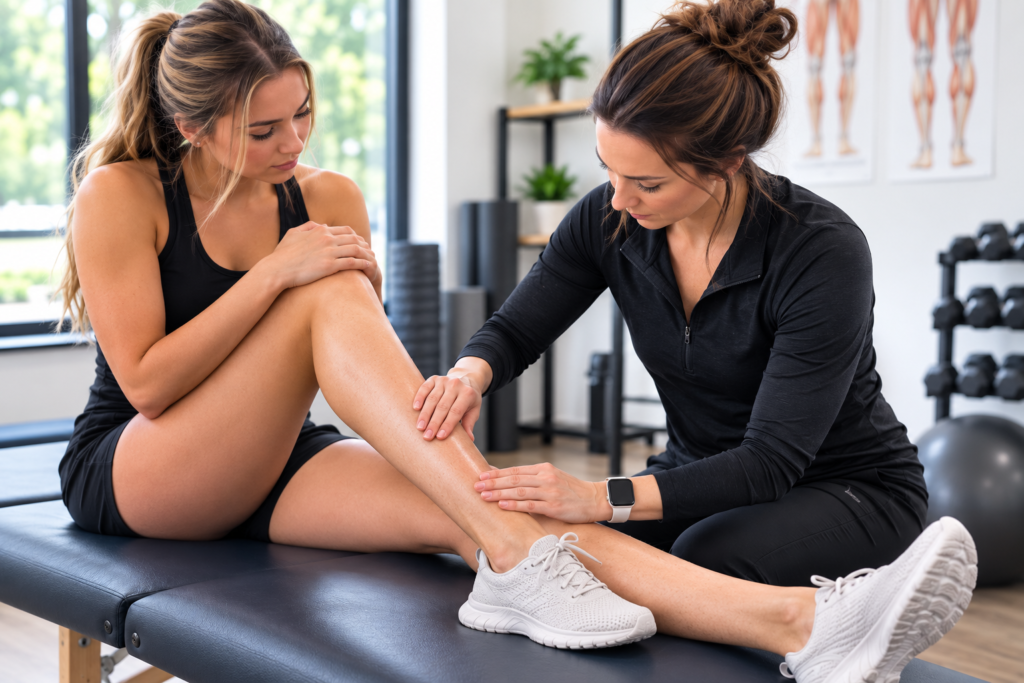
Shin splints treatment can help reduce lower-leg pain and address the movement, strength, footwear, or training problems that may be placing too much stress on the shinbone. Shin splints commonly cause aching or tenderness along the inner edge of the tibia, which is the large bone in the lower leg. Symptoms often develop after running, jumping, sports practice, or a sudden increase in exercise.
The medical name for shin splints is medial tibial stress syndrome. It involves irritation of the muscles, tendons, and bone tissue surrounding the tibia. Although it is common among runners and athletes, it can also affect people who recently started walking for exercise, returned to activity, or changed their workout routine. At Reform Physical Therapy, we provide one-on-one care based on your symptoms, movement, strength, activity level, and goals. Your therapist will examine your lower leg while also checking your feet, ankles, knees, hips, balance, walking pattern, and training habits.
Understanding Shin Splints
Shin splints describe pain caused by repeated stress along the inner border of the shinbone. The pain is usually spread across a larger area rather than focused on one small point. The muscles and tissues surrounding the tibia help support the foot and control the lower leg during walking, running, and jumping. When these tissues experience more force than they are prepared to handle, irritation may develop.
This commonly happens when a person increases activity too quickly. The body may not have enough time to adapt to the added distance, speed, hills, jumping, or training days. Shin splints are considered an overuse injury. Unlike a sudden muscle tear, symptoms often develop gradually and become more noticeable as activity continues.
Common Shin Splint Symptoms
Pain is usually felt along the inner edge of the shinbone. It may affect one leg or both legs. During the early stage, discomfort may only appear at the beginning of exercise and improve as the body warms up. As the condition becomes more irritated, pain may continue throughout the workout or remain after activity has ended.
The lower leg may feel tender when pressed. Some people also notice mild swelling, tightness, aching, or a dull throbbing feeling. Symptoms may become worse during running, jumping, fast walking, hills, stairs, or sports that require repeated starts and stops. Pain that becomes severe, remains present during rest, or is focused in one small area may suggest a different condition that requires medical evaluation.
Pain Location Along the Shin
Shin splint pain usually follows the inner border of the tibia. This is the side of the shinbone that faces the opposite leg. The painful area is often several inches long. This broader pattern helps separate shin splints from some stress fractures, which may create more focused tenderness. Pain directly on the front of the shin may involve nearby muscles, tendons, or another type of overuse injury. Symptoms along the outside of the lower leg may also have a different cause.
A physical therapy evaluation can help determine whether the pain matches shin splints or whether another structure may be involved.
Common Causes of Shin Splints
Shin splints often develop when training demands increase faster than the body can adapt. A runner may add too many miles, increase speed, begin hill training, or start exercising more days each week. A person returning after a long break may also develop symptoms even when the new activity does not seem intense. The bones, muscles, and tendons need time to rebuild their ability to manage repeated force.
Hard surfaces may increase the amount of force moving through the legs. Running or practicing on pavement, gym floors, or firm fields may contribute when combined with high training volume. Worn or poorly matched shoes can change how the foot absorbs force. However, footwear is rarely the only factor. Strength, movement, training load, recovery, and exercise technique may also play a role. Shin splints may also begin after changing sports, switching running surfaces, starting a new job that requires more walking, or joining a military or fitness training program.
Training Changes and Overuse
The body becomes stronger when activity increases gradually. Problems may occur when the increase is too large or happens too quickly. For example, a person may feel comfortable running two miles but develop shin pain after suddenly increasing to five miles. Another person may tolerate level running but experience symptoms after adding hills or sprints.
Exercise intensity is not the only concern. Increasing the number of weekly workouts can also reduce recovery time between sessions. Physical therapy can help identify which part of the training program may be contributing. Your therapist may recommend temporary changes while helping you build back toward your normal routine.
Strength and Movement Factors
Weakness in the feet, ankles, calves, hips, or core may affect how force moves through the legs. The calf muscles help control the ankle and absorb force during walking and running. When they fatigue quickly, other tissues may take on more stress.
Hip weakness may also affect the position of the knee and lower leg. This can change how the foot lands and how the body controls each step. Limited ankle movement may make it harder for the leg to move smoothly over the foot. The body may compensate by changing the way the foot, knee, or hip moves. These findings do not mean that one muscle or movement caused the condition. Shin splints often develop from several factors working together.
Foot Position and Footwear
People have different foot shapes and movement patterns. Some feet roll inward more during walking or running, while others remain more rigid. Neither pattern automatically causes shin splints. However, certain foot movements may become important when combined with rapid training changes, weakness, fatigue, or limited mobility. Your therapist may look at your shoes for signs of uneven wear. They may also watch how your feet and legs move while walking, running, squatting, or stepping.
Shoes should feel comfortable and match the activity being performed. Athletic shoes that are heavily worn may no longer provide the same support or cushioning they once did. Some patients benefit from temporary shoe inserts or other footwear changes. These options should be based on the individual evaluation rather than used as the only treatment.
Shin Splints and Stress Fractures
Both shin splints and tibial stress fractures can cause lower-leg pain, but they are not the same condition. With shin splints, discomfort is usually spread across a wider area along the inner edge of the shin. A stress fracture often causes more focused pain in one small spot. Symptoms from a stress fracture may also become noticeable during normal walking, remain present at rest, or worsen at night. Sharp pain while hopping on the affected leg can be another warning sign.
Because early stress fractures may not always appear on an X-ray, additional imaging may be needed when the symptoms or examination findings raise concern. A stress fracture may produce pain that is more focused in one small area. Stress fracture pain may also become more noticeable during normal walking, remain present at rest, or worsen at night. Hopping on the affected leg may cause sharp pain.
A stress fracture may not always appear on an early X-ray. Further imaging may be needed when symptoms and examination findings raise concern. The American Academy of Orthopaedic Surgeons recommends further evaluation when shin pain does not respond to treatment because a stress fracture may need to be ruled out.
Other Conditions That Can Resemble Shin Splints
Several conditions can cause pain in the lower leg. Calf strains may cause pain after a sudden push, jump, or running movement. Tendon problems can create pain closer to the ankle or along the muscles surrounding the shin. Nerve irritation may cause burning, tingling, numbness, or weakness. These symptoms are not typical of simple shin splints.
Chronic exertional compartment syndrome can cause tightness, pressure, pain, weakness, or numbness during exercise. Symptoms may improve after activity stops but return at a similar point during the next workout. Circulation problems, infection, blood clots, and bone injuries may also cause lower-leg pain. These conditions require medical evaluation.
Effects on Walking, Running, and Daily Life
Shin splints may begin as a mild exercise-related problem. However, continued irritation can eventually affect walking, stairs, work, and daily activities. Some people begin changing the way they walk or run to avoid pain. This may create discomfort in the foot, ankle, knee, hip, or opposite leg. Runners may cut workouts short or stop training completely. Athletes may struggle with jumping, sprinting, or repeated drills.
People with active jobs may notice pain after long periods of walking or standing. Symptoms may also make it harder to exercise for general health. Treatment focuses on calming the irritated area while helping the body gradually rebuild its ability to manage activity.
Physical Therapy Evaluation
Your first appointment begins with a discussion about when the symptoms started, where the pain is located, and which activities make it worse. Your therapist will review recent changes in running, sports, work, footwear, and exercise. Information about training distance, speed, surfaces, hills, and recovery days may help identify the reason the lower leg became overloaded. The examination may include the shin, calf, ankle, foot, knee, and hip. Your therapist may check movement, strength, balance, tenderness, and the way you stand or walk.
A running assessment may be included when appropriate. Your therapist may observe your step pattern, foot position, cadence, stride, and control of the hip and knee. If the symptoms do not match a typical shin splint pattern, your therapist may recommend medical evaluation or imaging.
Shin Splints Treatment Options
Shin splints treatment usually begins by reducing the activities that are keeping the area irritated. This does not always mean stopping all movement. Running, jumping, or sports practice may need to be temporarily reduced. Lower-impact activities such as cycling, swimming, or another pain-free option may help maintain fitness during recovery.
Treatment then focuses on restoring movement, improving strength, and gradually rebuilding the leg’s ability to absorb force. Physical therapists can assess movement and exercise technique before creating an individualized program for recovery and injury prevention.
Activity Changes During Recovery
Continuing to run through worsening shin pain may delay recovery. The irritated tissues need enough time to settle before they are exposed to the same level of force again. Your therapist may recommend reducing running distance, speed, hills, or training days. In some cases, running may need to stop for a short period.
The correct amount of activity depends on your symptoms. Mild discomfort that quickly settles may be treated differently from pain that causes limping or continues for hours after exercise. A temporary decrease in activity is not the same as losing all progress. It creates an opportunity to address the factors that contributed to the problem.
Pain and Swelling Management
Ice may provide short-term relief after activity. Place a cloth between the ice and skin and avoid leaving it on long enough to damage the skin. Compression sleeves may feel supportive for some patients, although they do not correct the underlying cause. Your therapist may also suggest changes to standing, walking, or exercise during the most painful stage. Medication questions should be discussed with a physician or pharmacist, especially when other medical conditions or medications are involved.
Ankle and Calf Mobility
Limited ankle movement can affect how the body moves over the foot during walking and running. Mobility exercises may focus on gently moving the ankle upward, improving calf flexibility, or restoring motion after a previous ankle injury. Stretching should feel controlled rather than sharp. Aggressive stretching directly over a painful shin may increase irritation. Mobility work is usually combined with strengthening because flexibility alone may not prepare the leg for repeated running or jumping.
Foot and Ankle Strengthening
The muscles of the foot and ankle help support the arch, control landing, and move the body forward. Early exercises may involve gentle foot activation, controlled heel raises, or resistance-band movements. As strength improves, exercises may progress to standing, single-leg work, and movements that are closer to running or sports. The goal is not to force the foot into one position. Instead, treatment helps the foot and ankle manage force more effectively.
Calf Strengthening
The calf muscles play an important role in absorbing force and pushing the body forward. Treatment may begin with heel raises using both legs. Later, the exercise may progress to one leg, added resistance, or slower lowering. Both straight-knee and bent-knee calf exercises may be used because they target different parts of the calf.Strengthening should progress gradually. Doing too many repetitions too soon may increase shin soreness.
Hip and Core Strengthening
The hips and trunk help control the position of the leg during each step. Treatment may include bridges, side-stepping, step-downs, squats, lunges, and single-leg exercises. Core exercises may also help improve trunk and pelvic control during walking, running, or jumping. These exercises should match the patient’s current ability. Good control is more important than completing a large number of repetitions.
Balance and Single-Leg Control
Running involves repeatedly landing and balancing on one leg. Balance exercises may begin with standing on one leg. The difficulty can increase by adding reaching, stepping, head movement, or an uneven surface. Later training may include hopping, landing, and direction changes. This progression helps prepare the leg for the speed and force required during running and sports.
Running Assessments
A running assessment may help identify movement or training habits that place added stress on the lower leg. Your therapist may observe stride length, step rate, foot contact, hip position, and knee control. Small changes may be recommended when they reduce symptoms or improve comfort. For example, a gradual change in running cadence may help some runners. Running form should not be changed simply to make it look a certain way. Any adjustment should be based on the individual runner and tested gradually.
Gradual Return to Running
Returning to running should happen after walking is comfortable and lower-leg strength has improved. The first sessions may alternate short periods of jogging and walking. Distance is usually increased before speed or hills. Symptoms should be monitored during the run and afterward. Pain that continues to build, changes the running pattern, or remains worse the following day may mean the progression was too fast. Rest days can be placed between running sessions to give the tissues time to respond. Speed work, hills, trails, and longer distances are generally added after basic running is comfortable.
Return to Sports
Athletes may need to complete more advanced training before returning to full practice or competition. The program may include jumping, landing, sprinting, cutting, and repeated drills. These activities are added after basic strength and movement have improved. Sport-specific demands also matter. A soccer player may need repeated running and direction changes, while a basketball player may need more jumping and landing work. The final stage should prepare the athlete for both the intensity and length of practices or games.
Hands-On Treatment
Hands-on treatment may be used to address calf tightness, ankle stiffness, or discomfort in nearby tissues. This may include soft tissue work, gentle joint movement, or assisted mobility. Direct and forceful pressure over a painful shin is not always appropriate. Hands-on care should not replace the gradual strengthening and activity changes needed for lasting improvement.
Home Exercise Program
Your home program may include mobility, strengthening, balance, and activity guidance. The plan should be short enough to complete consistently. Exercises can change as pain decreases and strength improves. Your therapist may also give you clear limits for walking, running, or sports practice. Following the gradual progression is important even when symptoms begin to feel better.
Recovery Time
Recovery time depends on how long the symptoms have been present, the amount of pain, and the activity the person wants to return to. Mild symptoms may improve after several weeks of activity changes and exercise. More persistent cases may require a longer period of gradual strengthening and training adjustments. Trying to return to full mileage or sports as soon as the pain decreases may cause symptoms to return. Signs of progress include comfortable walking, less tenderness, improved calf strength, better single-leg control, and the ability to complete short running sessions without worsening pain.
Preventing Shin Splints From Returning
A gradual training plan can reduce the chance of symptoms returning. Distance, speed, hills, and workout frequency should not all increase at the same time. Strength exercises may need to continue after pain improves. The feet, calves, hips, and core must remain prepared for the force of running and jumping. Recovery days are also important. Hard training sessions placed too close together may not give the body enough time to adapt.
Shoes should be replaced when they become heavily worn or uncomfortable. However, footwear changes should be combined with appropriate training and strengthening. Warm-ups may include easy walking, gentle jogging, or movement drills before faster activity begins.
Medical Warning Signs
Prompt medical evaluation is important when pain is severe, focused in one small area, or present during normal walking and rest. A person should also seek care when the lower leg becomes very swollen, red, warm, numb, or weak. Pain that repeatedly begins at the same point during exercise and is accompanied by intense pressure, tingling, or foot weakness may require evaluation for compartment syndrome.
Sudden calf swelling, chest pain, or trouble breathing requires urgent medical care because these symptoms may indicate a blood clot or another serious condition. A fever, open wound, or rapidly spreading redness may indicate infection and should also be evaluated promptly.
Shin Splints Treatment in Maine
Reform Physical Therapy provides one-on-one shin splints treatment at our Maine clinic locations. We work with runners, athletes, active adults, students, and people who have developed lower-leg pain after increasing their activity. Your treatment plan may include activity guidance, ankle mobility, foot and calf strengthening, hip exercises, balance work, running analysis, and a gradual return-to-activity program. The goal is not only to reduce pain. Treatment also helps prepare your legs for the activities you want to continue.
Schedule a Shin Splints Evaluation
Shin pain can make walking, running, exercise, work, and sports difficult. Continuing to push through worsening symptoms may lead to a longer recovery or allow a more serious injury to go unnoticed. A one-on-one evaluation can help identify the movements and training factors contributing to your symptoms.
Contact Reform Physical Therapy today to schedule an evaluation at one of our Maine locations.