


Hamstring Injury Treatment
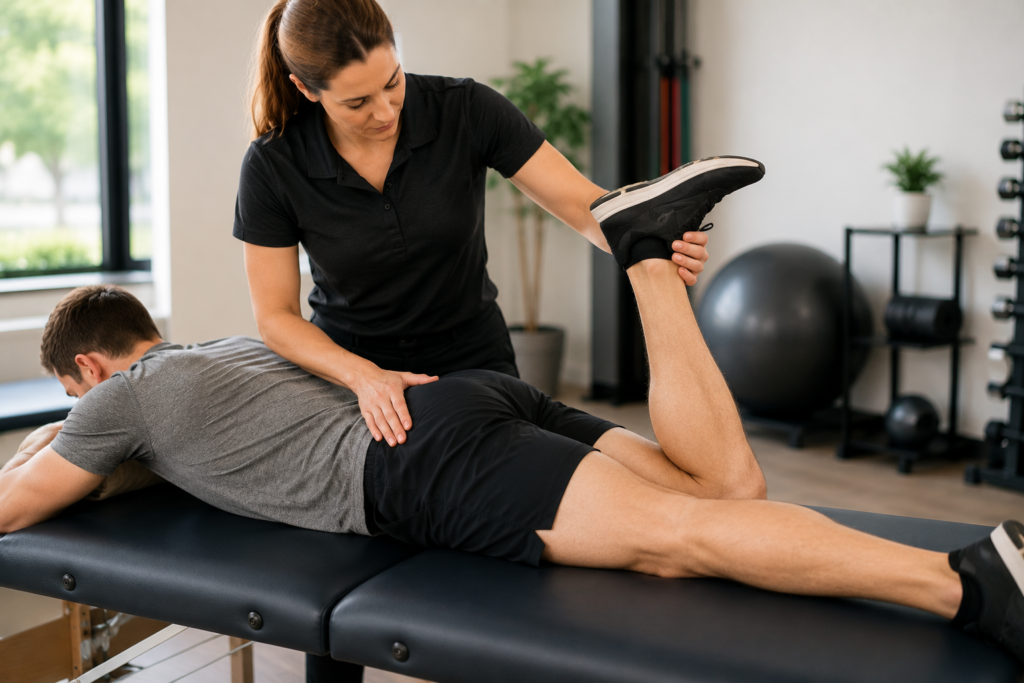
Hamstring injury treatment can help when pain, weakness, bruising, or tightness along the back of the thigh makes it difficult to walk, run, bend, lift, or play sports. The hamstrings are a group of three muscles located along the back of the thigh. These muscles help bend the knee, move the leg behind the body, and control the leg during walking, running, jumping, and changing direction. A hamstring injury happens when one or more of these muscles or their tendons are stretched beyond what they can safely handle. The injury may range from a mild strain to a complete tear.
At Reform Physical Therapy, we provide one-on-one care based on your injury, symptoms, strength, mobility, activity level, and goals. Your therapist will determine what movements are safe and create a plan to help you return to work, exercise, running, or sports. Treatment may include early movement, gradual strengthening, balance work, running drills, hands-on care, activity changes, and a personalized home exercise program.
What Is a Hamstring Injury?
A hamstring injury is a strain or tear involving one or more muscles at the back of the thigh.
The hamstring group includes:
- Biceps femoris
- Semitendinosus
- Semimembranosus
These muscles begin near the bottom of the pelvis and travel down the back of the thigh. Most attach near the knee. A strain happens when muscle or tendon fibers become overstretched or torn. Hamstring strains are common during activities that involve sprinting, jumping, sudden stops, or quick changes in direction.
Hamstring injuries may occur near:
- The upper thigh or buttock
- The middle of the back of the thigh
- The lower hamstring near the knee
- The tendon where it attaches to bone
The location and severity of the injury can affect the treatment plan and recovery time.
What Does a Hamstring Injury Feel Like?
Symptoms may begin suddenly during activity. However, some hamstring problems build slowly from repeated stress.
Common symptoms include:
- Sudden pain along the back of the thigh
- A pulling or tearing feeling
- Pain near the buttock
- Pain closer to the knee
- Tenderness
- Swelling
- Bruising
- Muscle weakness
- Tightness
- Trouble walking
- A limp
- Pain while bending forward
- Pain when straightening the knee
- Pain during running
- Pain while climbing stairs
- Trouble sitting
- Difficulty pushing off the foot
Some people hear or feel a pop when the injury happens. In more serious cases, bruising may spread down the thigh over the next several days. A complete tear may cause severe weakness, major bruising, or a visible change in the shape of the muscle.
Where Is Hamstring Pain Located?
Pain in the Middle of the Back of the Thigh
Pain in the middle portion of the muscle is common after sprinting, jumping, or suddenly reaching the leg forward.
Symptoms may increase during:
- Walking quickly
- Running
- Bending forward
- Straightening the knee
- Climbing stairs
- Lifting
- Stretching the leg
Pain Near the Buttock
Upper hamstring pain may occur where the tendon attaches to the pelvis. This area may become painful after a sudden injury. In addition, some people develop pain gradually from repeated running, sitting, or exercise.
Symptoms may become worse during:
- Sitting on a firm chair
- Running
- Hill training
- Lunging
- Bending forward
- Stretching
- Driving for long periods
Pain near the buttock can also come from the lower back, hip, sciatic nerve, or other muscles. Therefore, a full evaluation is important.
Pain Near the Back of the Knee
Lower hamstring injuries may cause pain closer to the inside or outside of the knee. This may feel similar to a knee injury. Your therapist may examine the knee, calf, hip, and lower back to determine where the symptoms begin.
Hamstring Injury Grades
Hamstring strains are often described by grade.
Grade 1 Hamstring Strain
A Grade 1 strain is a mild injury involving a small number of muscle fibers.
Symptoms may include:
- Mild pain
- Tightness
- Tenderness
- Little or no bruising
- Mild weakness
- Ability to walk with limited difficulty
A mild strain may still make running or sports uncomfortable.
Grade 2 Hamstring Strain
A Grade 2 strain is a partial tear involving more muscle or tendon fibers.
Symptoms may include:
- Moderate or sharp pain
- Swelling
- Bruising
- Weakness
- A limp
- Pain while walking
- Difficulty bending the knee
- Trouble running
Recovery often takes longer because more tissue has been injured.
Grade 3 Hamstring Tear
A Grade 3 injury is a severe or complete tear.
Symptoms may include:
- Sudden severe pain
- A popping feeling
- Major swelling
- Significant bruising
- Difficulty walking
- Major weakness
- Inability to continue activity
- A visible gap or change in muscle shape
A complete tear or tendon pulled away from the bone may require surgical evaluation.
Common Causes of Hamstring Injuries
Hamstring injuries commonly happen when the muscles are forced to lengthen while also producing a high amount of force. Several factors may contribute.
Sprinting
Sprinting places a large demand on the hamstrings. The muscles work hard as the leg moves forward and then pulls back against the ground. As a result, strains often occur during fast running.
Sudden Stops and Direction Changes
Sports such as soccer, basketball, football, lacrosse, and tennis involve quick stops, cuts, and changes in direction.
A hamstring may become injured if the muscles are not ready to control the force.
Jumping and Landing
Jumping sports require the hamstrings to help control the hip, knee, and pelvis.
An awkward landing or sudden movement may cause a strain.
Kicking
Forceful kicking can quickly lengthen and contract the hamstring.
Therefore, soccer players, dancers, martial artists, and other athletes may be at risk.
Slipping
A slip can force one leg forward while the body remains behind.
This sudden stretch may injure the hamstring near the thigh or pelvis.
Lifting
Heavy lifting may strain the hamstring when the person bends forward or straightens quickly.
Poor footing, fatigue, or lifting more than the body is prepared to handle may increase the risk
Sudden Training Changes
A quick increase in running, speed work, hills, sports practice, or strength training may place more stress on the muscles than they can manage.
For example, symptoms may begin after:
-Adding sprint workouts
-Returning after time off
-Increasing running mileage
-Starting hill training
-Adding more games or practices
-Increasing deadlift weight
-Starting a new workout program
Previous Hamstring Injury
A past hamstring injury can increase the risk of another strain, especially when strength and sprinting ability have not been fully restored. Returning as soon as the pain improves may not be enough. The leg must also be prepared for speed, force, and sport-specific movement.
Muscle Weakness
Weak hamstrings may have difficulty managing the demands of running, lifting, and sports.
Weakness in the gluteal muscles, calves, or core may also affect how force moves through the leg.
Fatigue
Tired muscles may not control movement as well.
Hamstring injuries may occur late in a game, race, workout, or practice when the athlete is fatigued.
Reduced Flexibility or Mobility
Limited movement may contribute in some cases. However, flexibility is only one part of the picture.
Strength, speed, training load, recovery, and movement control may be equally important.
How a Hamstring Injury Is Evaluated
Your first appointment begins with a conversation about the injury, symptoms, activity level, work, and goals.
Questions About the Injury
Your therapist may ask:
- When did the pain begin?
- What were you doing?
- Did you feel or hear a pop?
- Could you continue playing or exercising?
- Did bruising develop?
- Where is the pain located?
- Can you walk normally?
- Does sitting hurt?
- Do you have numbness or tingling?
- Have you injured the hamstring before?
- What sports or exercises do you do?
- What activities do you want to return to?
Physical Tests During the Evaluation
Next, your therapist may examine:
- Walking
- Bruising and swelling
- Areas of tenderness
- Hip movement
- Knee movement
- Hamstring strength
- Gluteal strength
- Calf strength
- Core control
- Balance
- Nerve symptoms
- Lower-back movement
- Squatting
- Stepping
- Running when appropriate
- Sport-specific movement
Early testing may remain gentle when a larger tear is suspected.
Do You Need an MRI?
Most mild hamstring strains do not require an MRI.
Imaging may be considered when:
- A complete tear is suspected
- Severe bruising is present
- The person cannot walk
- A tendon may have pulled away from the bone
- A fracture is possible
- Symptoms are not improving
- Surgery is being considered
- The diagnosis is unclear
An X-ray may be used when an avulsion injury is suspected. This happens when a tendon pulls away with a small piece of bone. MRI or ultrasound may help show the location and size of a muscle or tendon tear.
How Hamstring Injury Treatment May Help
Hamstring injury treatment may help reduce pain, restore movement, rebuild strength, and prepare the leg for daily activities or sports.
Physical therapy may help you:
- Walk normally
- Reduce pain and swelling
- Restore knee movement
- Improve hip movement
- Rebuild hamstring strength
- Improve gluteal strength
- Improve balance
- Return to running
- Return to work
- Return to sports
- Improve sprinting ability
- Reduce the risk of another injury
- Build confidence
Physical therapists may also guide rehabilitation after surgery when a severe tendon or muscle tear requires repair.
Hamstring Injury Treatment Options
Early Protection and Movement
During the first stage of recovery, treatment may focus on protecting the injured area without keeping the leg completely still.
Your therapist may recommend:
- Temporary activity changes
- Shorter walking distances
- Crutches when needed
- Compression
- Comfortable positions
- Gentle knee movement
- Gentle hip movement
Ice may help with pain during the early stage. Place a protective layer between the ice and skin.
Reducing Swelling and Bruising
Swelling and bruising may occur after a moderate or severe strain.
Treatment may include:
- Compression
- Elevation
- Gentle movement
- Activity guidance
- Walking support
- Medical referral when needed
Large or rapidly increasing bruising should be evaluated.
Restoring Comfortable Movement
Movement exercises may begin gently.
They may include:
- Knee bending
- Knee straightening
- Hip movement
- Gentle leg slides
- Controlled walking
- Light mobility exercises
The goal is to restore movement without sharply increasing pain.
Isometric Hamstring Exercises
Isometric exercises tighten the muscle without creating much movement. These may be useful during the early stages of recovery.
Examples include:
- Pressing the heel into the floor
- Gentle bridge holds
- Seated hamstring contractions
- Lying hamstring holds
The amount of force should be based on pain and injury severity.
Progressive Hamstring Strengthening
As healing continues, strengthening can gradually become more challenging.
Exercises may include:
- Bridges
- Hamstring curls
- Resistance-band exercises
- Ball curls
- Hip-hinge exercises
- Deadlift patterns
- Single-leg bridges
- Sliding hamstring curls
- Nordic hamstring exercises
- Running drills
Not every exercise is appropriate during the early stage.
Lengthening Strength Exercises
Hamstrings must often produce force while they lengthen. This is called eccentric muscle work.
Eccentric exercises may include:
- Controlled deadlifts
- Sliding leg curls
- Slow hamstring lowering
- Nordic hamstring exercises
- Single-leg hinge exercises
These exercises are usually introduced gradually because they can place a strong demand on healing tissue.
Hip and Gluteal Strengthening
The gluteal muscles help extend the hip and support the pelvis.
Strengthening may include:
- Bridges
- Hip thrusts
- Squats
- Lunges
- Step-ups
- Resistance-band walking
- Single-leg exercises
- Carrying exercises
Improving nearby muscle strength may reduce the amount of work placed on the hamstrings.
Core and Trunk Strengthening
The trunk and pelvis help control the leg during running, jumping, and lifting.
Exercises may include:
- Modified planks
- Standing resistance exercises
- Carrying exercises
- Controlled leg movements
- Anti-rotation exercises
The goal is to improve control while allowing normal movement.
Balance and Single-Leg Training
Running and sports require repeated control on one leg.
Balance training may include:
- Single-leg standing
- Reaching
- Step-downs
- Direction changes
- Uneven surfaces
- Landing practice
- Sport-specific drills
Walking and Stair Training
Pain or weakness may cause limping.
Your therapist may help you practice:
- Taking even steps
- Bending the knee during walking
- Pushing off the foot
- Climbing stairs
- Walking faster
- Increasing distance
- Using crutches when needed
Running Progression
A return-to-running plan may begin after walking and basic strength exercises are comfortable.
The progression may include:
- Fast walking
- Short jogging intervals
- Easy continuous jogging
- Longer running
- Faster running
- Stride drills
- Sprinting
- Sport-specific running
Speed is usually added later because sprinting places high force on the hamstrings.
Return-to-Sport Training
Athletes may need more than basic strength before returning to competition.
Training may include:
- Sprinting
- Accelerating
- Slowing down
- Jumping
- Landing
- Cutting
- Kicking
- Direction changes
- Fatigue drills
- Sport-specific movement
Your therapist may compare strength and performance between the injured and uninjured legs.
Manual Therapy
Hands-on treatment may be used to reduce muscle tension or improve nearby movement.
It may include:
- Soft tissue work
- Gentle joint movement
- Scar treatment
- Assisted mobility
- Guided stretching
Manual therapy may provide short-term relief. However, progressive exercise is usually needed to restore full strength.
Home Exercise Program
Your home program may include:
- Gentle movement
- Strengthening
- Balance
- Walking
- Running goals
- Activity limits
- Recovery guidance
Exercises should change as the muscle heals and becomes stronger.
Returning to Sports
Return-to-sport decisions should not be based only on the number of days since the injury.
The athlete may need to show:
- Good hamstring strength
- Good hip and gluteal strength
- Normal walking
- Pain-free jogging
- Fast running ability
- Sprinting ability
- Change-of-direction control
- Sport-specific confidence
- Ability to perform while tired
Returning before strength and speed have recovered may increase the risk of another injury.
Hamstring Injuries in Children and Teenagers
Growing athletes can also develop hamstring injuries. In some cases, a sudden force may pull the tendon away from the pelvis with a small piece of bone. This is known as an avulsion fracture.
Medical evaluation is important when a child or teenager has:
- A sudden pop
- Severe pain near the buttock
- Major bruising
- Trouble walking
- A clear sports injury
- Inability to continue activity
Hamstring Surgery and Rehabilitation
Most hamstring strains do not require surgery.
Surgery may be considered when:
- The tendon completely tears away from the pelvis
- Multiple tendons are involved
- A complete tear causes major weakness
- A large avulsion injury is present
- Conservative treatment does not restore function
After surgery, rehabilitation may include:
- Protecting the repair
- Using crutches
- Following movement limits
- Restoring walking
- Gradual hip and knee movement
- Progressive strengthening
- Running progression
- Return-to-sport testing
Your therapist will follow the surgeon’s instructions throughout recovery.
How Long Does Hamstring Injury Treatment Take?
Recovery depends on the injury grade, location, amount of bruising, activity demands, and whether surgery is needed. A mild strain may improve within several weeks. However, a severe strain or complete tear may take several months. AAOS notes that severe thigh muscle strains can require a much longer recovery than mild injuries.
Signs of progress may include:
- Less pain
- Reduced bruising
- Normal walking
- Better knee movement
- Improved strength
- Easier stairs
- Comfortable jogging
- Faster running
- Improved confidence
- Returning to sports
Recovery does not always happen in a straight line. Therefore, activity should increase in gradual steps.
Can a Hamstring Injury Return?
Yes. Hamstring strains can happen again, especially when an athlete returns before strength and sprinting ability have fully recovered.
A long-term plan may include:
- Hamstring strengthening
- Gluteal strengthening
- Running progressions
- Sprint training
- Gradual workload changes
- Rest and recovery
- Sport-specific drills
- Continued exercises after symptoms improve
When to Seek Immediate Medical Care
Seek prompt medical care if the injury occurs with:
- A loud pop
- Severe pain
- Inability to walk
- Inability to place weight on the leg
- Rapidly increasing swelling
- Major bruising
- A visible gap in the muscle
- A change in muscle shape
- Loss of feeling
- A cold, pale, or blue foot
- Severe weakness
- A major fall or accident
These signs may suggest a complete tear, tendon avulsion, fracture, circulation problem, or another serious injury.
When to Contact Your Medical Provider
Contact your healthcare provider if:
- Pain keeps getting worse
- Bruising continues to spread
- You cannot walk normally
- Weakness is severe
- Sitting causes strong pain near the buttock
- Numbness or tingling is present
- Pain regularly wakes you at night
- Symptoms began after a major injury
- The condition is not improving
- You are unsure whether exercise is safe
Your physical therapist may also recommend imaging or further medical evaluation when a larger tear is suspected.
Hamstring Injury Treatment in Maine
Reform Physical Therapy provides one-on-one hamstring injury treatment at our Maine clinic locations.
We help patients who want to:
- Walk normally
- Return to work
- Return to running
- Return to lifting
- Improve leg strength
- Climb stairs
- Sprint again
- Return to sports
- Reduce the risk of reinjury
- Move with greater confidence
Your therapist will evaluate the injury, surrounding joints, strength, movement, and activity demands before creating your treatment plan.
Schedule a Hamstring Injury Evaluation
A hamstring injury can make walking, working, exercising, and sports difficult. You do not have to guess when to stretch, strengthen, jog, or return to full activity. A one-on-one evaluation can help determine the likely severity of the injury and which exercises are appropriate for your current stage of recovery.