

Muscle Strains
A pulled muscle can happen in an instant. You sprint after a ball and suddenly feel a sharp pull in your hamstring. You lift something heavy and feel pain in your back. Or maybe soreness gradually develops after a weekend of yardwork, exercise, or an activity your body was not prepared for. Seeking muscle strain physical therapy can be important, as muscle strains are common injuries that can range from mild soreness to significant muscle damage.
While many mild strains improve with time, simply waiting for the pain to disappear does not always prepare the muscle to handle the activity that caused the injury in the first place. At Reform Physical Therapy, muscle strain physical therapy focuses on helping the injured area recover while gradually rebuilding strength, mobility, and confidence. Our goal is not just to get you feeling better. We want to help prepare your body for the activities you need and want to return to.
What Is a Muscle Strain?
A muscle strain occurs when muscle fibers are stretched beyond what they can tolerate or become torn. You may also hear someone describe this as a pulled muscle. Strains can happen suddenly during sports, exercise, lifting, or an awkward movement. They can also develop when a muscle repeatedly handles more demand than it is prepared for. Muscles throughout the body can be strained, but injuries commonly occur in areas such as the hamstrings, quadriceps, calves, groin, back, shoulders, and arms.
Muscle Strain vs. Muscle Sprain
Strains and sprains are often confused. A strain involves a muscle or tendon. A sprain involves a ligament, which connects one bone to another. Both injuries can cause pain, swelling, weakness, and difficulty moving, so it is not always possible to tell the difference based on symptoms alone. A physical examination can help determine which structures may be involved.
What Causes Muscle Strains?
Muscles are designed to handle physical stress. Problems can develop when the force placed on a muscle exceeds its current capacity. A strain may happen during sprinting, jumping, lifting, throwing, changing direction, slipping, or quickly reaching for something. Fatigue can also contribute. A muscle that handled an activity comfortably at the beginning of a workout may become less capable of producing and controlling force as it becomes tired. Sudden increases in exercise or activity can create another challenge. Your muscles need time to adapt to new demands.
Acute Muscle Strains
An acute strain happens suddenly. You may remember the exact moment the injury occurred. Some people describe feeling a pull, snap, or sharp pain. The injured area may become sore quickly, and using the muscle may be difficult. More significant strains can also cause swelling or bruising. The severity of the injury determines how quickly activity can safely progress.
Muscle Strains From Overuse
Not every strain begins with one dramatic moment. Sometimes symptoms gradually appear after repeated physical activity. Perhaps you recently increased your running mileage, started lifting heavier weights, spent several days doing yardwork, or returned to a sport after months away. The individual movements may not have been harmful. The total amount of activity may simply have exceeded what your muscles were ready to tolerate.
Signs and Symptoms of a Muscle Strain
Symptoms vary depending on the location and severity of the injury. Pain is usually the most noticeable symptom. The muscle may feel tender when touched or uncomfortable when stretched. Contracting the injured muscle may also reproduce pain. Some people notice weakness, stiffness, swelling, bruising, or difficulty completing normal activities. A more severe strain can make it difficult to use the muscle at all.
Grades of Muscle Strains
Muscle strains are sometimes described using grades.
A Grade 1 strain is generally mild. A relatively small number of muscle fibers are affected, and the muscle still maintains much of its function.
A Grade 2 strain involves a more significant partial injury. Pain, weakness, swelling, or bruising may be more noticeable.
A Grade 3 strain represents a complete or near-complete muscle or tendon tear and can cause major loss of function.
The grade alone does not determine the entire rehabilitation plan, but it can help describe injury severity.
Hamstring Strains
Hamstring strains are especially common during activities involving sprinting or sudden acceleration. The hamstrings run along the back of the thigh. You may feel a sudden pulling sensation or sharp pain while running. Walking, bending forward, climbing stairs, or extending the leg may become uncomfortable afterward. Hamstring strains also have a reputation for recurring. Rehabilitation should therefore progress beyond simply waiting until walking no longer hurts. Strength, running tolerance, and eventually faster movements may need to be rebuilt before returning fully to sport.
Quadriceps Strains
Your quadriceps are the large muscles at the front of your thigh. They help straighten your knee and control movements such as running, jumping, squatting, and climbing stairs. Quadriceps strains can occur during sports or sudden powerful movements. Pain may develop at the front of the thigh and increase when you contract or stretch the muscle. Physical therapy can gradually restore strength and prepare the quadriceps for higher-level activity.
Calf Strains
Calf strains can occur while running, jumping, pushing off the ground, or suddenly changing speed. Some people describe the sensation as though someone kicked them in the back of the leg. Walking may become uncomfortable, particularly during push-off. More significant calf injuries can resemble other conditions. Sudden calf swelling, warmth, redness, or unexplained pain should be medically evaluated because blood clots can also cause calf symptoms.
Groin Strains
Groin strains commonly involve muscles along the inside of the thigh. They can occur during cutting, kicking, skating, running, or rapid changes in direction. Athletes may notice pain when squeezing the legs together, changing direction, or kicking. Treatment can address hip strength, mobility, trunk control, and gradual return to sport-specific movements.
Back Muscle Strains
Muscular strains are one possible cause of back pain. Symptoms may begin after lifting, twisting, exercise, yardwork, or another demanding activity. The area may feel sore, tight, or painful with certain movements. Back pain has many possible causes, however, and not every episode is simply a pulled muscle. Your therapist can evaluate your symptoms and determine whether physical therapy is appropriate.
Shoulder Muscle Strains
Muscles around the shoulder help control a highly mobile joint. Strains may occur during lifting, throwing, sports, work, or repetitive overhead activity. Pain can make reaching, carrying, dressing, or sleeping difficult. Shoulder symptoms may also come from tendons, joints, the neck, or other structures. A physical therapy evaluation can help determine which movements and tissues appear to be involved.
Muscle Strains From Sports
Sports place high demands on muscles. Running, jumping, cutting, throwing, kicking, and rapidly changing direction all require muscles to produce and absorb significant force. A strain often occurs when the demands of the sport exceed what the muscle is currently prepared to handle. Rehabilitation should eventually recreate those demands. An athlete should not go directly from basic exercises to full-speed competition simply because everyday pain has disappeared.
Muscle Strains From Lifting
Muscle strains can also happen outside of sports. Moving furniture, lifting at work, carrying something awkward, or suddenly handling a heavier weight at the gym may cause symptoms. Sometimes the issue is not that you lifted “wrong.” The load may simply have exceeded your current capacity. Physical therapy can help rebuild strength while improving your ability to handle the lifting demands of work, home, or exercise.
Muscle Strains From Yardwork
Raking leaves, shoveling snow, gardening, moving mulch, and cleaning up the yard can be surprisingly demanding. These activities often involve repeated bending, lifting, carrying, twisting, or pulling. The biggest problem is sometimes the sudden change in workload. Someone who has been relatively inactive may spend six hours doing yardwork in one weekend. Gradually preparing your body for seasonal activities can help reduce this sudden spike in demand.
Muscle Strain or Muscle Soreness?
Soreness after exercise does not necessarily mean you strained a muscle. Delayed onset muscle soreness, commonly called DOMS, often develops after unfamiliar or challenging exercise. It usually affects the muscles more generally and may peak a day or two after activity. A strain is more likely to produce localized pain and may hurt when the injured muscle is stretched or contracted. If you are unsure, a physical therapist can evaluate the area.
Muscle Strain or Tendon Injury?
Muscles transition into tendons, which attach muscles to bones. Pain near this area can sometimes make it difficult to know whether the muscle, tendon, or both are involved. Tendon injuries can also behave differently from acute muscle strains and may require a different loading strategy. Your therapist can use your history and physical examination to determine what appears to be contributing.
Should You Stretch a Pulled Muscle?
Aggressively stretching a newly injured muscle is not always helpful. The injured tissue may already be sensitive to lengthening. Early rehabilitation may use comfortable movement rather than forcing the muscle into a strong stretch. As healing progresses, mobility work can be added when appropriate. Your therapist can determine when stretching makes sense and how much is appropriate.
Should You Massage a Muscle Strain?
Massage or other hands-on treatment may sometimes help with soreness or surrounding muscle tension. However, aggressive treatment directly over a fresh injury is not automatically better. Manual therapy should support the recovery process rather than replace it. The muscle eventually needs to regain strength and tolerate increasing loads.
Should You Use Ice or Heat?
Ice may provide temporary pain relief after an acute muscle injury. Heat may feel more comfortable later when stiffness is a bigger concern. Neither one repairs the muscle by itself. If either option makes you feel better, it can sometimes be used as part of symptom management while you work on restoring movement and strength.
Should You Rest a Muscle Strain?
Immediately returning to full activity after a significant strain is usually not a good idea. Complete inactivity for a long period may not be ideal either. The muscle needs an opportunity to heal while gradually being exposed to movement and load. This is where relative rest can be useful. You temporarily reduce activities that significantly aggravate the injury while continuing safe movement and gradually increasing activity as symptoms allow.
When Should You Start Moving Again?
The appropriate timeline depends on injury severity. With mild strains, comfortable movement may begin relatively early. More significant injuries require greater protection and a slower progression. Rehabilitation should gradually expose the muscle to greater range of motion and force. Your therapist can monitor how the muscle responds and adjust the program.
Physical Therapy for Muscle Strains
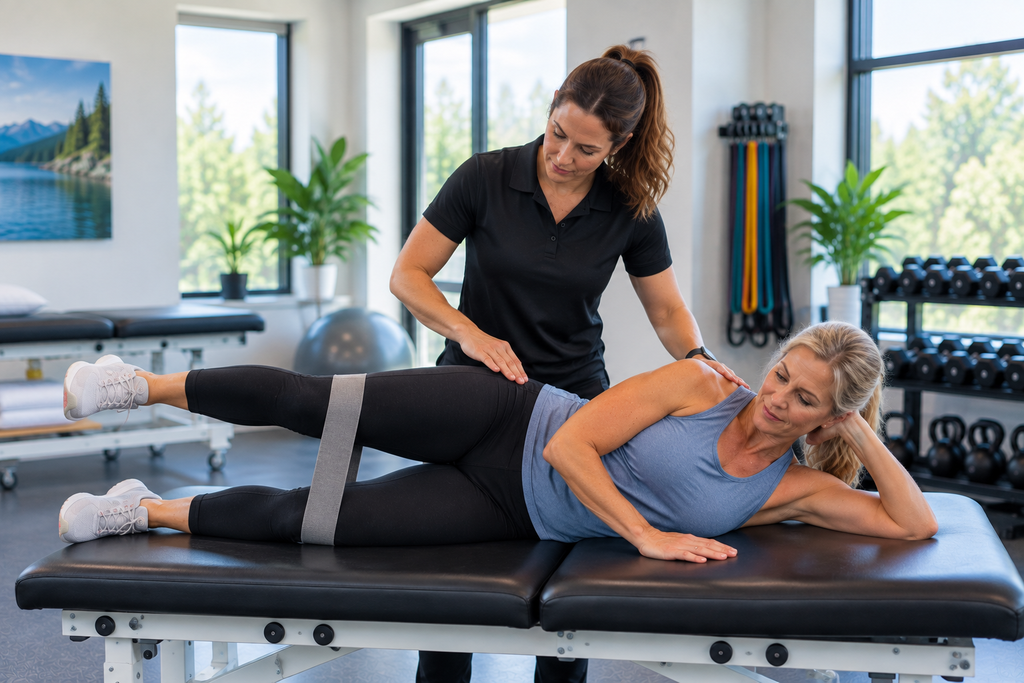
Physical therapy can guide you through the different stages of muscle strain recovery. Early treatment may focus on controlling symptoms and restoring comfortable movement. As healing progresses, strengthening becomes increasingly important. Eventually, rehabilitation should prepare the muscle for the specific demands of your life. A runner needs to tolerate running. A construction worker may need to lift and carry. A soccer player needs to sprint and change direction. A gardener needs to bend, squat, pull, and lift. Your rehabilitation should reflect those goals.
Strengthening After a Muscle Strain
Strengthening is one of the most important parts of rehabilitation. Exercises usually begin at a level the injured muscle can tolerate. Resistance gradually increases as your symptoms improve. Later stages may include heavier strength training, faster movements, or exercises performed at longer muscle lengths. The goal is to rebuild the muscle’s ability to handle force rather than simply waiting for tenderness to disappear.
Why Muscle Strains Can Come Back
Returning to activity too quickly can increase the risk of another injury. This is especially important with hamstring strains. You may feel normal during everyday activities before the muscle is truly prepared for sprinting, jumping, or high-speed sport. A good return-to-activity program looks at more than pain. Strength, mobility, endurance, speed, confidence, and sport-specific demands may all need to be considered.
Returning to Running
Running places repeated demands on the muscles of the legs. After a strain, your return may begin with walking and progress toward jogging. Distance and speed can gradually increase. Someone recovering from a hamstring strain may eventually need exposure to faster running before returning to full sport. Your therapist can help determine when those progressions are appropriate.
Returning to the Gym
You do not necessarily need to stop exercising your entire body because one muscle is injured. Exercises can often be modified while the affected area heals. As recovery progresses, the injured muscle can gradually be reintroduced to resistance training. Your therapist can help determine appropriate weights, repetitions, range of motion, and exercise variations.
Returning to Sports
Returning to sport requires more than being pain-free while walking. The muscle needs to tolerate the demands of your specific activity. That might include sprinting, cutting, jumping, kicking, throwing, or rapid changes in direction. Rehabilitation should gradually progress toward those demands before unrestricted competition.
How Long Does a Muscle Strain Take to Heal?
Recovery time varies considerably. A mild strain may improve relatively quickly. A larger partial tear can require significantly more rehabilitation. A severe tear may require specialist evaluation and, in some situations, surgery. The muscle involved also matters. Instead of relying only on a certain number of days or weeks, your therapist can monitor pain, mobility, strength, and ability to perform progressively more demanding activities.
Do You Need an MRI for a Muscle Strain?
Not every muscle strain requires imaging. Many can initially be evaluated based on the injury history and physical examination. Imaging may be recommended when a severe injury is suspected, the diagnosis is unclear, or symptoms are not progressing as expected. Your physical therapist can recommend additional medical evaluation when appropriate.
When Should You See a Doctor?
Seek medical evaluation if you experience severe pain, extensive swelling or bruising, obvious deformity, a significant loss of strength, inability to use the injured area, or symptoms following major trauma. A sudden injury accompanied by a pop and immediate loss of function may also require additional evaluation. Calf pain deserves particular attention when it occurs with unexplained swelling, redness, warmth, chest pain, or shortness of breath because those symptoms may indicate a blood clot rather than a muscle strain. Chest pain or difficulty breathing requires emergency medical attention.
What Happens During a Muscle Strain Evaluation?
Your physical therapist will ask how the injury happened and which activities are difficult. We will also want to know whether symptoms started suddenly or gradually. Your examination may include mobility, muscle strength, tenderness, flexibility, balance, and movements that use the injured muscle. For an athlete, we may also evaluate the movements required by your sport. The goal is to understand both the injury and what your body needs to do next.
Muscle Strain Physical Therapy at Reform
A muscle strain can temporarily take you away from the activities you enjoy, but recovery should be about more than waiting until the pain disappears. At Reform Physical Therapy, we help patients gradually rebuild the strength and movement needed for everyday life, work, exercise, and sports. Your treatment plan is built around your injury and your goals. Whether you want to return to running, get back in the gym, work without worrying about reinjury, play your sport, or simply move comfortably again, we’ll help you work toward those demands.
Schedule an Evaluation
If a muscle strain is keeping you from working, exercising, playing sports, or doing your normal activities, physical therapy can help guide your recovery.