


The Best Stretches for People Who Sit All Day
Posted by: in Healthy Living on July 27, 2026
Stretches for sitting all day can make a significant difference if you spend hours at a desk, in meetings, or behind the wheel. Sitting for long periods often leads to tight hips, stiff shoulders, neck pain, and lower back discomfort. The good news is that incorporating a few simple stretches into your daily routine can improve flexibility, reduce stiffness, and help prevent pain before it starts. If you spend most of your workday sitting at a desk, in meetings, or behind the wheel, you’re not alone. Millions of Americans sit for eight or more hours each day, and while it may not seem physically demanding, prolonged sitting can take a serious toll on your body.
Many people notice increasing tightness in their hips, lower back, shoulders, and neck after long periods of sitting. Over time, these aches and pains can become chronic if they’re not addressed. The good news? A few simple stretches performed throughout the day can help reduce stiffness, improve posture, and keep your body moving the way it was designed to.
Why Sitting Causes Pain and Stiffness
The human body thrives on movement. When you remain in one position for hours, certain muscles become shortened and tight while others weaken from lack of use.
Your hip flexors tighten as your hips remain bent throughout the day. Your glute muscles become less active, your hamstrings gradually lose flexibility, and your chest muscles shorten as your shoulders round forward toward your computer screen.
Meanwhile, your upper back, neck, and core muscles work harder to support poor posture, often leading to muscle fatigue and discomfort.
Over time, prolonged sitting can contribute to:
- Neck pain
- Shoulder tension
- Lower back pain
- Hip tightness
- Poor posture
- Reduced flexibility
- Headaches
- Decreased balance and mobility
Fortunately, regular stretching can help offset many of these effects.
1. Neck Side Stretch
One of the first areas to tighten after sitting is the neck.
Sit or stand tall with your shoulders relaxed. Slowly tilt one ear toward your shoulder until you feel a gentle stretch along the opposite side of your neck. Hold for 20 to 30 seconds without forcing the movement, then switch sides.
Avoid pulling aggressively on your head. Gentle stretching is more effective than forcing a larger range of motion.

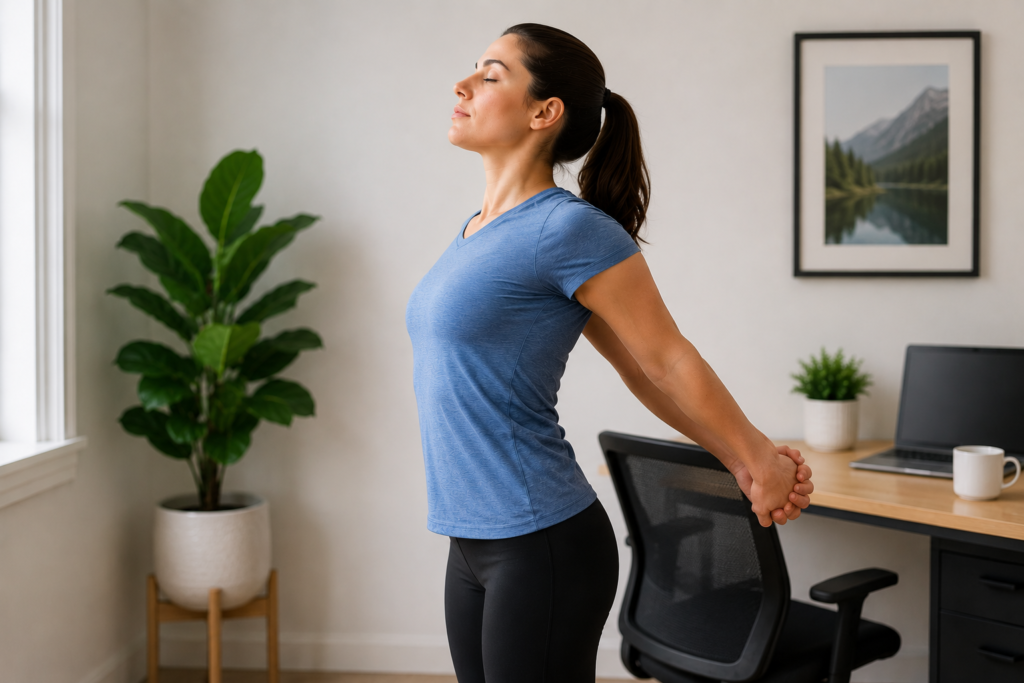
2. Chest Opener Stretch
Hours at a computer often cause the shoulders to round forward.
Stand tall and clasp your hands behind your back if comfortable. Gently straighten your arms while lifting your chest and drawing your shoulder blades together.
Hold for 20 to 30 seconds while breathing normally.
This stretch helps improve posture and reduce tension across the front of the shoulders and chest.
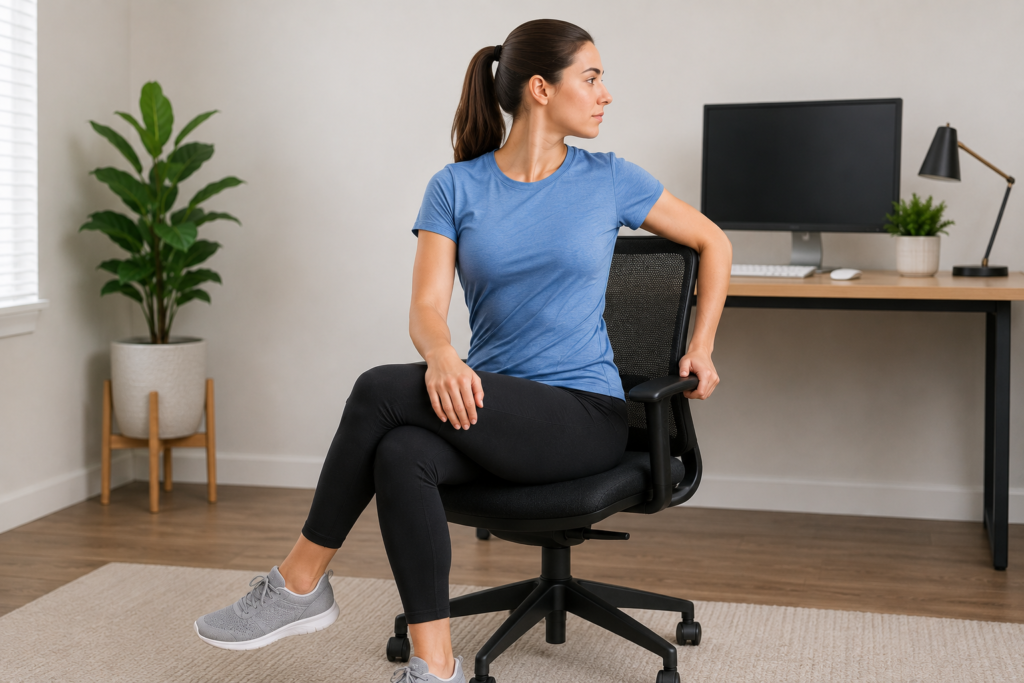
3. Seated Spinal Rotation
Your spine is designed to move in multiple directions, yet sitting often limits that movement.
Sit upright with both feet flat on the floor. Place one hand on the opposite knee and gently rotate your upper body until you feel a comfortable stretch through your mid-back.
Hold for 20 seconds before repeating on the opposite side.
Avoid twisting through pain or bouncing into the stretch.
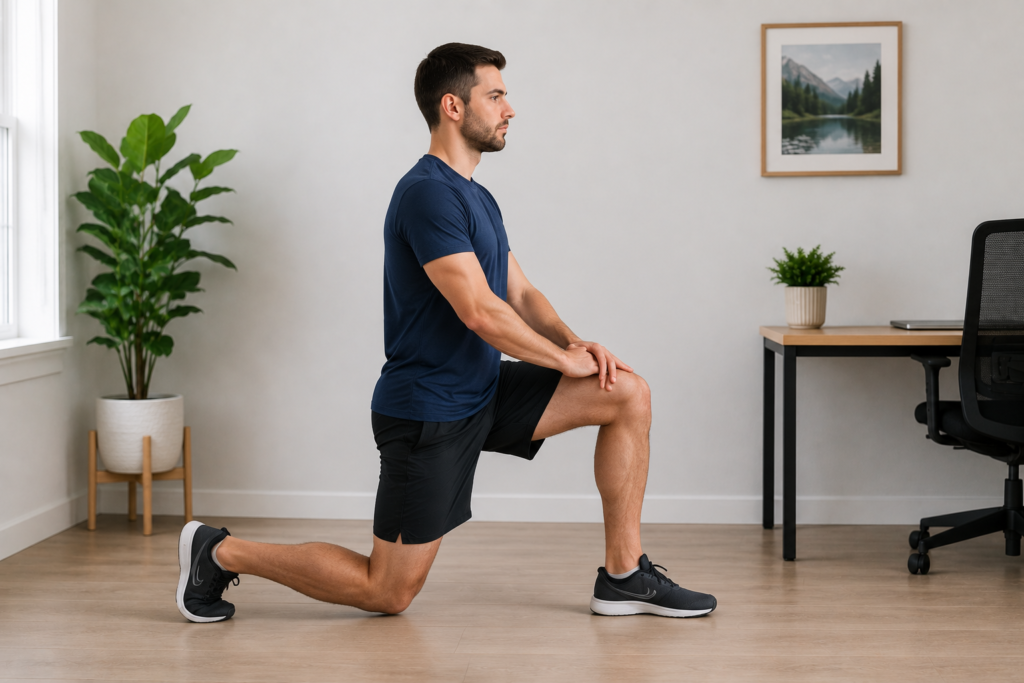
4. Hip Flexor Stretch
Tight hip flexors are one of the biggest contributors to lower back discomfort.
Step into a lunge position with one knee on the floor and the other foot in front. Keeping your chest upright, gently shift your weight forward until you feel a stretch across the front of your hip.
Hold for 30 seconds before switching sides.
Keeping your abdominal muscles engaged can help prevent excessive arching of your lower back.
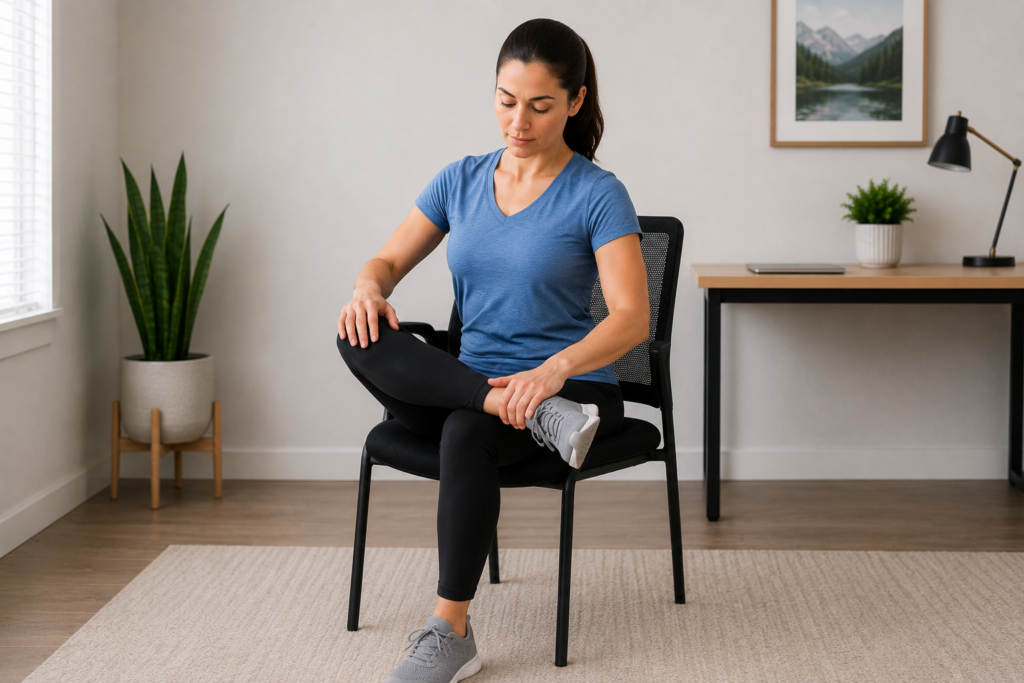
5. Figure Four Stretch
Sitting places constant pressure on the hips and glute muscles.
While seated, place one ankle across the opposite knee to form the shape of a number four. Keeping your back straight, slowly lean forward until you feel a stretch deep in the hip.
Hold for 20 to 30 seconds before switching sides.
This stretch can help relieve tension that sometimes contributes to lower back discomfort.
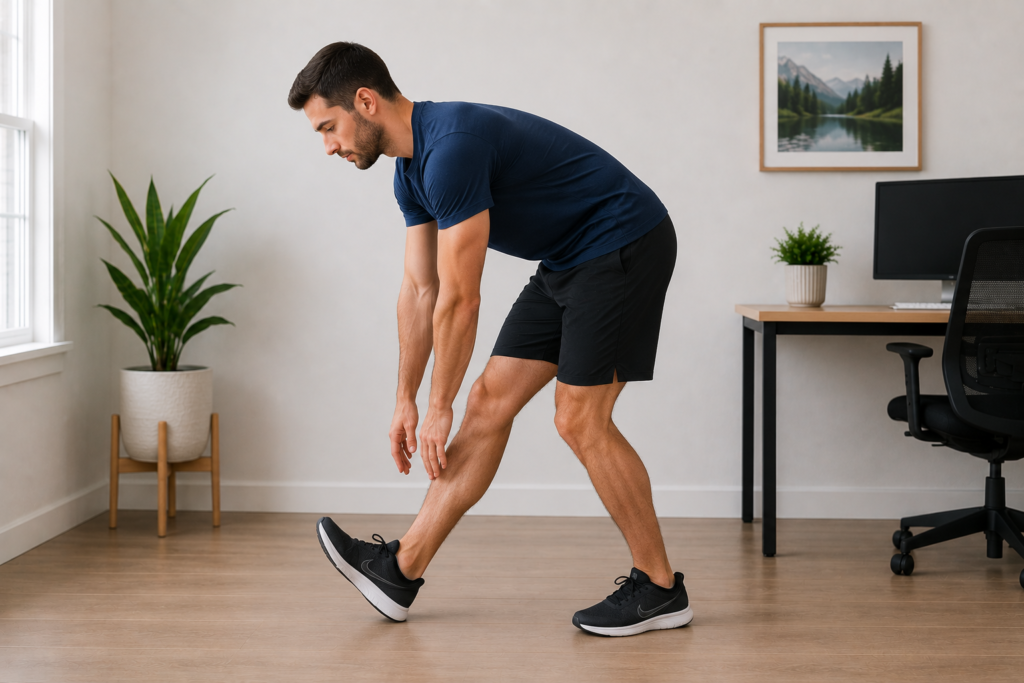
6. Standing Hamstring Stretch
Hamstrings often become tight after prolonged sitting.
Place one heel on a low step or sturdy surface while keeping your knee slightly bent. Hinge forward at your hips with a flat back until you feel a stretch along the back of your thigh.
Hold for 20 to 30 seconds before changing legs.
Avoid rounding your back while stretching.
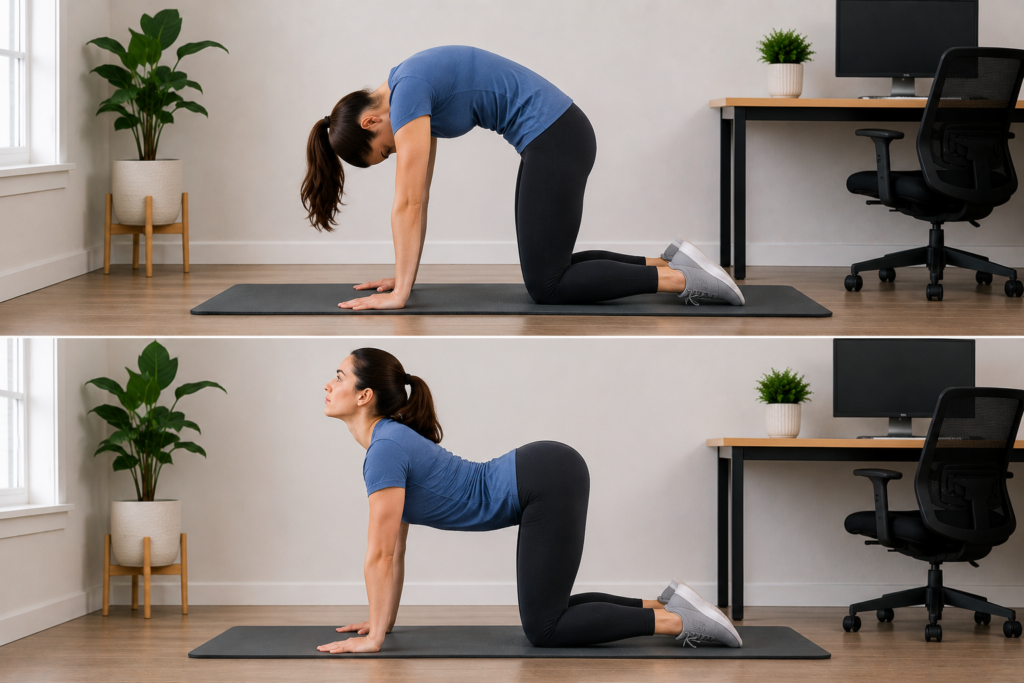
7. Cat-Cow Stretch
This gentle movement helps improve flexibility throughout the spine.
Start on your hands and knees. Slowly arch your back toward the ceiling while gently tucking your chin. Then reverse the movement by lowering your stomach toward the floor while lifting your chest and looking forward.
Move slowly through each position for 8 to 10 repetitions.
Cat-Cow is excellent for reducing stiffness after prolonged sitting.
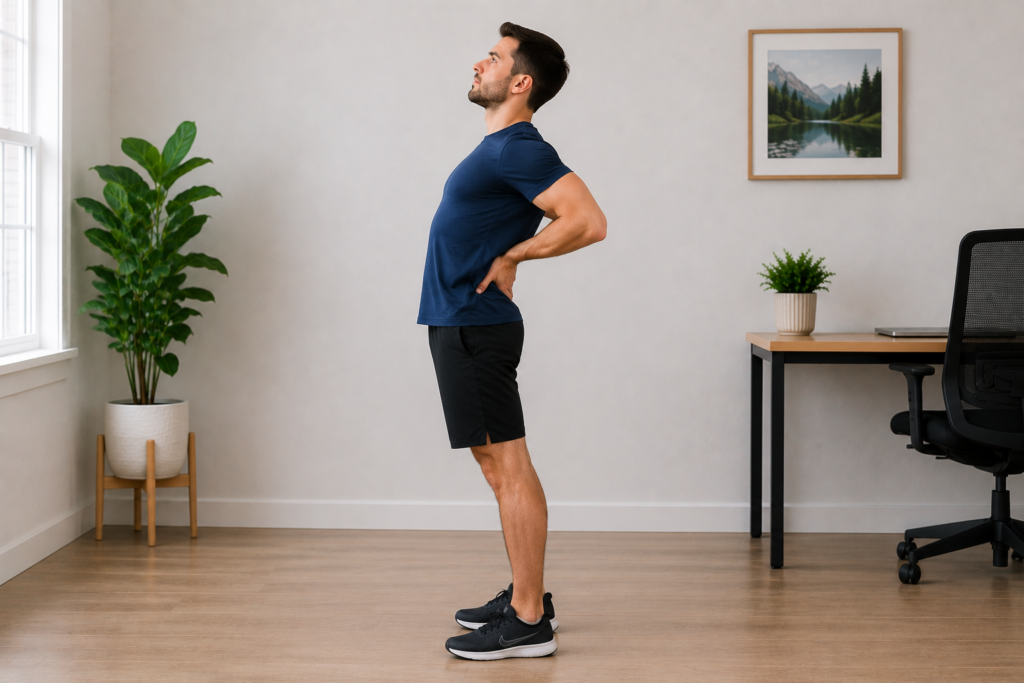
8. Standing Back Extension
If you’ve been sitting for hours, your spine often appreciates moving in the opposite direction.
Stand with your hands resting on your hips. Slowly lean backward just a few inches while looking straight ahead.
Hold for a few seconds before returning to neutral.
This simple stretch can temporarily relieve pressure created by prolonged sitting.
Don’t Forget to Move
Stretching is important, but movement throughout the day is even more valuable. Try standing every 30 to 60 minutes, even if it’s only for a minute or two. Walk to refill your water bottle, take the stairs, or simply walk around your office.
Small movement breaks performed consistently are often more effective than one long stretching session at the end of the day.
Build Better Ergonomic Habits
Your workstation also plays an important role in preventing pain.
Consider these simple adjustments:
- Keep your computer monitor at eye level.
- Sit with both feet flat on the floor.
- Keep your elbows close to your body at approximately 90 degrees.
- Position your keyboard so your wrists remain neutral.
- Support your lower back with your chair or a small lumbar cushion.
- Avoid crossing your legs for extended periods.
Proper ergonomics combined with regular movement creates the best long-term results.
When Stretching Isn’t Enough
While stretching can relieve everyday stiffness, persistent pain that doesn’t improve may indicate an underlying problem. If you’re experiencing ongoing neck pain, back pain, numbness, tingling, weakness, or pain that interferes with your daily activities, it’s worth having it evaluated by a physical therapist.
Pain is your body’s way of telling you that something isn’t working as it should.
How Physical Therapy Can Help
At Reform Physical Therapy, we help people who spend long hours sitting at work every day. Whether you’re working in an office, driving for a living, or working remotely from home, our physical therapists can identify the root cause of your discomfort and create a treatment plan tailored to your needs.
Treatment may include manual therapy, posture correction, targeted strengthening exercises, flexibility training, ergonomic education, and personalized home exercise programs designed to keep you moving comfortably throughout your workday.
Feel Better at Work and Beyond
Sitting all day doesn’t have to leave you feeling stiff, sore, or exhausted. Incorporating a few simple stretches into your daily routine can make a significant difference in how your body feels.
If your pain persists despite stretching or is limiting your ability to work, exercise, or enjoy daily life, the team at Reform Physical Therapy is here to help. With seven convenient locations across Maine, we’ll help you improve mobility, reduce pain, and get back to feeling your best.
RELATED PAGES:
- Why Stretching Feels So Good: The Science Behind Your Warm-Up
- Morning Pain: Why Your Pain Is Worse When You Wake Up
- Text Neck in Parents and its Surprising Impact
- Symptoms You Should Not Ignore for Your Health
- Treating Chronic Pain for Lasting Recovery
- Pelvic Pressure After Standing All Day Explained