

Stroke Rehabilitation
Recovering from a stroke can change the way you move, walk, and complete everyday activities. Stroke rehabilitation physical therapy plays a crucial role in helping you regain these important functions. Tasks that once felt simple, such as standing from a chair, climbing stairs, reaching for an object, or walking across a room, may suddenly require more effort and concentration. You might experience weakness on one side of your body, difficulty maintaining balance, changes in coordination, or increased fatigue throughout the day.
For many stroke survivors, recovery involves learning new movement strategies while gradually rebuilding strength, confidence, and independence. Progress can look different for everyone. Some people regain mobility relatively quickly, while others need ongoing rehabilitation to address physical challenges that affect their daily routines.
At Reform Physical Therapy, we believe meaningful recovery begins with understanding your individual needs and goals. Stroke rehabilitation physical therapy may help improve strength, balance, coordination, walking ability, and functional movement through personalized treatment. Whether your goal is walking more comfortably, improving stability, or returning to activities you enjoy, physical therapy can be an important part of your recovery journey.
What Is a Stroke?
A stroke occurs when blood flow to part of the brain is interrupted or when a blood vessel in the brain ruptures. Without adequate blood flow, brain cells may become damaged, affecting the functions controlled by that area of the brain. A stroke can influence movement, balance, sensation, speech, vision, thinking, and other important abilities. The effects depend on which part of the brain was affected and the severity of the injury.
Some people experience weakness or difficulty moving one side of the body. Others notice changes in coordination, walking, balance, or endurance. In more complex cases, stroke survivors may require assistance with everyday activities or mobility. Stroke is a medical emergency. If you or someone else develops sudden facial drooping, arm weakness, speech difficulty, vision changes, or loss of balance, call 911 immediately. Rehabilitation is appropriate only after emergency treatment and medical stabilization.
Types of Stroke
There are two main types of stroke, and each affects the brain differently.
Ischemic Stroke
An ischemic stroke occurs when a blood vessel supplying the brain becomes blocked, often by a blood clot. This reduces or stops blood flow to part of the brain, depriving affected cells of oxygen and nutrients. Ischemic strokes are the most common type. The physical effects depend on the location and extent of the brain injury.
Hemorrhagic Stroke
A hemorrhagic stroke occurs when a blood vessel in the brain ruptures, causing bleeding in or around the brain. This bleeding can damage brain tissue and increase pressure within the skull. Recovery needs vary depending on the location and severity of the bleeding, medical complications, and the individual’s overall health.
What Is a Transient Ischemic Attack?
A transient ischemic attack, or TIA, occurs when blood flow to part of the brain is temporarily disrupted. Symptoms may resemble those of a stroke but resolve. A TIA is an urgent warning sign and requires immediate medical evaluation, even when symptoms disappear. It should never be ignored or treated as a routine rehabilitation concern.
What Causes a Stroke?
Strokes develop when blood flow to the brain is disrupted by a blockage or bleeding. Several health conditions and risk factors may increase the likelihood of experiencing a stroke. Common risk factors include high blood pressure, atrial fibrillation and other heart conditions, diabetes, high cholesterol, smoking, and certain vascular diseases. Age and family history may also influence risk. Stroke prevention and medical management should be guided by qualified healthcare professionals. Physical therapy supports movement and functional recovery after a stroke but does not replace medical treatment or strategies to reduce the risk of another stroke.
Common Physical Effects of a Stroke
The physical effects of a stroke vary depending on the areas of the brain affected. Some people experience mild weakness or coordination changes, while others have more significant limitations that interfere with walking, standing, and everyday activities.
Common physical challenges include:
- Weakness on one side of the body
- Difficulty walking or changes in gait
- Reduced balance and postural control
- Muscle stiffness or spasticity
- Limited arm or leg movement
- Reduced coordination
- Difficulty standing from a chair
- Trouble climbing stairs
- Changes in sensation
- Fatigue or reduced endurance
- Difficulty transferring between surfaces
- Increased fall risk
- Reduced independence with daily activities
Stroke survivors may also experience speech, swallowing, vision, cognitive, or emotional changes that require care from other healthcare professionals.
How a Stroke Affects Movement
The brain plays an essential role in controlling voluntary movement. When a stroke damages areas responsible for muscle activation, coordination, or sensory processing, the body may have difficulty performing movements that previously felt automatic. For example, you may notice that one leg feels weaker, your steps are less controlled, or your arm does not move as smoothly as it once did. Changes in balance and sensation can also make standing and walking more challenging. Physical therapy focuses on helping you practice meaningful movements, improve available strength, and develop strategies that support everyday function. Treatment is adjusted according to your abilities, recovery stage, and goals.
Weakness on One Side of the Body
Weakness affecting one side of the body is a common consequence of stroke. This is often called hemiparesis. When movement is severely limited or absent, the term hemiplegia may be used. Weakness can affect the arm, leg, trunk, or a combination of these areas. Some people have difficulty lifting the foot while walking, standing evenly on both legs, or using the affected arm during everyday activities. Physical therapy may include strengthening, movement practice, weight shifting, and functional exercises. Treatment aims to improve available movement and help you use your body more effectively during daily activities.
Balance Problems After a Stroke
Balance difficulties can occur when a stroke affects strength, sensation, coordination, vision, or the brain’s ability to process information about body position. You may feel unsteady when standing, turning, walking across uneven surfaces, or shifting weight from one leg to the other. Some people rely heavily on their stronger side, which can make movement less efficient and increase the risk of falling. Physical therapy may include standing balance exercises, controlled weight shifting, stepping activities, and functional movement training. Exercises are selected according to your abilities and safety needs.
Walking Difficulties After a Stroke
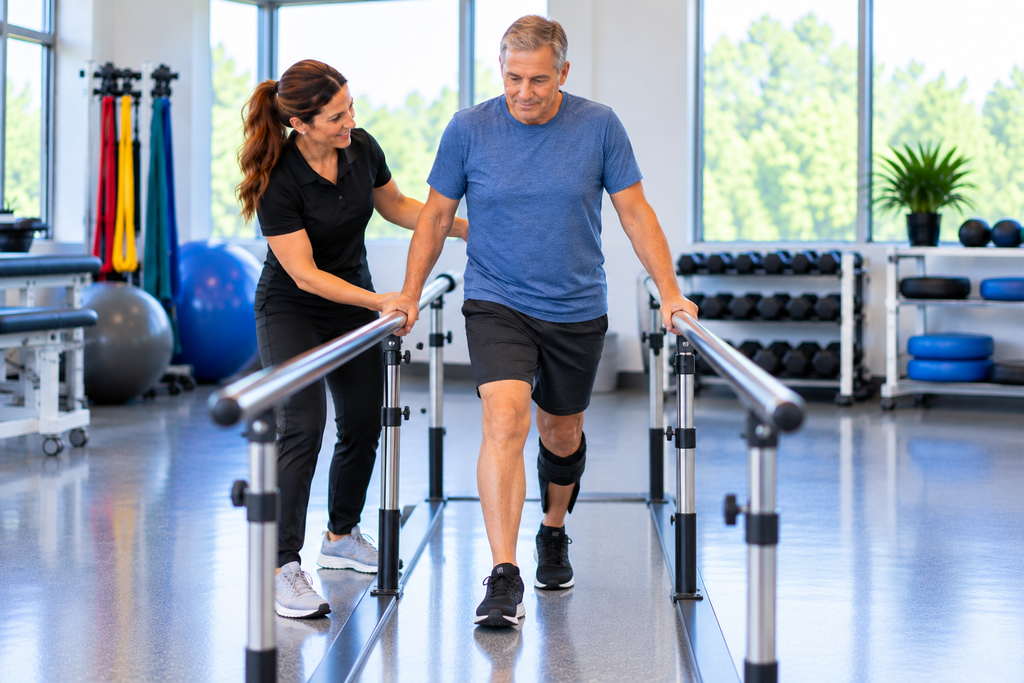
Walking changes are common following a stroke. Weakness, altered muscle tone, reduced coordination, and sensory changes can affect step length, foot placement, walking speed, and stability. Some people experience difficulty lifting the foot, causing the toes to drag during walking. Others develop a stiff-legged walking pattern, take shorter steps, or require assistance with balance. Physical therapy may help address these challenges through gait training, strengthening, balance exercises, and repetitive walking practice. Depending on your needs, treatment may also include appropriate assistive devices or referral for an orthotic assessment.
Foot Drop After a Stroke
Foot drop occurs when someone has difficulty lifting the front of the foot during walking. Following a stroke, this may result from weakness, impaired muscle activation, or changes in movement control. Foot drop can increase the risk of catching the toes on the ground, which may contribute to tripping or falling. Some people compensate by lifting the knee higher or changing the way they swing the leg forward. Physical therapy may include exercises to improve muscle activation, gait training, and movement strategies. Certain individuals may also benefit from an ankle-foot orthosis or other interventions recommended by their rehabilitation team.
Muscle Spasticity and Stiffness After a Stroke
Some stroke survivors develop spasticity, which causes increased muscle tone and resistance to movement. Spasticity may affect the arms, hands, legs, or other muscle groups. Muscles may feel unusually tight, making it difficult to straighten a joint, position a limb, or perform controlled movements. Over time, limited mobility may contribute to joint stiffness or contractures.
Physical therapy can help assess how muscle tone affects movement and develop strategies to maintain mobility and improve function. Treatment may include positioning, mobility exercises, strengthening, and task-specific movement practice. Significant spasticity may also require medical management through a rehabilitation physician or other specialist.
Coordination and Motor Control Challenges
A stroke can affect the brain’s ability to coordinate muscle activity and control movement. You may notice difficulty reaching accurately, placing your foot where you intend, or completing movements smoothly. These challenges can make everyday tasks more demanding, even when some muscle strength has returned. Physical therapy may include repetitive movement practice, coordination exercises, controlled stepping, and functional activities that require accurate movement.
The goal is to improve movement quality and help you complete meaningful tasks more effectively.
Fatigue and Reduced Endurance After a Stroke
Fatigue is common after a stroke and may occur even when you are getting adequate rest. Some people experience physical exhaustion after relatively small amounts of activity, while others notice mental fatigue or reduced concentration. Changes in muscle function, movement efficiency, sleep, medications, and overall health may contribute to fatigue. Physical therapy can help address reduced physical endurance through carefully paced exercise and gradual activity progression. Your therapist may also discuss strategies for balancing activity and recovery throughout the day. Persistent or worsening fatigue should be discussed with your healthcare provider because it can have several contributing causes.
How Can Stroke Rehabilitation Physical Therapy Help?
Stroke rehabilitation physical therapy focuses on improving or maintaining movement, strength, balance, walking ability, and functional independence. Treatment is individualized according to the effects of the stroke, current physical abilities, and personal goals. Your physical therapist may evaluate muscle strength, coordination, sensation, joint mobility, posture, balance, gait, and functional movement. Based on these findings, a rehabilitation plan can be developed to address the activities that matter most to you.
Strength Training
Strengthening exercises can help improve available muscle function and support everyday movements. Treatment may focus on the hips, legs, trunk, or other muscle groups affected by weakness. Exercises may include resistance training, supported standing, sit-to-stand movements, step-ups, and other functional activities. Your therapist will select exercises that match your abilities and recovery stage.
Gait Training
Gait training focuses on improving walking mechanics, stability, and movement efficiency. Treatment may include practicing step length, foot placement, weight shifting, turning, and navigating different surfaces. Some individuals benefit from walking aids, braces, or additional support during rehabilitation. The goal is to improve safe, functional walking according to each person’s abilities.
Balance Training
Balance exercises help address difficulty maintaining stability while sitting, standing, or walking. Activities may include weight shifting, reaching, controlled stepping, and practicing balance reactions. As stability improves, exercises may become more challenging and incorporate movements that reflect everyday situations.
Neuromuscular Re-Education
Neuromuscular re-education focuses on improving the coordination and control of movement. Following a stroke, the brain and muscles may not communicate as effectively as they did before the injury. Treatment may include guided movement practice, postural control exercises, weight-bearing activities, and repetitive functional tasks.
Functional Mobility Training
Functional mobility training focuses on everyday activities such as standing from a chair, getting in and out of bed, transferring between surfaces, and navigating stairs. Practicing these movements can help improve safety, efficiency, and independence.
Coordination Training
Coordination exercises help address difficulties controlling the timing, direction, and accuracy of movement. Treatment may involve reaching, stepping, controlled leg movements, and other task-specific activities. Exercises are adjusted according to the areas affected by the stroke and your rehabilitation goals.
Postural Stability and Trunk Control
Trunk strength and postural control are important for sitting, standing, reaching, and walking. Some stroke survivors have difficulty maintaining an upright position or shifting weight evenly. Physical therapy may include trunk strengthening, seated balance exercises, reaching activities, and controlled movement practice.
Endurance Training
Aerobic and functional conditioning can help improve physical endurance and activity tolerance. Depending on your abilities and medical clearance, treatment may include walking, stationary cycling, or other appropriate exercises. Exercise intensity and progression should reflect your cardiovascular health, fatigue levels, and recovery needs.
How Does the Brain Recover After a Stroke?
The brain has an ability known as neuroplasticity, which allows neural connections and patterns of activity to change in response to experience and practice. Following a stroke, rehabilitation can encourage the nervous system to practice and improve movement skills through repeated, meaningful activities. For example, practicing standing, stepping, or walking may help improve coordination and functional performance over time. Neuroplasticity does not guarantee a complete recovery, and outcomes vary depending on the severity and location of the stroke, medical factors, and rehabilitation needs. However, consistent, goal-directed movement practice is an important part of stroke rehabilitation.
When Should Stroke Rehabilitation Begin?
Rehabilitation often begins during the hospital stay once a person is medically stable and the healthcare team determines that activity is appropriate. Early rehabilitation may focus on safe positioning, sitting, standing, transfers, and basic mobility. As recovery progresses, treatment may become more focused on walking, strengthening, balance, and everyday activities. After leaving the hospital or inpatient rehabilitation facility, some stroke survivors continue therapy in an outpatient setting. The appropriate timing and level of care depend on medical stability, physical abilities, safety needs, and rehabilitation goals.
Outpatient Stroke Rehabilitation
Outpatient physical therapy may be appropriate for stroke survivors who are medically stable and able to participate safely in clinic-based rehabilitation. Treatment can focus on ongoing weakness, balance problems, walking difficulties, coordination changes, and reduced endurance. Some people begin outpatient therapy soon after leaving inpatient rehabilitation, while others return later to address persistent mobility challenges or changes in function. An evaluation can help determine whether outpatient rehabilitation is appropriate or whether a more specialized level of care is needed.
Can Physical Therapy Help Months or Years After a Stroke?
Yes. Some stroke survivors can make meaningful functional improvements months or years after their injury, although the amount and pace of progress vary. Rehabilitation may help address ongoing weakness, balance difficulties, walking limitations, or reduced endurance. Even when full recovery is not possible, treatment can focus on improving movement efficiency, maintaining mobility, and supporting independence. Your goals may change over time, and rehabilitation should reflect your current needs rather than relying only on how long ago the stroke occurred.
Stroke Rehabilitation for Older Adults
Older adults recovering from a stroke may experience additional challenges related to muscle weakness, reduced endurance, joint stiffness, or other health conditions. Physical therapy can help address movement limitations while considering overall health, safety, and functional goals. Treatment may focus on improving transfers, walking stability, balance, strength, and the ability to participate in daily routines.
Preventing Falls After a Stroke
Stroke survivors may have an increased risk of falling because of weakness, impaired balance, reduced sensation, vision changes, or difficulty coordinating movement. Physical therapy may help address these factors through balance training, strengthening, gait exercises, and functional movement practice. Some individuals may also benefit from appropriate assistive devices, home safety modifications, and additional medical or occupational therapy assessments. Reducing fall risk is often an important part of supporting confidence and independence during recovery.
Working With Your Stroke Rehabilitation Team
Stroke recovery often involves several healthcare professionals. A neurologist or other medical provider manages medical concerns and strategies to reduce the risk of another stroke. Physical therapy focuses on movement, walking, strength, balance, and mobility. Occupational therapy may address upper-extremity function, daily living skills, and adaptive equipment. Speech-language pathology may help with communication, cognition, or swallowing difficulties. Coordinated care helps ensure that different aspects of recovery receive appropriate attention.
What to Expect During Your First Stroke Rehabilitation Visit
Your first appointment begins with a conversation about your stroke history, current physical challenges, and rehabilitation goals. Your physical therapist may ask about previous therapy, walking ability, balance concerns, fatigue, assistive devices, and activities that have become difficult since the stroke. The physical examination may include assessments of strength, joint mobility, muscle tone, coordination, posture, balance, walking, and functional movement. Your therapist may also observe how you stand from a chair, transfer between surfaces, or navigate short walking distances. Based on the findings, an individualized treatment plan can be developed to address your current needs. If your symptoms or support requirements indicate that a different level of rehabilitation is more appropriate, your therapist can discuss that with you.
How Long Does Stroke Rehabilitation Take?
Stroke recovery timelines vary significantly. Some people make noticeable progress over several weeks or months, while others require longer-term rehabilitation or periodic reassessment. The length of outpatient physical therapy depends on the severity of movement limitations, medical needs, progress, and personal goals. Your therapist may recommend supervised treatment along with an appropriate home exercise program. Rehabilitation activities can be adjusted as your strength, mobility, and functional abilities change.
Tips for Supporting Recovery After a Stroke
Stroke recovery involves medical care, rehabilitation, and daily habits that support overall health and function.
Helpful strategies may include:
- Following your healthcare provider’s treatment recommendations
- Taking prescribed medications as directed
- Participating in appropriate rehabilitation activities
- Practicing recommended home exercises
- Staying physically active within your abilities
- Allowing adequate time for rest and recovery
- Using prescribed mobility devices when needed
- Maintaining a safe home environment
- Communicating changes in symptoms to your healthcare team
- Attending recommended medical follow-up appointments
Sudden new neurological symptoms require emergency evaluation, even if you have experienced a stroke in the past.
Why Choose Reform Physical Therapy?
At Reform Physical Therapy, we understand that recovering from a stroke involves more than simply rebuilding muscle strength. Changes in walking, balance, coordination, and endurance can affect independence, confidence, and participation in everyday life. When outpatient neurological rehabilitation is appropriate, physical therapy can focus on the movement challenges that matter most to you. Our goal is to help you work toward improved mobility, greater stability, and more confidence with daily activities. Because stroke survivors may have complex rehabilitation needs, our team can help determine whether the appropriate services and clinical experience are available at your preferred Reform Physical Therapy location.
Take the Next Step Toward Better Movement
Recovering from a stroke can take time, patience, and individualized support. Whether you want to improve walking, strengthen an affected leg, feel steadier on your feet, or regain confidence with everyday activities, physical therapy may help.