

Rotator Cuff Repair Rehabilitation
Rotator cuff surgery may repair the injured tendon, but getting your shoulder moving, strong, and functional again takes time. During the first few weeks after surgery, even simple things can feel difficult. Getting dressed, sleeping comfortably, washing your hair, reaching for something, or finding a comfortable position for your arm may suddenly require planning. Later, you may wonder when you can lift again, return to work, exercise, golf, garden, or get back to the activities you enjoyed before surgery. At Reform Physical Therapy, rotator cuff repair rehabilitation is designed to safely guide you through each stage of recovery. Your physical therapist will work within your surgeon’s recommendations while helping you gradually restore shoulder movement, strength, function, and confidence. The goal is not to rush your recovery. It is to help the repaired shoulder heal while progressively preparing you to use it again.
Physical Therapy After Rotator Cuff Repair
The rotator cuff is a group of muscles and tendons surrounding the shoulder. These muscles help stabilize the shoulder joint and play an important role in lifting and rotating your arm. When a rotator cuff tendon is significantly torn, surgery may be performed to repair the tendon and reconnect it to the bone. After surgery, that repair needs time to heal. This makes rotator cuff rehabilitation different from simply treating a sore shoulder. During the early stages, your shoulder may need significant protection. Movement and strengthening are gradually introduced based on your surgeon’s protocol and your stage of healing. As recovery progresses, physical therapy shifts from protecting the repair toward restoring movement and eventually rebuilding strength.
Why Is Rehabilitation Important After Rotator Cuff Surgery?
Your shoulder is involved in hundreds of everyday movements. You use it to get dressed, reach into cabinets, wash your hair, drive, carry groceries, work, exercise, and participate in recreational activities. After rotator cuff surgery, these movements may temporarily become difficult or restricted. Your shoulder can also become stiff and weak when it is not being used normally. Physical therapy helps you gradually regain these abilities without placing unnecessary stress on the healing tendon. Each stage of rehabilitation builds the foundation for the next.
When Does Physical Therapy Start?
The timing of physical therapy depends on your procedure and your surgeon’s recommendations. Some patients begin therapy relatively early with protected movement. Other repairs may require a longer period before certain movements are introduced. The size of the tear, type of repair, tissue quality, and whether other procedures were performed can all influence rehabilitation. Your surgeon may provide a specific post-operative protocol based on the procedure performed. At Reform Physical Therapy, we use those guidelines to help safely progress your treatment through each stage of recovery.
Your First Physical Therapy Visit
During your first appointment, we will take time to understand your surgery, current stage of recovery, and goals. Your physical therapist will review the procedure you had, instructions from your surgeon, current symptoms, precautions, and any rehabilitation protocol you received.
We will also talk about what you want to get back to doing. Maybe your goal is returning to work, reaching overhead comfortably, getting back to the gym, golfing, gardening, playing pickleball, or simply using your arm normally throughout the day.
From there, your therapist will assess what is appropriate for your current stage of healing and begin building an individualized rehabilitation plan around your recovery. We will also talk about your goals. Maybe you want to return to work. Perhaps you want to golf, kayak, garden, lift weights, play pickleball, or simply reach into your kitchen cabinets comfortably again. Your therapist will assess what is appropriate for your current stage of healing and develop a rehabilitation plan from there.
The Early Stage of Rotator Cuff Rehabilitation
Early rehabilitation is focused heavily on protecting the surgical repair. Your tendon needs time to begin healing back to the bone. You may spend much of the early recovery period wearing a sling. Exercises during this stage are typically much less demanding than they will be later. Depending on your surgeon’s protocol, treatment may focus on protected shoulder movement along with maintaining comfortable movement in areas such as the elbow, wrist, and hand. This stage can feel slow, but it serves an important purpose. Healing cannot be rushed.
Wearing a Sling After Rotator Cuff Surgery
Many patients wear a sling after rotator cuff repair. Your surgeon will determine how long you should use it and when you can begin spending more time without it. The sling protects the shoulder during an important period of healing. It may also make everyday activities more challenging. Your physical therapist can help you understand how to safely move while following your surgical precautions. Do not stop wearing your sling earlier than recommended simply because the shoulder begins feeling better.
Passive Shoulder Movement
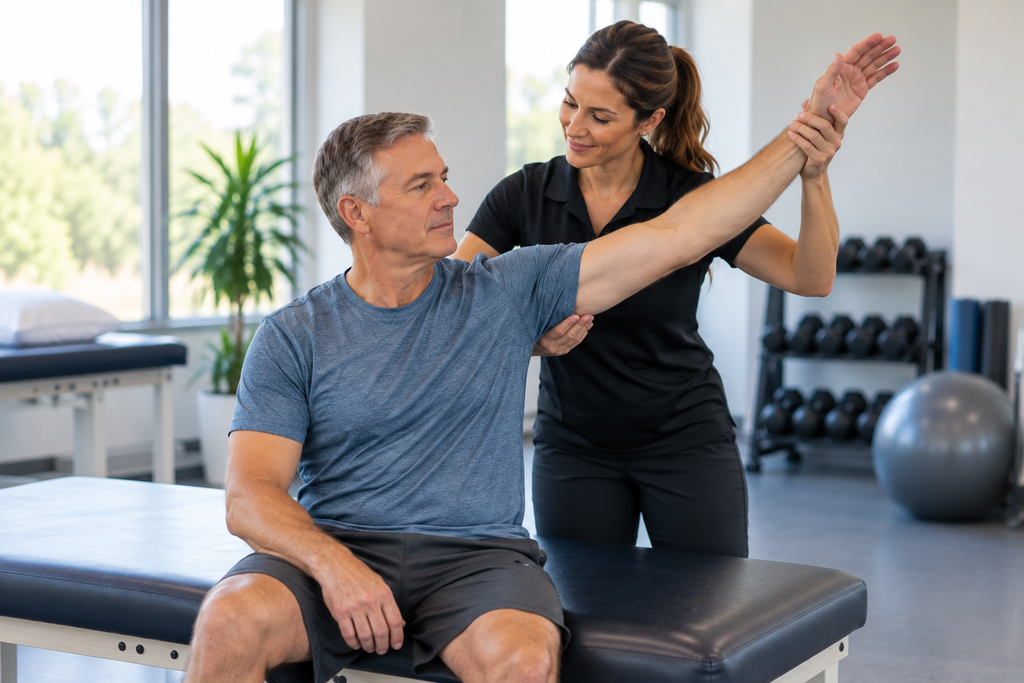
During the early stages of some rotator cuff rehabilitation programs, shoulder movement may be passive. Passive movement means the surgical shoulder is moved without the repaired muscles actively lifting the arm. Your therapist may carefully guide the shoulder through an appropriate range of motion based on your surgical protocol. You may also be given specific exercises for home. The amount and direction of movement allowed depends on your procedure.
Active-Assisted Movement
As healing progresses, your surgeon’s protocol may allow active-assisted movement. During active-assisted movement, your surgical arm begins participating while receiving help from your other arm, a cane, pulley, or another form of assistance. This helps transition the shoulder from being moved for you toward moving more independently. Your therapist will guide when and how this progression occurs.
Active Shoulder Movement
Eventually, you may begin actively lifting and moving your surgical arm without assistance. This is an exciting stage of recovery. However, your shoulder muscles may still be weak after weeks of limited use. Simple movements can initially feel surprisingly difficult. Your therapist can help you gradually restore control while avoiding unnecessary compensation.
Restoring Shoulder Range of Motion
Stiffness is common after rotator cuff surgery. Your shoulder may feel tight when reaching overhead, out to the side, or behind your back. Restoring movement should happen progressively. Trying to force the shoulder aggressively is not necessarily better and may irritate healing tissues. Your physical therapist will work within the guidelines for your procedure while helping you gradually improve mobility.
Rebuilding Rotator Cuff Strength
Strengthening is introduced when the repaired tendon has reached an appropriate stage of healing and your surgeon’s protocol allows it. Early strengthening may begin with relatively light resistance. Over time, exercises can become progressively more challenging. Your program may eventually include resistance bands, weights, cable exercises, or other strengthening activities. The goal is to help your shoulder tolerate the demands of everyday life, work, exercise, and recreation.
Shoulder Blade Strength and Control
The shoulder blade plays an important role in how your arm moves. Muscles surrounding the shoulder blade help create a stable base for shoulder movement. After surgery and time in a sling, these muscles may also need attention. Your rehabilitation may include exercises for shoulder blade control, posture, and upper-body strength as appropriate.
Getting Dressed After Rotator Cuff Surgery
Getting dressed can be one of the first frustrating challenges after shoulder surgery. Pulling a shirt overhead or putting your arm into a sleeve may be difficult while you are wearing a sling or following movement restrictions. Your therapist can discuss strategies for dressing while protecting the surgical shoulder. As your movement improves, getting dressed should gradually become easier.
Washing and Styling Your Hair
Reaching your head requires significant shoulder movement. It may take time before you can comfortably wash, brush, or style your hair using the surgical arm. This is a meaningful functional milestone for many patients. Your therapist can help you progressively work toward the movement and strength required for these activities.
Reaching Overhead
Overhead reaching is often one of the abilities patients are most eager to regain. You need it to reach cabinets, change a light object on a shelf, get dressed, and perform many work and recreational activities. Overhead movement is gradually restored as your shoulder heals. Later rehabilitation can strengthen the shoulder in these positions so you are not only able to reach overhead but can eventually tolerate appropriate loads there as well.
Reaching Behind Your Back
Reaching behind your back is needed for dressing, bathing, fastening clothing, and other everyday activities. This movement can remain limited for some time after shoulder surgery. Your therapist can help gradually restore the mobility needed for these tasks while respecting your surgical precautions.
Sleeping After Rotator Cuff Surgery
Sleep can be one of the most difficult parts of early shoulder recovery. Finding a comfortable position while wearing a sling may be frustrating. Many patients initially find a more upright sleeping position comfortable, but you should follow your surgeon’s recommendations. As healing progresses and you are allowed more positioning options, sleep often becomes easier. Let your therapist know if shoulder discomfort is consistently interfering with your sleep.
Driving After Rotator Cuff Surgery
Driving requires you to control the steering wheel, react quickly, and safely use both arms. You should not drive while wearing a sling if doing so prevents you from safely controlling the vehicle, and you should never drive while taking medications that impair your ability to operate a vehicle. Your surgeon should provide guidance about when you can return to driving. Your physical therapist can help you regain the movement and control needed for driving.
Returning to Work
Your job can have a major impact on your rehabilitation goals. Someone who works at a computer has very different shoulder demands than someone who performs construction, healthcare, manufacturing, landscaping, or another physical occupation. If your job involves reaching, lifting, carrying, pushing, pulling, or working overhead, your rehabilitation should eventually prepare you for those tasks. Your therapist can gradually introduce work-related movements as your shoulder becomes ready for greater loads.
Returning to a Physical Job
Heavy physical work requires more than basic shoulder mobility. You may need to lift objects from the floor, carry equipment, reach overhead, use tools, push, pull, or repeat movements for hours. Later rehabilitation can focus on building the strength and endurance required for these demands. The goal is to prepare you for your job rather than simply getting you to the point where your shoulder feels comfortable at rest.
Returning to the Gym
Many patients want to know when they can lift weights again. Returning to strength training after rotator cuff repair needs to happen gradually. Your repaired tendon must be ready for the load being placed on it. Your therapist can help you progressively reintroduce resistance exercises while monitoring strength, movement, and symptoms. Early gym exercises may look very different from your previous workouts. As your shoulder becomes stronger, your program can progress.
Returning to Golf
Golf requires shoulder movement, rotation, strength, and control. If golf is important to you, tell your therapist. Later rehabilitation can help prepare your shoulder for the movements involved in your swing. Returning may begin with shorter swings or practice sessions before progressing toward full play.
Returning to Pickleball or Tennis
Racquet sports require repeated shoulder movement, reaching, quick reactions, and force production. Serving and overhead shots can place greater demands on the shoulder. Your rehabilitation may eventually include movements that prepare you for these activities. Returning gradually gives your shoulder time to adapt to repeated sport-specific demands.
Returning to Swimming
Swimming places repeated demands on the shoulders. Before returning, you need adequate mobility, strength, and endurance. Your therapist can help you progressively prepare for these demands. When appropriate, returning to the pool may begin with shorter or modified sessions before gradually increasing distance and intensity.
Returning to Throwing Sports
Throwing requires significant shoulder mobility, strength, coordination, and control. Athletes returning to baseball, softball, football, or other throwing activities may require a more advanced rehabilitation progression. Later treatment can focus on the strength and movement needed for throwing. A gradual throwing program may be appropriate once you have reached the necessary stage of recovery and have been cleared by your healthcare team.
Gardening and Yardwork
Gardening and yardwork can place surprisingly large demands on the shoulder. Raking, shoveling, pruning, carrying soil, pushing a wheelbarrow, and working overhead all require strength and endurance. If these activities are important to you, they should be considered during rehabilitation. Later treatment can help prepare you for lifting, carrying, pulling, pushing, and repeated upper-body movements.
Why Does My Shoulder Still Feel Weak?
Weakness is expected after rotator cuff repair. Your shoulder may spend weeks being protected while the tendon heals. During that time, the muscles are not working at their normal level. Strength takes time to rebuild. Even after you regain much of your range of motion, you may not yet have the strength required for heavier lifting or repeated activity. That is why later-stage rehabilitation remains important.
Why Is My Shoulder Still Stiff?
Stiffness can continue for some time after surgery. The shoulder has undergone a significant procedure and may have spent weeks with limited movement. Your therapist will gradually address mobility while respecting the healing repair. Progress can sometimes feel slow, particularly with movements such as reaching overhead or behind your back. Consistency with your rehabilitation program is important.
How Long Does Rotator Cuff Repair Rehabilitation Take?
Rotator cuff recovery generally takes months rather than weeks. The exact timeline varies. The size of the tear, type of repair, age, tissue quality, overall health, additional procedures, and your activity goals can all influence recovery. Returning to everyday activities may happen much earlier than returning to heavy lifting or demanding sports. Your progress should be based on healing and function rather than comparing your recovery with someone else’s.
Why Can’t I Strengthen My Shoulder Right Away?
After rotator cuff repair, the tendon needs time to heal to the bone. Feeling less pain does not necessarily mean the repair is ready for heavy resistance. Introducing too much force too early can place unnecessary stress on healing tissue. Your rehabilitation is intentionally progressive. Early protection creates the foundation for later strengthening.
What If I Had Other Procedures During Surgery?
Rotator cuff surgery may sometimes be performed along with other shoulder procedures. Your surgeon’s rehabilitation instructions may change depending on what was performed. That is why your therapist needs to know exactly which procedures you had. Bring your surgical information and post-operative protocol to your evaluation when available.
What If My Surgery Was Months Ago?
You can still benefit from physical therapy if your shoulder remains weak, stiff, painful, or limited. Some people regain enough function for everyday activities but continue struggling with heavier lifting, work, exercise, or sports. A physical therapy evaluation can identify remaining mobility and strength limitations and determine how rehabilitation can continue progressing.
Preparing for Rotator Cuff Surgery With Prehab
In some cases, physical therapy can begin before surgery. Pre-surgical rehabilitation, or prehab, may help maintain shoulder movement and surrounding strength while preparing you for what to expect after the procedure. Your physical therapist may also teach you exercises or strategies you will use during recovery. Ask your surgeon whether prehab is appropriate for your situation.
When Should I Contact My Surgeon?
Your surgical team should provide instructions about symptoms that require medical attention. Contact your healthcare provider if you experience unexpected or rapidly worsening pain, significant redness or warmth, drainage from the incision, fever, or another concerning change. If you experience a sudden injury to the surgical shoulder or a significant unexpected loss of function, contact your medical team. When you are unsure whether something is part of normal recovery, it is appropriate to ask.
Why Choose Reform for Rotator Cuff Repair Rehabilitation?
Rotator cuff rehabilitation requires patience, progression, and a plan. At Reform Physical Therapy, we want to know what you need your shoulder to do when rehabilitation is finished. Maybe you want to reach into a cabinet without thinking about your shoulder. Perhaps you need to lift and carry at work. Maybe you want to get back to the gym, golf course, garden, pickleball court, pool, or another activity you love. Those goals help shape your treatment.
Your physical therapist will work within your surgeon’s recommendations while gradually restoring movement, strength, function, and confidence. As your shoulder heals, your rehabilitation progresses with you. We are not simply working toward better shoulder measurements. We are helping you build a shoulder that is prepared for your life.
Start Your Rotator Cuff Recovery With Reform
If you are preparing for rotator cuff surgery, recently had a repair, or are several months into recovery and still feel limited, Reform Physical Therapy can help. Your therapist will create an individualized rotator cuff repair rehabilitation program based on your surgery, current stage of healing, and personal goals. From restoring those first protected movements to reaching, lifting, working, exercising, and returning to the activities you enjoy, we are here to help you keep moving forward.
Contact Reform Physical Therapy to schedule your post-surgical rehabilitation evaluation.