


ACL Reconstruction Rehabilitation
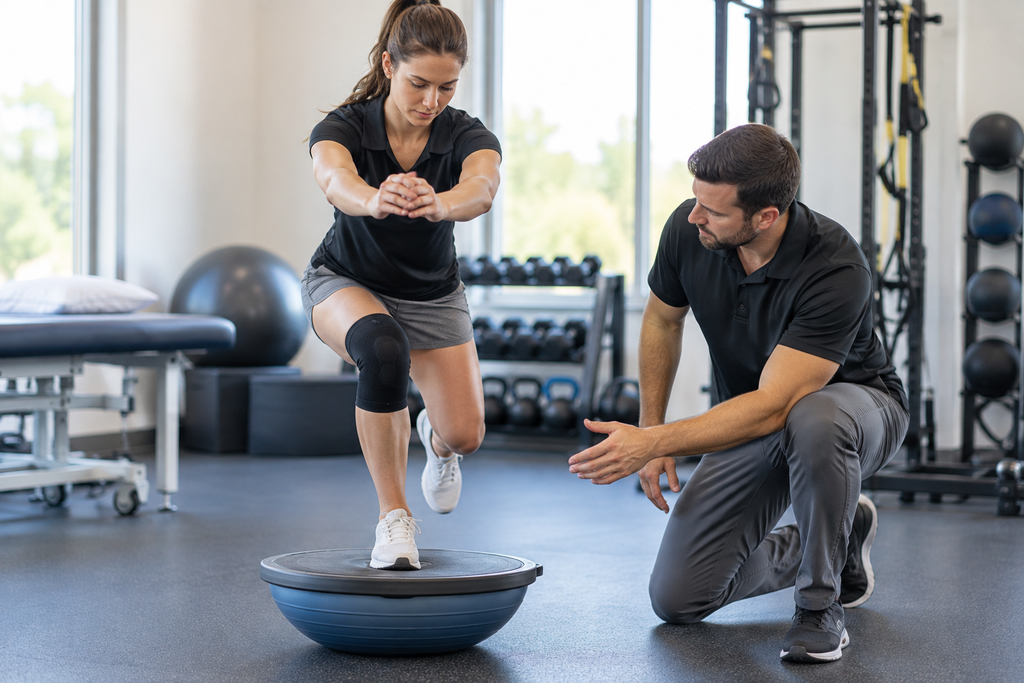
ACL surgery repairs the ligament. Rehabilitation helps you rebuild the knee you need for everything that comes next. After ACL reconstruction, your knee may feel swollen, stiff, weak, and unfamiliar. Walking may feel different. Stairs can be challenging. Your thigh muscles may seem noticeably smaller or weaker. If you are an athlete, getting back to running, jumping, cutting, or competing can feel like a long way away. Recovery happens one step at a time.
At Reform Physical Therapy, ACL reconstruction rehabilitation is designed to guide you through each stage of recovery while helping you rebuild knee mobility, strength, balance, control, and confidence. Your rehabilitation is based on your surgery, your surgeon’s recommendations, your progress, and your goals. Whether you want to return to competitive sports, recreational activities, work, running, skiing, hiking, the gym, or simply feeling confident on your knee again, we build your rehabilitation around where you want to go.
Physical Therapy After ACL Reconstruction
The anterior cruciate ligament, commonly called the ACL, is one of the major ligaments that helps stabilize the knee. ACL reconstruction is often performed when the ligament has been significantly injured, and surgery is determined to be appropriate. Surgery is only one part of recovery. After the procedure, the knee needs time to heal while movement, strength, balance, and function are gradually restored. Physical therapy provides a structured progression through that process. Early rehabilitation looks very different from the final stages. At first, walking comfortably and bending or straightening your knee may be major goals. Months later, you may be running, jumping, changing direction, and practicing movements specific to your sport.
Each stage prepares you for the next.
Why Is Rehabilitation So Important After ACL Surgery?
Your knee and surrounding muscles can change significantly after an ACL injury and surgery. Swelling can limit movement. Your quadriceps may have difficulty activating normally. Walking can become altered. Strength decreases when you are unable to use your leg normally. Balance and confidence may also be affected. Physical therapy helps address these changes while respecting the healing ACL graft. The goal is not to rush through recovery. It is to progressively prepare your knee for greater demands as healing allows.
When Does Physical Therapy Start After ACL Reconstruction?
Physical therapy often begins relatively early after ACL surgery, but your exact timeline should follow your surgeon’s recommendations. Your surgeon may provide a rehabilitation protocol that outlines precautions and when certain activities can begin. The type of ACL graft used and whether additional procedures were performed can also affect rehabilitation. For example, someone who had an ACL reconstruction along with a meniscus repair may have different early restrictions than someone who had an isolated ACL reconstruction. Your Reform physical therapist will review your surgical information and incorporate those recommendations into your treatment plan.
Your First Physical Therapy Visit
Your first appointment begins with understanding your surgery and where you are in the recovery process. Your therapist will review your surgeon’s instructions, current symptoms, medications or precautions relevant to rehabilitation, and any post-operative protocol you received. We will also talk about your goals. Maybe you want to return to soccer, basketball, lacrosse, skiing, running, or another sport. Perhaps you simply want to walk, work, exercise, and move confidently again. Your therapist may assess swelling, knee movement, quadriceps activation, walking, strength, and your ability to perform basic functional movements that are appropriate for your stage of recovery. From there, we begin building your plan.
The Early Goals of ACL Rehabilitation
During the early stage of ACL reconstruction rehabilitation, treatment often focuses on protecting the healing knee while restoring basic function. Managing swelling is important because swelling can make it more difficult for the muscles surrounding the knee to work effectively. Restoring knee extension, or the ability to fully straighten your knee, is also commonly an important early goal. Your therapist may work with you on knee bending, quadriceps activation, walking, and basic strengthening. These early exercises may seem simple, but they create the foundation for everything you will do later.
Swelling After ACL Surgery
Swelling is common after ACL reconstruction. It can make the knee feel tight and uncomfortable while limiting movement. Swelling can also interfere with quadriceps activation. Your therapist can provide guidance for managing swelling while gradually increasing activity. As rehabilitation progresses, we also pay attention to how your knee responds to exercise. If swelling repeatedly increases after certain activities, it may be a sign that your current workload needs to be adjusted.
Restoring Knee Extension
Regaining the ability to fully straighten the knee is an important part of early ACL rehabilitation. Limited extension can affect the way you walk and how the knee functions during everyday movement. Your physical therapist may use specific exercises and positioning to gradually restore extension while monitoring your response. Consistency with your home program can be particularly important during this stage.
Restoring Knee Bending
Knee bending also improves progressively after surgery. Early stiffness is common. Your therapist will guide you through exercises designed to gradually restore flexion while respecting your surgical precautions. The goal is steady improvement rather than forcing the knee aggressively.
Rebuilding Quadriceps Strength
Quadriceps weakness is one of the biggest challenges following ACL injury and reconstruction. The quadriceps are the large muscles at the front of your thigh. They play an important role in walking, climbing stairs, squatting, running, jumping, and controlling the knee. After surgery, these muscles can become significantly weaker. Early exercises may focus on simply getting the quadriceps to contract effectively. Over time, strengthening becomes progressively more challenging. Rebuilding strong quadriceps is an important part of preparing the knee for higher-level activities.
Hamstring and Hip Strength
Your knee does not work alone. The muscles surrounding your hips and throughout your leg contribute to movement and control. ACL rehabilitation may include progressive strengthening for the hamstrings, glutes, calves, and other muscles in addition to the quadriceps. A strong lower body helps prepare you for increasingly demanding activities later in recovery.
Walking After ACL Reconstruction
Walking may feel awkward at first. You may use crutches during the early stages depending on your surgeon’s instructions and whether other procedures were performed. Your therapist can help you safely use your assistive device and work toward a more natural walking pattern. As your knee movement, strength, and control improve, you can gradually progress away from assistance when appropriate.
Going Up and Down Stairs
Stairs can remain challenging even after normal walking begins to feel easier. Going upstairs requires significant leg strength. Going downstairs requires your muscles to control your body as you lower yourself onto the next step. Your therapist may gradually introduce step-ups, step-downs, squats, and other exercises to rebuild the strength and control needed for stairs.
Balance and Knee Control
Your ACL contributes to knee stability, but successful recovery involves more than the ligament itself. Balance, coordination, and movement control also need to be restored. Early balance exercises may be relatively simple. As you improve, they can become increasingly challenging. Later activities may involve single-leg balance, reaching, changing surfaces, reacting to movement, or combining balance with sport-related tasks.
Progressive Strength Training
Strength training becomes increasingly important as your knee heals. Exercises may progress from basic bodyweight movements to resistance bands, weights, machines, and more demanding single-leg exercises. Your therapist will adjust resistance based on your strength, movement quality, symptoms, and stage of recovery. The goal is not simply to make the surgical knee feel better. We want to rebuild its ability to tolerate the forces required for everyday life and the activities you want to return to.
When Can I Start Running After ACL Reconstruction?
Returning to running is an exciting milestone, but it should not be based only on how many weeks or months have passed. Running places much greater demands on the knee than walking. Before beginning a running program, your therapist may look at your strength, knee movement, swelling, single-leg control, and ability to tolerate impact. When appropriate, running may begin gradually. Short intervals can progress toward longer periods as your knee adapts.
Jumping and Landing After ACL Surgery
Jumping requires strength. Landing requires your body to absorb and control force. Both are important for many sports and recreational activities. Later stages of ACL rehabilitation may include jumping and landing exercises. Your therapist can help you work on how you generate and absorb force while gradually increasing the difficulty of these activities. Exercises may progress from two-leg movements to more challenging single-leg and multidirectional tasks.
Cutting and Changing Direction
Sports such as soccer, basketball, football, lacrosse, field hockey, and tennis require rapid changes of direction. These movements place different demands on the knee than straight-line running. Once you have developed an appropriate foundation of strength and control, your rehabilitation may progress to cutting, pivoting, acceleration, deceleration, and reaction-based exercises. These activities should be introduced gradually rather than attempted simply because running feels comfortable.
Returning to Sports After ACL Reconstruction
For athletes, returning to sports is often the biggest goal. It can also be one of the most demanding stages of rehabilitation. Being able to jog does not mean you are automatically ready for unrestricted sports. Your sport may require sprinting, jumping, landing, cutting, pivoting, reacting, and performing these movements while tired. Later rehabilitation should progressively prepare you for those demands. Your therapist may also use strength and functional testing to better understand how your surgical leg compares and how you perform higher-level movements.
ACL Rehabilitation for Teen Athletes
ACL injuries can be especially frustrating for teenagers who want to return to their team and sport as quickly as possible. It is understandable to feel impatient. However, ACL recovery requires time and progressive rehabilitation. For young athletes, treatment should eventually prepare them for the movements their sport requires rather than focusing only on basic knee exercises. Strength, jumping, landing, running, changing direction, and confidence may all become important parts of later rehabilitation.
ACL Rehabilitation for Recreational Athletes
You do not need to be a competitive athlete to need a strong, stable knee. Maybe you ski on the weekends. Perhaps you love hiking, running, pickleball, recreational soccer, CrossFit, strength training, or chasing your kids around the yard. Your rehabilitation should prepare you for your activities. We want your knee to handle the demands of your actual life, not just exercises inside the clinic.
Returning to Skiing After ACL Reconstruction
Skiing places significant demands on the knees and lower body. Strength, endurance, balance, control, and the ability to respond to unpredictable movement are important. If returning to skiing is your goal, your later rehabilitation may incorporate exercises that prepare your legs for sustained loading, single-leg control, lateral movement, and other skiing-related demands. Your therapist can help determine when your physical abilities are progressing toward those requirements.
Returning to the Gym
Strength training often becomes an important part of ACL rehabilitation long before you are completely finished with physical therapy. Your therapist can help you understand which exercises are appropriate and how they should progress. Over time, squats, lunges, step-ups, deadlift variations, single-leg exercises, and other strengthening movements may become part of your program when appropriate. Your program should become progressively more challenging as your knee becomes stronger.
Returning to Work After ACL Surgery
Your job matters when planning rehabilitation. Someone who works at a desk may return to work under very different circumstances than someone who climbs ladders, kneels, carries equipment, works on uneven ground, or performs heavy physical labor. Your therapist can gradually introduce movements related to your job. Later rehabilitation may include lifting, carrying, squatting, kneeling, climbing, and prolonged standing depending on your responsibilities.
What If I Also Had Meniscus Surgery?
ACL injuries sometimes occur along with meniscus injuries. If your meniscus was repaired during ACL reconstruction, your surgeon may place additional restrictions on weight bearing or knee movement during the early stages of recovery. This can temporarily change the rehabilitation timeline. Your therapist will follow the specific instructions provided by your surgeon rather than using the exact same program for every ACL patient.
What Type of ACL Graft Did I Have?
ACL reconstruction can be performed using different types of grafts. The graft may come from your patellar tendon, hamstring tendon, quadriceps tendon, or donor tissue depending on your individual situation and surgeon’s recommendation. The graft type can influence certain aspects of rehabilitation. Your therapist will consider your surgical procedure when selecting and progressing exercises.
How Long Does ACL Reconstruction Rehabilitation Take?
ACL recovery is measured in months rather than weeks. However, there is not one date that automatically means every person is ready to return to unrestricted activity. Healing is only one part of the process. Strength, mobility, movement control, confidence, functional performance, and the demands of your activity also matter. Your physical therapist will monitor these areas as your rehabilitation progresses.
Why Does My Knee Still Feel Weak Months After ACL Surgery?
ACL rehabilitation is a long process, and strength deficits can persist even after everyday activities begin feeling normal. You may be able to walk, work, and climb stairs while still lacking the strength needed for running, jumping, or sports.That is why later-stage rehabilitation matters. Once pain and basic movement improve, treatment should continue progressing toward rebuilding higher-level strength and function when those activities are part of your goals.
What If My ACL Surgery Was Months Ago and I Never Finished PT?
You can still have your knee evaluated. Some people stop rehabilitation once everyday activities feel manageable but later realize they do not feel ready to return to running, sports, or more demanding exercise. Others continue experiencing weakness, stiffness, swelling, or lack of confidence. Your physical therapist can evaluate where you are now and identify areas that may still need attention.
Confidence After ACL Reconstruction
Physical recovery is only part of returning to activity. It is common to feel nervous about trusting your knee again. Cutting, jumping, landing, skiing, or returning to the movement that caused your original injury may feel intimidating. Progressive rehabilitation allows you to practice increasingly challenging movements in a controlled environment. As your strength and physical abilities improve, repeated successful experiences can help rebuild confidence in your knee.
Why Choose Reform for ACL Reconstruction Rehabilitation?
ACL rehabilitation is a process. You need more than a sheet of exercises. At Reform Physical Therapy, we want to understand what you are trying to get back to and build your rehabilitation around those demands. Early treatment may focus on swelling, knee movement, walking, and quadriceps activation. As you progress, your program becomes increasingly focused on strength and function. For athletes and active patients, later rehabilitation can incorporate running, jumping, landing, agility, and sport-specific movements when appropriate. Your treatment progresses as you do. Our goal is not simply to help you recover from ACL surgery. We want to help prepare your knee for whatever comes next.
Start Your ACL Recovery With Reform Physical Therapy
If you are preparing for ACL reconstruction, recently had surgery, or are several months into recovery and still do not feel like yourself, physical therapy can help you continue moving forward. Your Reform physical therapist will work with your surgeon’s recommendations while creating an individualized rehabilitation plan based on your current abilities and goals. Whether you are working toward walking comfortably, returning to work, running again, getting back on the slopes, or returning to competitive sports, we are ready to help you take the next step.
Contact Reform Physical Therapy to schedule your ACL reconstruction rehabilitation evaluation.