


Pelvic Floor Biofeedback
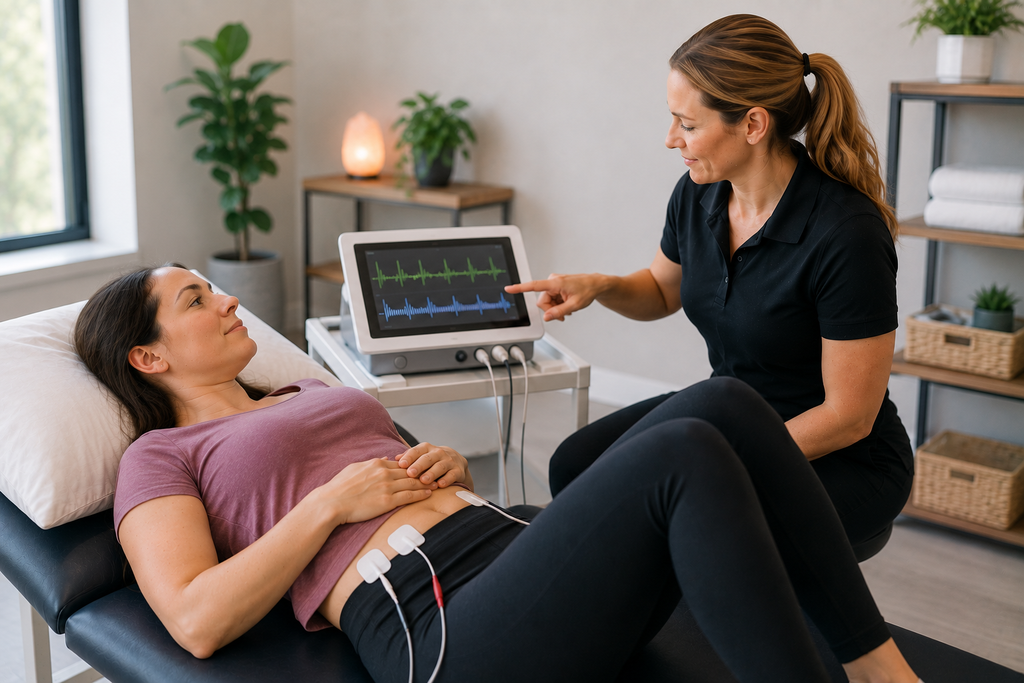
Pelvic floor biofeedback is a tool used during pelvic floor physical therapy to help you better understand how your pelvic floor muscles are working. Pelvic floor muscles are different from muscles in your arms or legs. You cannot easily look at them while you exercise. Because of this, it can be difficult to know whether you are contracting the correct muscles, relaxing them completely, or coordinating them at the right time. Biofeedback provides information about pelvic floor muscle activity. Sensors can monitor the muscles while you contract or relax them. Your physical therapist can then use that information to help you improve awareness and control.
At Reform Physical Therapy, pelvic floor biofeedback is available through our pelvic health program at the South Portland clinic. Biofeedback is not necessary for every patient. Your therapist will first evaluate your symptoms, pelvic floor function, medical history, and goals before determining whether it may be useful as part of your treatment.
What Is Pelvic Floor Biofeedback?
Biofeedback is exactly what the name suggests: your body performs an action, and technology provides feedback about what happened. During pelvic floor biofeedback, sensors monitor muscle activity while you attempt to contract or relax your pelvic floor. The information can help you and your physical therapist understand whether the muscles are responding the way you intend. Cleveland Clinic explains that physical therapists may use sensors during biofeedback to monitor the pelvic floor while a patient tightens or relaxes the muscles. The therapist can then provide guidance to improve coordination. Think of biofeedback as giving you another way to “see” muscles that normally cannot be seen.
What Does the Pelvic Floor Do?
Your pelvic floor is a group of muscles located at the bottom of the pelvis. These muscles help support the bladder, bowel, uterus, prostate, rectum, and other pelvic structures. They also contribute to bladder control, bowel control, sexual function, pelvic organ support, and core stability. Most importantly, the muscles need to do more than squeeze. A healthy pelvic floor needs to contract when appropriate and fully relax when necessary. Biofeedback can help your therapist evaluate both sides of that equation.
Why Is Pelvic Floor Coordination Important?
Imagine constantly keeping your hand clenched into a fist. Even though the muscles are technically “strong,” they are not functioning normally because they cannot relax when needed. The same idea applies to the pelvic floor. Some people have weak pelvic floor muscles and struggle to create an effective contraction. Others keep the muscles too tight. There are also patients who can both contract and relax the muscles but have difficulty doing either one at the correct time. This is why simply telling every pelvic health patient to “do Kegels” is not enough.
Your therapist needs to determine what your muscles are actually doing.
How Does Pelvic Floor Biofeedback Work?
The exact setup can vary depending on the equipment and treatment goal. Sensors monitor muscle activity and send that information to biofeedback equipment. Your therapist may ask you to contract your pelvic floor, hold a contraction, relax the muscles, or coordinate them with breathing or another activity. The equipment provides feedback about how the muscles responded. This gives you an opportunity to make adjustments. Instead of wondering whether you performed the exercise correctly, you receive additional information about your muscle activity.
What Does Biofeedback Show?
Biofeedback may help your therapist observe several aspects of pelvic floor muscle activity. For example, it can help determine whether you are activating the targeted muscles when asked to contract. Your therapist may also evaluate how well you maintain a contraction, whether the muscles relax afterward, and how consistently you can repeat the movement. The information is then used alongside your physical examination and symptoms.
Biofeedback is a tool. It does not replace a complete pelvic health evaluation.
Learning How to Contract the Pelvic Floor
Many people struggle to identify their pelvic floor muscles. You may accidentally squeeze your buttocks, thighs, or abdominal muscles instead. Another common mistake is pushing downward rather than creating an upward pelvic floor contraction. Biofeedback can provide additional information that helps you recognize when you are using the correct muscles. NIDDK notes that biofeedback may be used when someone is unsure whether they’re performing pelvic floor exercises correctly. Once you understand what a correct contraction feels like, the goal is to become less dependent on the equipment.
Learning How to Relax the Pelvic Floor
Biofeedback is about strengthening. For some patients, relaxation is actually the bigger challenge. Pelvic floor dysfunction can involve muscles that remain tight when they should relax. This can contribute to difficulty with bowel movements, urinary symptoms, pelvic pain, or other concerns. Biofeedback can help you recognize whether your muscles are actually relaxing. That information may be particularly useful for someone who has been unconsciously holding tension in the pelvic floor for a long time.
Pelvic Floor Biofeedback for Weakness
Weak pelvic floor muscles may contribute to bladder or bowel leakage. Your therapist may first teach you how to correctly activate the muscles. Biofeedback can provide additional information while you practice. Over time, treatment may progress toward longer contractions, repeated contractions, functional strengthening, and using the pelvic floor during everyday activities. The goal is not simply to produce a better number on a machine. It is to help your muscles work more effectively during real life.
Pelvic Floor Biofeedback for Tight Muscles
A tight pelvic floor needs a different treatment approach. If your muscles are already holding too much tension, repeatedly squeezing them may make symptoms worse. Your therapist may instead use biofeedback to help you practice releasing the pelvic floor. Breathing, relaxation techniques, mobility exercises, manual therapy, and other treatments may also be incorporated depending on your symptoms. The treatment plan should reflect what your muscles need rather than assuming everyone needs strengthening.
Pelvic Floor Biofeedback and Urinary Incontinence
Urinary incontinence means urine leaks when you do not intend it to. Some people leak while coughing, sneezing, exercising, running, jumping, or lifting. Others experience a sudden urge to urinate and cannot always reach the bathroom in time. Pelvic floor muscle training is commonly used as part of conservative treatment for bladder control problems. When someone is unsure whether they are contracting the muscles correctly, NIDDK notes that biofeedback may be used to help improve pelvic floor exercise technique.
Biofeedback for Stress Urinary Incontinence
Stress urinary incontinence typically causes leakage when pressure increases through the abdomen. Coughing, sneezing, laughing, lifting, and exercise are common triggers. Pelvic floor rehabilitation may focus on strength, timing, breathing, and coordinating the pelvic floor with activities that increase abdominal pressure. Biofeedback may help you learn how to activate the muscles more effectively. Eventually, however, your pelvic floor needs to respond without relying on a machine.
Biofeedback for Urinary Urgency
Urinary urgency is a sudden, strong need to urinate. You may feel as though you need to reach a bathroom immediately. Some patients also experience urgency incontinence, which means leakage occurs before they make it to the toilet. Pelvic health treatment may include bladder training, urge-control strategies, breathing, pelvic floor coordination, and other techniques. Biofeedback may be incorporated when improved awareness of the pelvic floor would help support those goals.
Pelvic Floor Biofeedback and Bowel Dysfunction
The pelvic floor plays an important role during bowel movements. These muscles need to relax appropriately to allow stool to pass. When they tighten instead, bowel movements can become difficult. You may experience straining, incomplete emptying, prolonged bathroom trips, or the sensation that you still need to go. Biofeedback can be especially useful for certain bowel coordination problems because it helps patients learn how to change the way their muscles are working.
Biofeedback for Constipation
Not every case of constipation comes from the pelvic floor. Diet, hydration, medications, digestive conditions, and other factors can contribute. However, some people have difficulty having bowel movements because the pelvic floor muscles do not relax appropriately. NIDDK specifically recommends biofeedback therapy as a possible treatment when problems with the muscles controlling bowel movements contribute to constipation. Treatment can help retrain the muscles, so they coordinate more effectively during bowel movements.
Pelvic Floor Dyssynergia
Pelvic floor dyssynergia occurs when the muscles do not coordinate correctly during a bowel movement. Instead of relaxing to allow stool to pass, the muscles may tighten. This can create a frustrating cycle of pushing and straining without completely emptying. Biofeedback is commonly used to help retrain this coordination. Cleveland Clinic identifies biofeedback as the most common treatment for pelvic floor dysfunction and notes that it is typically performed alongside physical therapy.
Biofeedback for Bowel Leakage
Pelvic floor biofeedback may also be used for certain bowel control problems. NIDDK explains that biofeedback therapy can help people learn exercises to strengthen the pelvic floor. It may also improve awareness of rectal filling or help someone learn to control strong bowel urgency. Your therapist will determine whether weakness, sensation, coordination, or another factor appears to be contributing. Medical evaluation is also important because bowel leakage can have several causes.
Pelvic Floor Biofeedback After Pregnancy
Pregnancy changes the demands placed on the abdominal wall and pelvic floor. After delivery, some people experience urinary leakage, bowel symptoms, pelvic pressure, weakness, pain, or difficulty reconnecting with the pelvic floor. Biofeedback may be useful when you are unsure how to contract or relax your muscles. Your postpartum rehabilitation may also include abdominal strengthening, breathing, hip strengthening, lifting practice, and gradual return to exercise. The goal is to rebuild overall function rather than focusing only on the pelvic floor.
Biofeedback After Vaginal Birth
The pelvic floor undergoes significant stretching during vaginal childbirth. Some people regain strength and coordination naturally as they heal. Others notice weakness, urinary leakage, bowel symptoms, or difficulty identifying the pelvic floor muscles. Biofeedback can provide additional information while you relearn how to activate and relax those muscles. Your therapist can incorporate that training into a larger postpartum rehabilitation program.
Biofeedback After Cesarean Birth
Pelvic floor symptoms can still occur after a Cesarean birth. Pregnancy itself places increasing demands on the pelvic floor and abdominal wall. Recovery from abdominal surgery can also affect movement, breathing, strength, and core coordination. A pelvic health physical therapist can evaluate the entire system. If biofeedback would provide useful information about your pelvic floor function, it may be incorporated into treatment.
Pelvic Floor Biofeedback for Men
Men have pelvic floor muscles too. These muscles contribute to bladder and bowel control, sexual function, and pelvic support. Men may be referred to pelvic floor rehabilitation following prostate surgery or for urinary, bowel, pelvic pain, or other pelvic health concerns. Biofeedback can help someone learn how to correctly activate or relax the pelvic floor. At Reform, male pelvic health rehabilitation is available through our South Portland pelvic health program.
Biofeedback After Prostate Surgery
Urinary leakage can occur following prostate surgery. Pelvic floor muscle training is commonly incorporated into rehabilitation to help improve urinary control. One challenge is making sure the correct muscles are being activated. Biofeedback may provide additional information while a patient practices pelvic floor contractions. Your therapist can then progress treatment toward functional activities and independent muscle control.
Pelvic Floor Biofeedback and Pelvic Pain
Pelvic pain can occur for many reasons. Some patients experiencing chronic pelvic pain also develop excessive pelvic floor muscle tension. In these situations, the goal may not be strengthening. Biofeedback may instead help someone recognize when the pelvic floor is holding tension and practice allowing those muscles to relax. Treatment may also include breathing, mobility, manual therapy, exercise, and medical care depending on the cause of the pain.
Pain With Intercourse or Sexual Activity
Pain with intercourse or sexual activity can sometimes occur alongside pelvic floor muscle tension. If the muscles automatically tighten in anticipation of discomfort, relaxing them may become difficult. Biofeedback may help improve awareness of this muscle activity. However, painful sexual activity can have many causes beyond the pelvic floor. Your gynecologist, urologist, or another healthcare provider may need to evaluate other potential causes.
Biofeedback and Pelvic Organ Prolapse
Pelvic floor muscle training may be included in conservative management of pelvic organ prolapse. Biofeedback may help if someone has difficulty identifying the correct muscles during pelvic floor exercises. However, prolapse rehabilitation usually involves more than isolated pelvic floor contractions. Your therapist may also address breathing, pressure management, hip and core strength, bowel habits, lifting mechanics, and exercise.
Biofeedback and Endometriosis Support
Endometriosis itself is not treated with biofeedback. However, someone living with endometriosis may also develop pelvic floor muscle guarding or excessive tension. When those muscles have difficulty relaxing, biofeedback may provide additional information during pelvic floor retraining. This should be considered supportive care for musculoskeletal and pelvic floor factors occurring alongside endometriosis, not a treatment for the underlying disease.
Is Pelvic Floor Biofeedback the Same as E-Stim?
No. This is one of the most important differences to explain. Biofeedback measures and displays information about muscle activity. Electrical stimulation delivers a controlled electrical current to stimulate targeted muscles or nerves. NIDDK lists both biofeedback and electrical stimulation as tools that may help someone learn to perform pelvic floor exercises correctly. Depending on your symptoms, your therapist may use one, both, or neither. At Reform, pelvic floor biofeedback and electrical stimulation are available through our South Portland pelvic health program when clinically appropriate.
Does Biofeedback Make the Muscles Contract?
Biofeedback itself does not electrically make your pelvic floor muscles contract. You perform the contraction or relaxation. The equipment provides information about what happened. That feedback can help you make adjustments and learn better control. This is different from electrical stimulation, where electrical impulses can be used to produce or influence a muscle response.
What Does Pelvic Floor Biofeedback Feel Like?
Biofeedback itself should not create an electrical sensation. The sensors are monitoring activity rather than stimulating the muscles. You may be asked to tighten, hold, relax, or repeat pelvic floor contractions. If relaxation is your treatment goal, your therapist may instead have you practice breathing or releasing the muscles while watching how the activity changes. Your therapist should explain what the equipment is measuring and what you are working toward.
Does Pelvic Floor Biofeedback Hurt?
Biofeedback should not be painful. The type of sensor used depends on the equipment and treatment goal. If anything feels uncomfortable, tell your therapist. Pelvic health care should involve ongoing communication. You should understand what is being recommended and have an opportunity to ask questions before treatment begins.
Are Biofeedback Sensors Internal or External?
Different biofeedback systems use different types of sensors. Some use external surface electrodes. In certain pelvic health settings, internal vaginal or rectal sensors may also be used. Your therapist should explain what type of sensor is being recommended, why it may be helpful, and what the process involves. Any internal pelvic health treatment or assessment requires your informed consent.
What If I Don’t Want an Internal Sensor?
You can tell your therapist. You are not required to agree to an internal pelvic floor treatment simply because it is available. Your physical therapist can discuss other ways to evaluate and treat your symptoms. An external assessment, breathing evaluation, movement assessment, exercises, education, and other treatment approaches may still provide valuable information. Your comfort and consent remain part of the treatment process.
What Happens During a Biofeedback Session?
Your therapist will explain the equipment before beginning. Once the sensors are positioned, you may be asked to perform several pelvic floor contractions or relaxation exercises. Your therapist can observe the feedback and coach you through adjustments. For example, you may discover that you are contracting correctly but not fully relaxing afterward. Another patient may learn that they are bearing downward rather than lifting the pelvic floor. These details can help make your home exercise program more specific.
What Happens During Your First Pelvic Health Visit?
Your first appointment is about understanding your symptoms before choosing treatment. Your therapist may ask about bladder and bowel function, pelvic pain, pregnancies, childbirth, surgeries, sexual symptoms when relevant, exercise, and the activities affected by your condition. The physical examination may include breathing, abdominal function, hip strength, mobility, movement, and pelvic floor coordination. An internal or external pelvic floor assessment may be discussed depending on your symptoms. After the evaluation, your therapist can determine whether biofeedback would actually add value to your treatment.
Do I Need Biofeedback at Every Appointment?
Probably not. Biofeedback is a learning tool. The goal is to help you develop enough awareness and control that you can use your pelvic floor appropriately without relying on equipment. Your therapist may use biofeedback during certain stages of rehabilitation and not during others. Treatment should change as you improve.
How Long Does Pelvic Floor Biofeedback Take to Work?
There is no universal timeline. Someone who simply needs help identifying the correct muscles may learn quickly. A person dealing with long-term pelvic floor dysfunction may require more time to change muscle coordination and movement habits. Cleveland Clinic notes that improvement from pelvic floor physical therapy can take several months, depending on the individual condition and treatment plan. Progress should be based on your symptoms and function rather than a predetermined number of sessions.
Is Biofeedback Better Than Kegels?
They serve different purposes. Kegel exercises involve intentionally contracting and relaxing the pelvic floor muscles. Biofeedback provides information that may help you perform those exercises or other pelvic floor activities more effectively. If you already know how to correctly contract and relax your muscles, biofeedback may not be necessary. If you are struggling to identify them, it can provide useful additional information.
Can I Do Pelvic Floor Biofeedback at Home?
Some biofeedback devices are designed for home use. However, purchasing a device does not necessarily tell you whether strengthening is the correct treatment for your symptoms. Someone with excessive pelvic floor tension may need relaxation rather than more contractions. Before investing in a home pelvic floor device, consider having your symptoms evaluated by a qualified pelvic health professional. The most useful technology is still only useful when it is addressing the right problem.
Pelvic Floor Biofeedback at Reform Physical Therapy
Reform Physical Therapy offers pelvic floor biofeedback at our South Portland clinic as part of individualized pelvic health rehabilitation. Biofeedback is not a stand-alone program. Your therapist will first evaluate your symptoms and pelvic floor function. If biofeedback is appropriate, it may be combined with pelvic floor retraining, breathing exercises, core and hip strengthening, bladder or bowel strategies, manual therapy, mobility work, or functional exercise. The goal is to help you better understand your body and eventually use your pelvic floor effectively without relying on equipment.
Pelvic Health Physical Therapy in South Portland, Maine
Pelvic health symptoms can feel personal, frustrating, or difficult to explain. Maybe you have been doing Kegels but have no idea whether you are doing them correctly. Perhaps you have been told your pelvic floor is tight but cannot figure out how to relax it. Or you may be recovering from childbirth or prostate surgery and struggling to reconnect with muscles that suddenly feel unfamiliar. Biofeedback can provide another piece of information.
Reform’s South Portland pelvic health team can determine whether that information would be useful for you and incorporate it into a treatment plan built around your individual goals.
Schedule a Pelvic Floor Evaluation
You do not need to know whether you need biofeedback before making an appointment. That is what the evaluation is for. Your physical therapist can assess pelvic floor strength, relaxation, coordination, breathing, movement, and the symptoms affecting your everyday life. From there, your therapist can determine whether pelvic floor biofeedback should be included in your treatment plan.
Contact Reform Physical Therapy to schedule a pelvic health evaluation at our South Portland clinic.