

Balance & Neurological
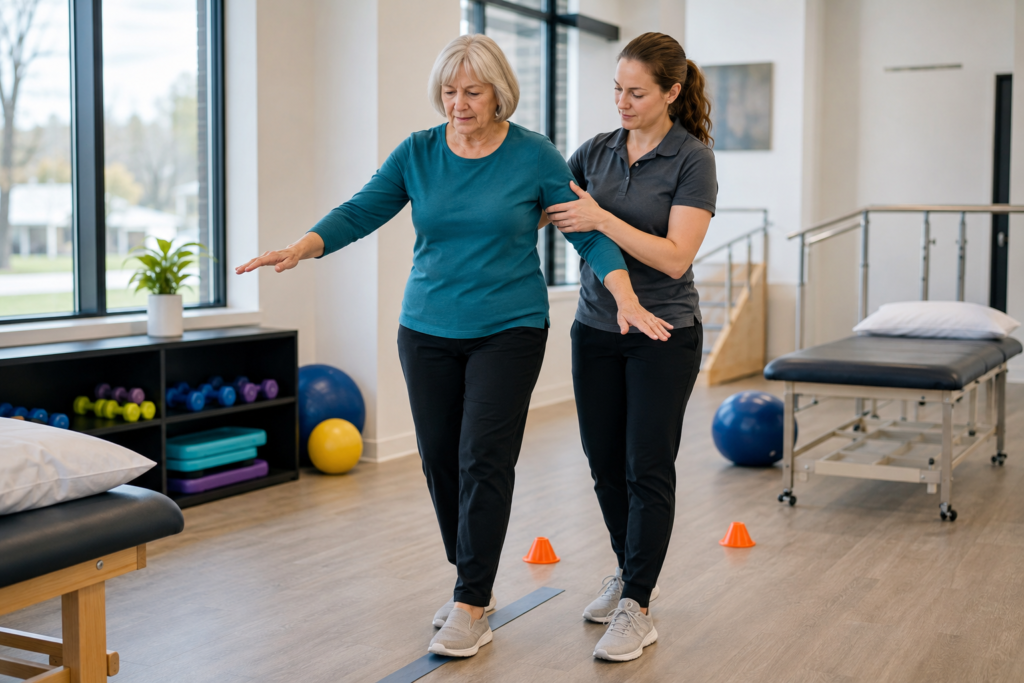
Balance and neurological conditions can affect the way a person moves, walks, sees the environment, responds to changes in position, and completes everyday activities. Symptoms may include dizziness, unsteadiness, weakness, numbness, poor coordination, slowed movement, fatigue, or a fear of falling.
These symptoms can make routine activities feel unpredictable. Standing up, turning quickly, walking through a busy store, getting out of bed, climbing stairs, driving, or moving across an uneven surface may suddenly feel more difficult. Some people begin avoiding activity because they are afraid of triggering dizziness or losing their balance, which can gradually contribute to additional weakness and reduced confidence.
At Reform Physical Therapy, we provide individualized balance, vestibular, and neurological physical therapy for people experiencing dizziness, vertigo, balance disorders, concussion symptoms, and movement limitations related to neurological conditions.
Our physical therapists evaluate the systems that contribute to balance and movement, then create a treatment plan based on the patient’s diagnosis, symptoms, current abilities, lifestyle, and goals. Treatment may focus on improving stability, walking, coordination, strength, endurance, visual tolerance, and confidence with daily movement.
How Your Body Maintains Balance
Balance is not controlled by one body part. Your brain continuously receives information from several systems to determine where your body is located and how it should respond to movement.
Three major systems help maintain balance:
The Vestibular System
The vestibular system is located in the inner ear. It detects changes in head position and movement and sends that information to the brain. When this system is not functioning properly, a person may experience vertigo, dizziness, motion sensitivity, blurred vision with movement, or unsteadiness.
The Visual System
Your eyes provide information about your surroundings and help your brain determine whether you or the environment are moving. Visual problems or difficulty processing busy environments can contribute to dizziness, imbalance, headaches, and motion sensitivity.
The Somatosensory System
Nerves in the muscles, joints, and skin provide information about body position, pressure, and contact with the ground. Neuropathy, joint problems, weakness, or reduced sensation in the feet can interfere with this information and make balance more difficult. When one system is not providing accurate information, the brain may have to rely more heavily on the others. Balance and neurological physical therapy can help identify which systems are contributing to symptoms and train the body to use available information more effectively.
Physical Therapy for Balance and Neurological Conditions
Balance and neurological physical therapy focuses on improving movement, function, and independence. Treatment does not follow one standard routine because dizziness, balance loss, and neurological symptoms can have many different causes. During your first appointment, your physical therapist will ask about your symptoms, medical history, falls, medications, diagnoses, and daily activities. They will also want to understand when symptoms occur, how long they last, which movements trigger them, and what activities you have started avoiding.
Your physical therapy evaluation may include an assessment of:
- Walking and gait
- Static and dynamic balance
- Leg and core strength
- Coordination
- Joint mobility
- Sensation in the feet or legs
- Eye movements
- Head and eye coordination
- Position changes
- Reaction time
- Turning and stepping
- Ability to stand from a chair
- Ability to walk on uneven surfaces
- Activities that trigger dizziness
- Fall history and fear of falling
- Use of a cane, walker, or other assistive device
Treatment may include balance exercises, vestibular rehabilitation, strength training, walking practice, functional movement, coordination activities, and a personalized home exercise program. The goal is to help each person move as safely, independently, and confidently as possible.
Conditions We Treat
Vertigo
Vertigo is the sensation that you, the room, or your surroundings are spinning or moving even when you are still. It is a symptom rather than a diagnosis and can have several possible causes. One common cause is benign paroxysmal positional vertigo, also known as BPPV. BPPV occurs when tiny calcium crystals inside the inner ear move into an area where they do not belong. This can send inaccurate movement information to the brain and create brief episodes of spinning.
Vertigo related to BPPV is often triggered by movements such as:
- Rolling over in bed
- Lying down
- Sitting up from bed
- Looking upward
- Bending forward
- Turning the head quickly
- Getting in or out of a chair
BPPV symptoms commonly last for seconds rather than remaining constant. However, some people continue to feel unsteady, nauseated, or cautious with movement after the spinning sensation stops. A physical therapist with vestibular training can perform positional testing to determine whether BPPV may be present and which part of the inner ear is affected. When appropriate, the therapist may use a canalith repositioning maneuver to guide the displaced crystals back into the correct area. Physical therapists are trained to evaluate and treat BPPV and the dizziness or imbalance associated with it.
Not every case of vertigo is caused by BPPV. Your physical therapist will refer you to another medical provider when symptoms suggest that additional testing or medical treatment may be necessary.
Dizziness
Dizziness can mean different things to different people. Some people describe spinning, while others report lightheadedness, floating, rocking, swaying, disorientation, or feeling as though they may lose their balance. Because dizziness has many possible causes, accurately describing the sensation is an important part of the evaluation.
People may describe dizziness as:
- The room is spinning
- Feeling lightheaded
- Feeling faint
- Walking on a boat
- Floating or swaying
- Feeling pulled to one side
- Blurred vision with head movement
- Difficulty focusing in busy environments
- Feeling unsteady without spinning
- Feeling disoriented when turning quickly
Dizziness may be related to an inner-ear disorder, concussion, migraine, blood-pressure changes, medication, vision problems, anxiety, dehydration, neurological conditions, or other medical concerns. Physical therapy may be appropriate when dizziness is connected to vestibular dysfunction, balance limitations, visual-motion sensitivity, neck-related symptoms, or difficulty coordinating the head and eyes. Treatment will depend on what triggers the symptoms and how the person responds during the evaluation.
Vestibular Disorders
Vestibular disorders affect the inner-ear and brain systems that help control balance, spatial awareness, and eye movements. When vestibular information is inaccurate or incomplete, the brain may have difficulty determining whether the body or the environment is moving. Symptoms may develop suddenly or gradually. Some people experience a severe initial episode followed by lingering imbalance, while others notice recurring dizziness or difficulty in visually busy environments.
Symptoms of a vestibular disorder may include:
- Vertigo
- Dizziness
- Motion sensitivity
- Unsteadiness
- Blurred or bouncing vision
- Difficulty walking in the dark
- Difficulty walking on uneven surfaces
- Nausea
- Sensitivity to head movement
- Difficulty in grocery stores
- Discomfort in crowds
- Symptoms while scrolling on a phone
- Difficulty riding in a vehicle
- Fatigue related to concentrating on balance
Vestibular rehabilitation is an exercise-based form of physical therapy designed to improve balance, gaze stability, motion tolerance, and daily function. Clinical guidance supports vestibular physical therapy for appropriate peripheral vestibular conditions, with potential improvements in balance, symptoms, daily function, fall risk, and quality of life.
Treatment may include:
- Gaze-stabilization exercises
- Balance training
- Habituation exercises
- Walking with head movement
- Visual-motion exercises
- Positional testing
- Canalith repositioning for BPPV
- Strengthening
- A customized home program
Vestibular exercises must be selected according to the person’s specific condition. Generic dizziness exercises found online may be ineffective or may unnecessarily aggravate symptoms when used without a proper evaluation.
Cerebral Palsy
Cerebral palsy is a group of lifelong conditions that affect movement, posture, balance, and muscle control. It begins because the developing brain formed differently or experienced an injury. Although the brain condition does not get worse over time, a person’s physical needs may change as they grow older. Cerebral palsy affects each person differently. Some people can walk on their own but have trouble with balance, coordination, or muscle stiffness. Others may use braces, walkers, wheelchairs, or other equipment to move safely.
Common movement concerns may include:
- Muscle tightness or stiffness
- Muscle weakness
- Poor balance
- Difficulty walking
- Uneven movement
- Trouble with coordination
- Limited joint movement
- Difficulty standing or changing positions
- Fatigue during physical activity
- Pain caused by muscle or joint strain
- Difficulty completing daily tasks
Physical therapy does not cure cerebral palsy. However, it may help children and adults improve or maintain strength, movement, balance, flexibility, and independence. Physical therapy is one of the common treatments used to support people living with cerebral palsy.
Treatment may include:
- Stretching
- Strength training
- Balance exercises
- Walking practice
- Posture training
- Coordination activities
- Practice using stairs
- Transfers between sitting and standing
- Equipment or brace recommendations
- Exercises for daily activities
- Pain-management strategies
- A personalized home exercise program
Your physical therapist will create a plan based on your current ability and goals. Treatment may focus on walking more safely, maintaining joint movement, improving strength, reducing the risk of falls, or making work, school, sports, and daily activities easier. Adults with cerebral palsy may also experience new concerns related to aging, reduced activity, joint strain, pain, or fatigue. Ongoing physical therapy can help address these changes while supporting long-term mobility and independence.
Concussion Rehabilitation
A concussion is a type of brain injury that may occur after a blow to the head, rapid movement of the head and body, a fall, a collision, or another forceful event. A person does not need to lose consciousness to sustain a concussion. Concussion symptoms can affect the vestibular, visual, neurological, musculoskeletal, and cardiovascular systems. Symptoms may begin immediately or become more noticeable in the hours or days following the injury.
Common concussion symptoms include:
- Headache
- Dizziness
- Balance problems
- Nausea
- Neck pain
- Blurred or double vision
- Sensitivity to light or noise
- Difficulty concentrating
- Mental fatigue
- Motion sensitivity
- Difficulty reading
- Irritability
- Changes in sleep
- Reduced exercise tolerance
- Feeling slowed down or foggy
Physical therapy may be part of a broader concussion management plan when symptoms involve balance, dizziness, neck pain, eye and head coordination, or reduced exercise tolerance. Physical therapists may address vestibular, cervical, exertional, and educational components of concussion recovery.
Concussion rehabilitation may include:
- Vestibular exercises
- Balance training
- Gaze stabilization
- Visual-motion tolerance
- Neck mobility and strengthening
- Gradual aerobic exercise
- Symptom-management education
- Return-to-school or work planning
- Progressive return to activity
- Return-to-sport preparation when appropriate
Treatment is based on the person’s symptoms and stage of recovery. Exercises that are appropriate for one patient may not be appropriate for another. A suspected concussion should be evaluated by an appropriate healthcare provider. An athlete should not return to play on the same day as a suspected concussion.
Balance Disorders
A balance disorder can make a person feel unsteady while standing, walking, turning, or changing positions. Balance problems may be caused by weakness, vestibular dysfunction, reduced sensation, vision changes, neurological conditions, medication effects, or a combination of factors. Some people notice that they hold onto furniture or walls while walking. Others may feel stable on a flat surface but become unsteady in the dark, on grass, or when turning quickly.
Signs of a balance disorder may include:
- Frequent stumbles
- Drifting to one side while walking
- Difficulty walking in the dark
- Difficulty on uneven surfaces
- Holding onto furniture
- Feeling unstable when turning
- Difficulty standing with the feet close together
- Trouble stepping over obstacles
- Difficulty getting out of a chair
- Fear of walking alone
- Avoiding stairs
- Reduced confidence outside the home
Balance physical therapy may include exercises that safely challenge the visual, vestibular, and somatosensory systems. Treatment may also focus on leg strength, stepping reactions, coordination, walking speed, and the ability to recover from a loss of balance.
Fall Prevention
Falls are not an unavoidable part of getting older. Although age can increase certain risk factors, many contributors to falls can be identified and addressed.
Falls may be related to:
- Leg weakness
- Poor balance
- Dizziness
- Neuropathy
- Vision changes
- Medication side effects
- Unsafe footwear
- Home hazards
- Difficulty using an assistive device
- Reduced reaction time
- A previous fall
- Fear of falling
- Rushing to the bathroom
- Difficulty standing from a chair
A previous fall can cause a person to become afraid of moving. They may walk less, avoid stairs, or stop participating in community activities. Unfortunately, reduced activity can contribute to additional weakness and make future falls more likely. The CDC identifies poor strength and balance among the modifiable factors associated with older-adult fall risk and recommends strength and balance activity as part of fall prevention.
A physical therapy fall-risk evaluation may include:
- Walking assessment
- Balance testing
- Leg-strength testing
- Chair-rise testing
- Turning and stepping
- Assistive-device assessment
- Review of previous falls
- Discussion of environmental hazards
- Recommendations for other medical evaluation
- A personalized prevention plan
Fall-prevention treatment may include:
- Strength training
- Static and dynamic balance
- Stepping and reaction practice
- Walking on different surfaces
- Stair training
- Turning practice
- Dual-task activities
- Education about safe movement
- Cane or walker training
- Home exercises
The goal is not simply to prevent one fall. It is to help the patient maintain mobility, independence, confidence, and participation in everyday life.
Parkinson’s Disease
Parkinson’s disease is a progressive neurological condition that affects movement. Symptoms and progression vary, but people may experience slowed movement, stiffness, tremor, reduced balance, changes in posture, or difficulty initiating movement.
Parkinson’s disease may affect activities such as:
- Walking
- Turning
- Getting out of a chair
- Rolling in bed
- Reaching
- Dressing
- Climbing stairs
- Moving through narrow spaces
- Keeping up with others
- Recovering from a loss of balance
Walking changes may include smaller steps, reduced arm swing, a forward-flexed posture, shuffling, or freezing. Freezing occurs when a person temporarily feels as though their feet are stuck to the floor, often during turns, in doorways, or when initiating walking. Physical therapy cannot stop the progression of Parkinson’s disease, but exercise and movement training may help a person maintain strength, mobility, balance, endurance, and independence. NINDS recognizes physical activity such as walking, cycling, swimming, yoga, and dancing as potentially helpful for people living with Parkinson’s disease.
Physical therapy may focus on:
- Larger-amplitude movement
- Walking and stride length
- Posture
- Balance and stepping reactions
- Turning
- Strength and flexibility
- Bed mobility
- Chair transfers
- Strategies for freezing
- Aerobic conditioning
- Fall prevention
- Caregiver education
Because Parkinson’s symptoms can change over time, periodic reassessment may help identify new movement needs and adjust the exercise program.
Stroke Rehabilitation
A stroke occurs when blood flow to part of the brain is interrupted or when bleeding occurs in or around the brain. The effects depend on the location and severity of the stroke.
A stroke may affect:
- Strength
- Balance
- Coordination
- Sensation
- Walking
- Vision
- Communication
- Memory
- Attention
- Endurance
- Ability to complete daily activities
Physical therapy is often one part of an interdisciplinary stroke rehabilitation program. Rehabilitation may begin in the hospital and continue through inpatient, home-based, or outpatient care depending on the person’s needs. Outpatient physical therapy may help a person continue working toward greater independence after returning home.
Stroke rehabilitation may include:
- Walking practice
- Balance training
- Strengthening
- Coordination exercises
- Transfer training
- Stair practice
- Endurance activities
- Use of a cane, walker, or brace
- Functional movement
- Fall prevention
- Caregiver education
- A home exercise program
Recovery after a stroke is different for every person. Some improvements occur quickly, while others develop gradually with repeated practice and continued rehabilitation. Physical therapy goals may include walking more safely, transferring independently, improving use of the affected side, returning to community activities, or reducing the amount of assistance needed at home.
Multiple Sclerosis
Multiple sclerosis, commonly called MS, is a neurological condition that affects the brain, spinal cord, and optic nerves. Symptoms vary widely and may change over time.
A person with MS may experience:
- Fatigue
- Muscle weakness
- Stiffness or spasticity
- Balance problems
- Numbness or tingling
- Coordination changes
- Difficulty walking
- Vision changes
- Heat sensitivity
- Reduced endurance
- Pain
- Cognitive changes
Because MS affects people differently, physical therapy must be individualized. The exercise plan should consider fatigue, temperature sensitivity, symptom variability, current mobility, and the person’s goals.
Physical therapy may focus on:
- Strengthening
- Balance and coordination
- Walking
- Flexibility
- Management of stiffness
- Energy conservation
- Aerobic conditioning
- Assistive-device recommendations
- Fall prevention
- Maintaining independence
NINDS notes that physical therapy, stretching, and exercise may help manage certain MS-related movement concerns, including mild spasticity. The goal is not to push through severe fatigue or worsen symptoms. Your therapist can help determine an appropriate intensity, recommend rest strategies, and modify activities when symptoms fluctuate.
Neuropathy
Neuropathy occurs when nerves outside the brain and spinal cord are damaged or not functioning properly. It can affect sensory nerves, motor nerves, or both. Peripheral neuropathy commonly affects the feet and legs, although symptoms may also occur in the hands and arms.
Symptoms may include:
- Numbness
- Tingling
- Burning pain
- Reduced sensation
- Muscle weakness
- Difficulty detecting the floor
- Poor balance
- Foot drop
- Changes in walking
- Increased fall risk
- Sensitivity to touch
Reduced sensation in the feet can make it difficult for the brain to determine where the body is positioned. A person may rely more heavily on vision and may feel less stable in the dark or on uneven ground. Physical therapy cannot always reverse the nerve damage causing neuropathy. However, treatment may help improve strength, balance, walking, safety, and the ability to compensate for reduced sensation.
Neuropathy treatment may include:
- Balance exercises
- Leg and core strengthening
- Walking practice
- Foot and ankle mobility
- Assistive-device training
- Fall-prevention strategies
- Visual-compensation strategies
- Education about safe footwear
- A home exercise program
NINDS notes that braces and appropriate footwear may help some people with motor or walking limitations related to peripheral neuropathy. People with reduced foot sensation should regularly inspect their feet and discuss wounds, skin changes, or signs of infection with an appropriate medical provider.
Signs You May Benefit From Balance or Neurological Physical Therapy
Consider scheduling a physical therapy evaluation if you are experiencing:
- Vertigo or dizziness
- Frequent stumbles
- A recent fall
- Fear of falling
- Difficulty walking in the dark
- Difficulty on uneven surfaces
- Numbness or reduced sensation
- Unexplained changes in walking
- Weakness after a neurological event
- Difficulty turning
- Trouble getting out of a chair
- Loss of balance when moving the head
- Motion sensitivity
- Difficulty in busy stores
- Changes in coordination
- Reduced confidence with stairs
- Difficulty returning to activity after a concussion
- A new neurological diagnosis affecting movement
You do not need to wait until you have fallen to ask for help. Early evaluation may identify limitations before they lead to a serious injury or a significant loss of independence.
How Balance and Neurological Physical Therapy May Help
The goals of treatment depend on the diagnosis, symptoms, and activities that matter most to the patient.
Physical therapy may help:
- Reduce vertigo and dizziness
- Improve balance
- Increase leg and core strength
- Improve walking ability
- Reduce fall risk
- Improve coordination
- Increase motion tolerance
- Improve visual stability
- Build endurance
- Improve confidence
- Support recovery after a concussion
- Support recovery after a stroke
- Maintain function with a progressive condition
- Improve transfers and stair use
- Increase independence
- Identify an appropriate assistive device
Progress may look different for every patient. For one person, success may mean returning to work without dizziness. For another, it may mean walking to the mailbox, getting out of a chair independently, or feeling confident enough to attend family activities again.
Treatments for Balance and Neurological Conditions
Vestibular Rehabilitation
Vestibular rehabilitation uses specific exercises to address dizziness, motion sensitivity, visual instability, and balance limitations. Exercises are selected according to the person’s diagnosis and symptom triggers.
Canalith Repositioning
When testing indicates BPPV, a physical therapist may perform a repositioning maneuver designed to move displaced inner-ear crystals into a location where they no longer cause vertigo.
Gaze-Stabilization Training
Gaze-stabilization exercises help improve the ability to keep vision clear while the head is moving. These exercises may be used when a person experiences blurred vision, dizziness, or difficulty focusing during movement.
Habituation Exercises
Habituation involves controlled and repeated exposure to movements or visual environments that trigger manageable symptoms. The goal is to help the nervous system become less sensitive over time.
Balance Training
Balance exercises may be performed in different positions and on different surfaces. Activities are progressed according to the patient’s ability and are completed with appropriate safety support.
Gait Training
Gait training focuses on improving walking quality, speed, endurance, and safety. It may include turns, obstacles, stairs, outdoor surfaces, or use of an assistive device.
Strength and Endurance Training
Strengthening may focus on the legs, hips, core, or upper body. Aerobic conditioning may be added to improve endurance and tolerance for daily activity.
Coordination Training
Neurological conditions may affect timing, accuracy, and control. Coordination activities may include targeted reaching, stepping, alternating movements, or task-specific practice.
Functional Movement Training
Functional training focuses on the activities a person needs to complete at home and in the community, including standing from a chair, getting into bed, climbing stairs, carrying items, and safely changing direction.
Assistive-Device Training
A physical therapist can determine whether a cane, walker, or other device may improve safety. The therapist can also adjust the device and teach the patient how to use it correctly.
Home Exercise Program
Patients receive exercises and strategies to practice between appointments. The home program is adjusted as strength, balance, symptoms, and goals change.
What to Expect at Your First Appointment
Your first appointment will begin with a detailed discussion about your symptoms and how they are affecting your life.
Your physical therapist may ask about:
- When symptoms began
- What dizziness feels like
- How long episodes last
- Movements that trigger symptoms
- Recent falls or near-falls
- Neurological diagnoses
- Concussions, strokes, or previous injuries
- Medications
- Vision or hearing changes
- Use of a cane or walker
- Activities you have stopped doing
- Your personal treatment goals
The physical evaluation may include walking, balance, strength, coordination, eye movement, head movement, and position-change testing. The exact evaluation will depend on your symptoms. Some vestibular tests can temporarily reproduce dizziness. Your therapist will explain each test and provide appropriate support throughout the evaluation.
After the assessment, your therapist will explain their findings and discuss whether physical therapy is appropriate. If your symptoms require further medical evaluation, your therapist will recommend that you contact the appropriate provider. At Reform Physical Therapy, patients receive one-on-one care without aides or double-booked appointments. This allows your therapist to closely monitor your balance and symptoms while providing the support needed to complete exercises safely.
When Dizziness or Neurological Symptoms Require Immediate Care
Dizziness is often related to a vestibular or balance disorder, but it can also occur during a medical emergency.
Call 911 or seek immediate medical attention for sudden dizziness accompanied by:
- Facial drooping
- New arm or leg weakness
- Difficulty speaking
- Confusion
- Sudden vision loss
- A severe, sudden headache
- Loss of consciousness
- Chest pain
- Difficulty breathing
- New inability to walk
- New numbness on one side
- Seizure
- Repeated vomiting
- Symptoms following a serious head injury
Also seek urgent care for rapidly worsening neurological symptoms, a sudden major change in coordination, or a suspected stroke. Do not drive yourself when you are experiencing symptoms that may indicate a medical emergency.
One-on-One Balance and Neurological Physical Therapy in Maine
Reform Physical Therapy provides individualized balance, vestibular, and neurological physical therapy at our seven Maine clinics in Topsham, Brunswick, Freeport, Yarmouth, South Portland, Kennebunk, and Eliot.
Our physical therapists work with people who want to:
- Reduce dizziness
- Walk more confidently
- Prevent falls
- Return to work after a concussion
- Improve balance after a stroke
- Maintain mobility with Parkinson’s disease
- Manage movement limitations related to MS
- Improve safety with neuropathy
- Return to community activities
- Maintain independence at home
Each treatment plan is designed around the patient’s condition, abilities, symptoms, and personal goals.
Schedule a Balance or Neurological Evaluation
Dizziness, falls, weakness, and balance problems can make everyday movement feel uncertain. You do not have to wait until symptoms become severe or until a fall occurs before seeking help. A physical therapy evaluation can help identify the systems contributing to your symptoms and provide a plan for improving movement, safety, and confidence.