


Why Pickleball Injuries Are Rising So Quickly
Posted by: in Sports Injury Prevention on May 21, 2026
Pickleball has quickly become one of the fastest-growing sports in the country. Across Southern Maine and throughout the United States, more people of all ages are stepping onto the court for a sport that feels social, approachable, competitive, and fun. For many adults, pickleball offers a great way to stay active without the intensity of higher-impact sports.
But as participation continues to grow, so are the number of injuries connected to the sport.
At Reform Physical Therapy, we are seeing more patients dealing with pickleball-related injuries ranging from minor strains to more significant overuse issues and falls. Many players are surprised by how physically demanding the sport can actually be, especially for individuals returning to activity after long periods of inactivity or those playing multiple days per week without proper recovery.
Why Pickleball Injuries Are Rising So Quickly
One reason pickleball injuries are rising so quickly is simply because more people are playing than ever before. Community courts, recreational leagues, and social tournaments have exploded in popularity, particularly among adults looking for a lower-impact alternative to tennis or running.
However, while pickleball may appear less physically demanding on the surface, the sport still involves sudden movements, quick changes in direction, repetitive arm motions, balance demands, and rapid reaction times. These movement patterns can place significant stress on the body, especially when players are not adequately conditioned for the activity.
Many recreational players also underestimate the physical preparation needed before stepping onto the court. Unlike structured athletic training programs, many adults begin playing casually without warming up, strengthening supporting muscles, or gradually building endurance and mobility over time.
Quick Movements Create High Stress on Joints and Muscles
Pickleball requires constant short bursts of movement. Players are frequently lunging, pivoting, shuffling sideways, rotating through the hips and spine, and reacting quickly to fast shots.
These repetitive motions can place stress on:
- Knees
- Ankles
- Shoulders
- Lower back
- Elbows
- Wrists
- Calves and hamstrings
The smaller court size often gives people the impression that the sport is easier on the body. In reality, the constant stop-and-go movement can create significant strain, particularly for individuals with underlying weakness, balance deficits, previous injuries, or limited mobility.
Overuse Injuries Are Becoming More Common
Many pickleball injuries are not caused by one sudden accident. Instead, they develop gradually over time due to repetitive stress.
As players participate more frequently, the body may not fully recover between matches or practice sessions. Repeated swinging, overhead shots, gripping the paddle, and quick directional changes can eventually lead to tendon irritation, muscle strain, joint inflammation, or chronic soreness.
Some of the most common overuse injuries associated with pickleball include:
- Tennis elbow
- Rotator cuff irritation
- Achilles tendon pain
- Plantar fasciitis
- Knee pain
- Low back pain
- Shoulder tightness
- Hip irritation
These symptoms often begin subtly before progressively worsening if movement mechanics, strength deficits, or recovery habits are not addressed.
Falls Are a Major Concern for Many Players
Balance and fall risk are important concerns in pickleball, especially among older adults. The quick reaction times required during play can sometimes lead to awkward foot placement, slips, trips, or loss of balance. Sudden lunging movements or attempts to reach difficult shots may increase the risk of falling, particularly if balance, stability, or lower body strength are already compromised.
Falls can lead to wrist fractures, shoulder injuries, hip injuries, concussions, or other more serious complications. According to the Centers for Disease Control and Prevention (CDC), falls remain one of the leading causes of injury among older adults, making balance and movement training especially important for active populations.
Many Players Return to Sports Too Quickly
Another reason pickleball injuries are increasing is because many players return to activity too aggressively after years of inactivity.
Some individuals have not consistently exercised in years before suddenly playing several matches multiple times per week. While the excitement and social aspect of the sport are fantastic motivators, the body often needs time to adapt to increased activity demands.
Without gradually building strength, mobility, endurance, and movement tolerance, the risk of injury can increase significantly.
This is especially true for people with previous injuries, arthritis, balance concerns, or chronic stiffness who may already have underlying movement limitations before beginning the sport.
Shoulder, Elbow, and Knee Pain Are Extremely Common
Upper and lower body injuries are both common in pickleball players. Shoulder pain may develop from repetitive overhead swings, poor posture, weakness, or rotator cuff irritation. Elbow pain, often referred to as “pickleball elbow” or similar to tennis elbow, can occur from repetitive gripping and paddle use.
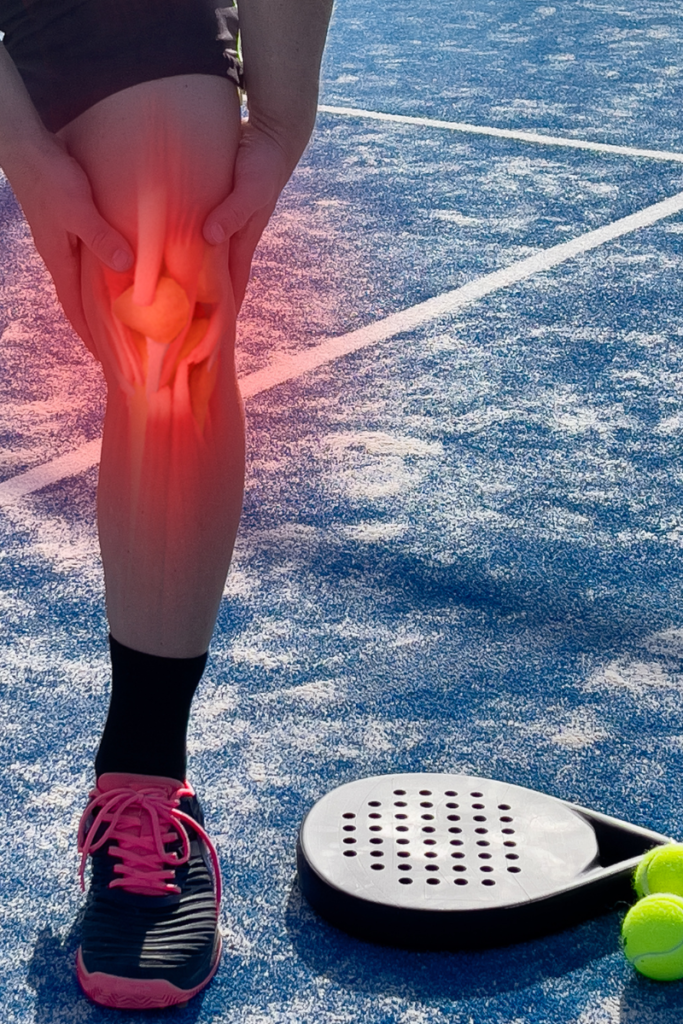
Knee pain is also extremely common due to repeated squatting, lunging, pivoting, and directional changes during matches. Players with underlying weakness in the hips or core often place additional stress on the knees without realizing it. Lower back pain may also develop from repeated spinal rotation, poor movement mechanics, or muscular fatigue during extended play.
Injury Prevention Matters More Than People Realize
One of the best ways to continue enjoying pickleball safely is focusing on prevention instead of waiting until pain becomes severe. Improving strength, flexibility, balance, mobility, coordination, and movement mechanics can significantly reduce injury risk. Warm-ups and recovery routines also become increasingly important as activity levels increase.
Some important prevention strategies include:
- Dynamic warm-ups before playing
- Strengthening hips, core, and shoulders
- Improving balance and stability
- Wearing supportive footwear
- Gradually increasing play time
- Allowing proper recovery between sessions
- Addressing minor pain early
- Improving flexibility and mobility
Small adjustments can make a major difference in long-term joint health and injury prevention.
Physical Therapy Can Help Players Stay on the Court
Physical therapy is not only for recovering after surgery or major injuries. It can also help active individuals prevent injuries, improve movement quality, and continue participating in the sports they enjoy safely. According to the American Physical Therapy Association (APTA), physical therapy can help improve strength, flexibility, mobility, balance, and sport-specific movement patterns while reducing injury risk.
Treatment may include:
- Strength and conditioning
- Balance training
- Mobility work
- Movement analysis
- Manual therapy
- Recovery strategies
- Flexibility training
- Sport-specific rehabilitation
At Reform Physical Therapy, our team works with active adults and athletes across all 7 Southern Maine clinics to help patients recover from injuries, improve movement, and safely return to the activities they enjoy most.
Staying Active Should Feel Sustainable
Pickleball offers incredible physical, mental, and social benefits for many people. Staying active is important, and movement should be encouraged at every age. The goal is not avoiding activity altogether. The goal is helping the body move efficiently, recover properly, and stay resilient enough to continue participating safely long term.
Understanding why pickleball injuries are rising so quickly can help players take proactive steps toward injury prevention, better movement habits, and healthier long-term activity overall. If pain, stiffness, balance issues, or recurring injuries are starting to interfere with your time on the court, physical therapy may help you move more confidently and continue playing the sport you love safely. Contact Reform Physical Therapy today to schedule an evaluation at one of our 7 Southern Maine locations.
RELATED BLOG POSTS:
- Preparing Your Body for Hiking Season in Maine
- Why Tight Hips Can Lead to Lower Back Pain
- How Mud Season Can Affect Balance and Joint Stability
- Signs Your Fall Risk Is Increasing