

Is It Sciatica or Just Tight Muscles? How to Tell the Difference
Posted by: in Physical Therapy Tips on February 25, 2026

Pain in your lower back or leg can feel confusing, and many people aren’t sure if they’re dealing with sciatica or tight muscles. Both can cause discomfort, but they behave very differently. Understanding the difference early helps you choose the right care and get relief sooner. At Reform Physical Therapy, we help patients across Maine figure out what’s really going on so they can move with less pain and more confidence.
At Reform Physical Therapy, we help patients across Maine figure out what’s really going on with their pain and guide them toward safe, steady relief.
What Sciatica Actually Is
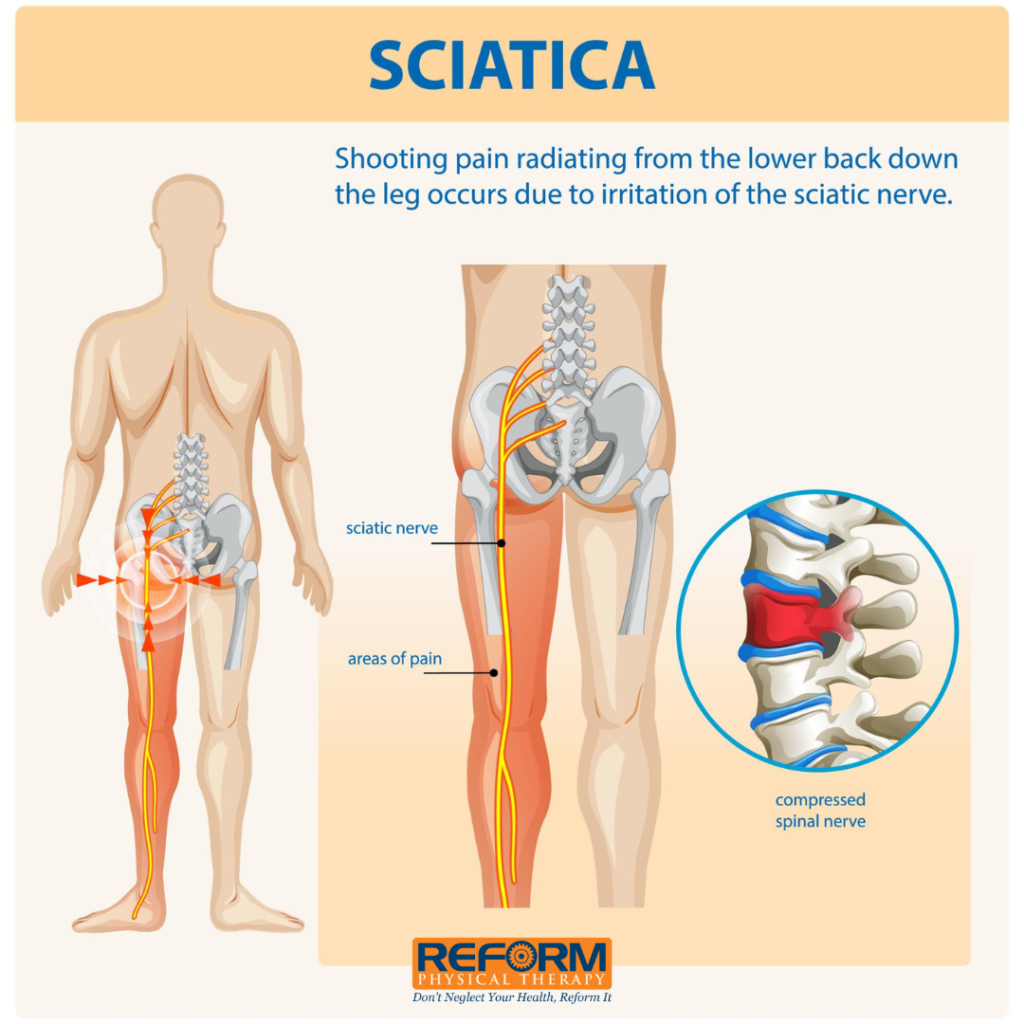
Sciatica happens when the sciatic nerve becomes irritated. This nerve starts in your lower back, travels through your hips and glutes, and runs down the back of your leg. When something presses on or inflames this nerve, you may notice pain that follows the nerve’s path. The pain often shows up on one side and can travel past the knee. Some people feel a sharp, electric shock. Others feel burning, tingling, or numbness. The pain may change when you sit, bend, or twist because those movements affect the nerve.
Sciatica doesn’t happen only from lifting something heavy. It can appear slowly from sitting for long hours, poor posture, or aging changes in the spine. Sometimes it comes from a disc issue or narrowing around the nerve. A physical therapist often spots these patterns within the first few minutes of watching you move.
What Sciatica or Tight Muscles Feel Like
Tight muscles create a different kind of pain. The pain usually stays in one area, like the lower back, a hip, or the back of the thigh. It feels more like a deep, stiff, or sore feeling. Many people notice it most when they get up in the morning or after sitting too long. The discomfort often eases when you stretch or walk a little.
Muscle tightness can still be frustrating, but it usually doesn’t send pain down the entire leg. It also responds faster to gentle movement, heat, or stretching compared to nerve pain.
How to Tell the Difference
Sciatica usually sends pain down one leg in a clear line. The sensation can feel sharp, hot, bright, or electric. It often gets worse with certain movements or sitting positions. Tight muscles, on the other hand, create steady, aching discomfort that stays in a small area. You may feel stiff when you first wake up or stand, but movement often helps.
Both problems can appear together. Tight muscles can change how your body moves. When that happens, the sciatic nerve may become irritated over time. That’s why your symptoms may shift from simple stiffness to sharper pain if the issue continues.

When You Should Think About Sciatica
If your pain shoots down your leg, feels burning or electric, or comes with numbness or tingling, it may be sciatica. Some people notice weakness or trouble lifting the foot. These symptoms can feel scary, but many improve with the right treatment. A physical therapist can help you understand what’s happening and why it’s affecting your leg.
How a Physical Therapist Figures It Out
You don’t have to diagnose yourself at home. During an evaluation at Reform Physical Therapy, your therapist listens to your symptoms, asks questions about your daily habits, and watches how you stand, walk, and bend. They may gently move your leg to see how your body reacts or check your spine and hip motion.
From this, your therapist can usually tell whether the pain comes from the sciatic nerve, tight muscles, a joint issue, or a mix of everything together. Once they know the cause, they create a plan that fits your goals, your comfort level, and your lifestyle.
How Sciatica Pain Starts and Why It Spreads
When the sciatic nerve is involved, your therapist focuses on calming the nerve and improving the way your spine and hips move. They guide you through gentle positions that take pressure off the nerve. They teach you how to move in ways that protect your back and leg. As the nerve settles down, you build strength in the core, hips, and legs so the pain becomes less likely to return.
Small improvements often show up fast. Many people notice easier walking, less shooting pain, or better sleep within a few visits.
How Physical Therapy Helps Tight Muscles
If your pain comes from muscle tightness, your therapist helps you restore mobility and build stability. They use stretching, hands-on techniques, simple strengthening, and posture coaching to loosen the muscles and support the joints. They also help you discover which daily habits tighten your muscles and how to change them.
This type of pain often responds well to consistent movement and a simple home plan. Many patients feel lighter and more flexible quickly once the right muscles begin to relax and strengthen.
When You Should Reach Out for Help
You don’t need to wait for severe pain. If your symptoms keep coming back, interrupt your sleep, or make you nervous to move, a therapist can help. And if you’re unsure whether it’s sciatica or tight muscles, that’s the perfect time to schedule an evaluation. Getting clarity helps you heal faster and with less fear.
Ready to Understand Your Pain?
If you want clear answers and a plan that works, our team at Reform Physical Therapy is here to help. Whether you’re dealing with sciatica or tight muscles, we guide you through each step so you feel safe, supported, and capable of getting back to the life you love.
RELATED BLOG POSTS:
- How Physical Therapy Helps with Lower Back Pain
- Understanding Sciatica: Symptoms, Causes, and What Actually Helps
- Why Your Back Hurts More After Shoveling (And How to Prevent It Next Time)