


Pelvic Floor Physical Therapy
Private, one-on-one care designed to help you reduce pelvic pain, improve bladder and bowel control, recover after pregnancy, and return to daily life with greater confidence.
Individualized treatment. Private environment. Advanced technology
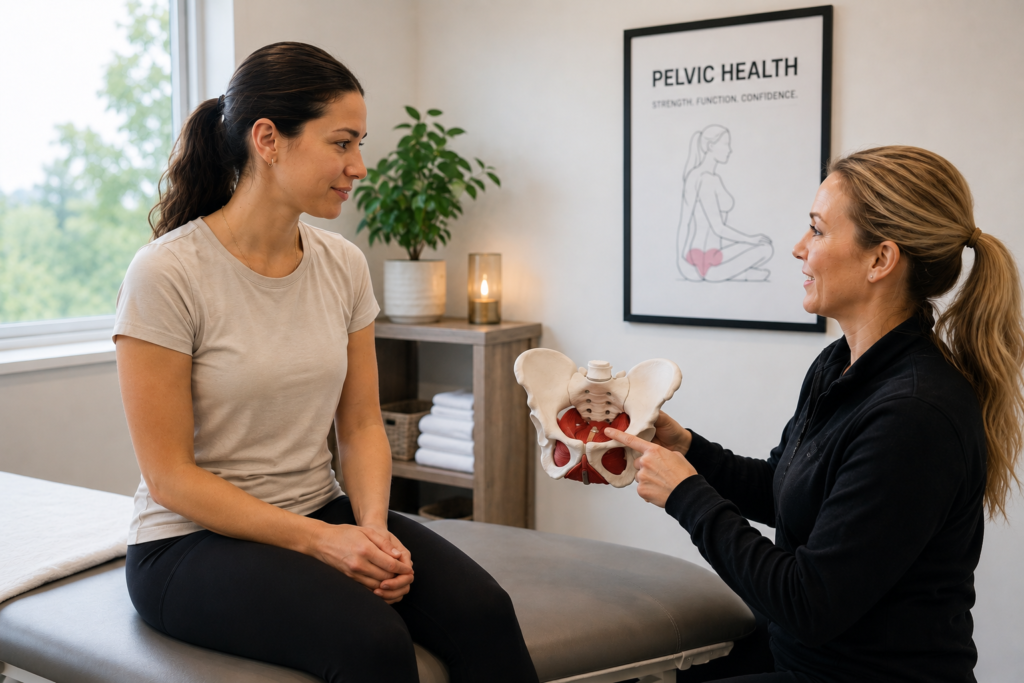
Now offering E-Stimulation and Biofeedback
Mackenzie Foley, PT, DPT now provides two advanced pelvic floor tools that are not commonly available in many outpatient physical therapy clinics.
Compassionate, Specialized Care at Reform Physical Therapy
Pelvic floor therapy can help relieve bladder leakage, pelvic pain, postpartum discomfort, and other symptoms that affect your daily life. At Reform Physical Therapy, our specialized pelvic floor therapy program in South Portland is designed to restore strength, improve function, and help you regain confidence through personalized, one-on-one care. Whether you’re recovering after pregnancy, managing pelvic pain, or experiencing urinary incontinence, Mackenzie Foley, PT, DPT, provides compassionate, evidence-based treatment tailored to your individual needs.
What Is the Pelvic Floor?
The pelvic floor is a group of muscles, ligaments, and connective tissues that form the base of your pelvis. These muscles work together to support your bladder, bowel, uterus (or prostate), and other pelvic organs while helping control bladder and bowel function, supporting your core, stabilizing your spine, and contributing to sexual health.
When these muscles become weak, tight, overactive, or uncoordinated, they can contribute to a wide variety of symptoms including urinary leakage, pelvic pain, constipation, prolapse, painful intercourse, and low back or hip pain. Pelvic floor physical therapy focuses on identifying the root cause of these symptoms, not simply treating them, and creating a personalized plan to restore strength, coordination, flexibility, and confidence.
Signs You May Benefit from Pelvic Floor Physical Therapy
You may benefit from an evaluation if you experience:
- Urinary leakage when coughing, sneezing, laughing, or exercising
- Frequent or urgent trips to the bathroom
- Difficulty emptying your bladder
- Constipation or bowel dysfunction
- Pelvic pain
- Pain during intercourse
- Pregnancy-related pelvic pain
- Postpartum weakness or discomfort
- Pelvic pressure or heaviness
- Diastasis recti (abdominal separation)
- Tailbone pain
- Hip or low back pain that hasn’t improved with traditional treatment
- Pain with sitting
- Difficulty returning to exercise after childbirth
You don’t have to live with these symptoms. Many patients experience significant improvement with specialized physical therapy.
Conditions We Treat
Urinary Incontinence
Urinary leakage is one of the most common pelvic floor conditions. Whether you experience leakage while running, coughing, laughing, or simply feel an overwhelming urge to use the restroom, pelvic floor rehabilitation can improve muscle control and reduce symptoms.
We treat:
- Stress urinary incontinence
- Urge urinary incontinence
- Mixed urinary incontinence
- Overactive bladder
- Frequent urination
- Bladder urgency
Pelvic Pain
Persistent pelvic pain can affect nearly every aspect of daily life. Treatment focuses on reducing muscle tension, improving mobility, restoring normal movement patterns, and decreasing sensitivity.
Common conditions include:
- Chronic pelvic pain
- Vulvodynia
- Painful intercourse (dyspareunia)
- Pudendal neuralgia
- Endometriosis-related symptoms
- Tailbone pain
- Hip and pelvic girdle pain
Pregnancy & Postpartum Rehabilitation
Pregnancy and childbirth place tremendous demands on the body. Pelvic floor therapy can help before and after delivery by improving strength, reducing pain, and preparing your body for recovery.
Treatment may address:
- Low back pain
- Pelvic girdle pain
- SI joint pain
- Diastasis recti
- Core weakness
- C-section recovery
- Scar mobility
- Perineal pain
- Return to exercise
- Bladder control after childbirth
Pelvic Organ Prolapse
Pelvic organ prolapse occurs when the pelvic floor muscles are unable to adequately support the pelvic organs.
Physical therapy can help reduce symptoms such as:
- Pelvic pressure
- Heaviness
- Bulging sensation
- Difficulty emptying the bladder
- Constipation related to prolapse
Bowel Dysfunction
Pelvic floor dysfunction can also contribute to bowel symptoms.
Treatment may improve:
- Constipation
- Difficulty with bowel movements
- Fecal incontinence
- Pelvic floor muscle coordination
Your First Visit
Your initial evaluation is designed to understand your entire body—not just your symptoms.
During your first appointment, your therapist will discuss:
- Your medical history
- Current symptoms
- Lifestyle and activity level
- Goals for treatment
- Previous injuries or surgeries
- Pregnancy or postpartum history (when applicable)
Your physical examination may include:
- Posture assessment
- Walking and movement analysis
- Hip mobility
- Core strength
- Functional movement testing
- Breathing mechanics
- Pelvic floor muscle assessment (only when appropriate and with your informed consent)
Your comfort is always our priority. Internal pelvic examinations are never required and are only performed if clinically appropriate and with your permission.
Treatment Techniques
Every treatment plan is customized to your individual needs and goals.
Depending on your condition, treatment may include:
Manual Therapy
Hands-on techniques to improve muscle mobility, decrease pain, and restore normal movement.
Therapeutic Exercise
Progressive strengthening and stretching designed specifically for your body and symptoms.
Neuromuscular Re-Education
Exercises that improve communication between your brain and pelvic floor muscles, helping restore proper muscle coordination.
Core & Breathing Training
The diaphragm, abdominal muscles, and pelvic floor work together as one system. We teach proper breathing strategies that improve stability and pelvic floor function.
Patient Education
Education is one of the most important parts of recovery. You’ll leave each visit understanding your condition, your progress, and exactly what you can do at home to continue improving.
Topics may include:
- Bladder health
- Bowel health
- Fluid intake
- Exercise modifications
- Body mechanics
- Lifestyle recommendations
- Long-term symptom prevention
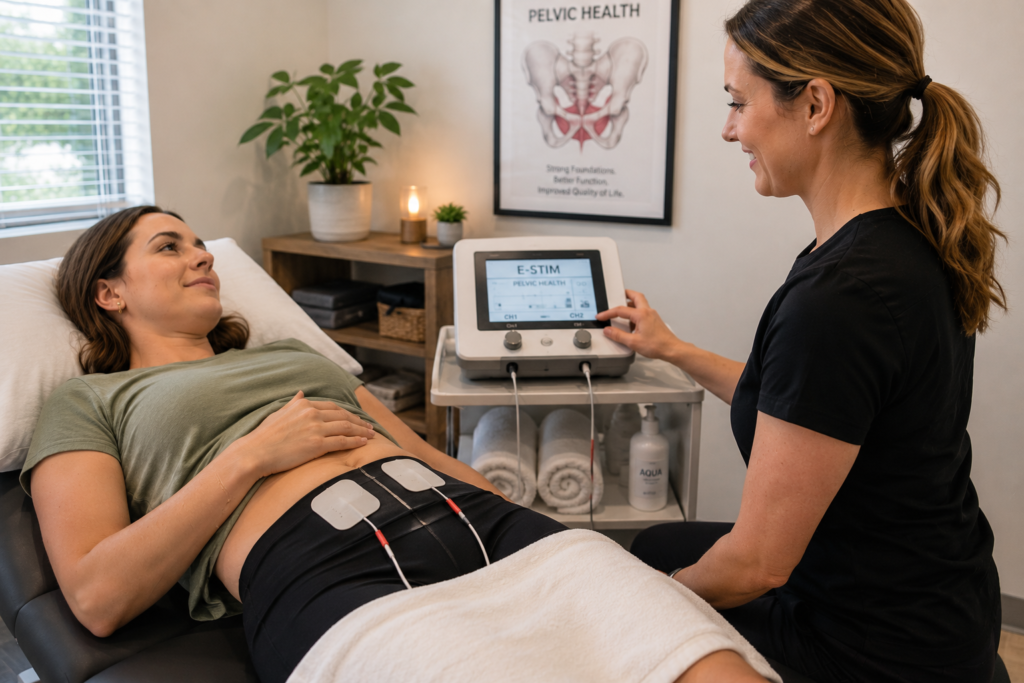
Electrical Stimulation (E-Stim)
Reform Physical Therapy is proud to offer electrical stimulation (E-Stim) as part of our pelvic floor rehabilitation program.
E-Stim uses gentle electrical impulses to help activate pelvic floor muscles that may be difficult to contract on their own. It can also improve communication between the nerves and muscles while helping reduce symptoms associated with pelvic floor dysfunction.
Depending on your evaluation, E-Stim may be used to help improve:
- Urinary incontinence
- Pelvic floor muscle weakness
- Muscle activation
- Neuromuscular coordination
- Bladder control
- Recovery following childbirth
Ready to Regain Confidence and Take Control?
You don’t have to accept pelvic pain, bladder leakage, or postpartum changes as your “new normal.” At Reform Physical Therapy, Mackenzie Foley, PT, DPT, provides personalized pelvic floor rehabilitation using evidence-based techniques, including advanced E-Stimulation and Biofeedback, to help you achieve lasting results.
Whether you’re seeking relief from pain, recovering after childbirth, or looking to improve bladder control, we’re here to support you every step of the way.
Take the first step toward better pelvic health today. Schedule your pelvic floor evaluation and discover how specialized physical therapy can help you get back to living life with confidence.