


How to Improve Balance After 50
Posted by: in Health & Wellness on April 3, 2026
Balance often changes as we get older, and many people notice they feel less steady on their feet after the age of 50. This can happen even in people who are active and healthy. Changes in strength, flexibility, reaction time, and coordination can all affect balance over time. Learning how to improve balance after 50 is important for preventing falls, staying active, and maintaining independence.
When balance begins to decline, simple activities like walking on uneven ground, climbing stairs, or getting up from a chair may feel harder. The good news is that balance can be improved at any age. With the right exercises and movement training, the body can become stronger and more stable. Physical therapy can help identify the cause of balance problems and create a plan to improve strength, coordination, and confidence with movement.

Why Balance Gets Worse After 50 and How to Improve Stability
Balance depends on several systems working together, including muscles, joints, vision, and the nervous system. As we age, these systems naturally change. Muscle strength often decreases, joints may become stiffer, and reaction time can slow down. These changes do not mean falling is unavoidable, but they can make it harder for the body to respond quickly when you trip or lose your footing. Many people also become less active as they get older, which can lead to weaker muscles and reduced stability. These changes are common with aging, but there are ways to improve balance after 50 by working on strength, coordination, and movement.
Working on strength and coordination can help reverse many of these changes and improve balance.
How Strength Training Helps Improve Balance After 50
Strong muscles play a major role in keeping the body steady. The hips, legs, and core help support the body when standing, walking, or changing direction. When these muscles are weak, the body has a harder time staying balanced. Strength training does not mean lifting heavy weights. Simple exercises that improve leg strength, core stability, and posture can make a big difference. When the muscles are stronger, the body can react faster and prevent falls more easily. Building strength is one of the most effective ways to improve balance after 50 and reduce the risk of falls.
According to the National Institute on Aging, regular exercise that includes strength and balance training can reduce fall risk and improve mobility.

Why Reaction Time Is Important to Improve Balance After 50
Balance is not only about strength. The body also needs to react quickly when something unexpected happens. If you trip, slip, or step on uneven ground, your body must move fast to keep you from falling. As we get older, reaction time may slow down, which makes it harder to catch yourself. This is why balance training often includes exercises that involve stepping, reaching, and changing direction.
These types of exercises help the brain and muscles work together so the body can respond more quickly.
How Flexibility Helps Improve Balance and Prevent Falls
Tight muscles and stiff joints can make balance more difficult. When the ankles, hips, or spine do not move well, the body cannot adjust easily when you lose your balance. Improving flexibility allows the body to move more freely and reduces the risk of falling. Stretching and mobility exercises can help keep the joints working the way they should.
Movement throughout the day is also important. Sitting for long periods can make the body feel stiff, which makes balance worse.
How Physical Therapy Helps Improve Balance After 50
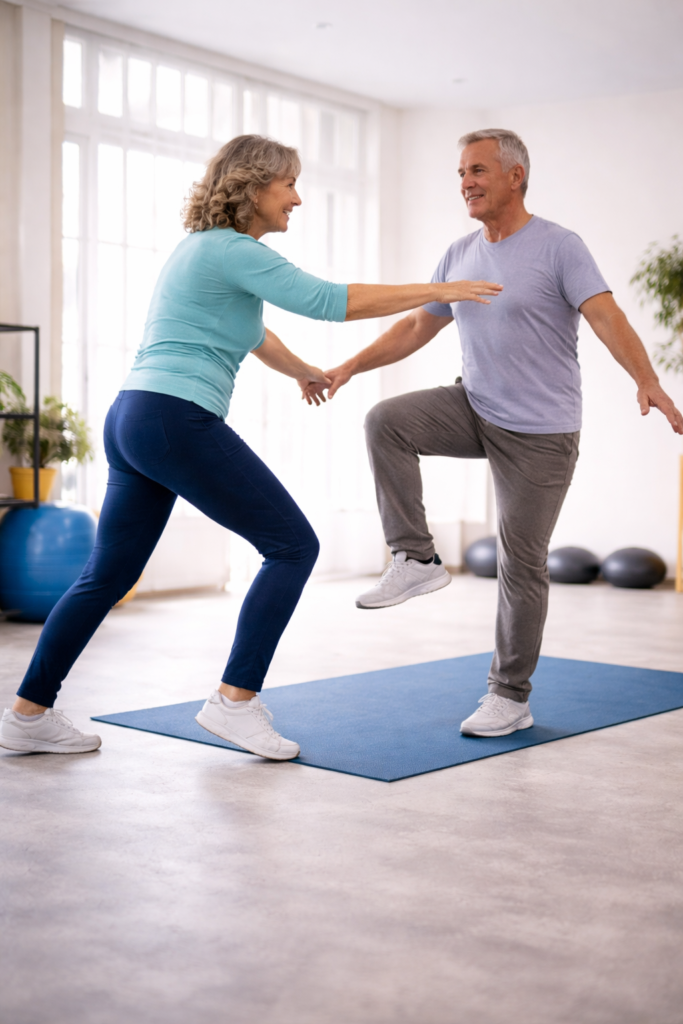
Physical therapy focuses on improving the specific problems that affect balance. Treatment may include strengthening exercises, balance training, walking drills, and coordination exercises. Therapists may also work on posture, flexibility, and movement patterns so the body can stay steady during everyday activities. Balance training is done safely and at a level that matches each person’s ability.
The American Physical Therapy Association explains that balance training and strength exercises can help prevent falls and improve confidence with movement.
Signs Your Balance May Need Improvement
Some changes in balance happen slowly, so they are easy to ignore. You may notice feeling unsteady on uneven ground, needing to hold onto something when walking, or feeling nervous on stairs. Other signs include stiffness, weakness in the legs, or feeling slower when reacting to movement. These changes are common, but they can improve with the right exercises.
Working on balance early can help prevent injuries and make everyday activities feel easier.
Balance Training at Reform Physical Therapy
At Reform Physical Therapy, balance training is designed for each patient based on their strength, mobility, and goals. Some people need to work on strength, while others need to improve coordination or flexibility. Our therapists provide one-on-one care to help patients feel more confident with walking, standing, and everyday activities. Improving balance can help reduce fall risk, decrease pain, and allow you to stay active longer.
It is never too late to improve balance, and small changes can make a big difference.
Balance often changes after 50, but it does not have to keep getting worse. Strength, flexibility, and reaction time can all be improved with the right training. Learning how to improve balance after 50 can help prevent falls, reduce pain, and make daily activities feel easier. Physical therapy can help the body move better so you can stay active and confident at any age.
If you have noticed changes in your balance, working with a physical therapist may help you feel steadier and stronger.
Ready to get scheduled? Give us a call!