


Why Sitting Too Much Causes Pain and How Physical Therapy Can Help
Posted by: in Health & Wellness on March 28, 2026
Many people spend more time sitting than they realize, and over time, sitting too much causes pain in the back, neck, hips, and shoulders. Between working at a computer, driving, watching television, and using phones or tablets, the body often stays in the same position for hours at a time. This is one of the main reasons sitting too much causes pain in the back, neck, and hips, especially for people who spend most of the day at a desk.
Neck pain, back pain, hip tightness, and even knee discomfort are often related to long periods of sitting. When the body stays in one position for too long, muscles become tight, joints become stiff, and posture begins to change. Over time, this can lead to ongoing pain that does not go away on its own.
Physical therapy can help correct the effects of too much sitting by improving strength, flexibility, and movement so the body can function the way it should.
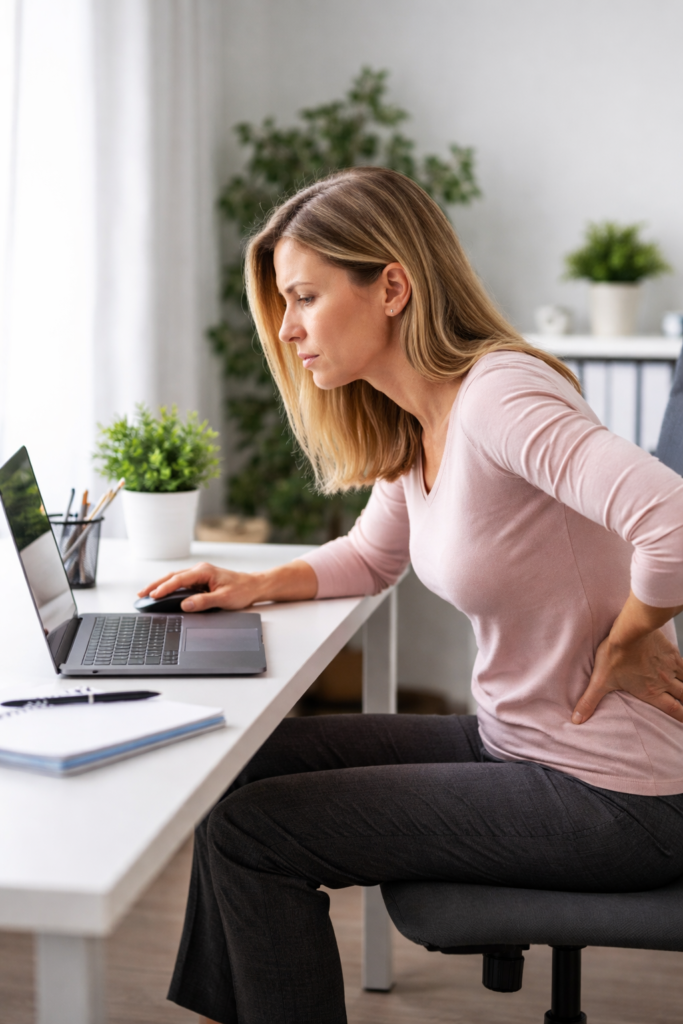
How Sitting Affects Your Body
The human body is designed to move. When you sit for long periods, certain muscles stay in the same position while others become inactive. This imbalance puts extra stress on the spine, hips, and shoulders. When sitting for too long, the hip flexor muscles shorten, the glutes become weaker, and the muscles that support the spine stop working as they should. This can cause the lower back to feel tight or sore. The shoulders may round forward, and the head may move forward as well, which often leads to neck pain.
Over time, these small changes can affect how you stand, walk, and move during everyday activities.
Why Sitting Too Much Causes Back and Neck Pain
One of the most common complaints related to sitting is pain in the lower back and neck. When posture changes, the spine is placed under more stress than it was designed to handle. Leaning forward toward a screen, looking down at a phone, or slouching in a chair can cause the muscles in the neck and upper back to work harder than they should. When posture stays the same for long periods, sitting too much causes pain by placing extra stress on the muscles and joints that support the spine.
The lower back can also become painful when the core muscles are not supporting the spine. When these muscles are weak, the joints in the back take on more pressure, which can lead to discomfort with sitting, standing, or walking.
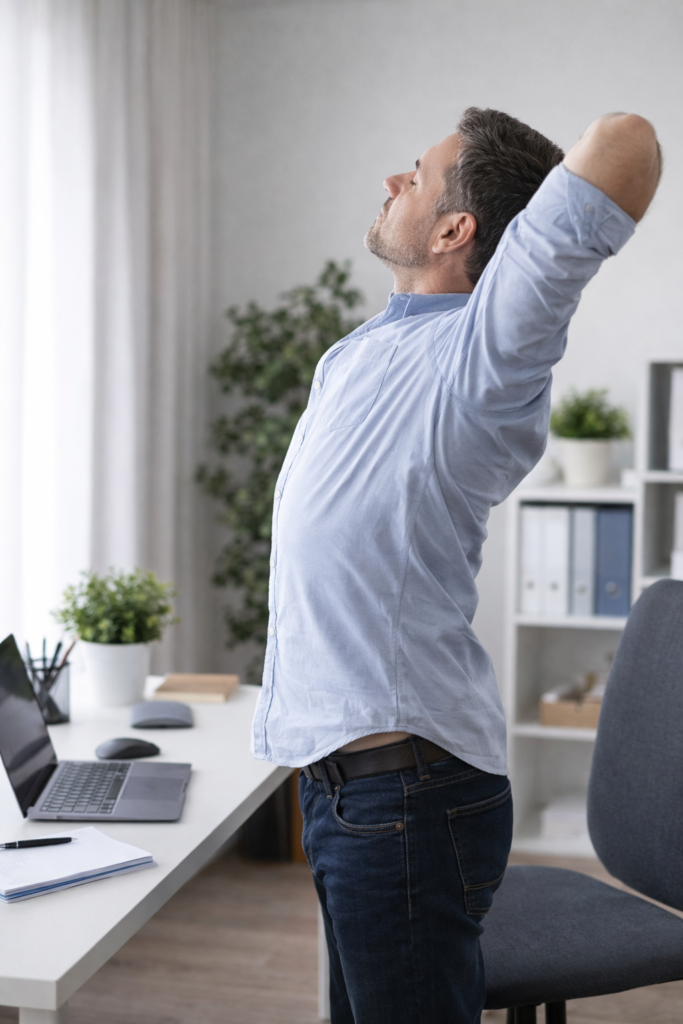
Tight Hips and Weak Muscles From Sitting
Another common problem caused by sitting too much is tightness in the hips. The hip flexor muscles stay in a shortened position while sitting, which makes them feel tight when standing or walking. At the same time, the glute muscles become less active. These muscles are important for supporting the pelvis and controlling movement. When they are weak, the body may rely on the lower back or knees instead, which can cause pain in those areas.
This combination of tight muscles and weak muscles is one of the main reasons people feel stiff after sitting for long periods.
Why Movement Is Important for Joint Health
Joints need movement to stay healthy. When the body moves, fluid inside the joints helps keep them lubricated and working smoothly. Sitting for long periods reduces this natural movement, which can make joints feel stiff. Lack of movement can also slow circulation, making muscles feel tired and tight. Even small amounts of activity throughout the day can help reduce this stiffness. The National Institute on Aging recommends regular movement and exercise to help reduce pain and maintain mobility as we get older.
How Physical Therapy Helps Pain Caused by Sitting
Physical therapy focuses on restoring normal movement and correcting the muscle imbalances caused by too much sitting. Treatment may include exercises to strengthen weak muscles, stretches to improve flexibility, and training to improve posture.
Learning how to sit, stand, and move correctly can reduce stress on the spine and joints. Small changes in daily habits can make a big difference in how the body feels. Physical therapy may also include balance training, core strengthening, and movement exercises that help the body handle everyday activities without pain. The American Physical Therapy Association explains that improving strength and mobility can help reduce pain and prevent future injuries.
Signs Sitting Too Much May Be Causing Your Pain
Pain related to sitting often develops slowly. You may notice stiffness after working at a desk, soreness after driving, or discomfort when getting up from a chair. Common signs include lower back pain, neck tightness, shoulder discomfort, hip stiffness, or feeling weak after sitting for long periods. These symptoms often improve with movement but return when sitting again.
If this pattern continues, physical therapy can help identify the cause and create a plan to correct it.
How Reform Physical Therapy Can Help
At Reform Physical Therapy, we work with patients who have pain related to posture, work habits, and everyday activities. Treatment is designed for each person based on their movement, strength, and goals. Improving flexibility, strengthening the right muscles, and learning better movement patterns can help reduce pain and prevent it from coming back. Our goal is to help patients stay active, comfortable, and confident in their daily lives.
Sitting is part of everyday life, but too much sitting can lead to pain, stiffness, and weakness if the body is not moving enough. The effects often build slowly, which makes them easy to ignore until discomfort becomes harder to manage. Physical therapy can help restore strength, improve posture, and reduce the stress placed on the body during daily activities. With the right exercises and movement habits, it is possible to feel better and prevent pain from returning.
If you spend long hours sitting and have started to notice discomfort, working with a physical therapist can help your body move the way it was meant to. Give your local Reform clinic a call and get scheduled.