


Motion Is Lotion: Joint Protection Strategies to Reduce Pain and Stay Active Longer
Posted by: in joint protection strategies, Orthopedic Physical Therapy on February 18, 2026

If you’re dealing with everyday aches and stiffness, learning joint protection strategies can make a meaningful difference. Many people assume joint pain is just part of getting older, but the way you move, lift, and carry throughout the day plays a major role in how your joints feel. The good news is that small changes in movement patterns and strength can reduce stress on irritated joints and help you stay active longer.
Joint protection is a smarter approach. It’s not about being fragile or avoiding movement. It’s about learning how to use your body in ways that reduce unnecessary stress on irritated joints, while keeping you active and independent for the long term. When you protect your joints and build better support around them, everyday tasks start to feel easier again.
What Joint Protection Really Means
Joint protection is a set of practical movement habits that help you reduce strain on joints that are already working hard. Think of it like giving your joints better “backup.” Instead of letting small, repetitive stress pile up in the same places, you learn how to distribute load more evenly, improve alignment, and use muscles more efficiently.
This matters because joints don’t work alone. They rely on surrounding muscles, tendons, ligaments, and the nervous system to guide movement smoothly. When those support systems are weak, tight, or uncoordinated, your joints end up taking more force than they should. Joint protection helps shift that force back where it belongs—into strong, well-trained muscles.
Why Joint Pain Gets Worse With “Doing Less”
It’s completely normal to avoid movement when something hurts. But when you stop moving as much, your joints can become stiffer and your muscles can lose strength faster than you expect. That weakness creates a cycle: less strength means less support, and less support means your joints feel even more sensitive during normal activity.
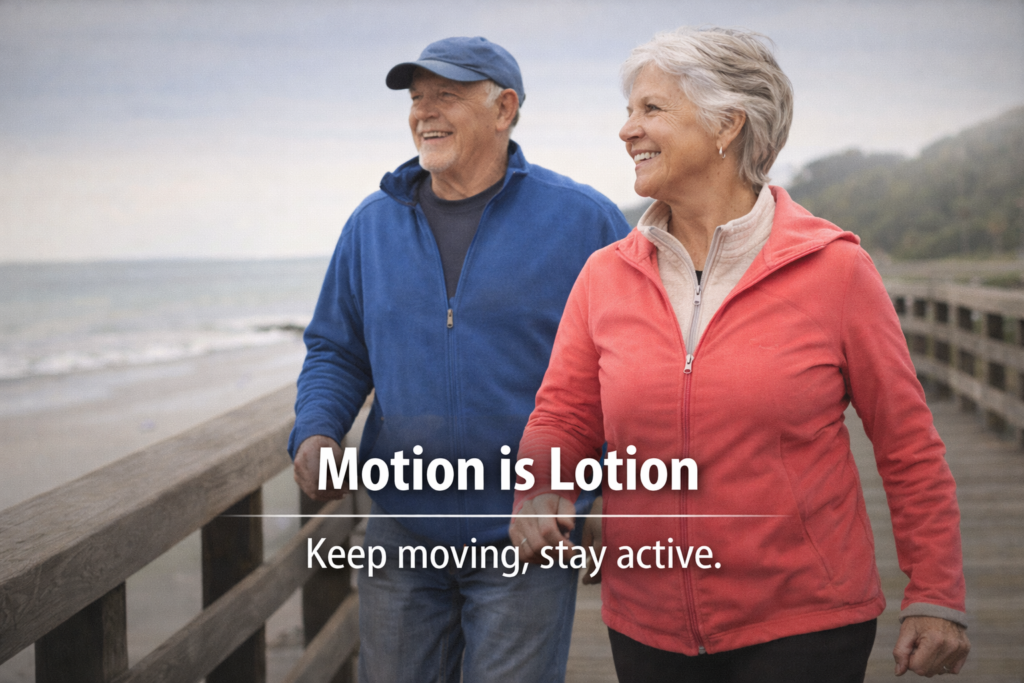
This is where the phrase “Motion is Lotion” is so helpful. Movement helps lubricate joints, improves circulation, and keeps tissues healthier. The goal isn’t to push through sharp pain or ignore your symptoms—it’s to move in a way that feels safe and smart, so your joints can calm down while your body gets stronger.
The Biggest Joint Protection Mistake Most People Make
One of the most common mistakes is assuming joint pain always means a joint is “weak” and needs more stretching or rest. In reality, many painful joints are already overloaded. The missing piece is often strength, stability, and better mechanics—not more stretching or less activity.
Another common issue is “powering through” with poor form. For example, repeatedly bending from the low back instead of using your hips, gripping too tightly during household tasks, or taking stairs with the knee collapsing inward. These small patterns can increase irritation over time. Joint protection teaches you how to move with better alignment so your joints aren’t taking the hit.
Joint Protection Strategy #1: Use Your Strongest Muscles for the Job
Your body has “power muscles” designed to handle load—like the glutes, thighs, and core. When these muscles aren’t doing their share, smaller joints and smaller muscle groups get forced to compensate. That’s when hands, wrists, knees, shoulders, and the low back often start complaining.
A simple example is carrying heavy items. If you grip tightly with your fingers and hold bags away from your body, your hands and shoulders work overtime. If you keep the load close, use two hands, and engage your core, the work spreads out through larger, stronger muscle groups. This kind of change seems small, but it can make a big difference in how your joints feel at the end of the day.
Joint Protection Strategy #2: Improve Alignment Before You Add Effort
Alignment is the “starting position” your joints are working from. When a joint is slightly out of position—because of posture, weakness, or movement habits—it can take extra stress with every step, reach, or lift. That stress adds up.
For example, if your knee tends to cave inward when you go up stairs, the joint is being loaded unevenly. Over time, that can contribute to irritation, pain, and reduced confidence. Joint protection means learning how to line up your body before you move, so the force travels through the joint the way it’s meant to. This is one of the reasons physical therapy is so helpful—because you’re not guessing. You get specific feedback that matches your body.
Joint Protection Strategy #3: Break Up Repetition Before It Becomes a Flare-Up
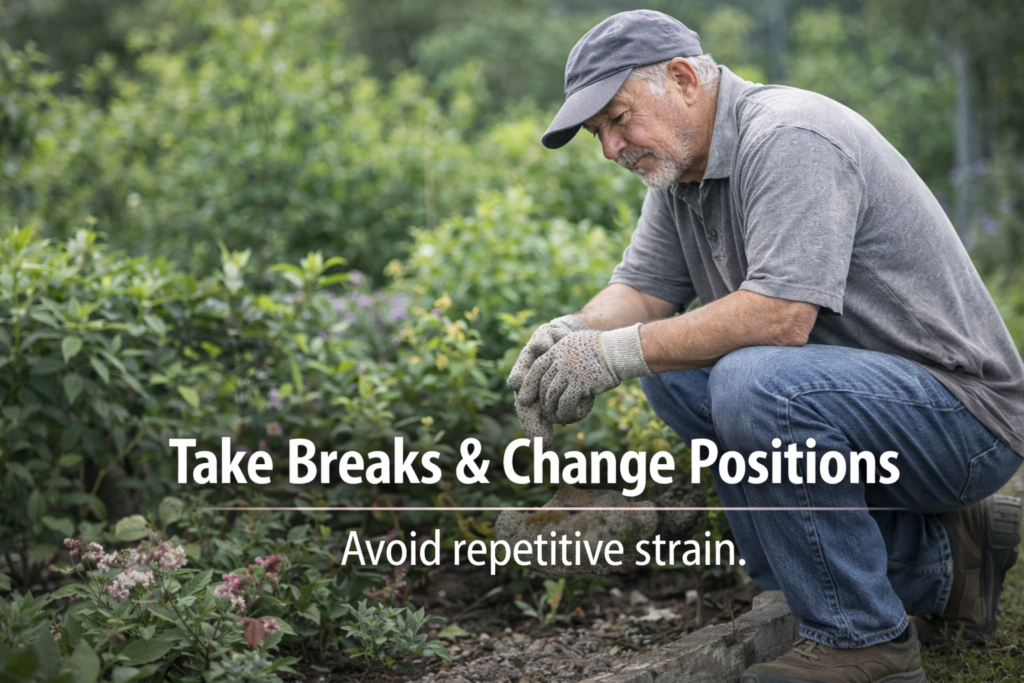
A lot of joint pain doesn’t come from one big event. It comes from the same stress repeated for too long. Gardening for an hour without changing position, standing at the counter for a long time, sitting at a desk without breaks, or doing the same lifting pattern all day can irritate joints—even if each individual movement seems harmless.
Joint protection encourages “movement variety.” Switching positions, changing tasks, and taking short breaks keeps joints from getting overloaded in one direction. If you’re prone to flare-ups, this strategy is one of the fastest ways to reduce them because it addresses the root cause: too much of the same stress for too long.
Joint Protection Strategy #4: Strength Is Joint Insurance
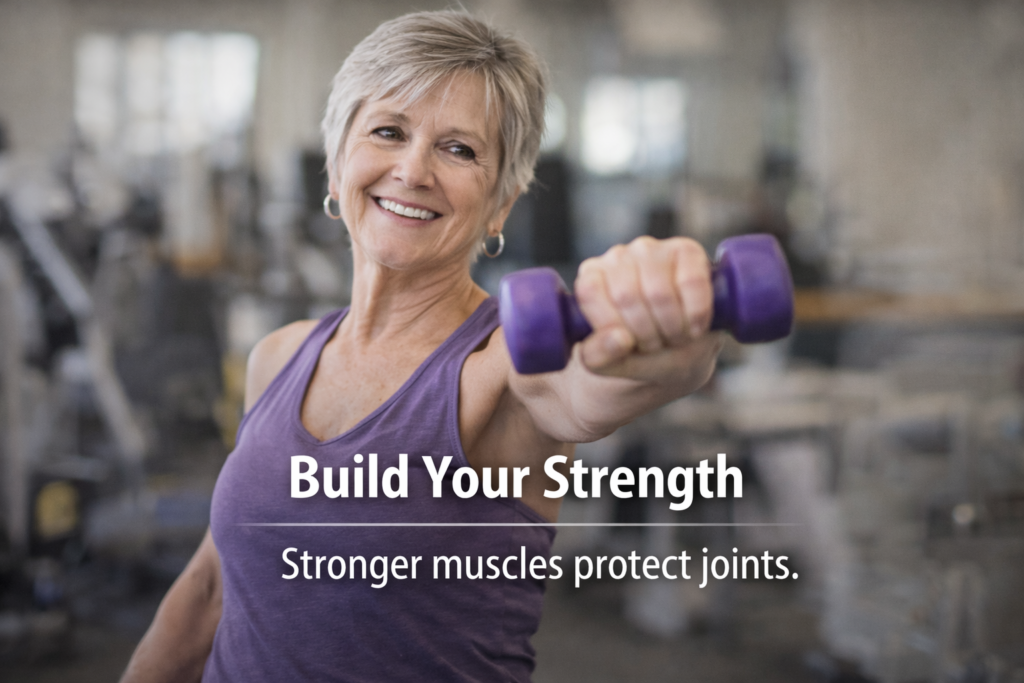
If you only take one thing away from joint protection, make it this: stronger muscles protect joints. When your muscles can absorb force, your joints don’t have to. That’s why strength training is often one of the most effective tools for joint pain—especially for hips, knees, shoulders, and the spine.
This doesn’t mean heavy weights or intense workouts. It means building the right strength in the right places, with the right form. A targeted plan can help you feel steadier on stairs, more confident getting up from a chair, and less sore after activity. It also helps with balance and fall prevention, which becomes increasingly important over time.
Joint Protection Strategy #5: Respect Pain Signals Without Fearing Them
Pain is information, but it isn’t always a danger alarm. Some discomfort can be normal when you’re rebuilding strength or reintroducing activity. The goal is to learn the difference between “working” discomfort and pain that signals irritation.
A helpful rule is that your activity shouldn’t cause symptoms to spike and stay elevated for the rest of the day or into the next day. Joint protection is about pacing—doing enough to improve, but not so much that your joints get angry. When you pace correctly and strengthen consistently, many people notice they can do more with less pain over time.
How Physical Therapy Helps You Protect Your Joints
Joint protection works best when it’s personalized. What irritates your knees may not be the same thing irritating someone else’s knees. Physical therapy helps by identifying what’s driving your symptoms—whether it’s weakness, stiffness, poor mechanics, balance issues, or a combination—and then giving you a plan that fits your daily life.
In physical therapy, you learn how your body moves, where it’s compensating, and what needs support. You also learn practical strategies you can use immediately—like how to lift, how to use stairs, how to get on and off the floor, and how to adjust posture during work or home tasks. When you understand the “why,” joint protection becomes second nature instead of something you have to remember all day.
When to Get Help for Joint Pain
If your joint pain is lasting more than a couple of weeks, disrupting sleep, limiting daily activities, or making you feel less stable, it’s worth being evaluated. Waiting often leads to more compensation and more loss of strength, which can make recovery slower. Getting the right plan early is one of the best ways to protect your joints long-term and keep doing the things you enjoy.
Joint Protection Is About Staying You
Joint protection isn’t about being careful in a fearful way. It’s about staying active with confidence. When you move with better mechanics, strengthen what supports your joints, and pace activity wisely, you give your body a real chance to feel better.
And remember: Motion is lotion—because movement helps lubricate joints and keeps them healthier over time.
Want help reducing joint pain and protecting your joints for the long run? Reform Physical Therapy can help you build a plan that matches your goals and your lifestyle.