


What to Expect at Your First Pelvic Floor PT Appointment
Posted by: in Pelvic Floor Physical Therapy on February 16, 2026

If you’ve scheduled your first pelvic floor physical therapy appointment, you may feel hopeful — but also a little uncertain. That’s completely understandable. Pelvic floor therapy is not something most women grow up learning about, and many patients walk into their first visit unsure of what will happen. If you’ve been wondering what to expect at your first pelvic floor PT appointment, you’re not alone. Many women delay care simply because they don’t know what will happen during that first visit.
The good news is this: your first pelvic floor PT appointment is calm, private, and centered entirely around you. There are no surprises, no rushing, and no pressure. It is simply the beginning of understanding what your body needs to function better.
Let’s walk through exactly what you can expect.
Understanding Pelvic Floor Physical Therapy
Pelvic floor dysfunction is a common condition that can affect bladder control, bowel function, and pelvic support. According to the American Physical Therapy Association’s Academy of Pelvic Health Physical Therapy, specialized pelvic health physical therapy helps address these concerns through evidence-based treatment.
When the pelvic floor muscles are weak, overly tight, strained, or not coordinating properly with the rest of the core, symptoms can develop. These symptoms may include urinary leakage, pelvic pain, tailbone discomfort, pressure or heaviness, constipation, or ongoing weakness after pregnancy.
Pelvic floor physical therapy focuses on restoring balance and coordination to these muscles. Rather than masking symptoms, it addresses the underlying muscular and movement patterns that are contributing to discomfort or dysfunction.
What to Expect at Your First Pelvic Floor PT Appointment: Step by Step
Your appointment will begin in a private treatment room with a one-on-one discussion between you and your physical therapist. This part of the visit is foundational. Your therapist will ask detailed questions about your symptoms, when they started, what makes them better or worse, and how they impact your daily life.
You may discuss pregnancy history, surgical procedures, past injuries, exercise routines, and even stress levels. Bladder habits and bowel habits are also part of the conversation because they provide important insight into pelvic floor function.
This is not an interrogation. It is a thoughtful and respectful conversation designed to connect the dots. Many patients leave this first discussion already feeling validated simply because someone is listening and taking their symptoms seriously.
A Whole-Body Movement Assessment
Before any internal evaluation is discussed, your therapist will assess how your body moves as a whole. Pelvic floor dysfunction rarely exists in isolation. It is often connected to breathing patterns, posture, abdominal coordination, hip strength, and spinal mobility.
Your therapist may evaluate how you breathe, how your ribcage expands, how your deep core muscles activate, and how your hips and low back move. Many patients are surprised to learn how closely their diaphragm, abdominal muscles, and pelvic floor work together as one system.
This portion of the exam helps identify whether your muscles need strengthening, relaxation, coordination training, or a combination of all three. In some cases, early improvements begin simply by adjusting breathing and posture patterns.
Is a Pelvic Floor Exam Required at Your First Appointment?
One of the most common concerns about a first pelvic floor PT appointment is whether there will be an internal exam. It is important to know that an internal pelvic floor assessment is never automatic and never required. Your therapist will clearly explain why it may be helpful and will only proceed with your full consent.
If you choose to have an internal assessment, it is very different from a gynecological exam. There are no stirrups and no speculums. The focus is on gently assessing muscle strength, tone, coordination, and areas of tenderness. The environment remains private, professional, and respectful at all times.
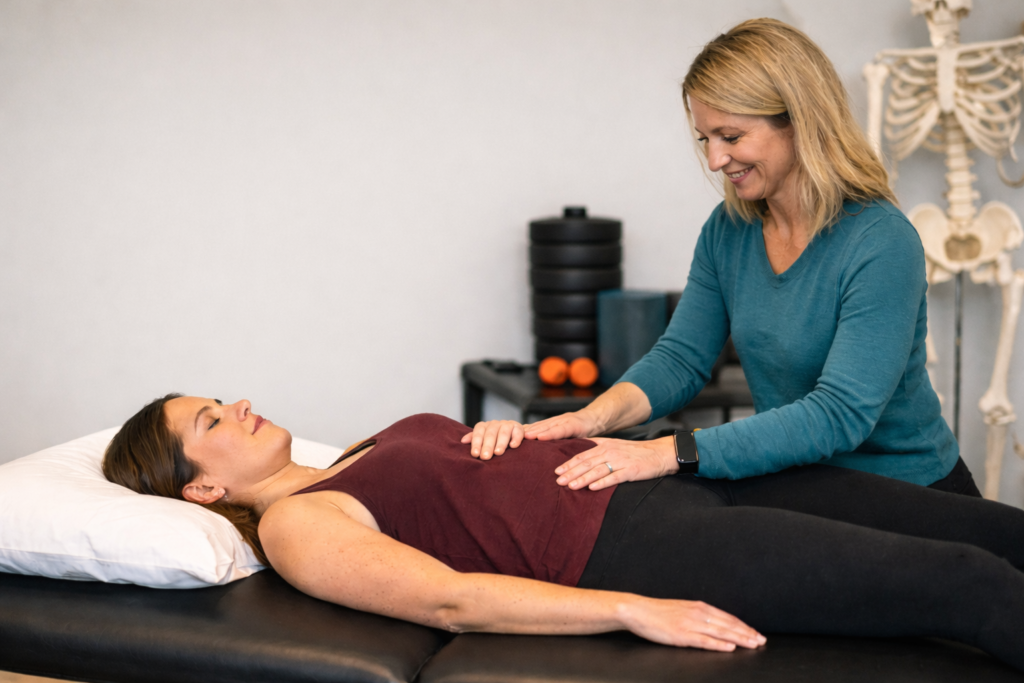
For patients who prefer not to proceed with an internal exam during the first visit, therapy can absolutely begin with external assessments and treatment approaches. Your comfort is always the priority.
Creating Your Creating Your Personalized Pelvic Floor Therapy Treatment Plan
Before the appointment ends, your therapist will review their findings and explain what is happening within your pelvic floor and core system. Understanding the “why” behind your symptoms often brings significant relief and clarity.
You will receive a personalized plan that may include breathing retraining, gentle mobility work, strengthening exercises, relaxation techniques, or manual therapy. Pelvic floor therapy is not simply about doing more Kegels. In fact, many patients need to learn how to properly relax their pelvic floor muscles before strengthening them.
You will leave with clear next steps and realistic expectations about progress.
What to Wear and How to Prepare
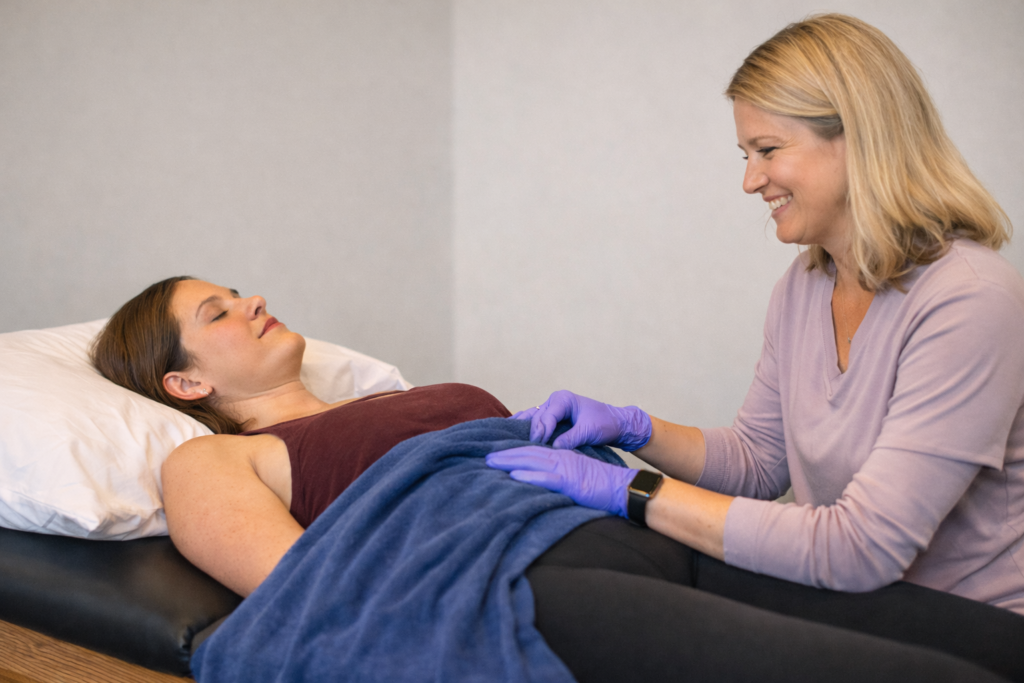
There is no special preparation required before your appointment. Wearing comfortable clothing, such as leggings, athletic shorts, or loose-fitting pants, makes movement assessment easier. If an internal exam is performed, appropriate draping techniques are used to maintain privacy and dignity.
It can also be helpful to think ahead about your goals. Whether your goal is returning to exercise, reducing leakage, improving intimacy comfort, or feeling stronger postpartum, sharing that openly helps guide your plan of care.
When Will You Start Seeing Improvement?
Every patient’s timeline is different. Some individuals begin noticing subtle changes within a few sessions, especially when breathing and coordination patterns improve quickly. Others may require several weeks of consistent therapy, particularly if symptoms have been present for years.
Recovery depends on the type of dysfunction, the severity of symptoms, and how consistently home exercises are performed. The most important thing to remember is that progress is possible, and many women experience meaningful improvement once they begin addressing the root cause.
You Deserve Answers
Many pelvic floor symptoms are common, but that does not mean they are normal. Leaking urine, pelvic pain, or persistent pressure are not things you simply have to accept as part of aging or motherhood.

Your first pelvic floor PT appointment is not something to fear. It is a thoughtful, respectful evaluation designed to give you clarity and a path forward. When you understand what your body needs, you can begin rebuilding strength, comfort, and confidence.
Now that you understand what to expect at your first pelvic floor PT appointment, you can walk into your visit feeling informed, prepared, and confident.
If you’re looking for pelvic floor physical therapy in South Portland, our team offers private, one-on-one care designed around your symptoms and goals. Give us a call and schedule your first eval.